
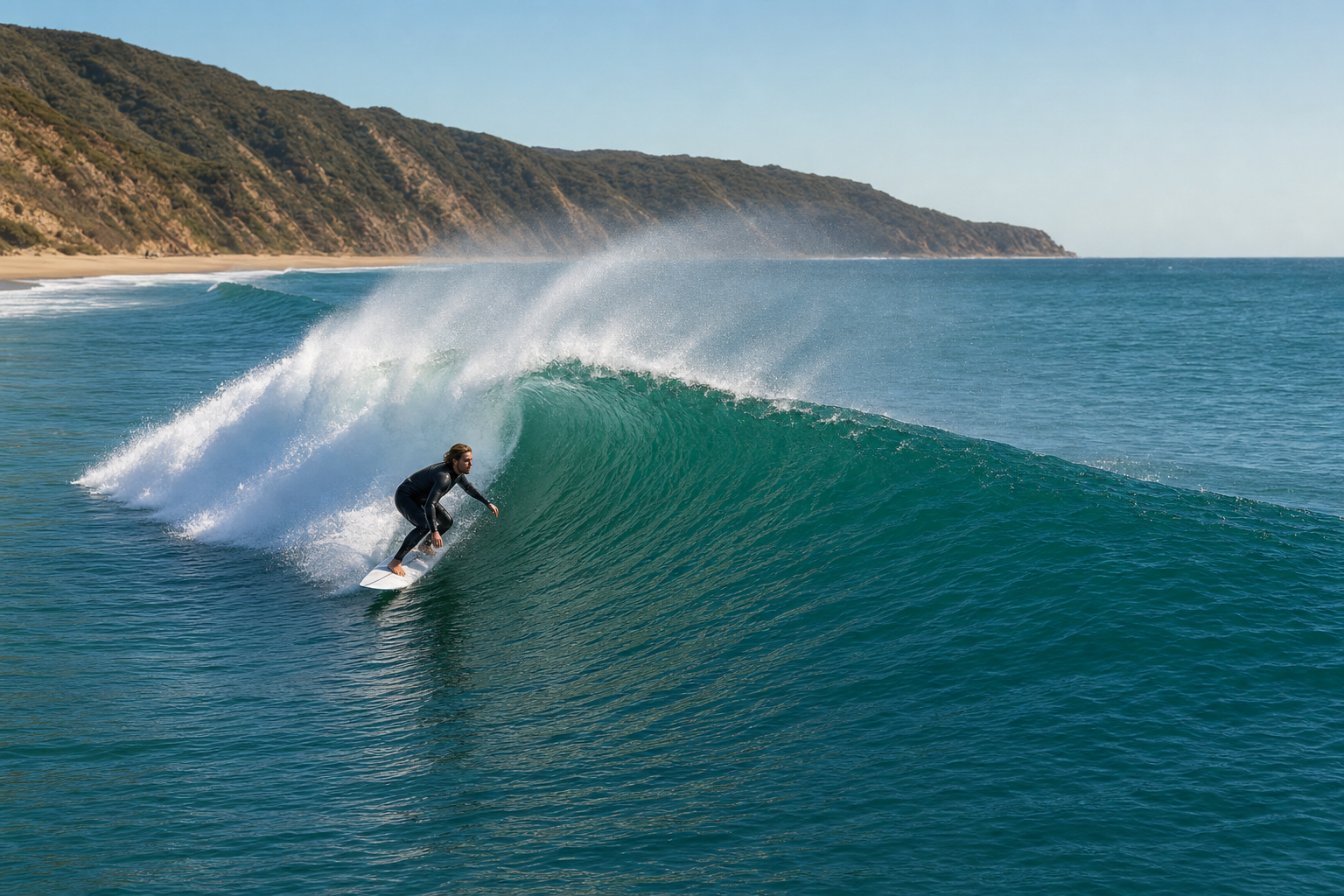
Wind is the invisible hand behind almost every surf session. It creates the swells that travel across oceans, then either grooms those waves into clean, hollow lines or tears them apart before they reach the beach. Learning how wind affects wave quality is one of the most useful skills in surf forecasting because two days with the same swell height and tide can feel completely different once the wind changes direction, strength, or timing. If you want to go deeper into the science behind all of this, this surf forecasting guide is a solid resource for understanding how swell and wind interact from ocean to shore. Keeping a dedicated surf journal to log wind conditions alongside your sessions can also help you spot patterns at your local break over time.
How Wind Affects Wave Quality Before the Waves Arrive
Every surfable wave begins with wind blowing across water. When wind moves over the ocean surface, friction transfers energy into the sea. Small ripples form first, then grow into wind chop, and eventually into organized waves if the wind is strong and persistent enough.
Three main ingredients determine how much wave energy the wind can generate:
Wind Speed
Stronger wind transfers more energy into the ocean. A light breeze may only create surface texture, while gale-force winds can generate powerful swells. However, stronger wind does not automatically mean better surf. If that wind is blowing directly onto your beach, it can create messy, short-period waves that are difficult to ride.
Fetch
Fetch is the distance over water that wind blows in the same direction. A long, uninterrupted fetch allows waves to build and organize. This is why large storm systems far out at sea can create quality groundswell that travels thousands of miles.
Duration
Duration is how long the wind blows over the fetch. A brief burst of strong wind may produce choppy local surf, but a long-lasting storm can generate a more powerful and consistent swell.
Once waves leave the storm area, they begin to sort themselves out. Longer-period waves travel faster and separate from shorter-period ones. By the time they reach a coastline, they may arrive as clean, organized swell even if the storm that created them was chaotic. This is the first important lesson: wind can create excellent surf when it happens far away, but it often ruins surf when it blows hard at the surf spot itself.
Local Wind: The Creator and Destroyer of Surf
Surfers usually care most about local wind because it directly shapes the breaking wave. Local wind can smooth the surface, hold up the lip, create barrels, add chop, or knock a wave down before it has a chance to stand up properly.
The effect depends on the wind’s direction relative to the shoreline and the breaking wave. A north wind may be offshore at one beach and onshore at another. For surf forecasting, wind direction should always be interpreted in relation to the coast, not just as a compass reading. A quality orienteering compass can help when you’re scouting a new spot and trying to work out how the coastline aligns with forecast wind directions.
Offshore Wind and Wave Quality
Offshore wind blows from land toward the ocean. In most surf forecasts, this is the wind direction surfers hope to see because it typically produces the cleanest wave faces and the best overall rideability.
How Offshore Wind Cleans Up the Face
Offshore wind blows against the incoming waves, resisting the forward motion of the wave’s surface and smoothing out small bumps. When the wind is light to moderate, it can create a clean, groomed surface often described as “glassy” or “brushed.”
Clean faces make waves easier to read. The line is more visible, the board holds better, and turns feel more predictable. Offshore wind can also make steep waves more manageable because the wave face stays open for longer.
How Offshore Wind Helps Create Barrels
Offshore wind holds the lip of the wave up as it pitches forward. This delay helps the wave throw out farther from the base, creating a more hollow shape. On reef breaks, beach breaks, and shallow sandbars, the right offshore wind can turn a wave that looks like it might close out into a makeable barrel.
This is also why offshore days often produce dramatic spray. As the lip throws, the wind blows the feathering water backward, creating plumes off the top of the wave. That spray is not just photogenic — it is a visible sign that the wind is pushing against the wave and helping it stand up.
When Offshore Wind Becomes Too Strong
Offshore wind is not always ideal. If it becomes too strong, it can make waves difficult to catch because it blows up the face and pushes surfers back. It can also hold the lip too long, causing waves to section quickly or close out abruptly.
Very strong offshore wind may also flatten smaller surf. The wave face can become ribbed, the lip may blow back, and the lineup can feel strangely slow even when the swell looks promising. As a general rule, light to moderate offshore wind is ideal, while strong offshore wind suits powerful waves with enough energy to push through it.
Onshore Wind and Wave Quality
Onshore wind blows from the ocean toward the land, traveling in the same general direction as the incoming waves. This usually makes surf messier and less organized.
How Onshore Wind Adds Chop
Onshore wind roughens the sea surface by creating small wind waves on top of the swell. These bumps interfere with the wave face, making it uneven and harder to ride. The stronger the onshore wind, the more the lineup becomes choppy and disorganized.
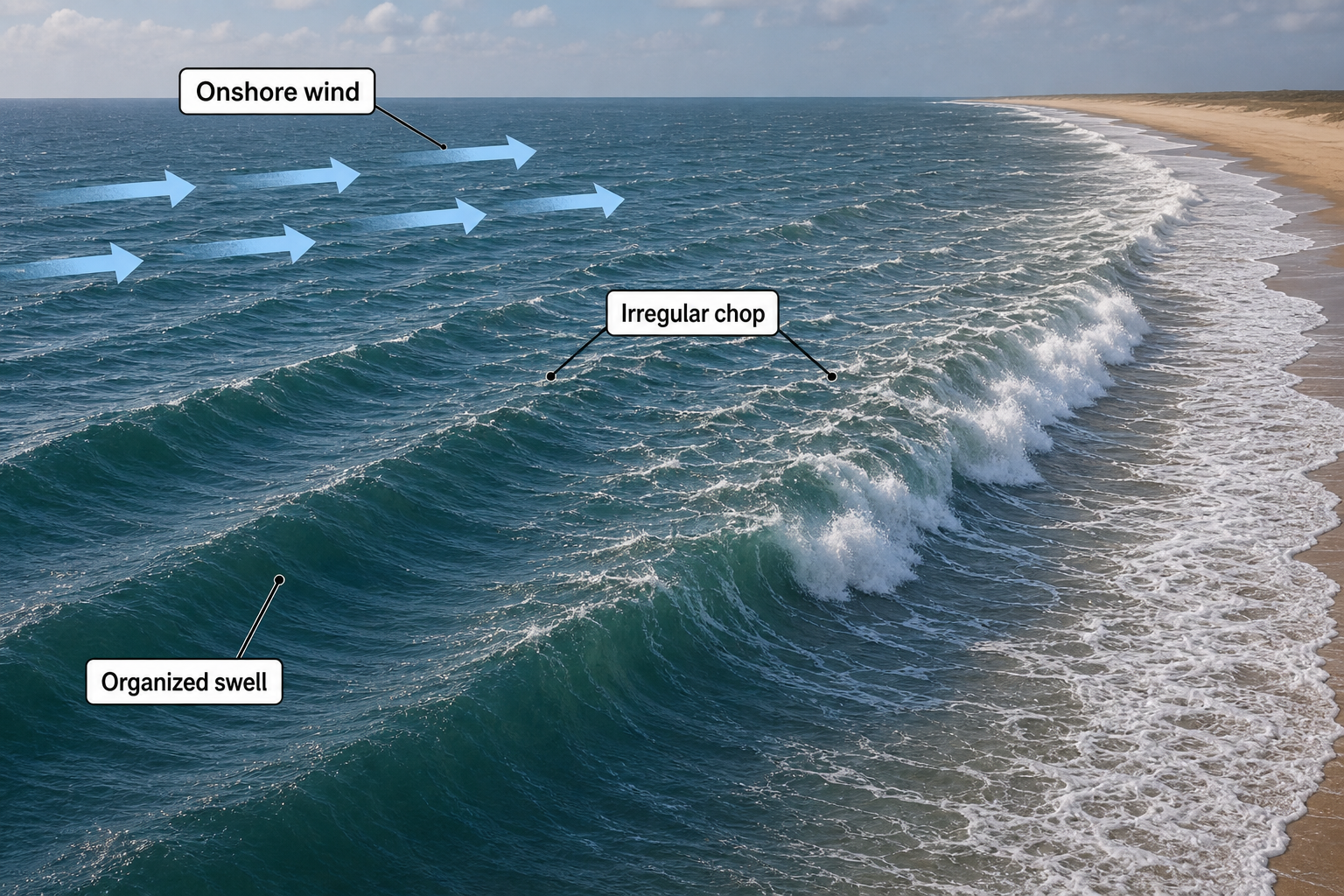
Chop affects surfing in several ways. It slows the board, disrupts rail control, and makes sections harder to predict. Even small chop can matter in weak surf because the wave has less power to overcome the surface disruption.
Why Onshore Wind Makes Waves Crumble
Onshore wind pushes into the back of the wave as it breaks. Instead of holding the lip up, it encourages the lip to spill early. This often creates crumbly, weak waves with soft shoulders.
Onshore conditions can still be fun, especially for small-wave surfing, airs, and relaxed beach-break sessions. But for clean turns, fast down-the-line surfing, and barrels, onshore wind is usually the least favorable option.
Onshore Wind and Windswell
Onshore wind can also create local windswell. This happens when wind blows toward the coast over a nearby stretch of ocean. Windswell tends to have a shorter period than groundswell, meaning the waves arrive closer together and with less deep-water organization.
Short-period windswell can be peaky and energetic, but it is often mixed with surface chop. If the wind later turns offshore, those same messy waves can clean up quickly. This is why a stormy afternoon may be followed by surprisingly fun surf the next morning when the wind swings around overnight.
Cross-Shore Wind and Wave Quality
Cross-shore wind blows parallel to the beach. Its effect is more complex than purely offshore or onshore wind because it interacts with the wave from the side.
How Cross-Shore Wind Textures the Face
A light cross-shore wind may leave the surf mostly rideable, especially if the swell is strong and the wave has good shape. It usually creates side texture across the face, which can appear as diagonal ribs or streaks running along the wave.
For surfers, cross-shore texture can make a wave feel less smooth underfoot. Bottom turns may chatter, high lines can become bumpy, and speed generation may require more adjustment.
Cross-Shore Wind and Wave Sections
Because cross-shore wind hits the wave unevenly, it can make some sections stand up while others crumble. On a long point break, the wind may help one part of the wave and damage another. At a beach break, it can push peaks sideways and make takeoff zones shift around unpredictably.
Cross-shore wind is not always bad. Some breaks handle it well, especially if cliffs, dunes, or headlands provide partial shelter. A wave that is protected from crosswind near the takeoff may still offer clean sections farther down the line.
Side-Offshore Wind and Wave Quality
Side-offshore wind blows diagonally from land toward the ocean. It combines an offshore component with a cross-shore component, so it can produce excellent surf when the angle suits the break.
Why Side-Offshore Wind Can Be Ideal
At many reef breaks and point breaks, side-offshore wind is better than straight offshore. It can clean the face while blowing into the barrel at an angle that keeps the lip open. For waves that peel in one direction, a side-offshore wind can groom the face down the line rather than blowing directly up the face.
This is especially important at long point breaks. A straight offshore wind may be perfect at the peak but less helpful along the wall. A side-offshore wind can follow the wave’s shape and keep multiple sections clean.
When Side-Offshore Wind Becomes Tricky
If the side component is strong, side-offshore wind can create ribbing across the face. It may also blow spray into the surfer’s line of sight, especially in hollow surf. At some spots, the wind can make one direction of a peak excellent while making the opposite direction bumpy or slow.
The key is local knowledge. A side-offshore wind from one direction may be magic at a right-hand point and poor at a nearby left-hand reef.
Side-Onshore Wind and Wave Quality
Side-onshore wind blows diagonally from the ocean toward land. It combines an onshore component with a cross-shore component, which usually makes it less favorable than side-offshore wind.
How Side-Onshore Wind Breaks Up the Surf
Side-onshore wind tends to add chop while pushing waves slightly sideways. This can make the lineup look torn or ragged. The faces may still have moments of rideability, but they often contain bumps and crumbling sections.
At beach breaks, side-onshore wind can create shifting peaks and unpredictable takeoffs. At points and reefs, it may blow into the face enough to soften the wave while also adding side texture.
When Side-Onshore Wind Can Still Be Surfable
Side-onshore wind is not automatically a deal breaker. Some surf spots are protected by headlands or coastal curves that block part of the wind. If the swell is strong and the wind is light, side-onshore surf can still be fun.
It can also create ramps and wedges at certain beach breaks. Surfers looking for aerial sections may actually prefer slightly textured waves over perfectly groomed lines. For most classic wave quality, however, side-onshore wind is usually a step down.
How Wind Affects Face Texture, Barrels, Spray, and Rideability
Wind changes the fine details of a wave, and those details often determine whether a session feels smooth and high quality or frustrating and unpredictable.
Face Texture
Face texture refers to the smoothness or roughness of the unbroken wave face. Clean texture allows the board to travel efficiently, while rough texture creates drag and makes turns less precise.
Common face conditions include:
- Glassy: Little to no wind, with a smooth mirror-like surface.
- Lightly textured: Small ripples caused by weak wind.
- Choppy: An uneven surface caused by stronger local wind.
- Bumpy: Larger irregularities from wind, current, or mixed swell.
Glassy conditions are often best for performance surfing, but a slight offshore texture can actually improve hollow waves by helping the lip pitch out more cleanly.
Barrels
Barrels depend on swell direction, seabed shape, tide, and wind. Wind cannot create a hollow wave by itself, but it can improve or ruin the barrel shape. Offshore and side-offshore winds help barrels by holding the lip open, while onshore winds usually cause the lip to crumble before it can throw. Cross-shore winds may keep one side of the barrel clean while adding texture to another section.
Spray
Spray reveals what the wind is doing. On offshore days, spray blows backward off the lip, and in strong offshore conditions it can become a thick plume. In crosswinds, spray travels sideways and may make the wave look torn along the top.
Spray also affects visibility inside hollow waves. A strong side-offshore wind may create beautiful barrels but blow water across the opening, making the wave more challenging even when the shape is excellent.
Chop and Rideability
Chop is short, irregular surface movement caused by local wind. It differs from organized swell and is most noticeable when wind blows onshore or side-onshore, though strong cross-shore wind can create it too. Chop reduces wave quality by interfering with the smooth energy of the swell, making paddling, takeoffs, and turns less predictable.
Rideability is the practical result of all these factors. A rideable wave has a clear takeoff, a workable face, and enough organization to link sections. Light offshore wind often improves rideability by cleaning the face and slowing the breaking lip. Strong onshore wind reduces it by creating chop and causing waves to break prematurely. Crosswinds fall somewhere between, depending on strength and local shelter.
If you want to measure exactly what the wind is doing at the beach, a handheld anemometer lets you check wind speed on the spot rather than relying entirely on forecast models. Paired with a portable weather station, you can track temperature, pressure, and wind trends from the beach or your car before paddling out.
Morning Glass-Off and Why Dawn Is Often Best
A morning glass-off is a period of calm or very light wind that often occurs around sunrise. It is one of the most reliable windows for clean surf in many coastal regions.
What Causes Morning Glass-Off Conditions?
Morning glass-off usually happens because land cools overnight. Cool air over land becomes denser, and the temperature difference between land and sea is reduced or reversed. With less surface heating, there is less atmospheric mixing near the ground, so wind often weakens.
In many places, this produces either calm conditions or a light land breeze. A land breeze blows from land toward the sea, which means it is offshore for many beaches. This is why dawn patrol can be so consistent when the swell and tide cooperate.
Why Morning Wind Often Changes Later
After sunrise, land heats faster than the ocean. Warm air over land rises, and cooler marine air begins moving inland to replace it. This creates a sea breeze, which is onshore for many coastlines. The transition can be gradual or sudden depending on the local weather pattern.
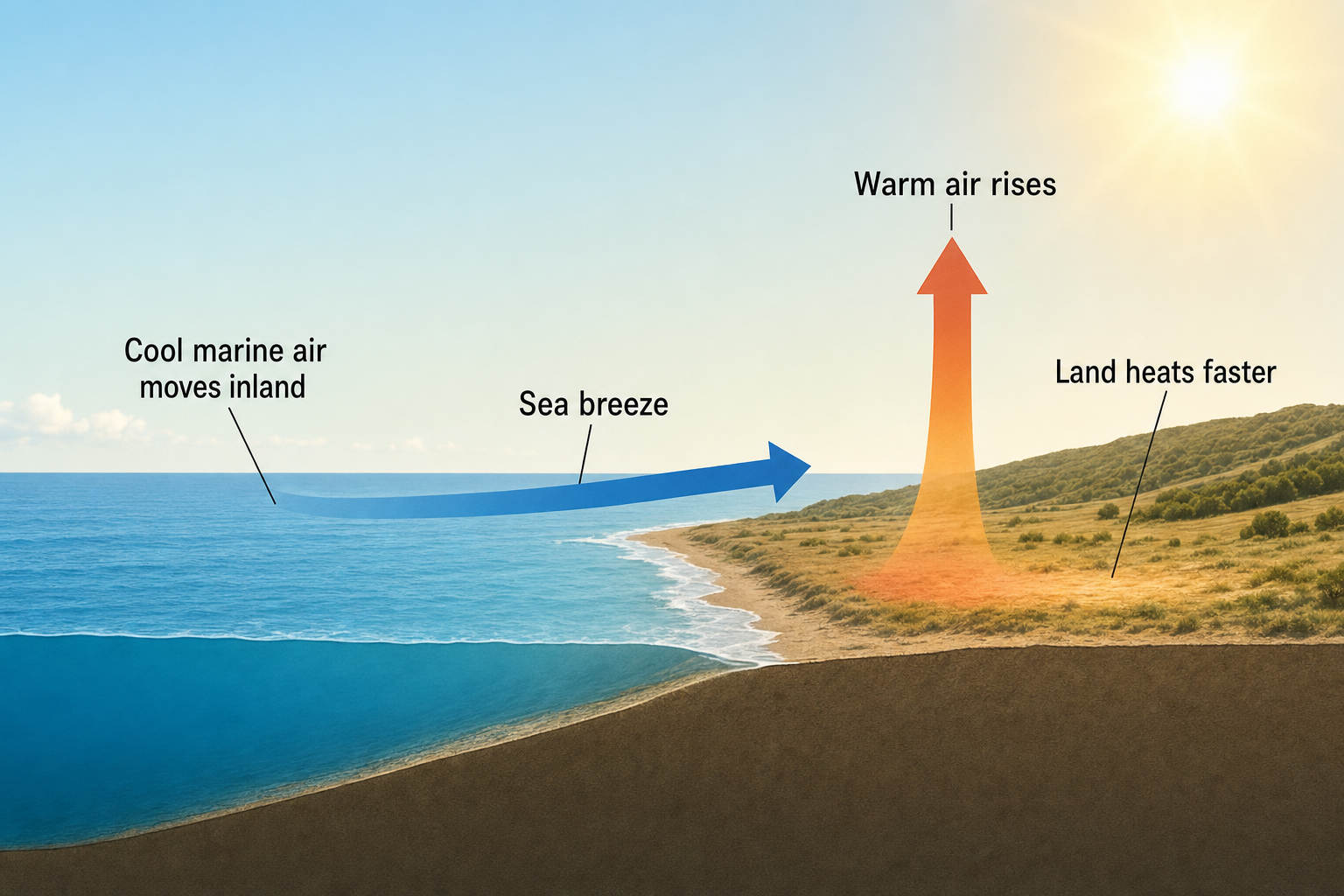
On classic sea-breeze days, the surf may be clean at 6 a.m., lightly textured by 9 a.m., and choppy by midday. This daily rhythm is one of the most important patterns in surf forecasting.
Evening Glass-Off and Late-Day Surf Windows
An evening glass-off happens when afternoon wind fades near sunset. It is less reliable than morning glass-off in many regions, but it can produce excellent surf when the sea breeze collapses quickly.
What Causes Evening Glass-Off Conditions?
During the afternoon, land begins to lose heat. As the temperature contrast between land and sea weakens, the pressure difference driving the sea breeze fades. If the larger weather pattern is not forcing strong wind, the local wind may become light or calm near sunset.
Sometimes the wind even turns lightly offshore after dark as the land cools below the ocean temperature. This can clean up leftover texture from the day, especially if the swell has enough period and organization.
Why Evening Glass-Off Is Less Predictable
Evening glass-off depends on the sea breeze dying before daylight runs out. If the afternoon wind was strong, the ocean surface may stay bumpy for a while even after the wind drops. A strong regional pressure gradient may keep the wind blowing right through sunset.
When it works, the evening glass-off can be excellent — crowds may thin and the surface can clean up noticeably. But compared with dawn, it is more sensitive to local weather conditions and harder to predict with confidence.
Daily Wind Cycles: Land Breezes, Sea Breezes, and Coastal Patterns
Many surf spots are shaped by daily thermal wind cycles driven by the fact that land heats and cools faster than water.
Land Breezes
A land breeze forms when air over land is cooler and denser than air over the ocean. The denser air flows seaward near the surface, often creating offshore wind for beaches facing the open ocean.
Land breezes are most common late at night and early in the morning. They are usually light, but in some regions they can become moderate when assisted by valleys, mountains, or strong inland cooling.
Sea Breezes
A sea breeze forms when land heats up during the day. Warm air rises over land, and cooler air from the ocean moves inland to replace it, creating onshore wind at the coast.
Sea breezes typically begin late in the morning and peak during the afternoon. They are strongest when skies are clear, inland temperatures are high, and the larger weather pattern is weak enough to let local heating dominate.
Coastal Wind Patterns and Local Geography
Coastlines are rarely simple. Headlands, cliffs, valleys, and even urban areas can bend or block wind. A beach around the corner from an exposed point may be messy while a protected cove stays clean. A point break may be offshore at the takeoff but cross-shore down the line.
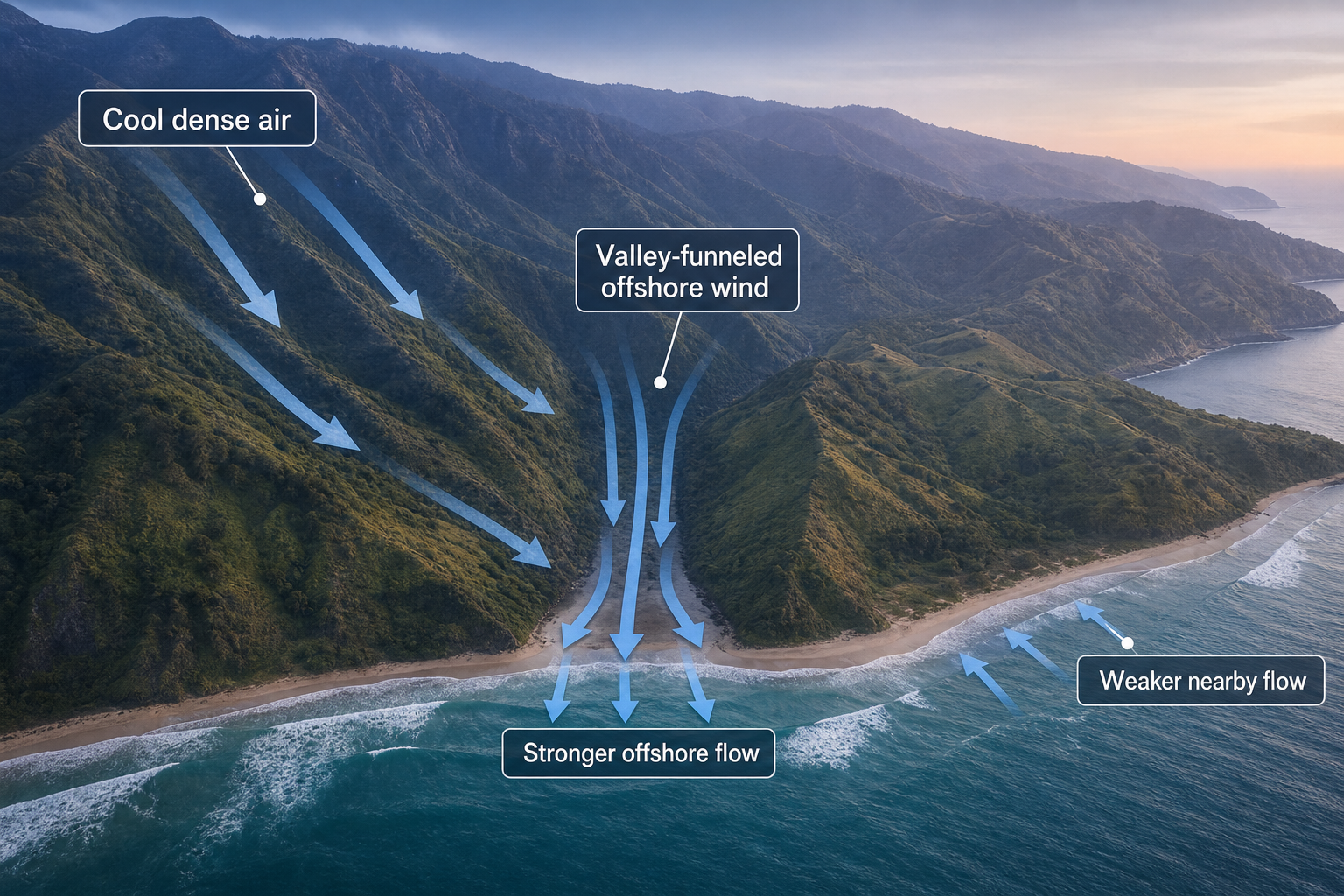
Local geography can also accelerate wind. Gaps in coastal mountains can funnel air toward the beach, while river valleys can guide land breezes offshore. Tall cliffs may create wind shadows near the shore while the open ocean outside remains textured.
This is why forecast models are useful but not perfect. A forecast may say “light onshore” while the actual lineup is clean because the beach is tucked behind a headland. Over time, surfers learn which wind directions each spot can handle. Scanning conditions from the cliff or carpark with a pair of compact binoculars before paddling out can save you from a session in poor conditions.
When Is the Best Time to Surf to Avoid Onshore Wind?
In many coastal areas, the best time to surf to avoid onshore wind is early morning. Dawn often offers the highest chance of light wind, offshore flow, or glassy conditions. This is especially true in regions with regular afternoon sea breezes.
Best General Surf Windows
- Dawn to mid-morning: Often the cleanest period before daytime heating creates onshore wind.
- Late evening: Sometimes clean if the sea breeze fades before dark.
- After a wind shift: Can be excellent when onshore wind turns offshore and the swell remains organized.
The exact timing varies by region and season. In some places, the onshore wind arrives by 8 a.m. In others, the surf may stay clean until early afternoon. During winter, weaker solar heating can reduce the sea breeze effect. During summer, strong inland heating can make onshore winds more frequent and earlier.
How to Forecast Onshore Wind Timing
To avoid onshore wind, look beyond the headline wind speed. Check the hourly trend, the direction shift, and the local sea-breeze pattern. If the forecast shows light offshore wind at sunrise but onshore wind by late morning, the clean window may only last a couple of hours.
Also pay attention to temperature contrasts. Hot inland conditions beside cooler ocean water often drive a stronger sea breeze. Cloud cover can delay land heating and help keep the morning clean for longer. A strong regional wind pattern can override the normal daily cycle entirely.
Keeping track of barometric pressure is another useful habit. A marine barometer can help you understand whether pressure is rising or falling, which often indicates what the wind is likely to do next. For real-time weather updates and marine alerts when you’re at the coast, a waterproof VHF marine radio gives you access to NOAA weather broadcasts wherever you are.
Weather Conditions That Favor Offshore Winds
Offshore winds occur when air flows from land toward the sea. The cause can be local cooling, regional pressure patterns, or terrain-driven air movement.
High Pressure Inland and Lower Pressure Offshore
Wind moves from higher pressure toward lower pressure. If pressure is higher over land than over the ocean, surface wind may blow offshore. This setup can produce clean surf over a wide area, especially when the pressure gradient is moderate rather than extreme.
Strong pressure gradients can create very windy offshore conditions, which may be good for powerful reef or point surf but too much for small beach-break waves.
Nighttime Cooling Over Land
Overnight cooling is one of the most common causes of light offshore wind. As land cools, dense air drains toward the coast and out over the water. This is the classic land breeze setup behind many clean morning sessions.
Offshore Flow After Weather Fronts
In some regions, wind turns offshore after a front passes. The exact direction depends on the coastline and the pressure system behind the front. These post-frontal offshore winds can clean up storm surf quickly, sometimes turning rough conditions into high-quality waves within hours.
Downslope and Valley Winds
In mountainous coastal regions, cool dense air can flow downhill toward the sea. These drainage winds can strengthen offshore flow at night and early morning. Valleys can focus the wind, making some beaches more offshore than nearby stretches of coast.
Weak Regional Pressure and Strong Local Cooling
Light synoptic wind allows local land-breeze effects to dominate. When the broader weather pattern is weak and the land cools efficiently overnight, offshore or glassy morning conditions become more likely. Heading out prepared for cool pre-dawn temperatures is worthwhile — a lightweight windbreaker jacket is useful for those early mornings when the offshore is blowing cold air off the land.
How Different Surf Breaks Handle Wind
Not all breaks respond to wind the same way. The same wind forecast can produce excellent waves at one spot and poor waves nearby.
Beach Breaks
Beach breaks are often sensitive to wind because shifting sandbars create peaks that rely on clean swell lines. Offshore wind can make them hollow and fast. Onshore wind can quickly turn them into disorganized peaks with short rides.
Some beach breaks enjoy light onshore wind in tiny surf because it adds a little push and surface energy. But for higher-quality conditions, offshore or light wind is usually better.
Point Breaks
Point breaks can handle wind well when the coastline provides shelter. A point may wrap swell into a protected corner where the wind is lighter than it is offshore. Side-offshore wind is often excellent because it grooms the wave along the direction it peels.
A bad wind angle, however, can ruin the down-the-line sections. A point that looks clean at the peak may become bumpy farther along the wall.
Reef Breaks
Reef breaks often benefit strongly from offshore wind because the seabed already creates a defined breaking pattern. Offshore wind can enhance barrels and keep the face open. Many reef breaks also handle stronger wind better than weaker beach breaks because the wave energy is more focused.
That said, crosswind texture still matters in hollow reef surf. Even a small change in wind angle may affect barrel shape, spray, and visibility inside the tube.
How to Read Wind in a Surf Forecast
To understand how wind affects wave quality, read the wind forecast in relation to your specific break. A forecast is only useful when combined with coastline orientation and local knowledge.
Step 1: Identify the Beach Orientation
Know which direction the beach faces. If a beach faces west, an east wind is offshore. If a beach faces south, a north wind is offshore. Curved coastlines require more careful interpretation because the wind angle can change over short distances. Tide timing also plays a role — a tide clock is a handy tool for tracking highs and lows at a glance, and a printed tide calendar lets you plan sessions weeks ahead.
Step 2: Compare Wind Direction to Wave Direction
Wind direction affects the surface, while swell direction affects how waves break. A perfect offshore wind will not help much if the swell direction misses the spot. Likewise, a great swell can be spoiled by bad local wind.
Step 3: Check Wind Strength
Light wind is usually less damaging than strong wind, even when the direction is not ideal. A light onshore breeze may only add minor texture, while a strong onshore wind can destroy wave quality. A light offshore wind is often perfect, while a strong offshore wind can make the surf physically challenging to catch.
Step 4: Look for Timing
Hourly timing matters. A forecast that says “offshore in the morning, onshore in the afternoon” is very different from a daily average. The best window may only last two or three hours, so plan accordingly.
Step 5: Account for Local Shelter
Headlands, dunes, piers, and cliffs can block or redirect wind. A spot with partial shelter may handle side-onshore wind better than an exposed beach. This is one of the reasons local observation remains valuable even with modern forecasts. Keep your phone protected when you’re checking apps at the water’s edge — a waterproof phone pouch is worth having in your bag. If you’re logging session notes in the field, a weatherproof notebook holds up to salt spray and wet hands in a way a regular notebook won’t.
Putting It All Together: The Best Wind for Surfing
The best wind for surfing depends on the wave, but the general hierarchy is straightforward. Light offshore wind is usually best. Side-offshore wind can be excellent, especially at points and reefs. Calm wind creates glassy conditions and is often ideal for performance surfing. Cross-shore wind is a mixed bag. Side-onshore and onshore winds generally reduce quality, particularly when they are strong.
Still, wind should never be judged in isolation. A perfect offshore breeze cannot fix a poor swell or a bad tide. A light onshore wind may be perfectly surfable if the swell is strong and the break is sheltered. Good surf forecasting means combining wind direction, wind strength, swell quality, tide stage, and local geography into one picture. For those who want to understand coastal conditions more deeply, a guide to reading nautical charts can sharpen your understanding of how seabed features, coastal shapes, and current patterns all influence what happens at your local break. A nautical training chart is also a practical reference for learning how to interpret coastal geography in a more structured way.
Wind is both the beginning and the final editor of a wave’s life. It builds swell out at sea, shapes the face at the coast, and decides whether the lip throws cleanly or crumbles into chop. Once you understand offshore, onshore, cross-shore, side-offshore, and side-onshore winds, surf forecasts become much easier to interpret. Watch the daily wind cycle, learn your local land and sea breeze patterns, and pay close attention to how each break responds to different conditions. The reward is simple: more clean waves, better timing, and fewer sessions ruined by wind you could have seen coming.