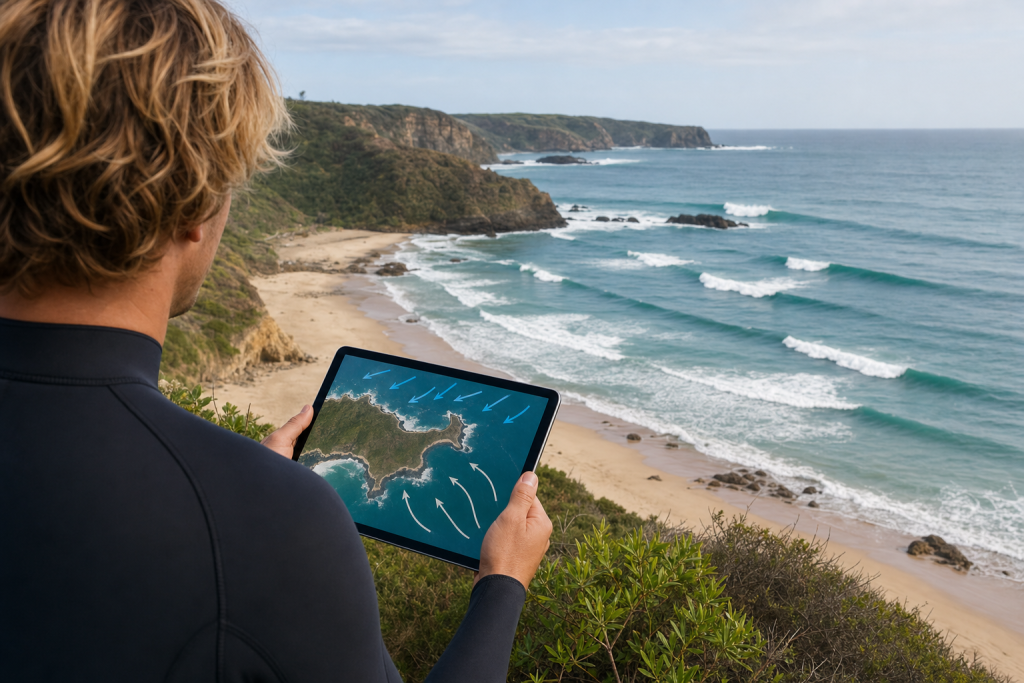
Surfing is one of those rare activities that can be a sport, a daily ritual, a travel adventure, and a lifelong connection to nature — all at once. At its simplest, surfing is riding moving water toward shore. At its deepest, it’s a study of waves, weather, coastlines, timing, patience, and community. Whether you’re thinking about your first lesson, returning after years away, or just trying to understand why surfers build their entire lives around the ocean, there’s far more here than a few seconds standing on a board. If you’re just getting started, a beginner surfboard can make those first sessions much more approachable. And don’t forget to protect your skin — a good reef-safe mineral sunscreen is something every surfer should have in their bag.
Why Surfing Is an Amazing Sport With Endless Depth
Surfing looks simple from the beach: paddle out, catch a wave, stand up, and ride. But anyone who has tried it knows that each of those steps contains layers of skill. That’s a big part of what makes surfing such a compelling sport. You can enjoy it as a beginner on a soft, rolling wave and still be challenged after decades in the water.
Surfing Combines Strength, Timing, and Feel
Surfing develops the whole body. Paddling builds shoulder strength, back endurance, and cardiovascular fitness. Popping up to your feet requires coordination and mobility. Riding a wave demands balance, leg strength, and quick reactions.
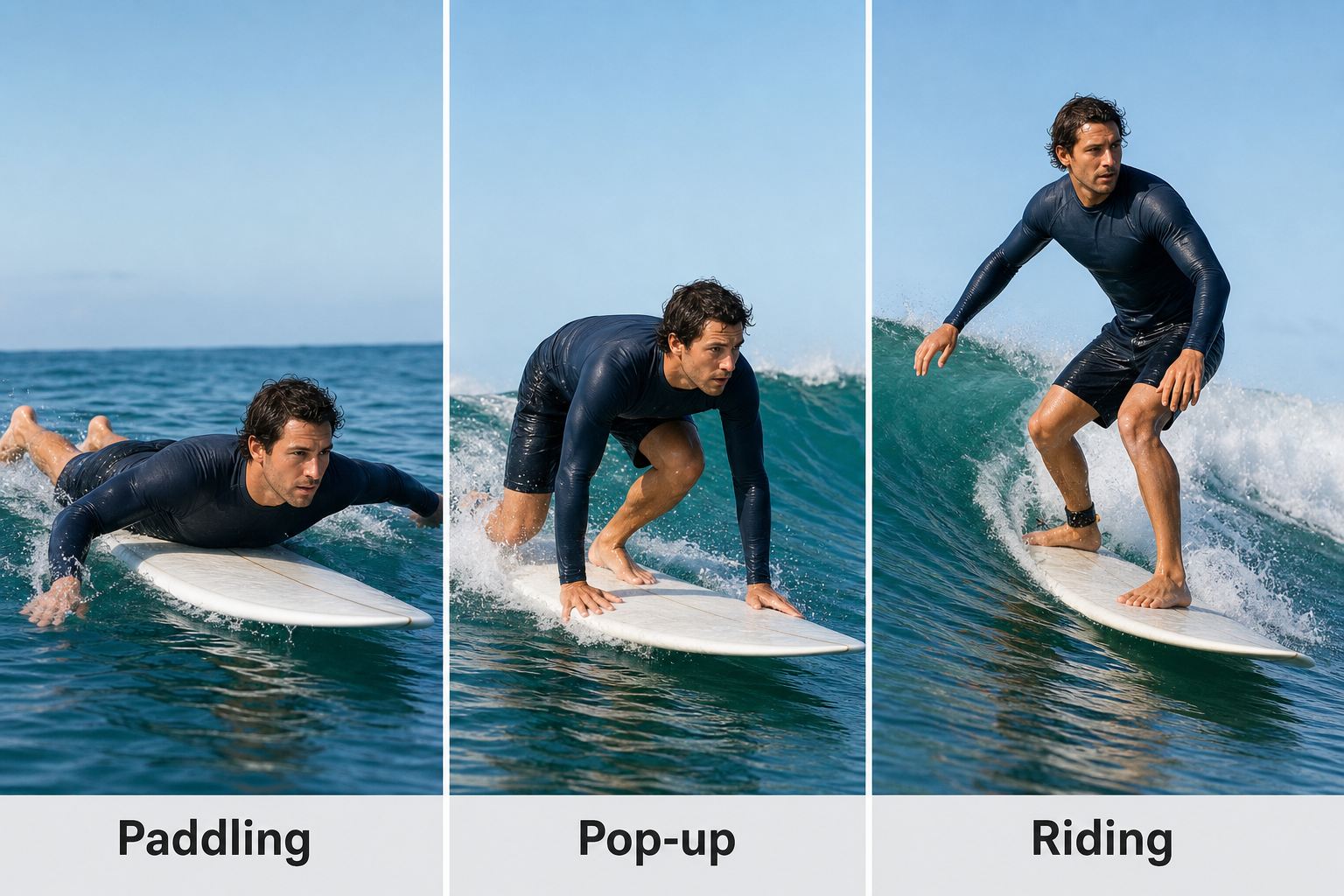
But the most interesting part of surfing isn’t purely physical. Great surfers develop feel — they learn when to paddle hard, when to glide, and when to wait. A wave is always changing, so surfing rewards awareness just as much as raw athletic ability.
Surfing Gives You Instant Feedback
In most sports, the playing field stays the same. In surfing, the playing field moves, breaks, reforms, and disappears. Every wave gives you feedback. Paddle too late and the wave passes under you. Stand too far back on the board and it stalls. Look down instead of down the line and your ride cuts short.
This constant feedback loop makes surfing addictive in the best possible way. Even small improvements feel meaningful, and catching one clean wave can make an entire session worthwhile.
Surfing Is Both Individual and Shared
Surfing is personal because no one else can ride the wave for you. You choose where to sit, which wave to go for, and how to draw your line. At the same time, it’s a shared experience — the lineup has rhythm, etiquette, and collective energy that shapes every session.
You can surf alone and feel completely absorbed in the ocean, or surf with friends and spend the next few years talking about that one memorable wave. That combination of solitude and community is a big part of surfing’s lasting appeal.
Surfing as Recreation: Why It Feels So Good
Surfing isn’t only a competitive sport. For most people, it’s recreation in the truest sense — a way to reset the mind, move the body, and spend meaningful time outdoors.
Surfing Pulls You Into the Present Moment
When you surf, you cannot multitask. You’re watching the horizon, feeling the board beneath you, and responding to the ocean in real time. The next set might arrive in five seconds or five minutes, and that uncertainty draws your full attention away from daily noise.
This is why even a short surf session can feel so refreshing. You might paddle out carrying stress from work or life, but the ocean demands your focus. By the time you come in, your mind is usually clearer.
Surfing Makes Exercise Feel Like Play
Many people struggle to stay consistent with exercise because it feels repetitive. Surfing solves that problem by making movement genuinely playful. Paddling, duck diving, and turning are all physically demanding, but they’re tied to the goal of catching waves rather than clocking reps.
Even imperfect sessions have real value. You might only catch a handful of waves, but you’ve still moved, breathed fresh air, and spent time in a dynamic natural environment. To keep your skills sharp between sessions, a surf balance board is a useful training tool you can use at home.
Surfing Connects You to Seasons and Local Nature
Surfers notice things that most beachgoers miss. They learn which months bring bigger swells, which winds clean up the surf, and which tides improve a particular sandbar. Over time, surfing turns the local coastline into a living map.
That kind of connection makes regular surfing feel richer. You’re not just visiting the beach — you’re learning its moods.
Surfing Culture: The Community Behind the Waves
Surfing has developed a culture shaped by coastal life, travel, craft, and local identity. It varies from place to place, but certain themes appear almost everywhere: respect for the ocean, appreciation for a good wave, and recognition that local knowledge genuinely matters.
Surfing Culture Is Built Around Shared Experience
Surfers often remember sessions by the details — the morning light, the first clean set, or the unexpected wave that stood up perfectly. These shared memories create real bonds. Two people from completely different backgrounds can connect immediately through the experience of chasing waves.
Surf culture also has its own vocabulary. Terms like lineup, peak, shoulder, and closeout describe things surfers see and feel in the water. Learning the language helps beginners understand both the sport and the community around it.
Surfing Etiquette Is Part of the Culture
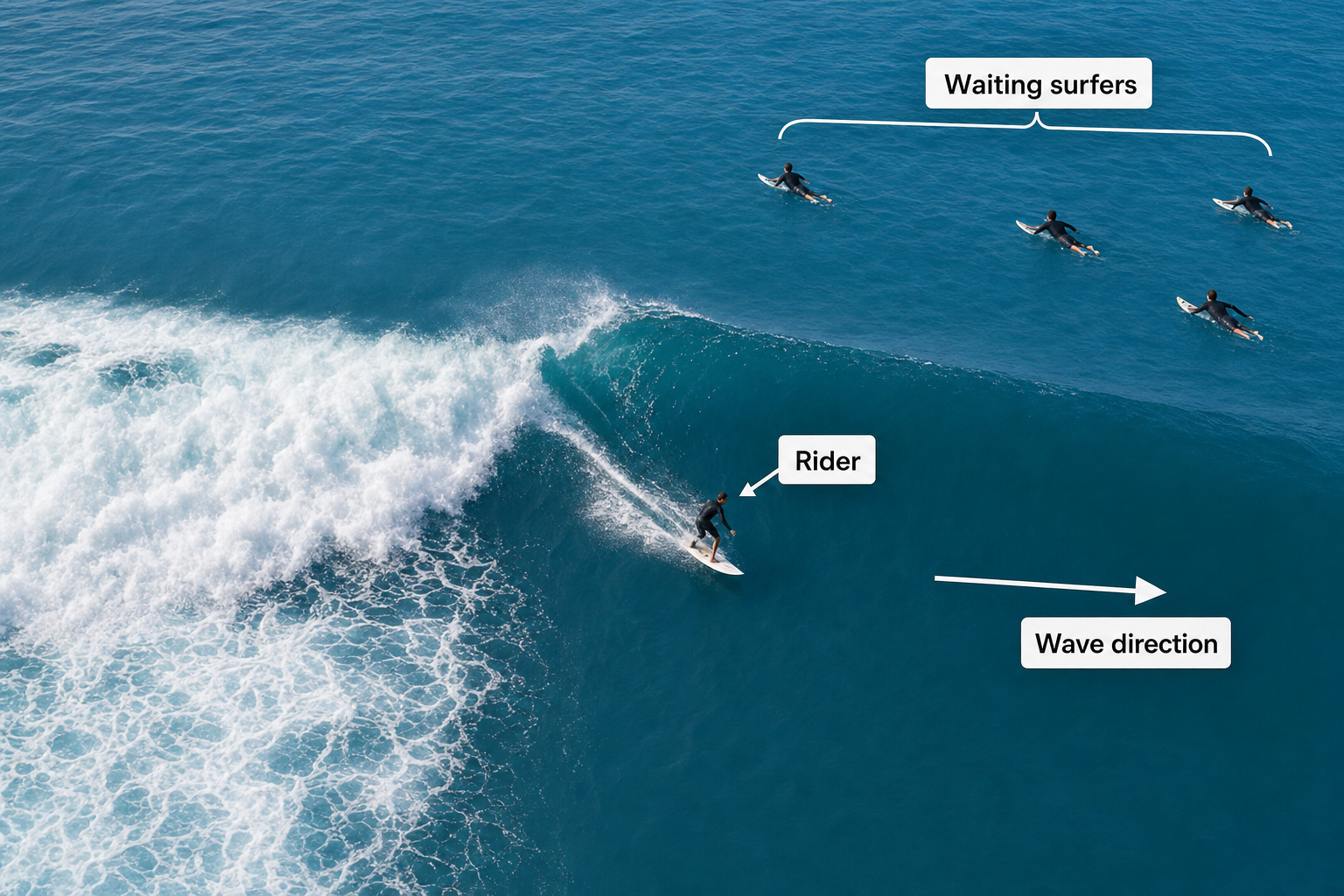
Surfing works best when people understand the basic order of the lineup. The surfer closest to the breaking part of the wave generally has priority. Paddling around a group to steal the inside position is frowned upon, and dropping in on someone already riding is considered poor form everywhere.
These aren’t just arbitrary rules. They’re how surfers share a limited resource. A wave can usually only be ridden well by one person at a time, so respect and spatial awareness are essential.
Surfboards Are Part of Surfing’s Creative Culture
Surfing culture is also shaped by board design. Longboards, shortboards, fish boards, and mid-lengths all create very different experiences. A longboard encourages glide and footwork. A shortboard favors sharper, more vertical turns. A fish shape can make smaller waves fast and fun.
Board choice is one reason surfing stays interesting over the long term. Changing boards can make a familiar break feel like an entirely new experience. A foam soft top longboard is a great option for beginners and for experienced surfers who want to have more fun in smaller surf.
Surfing as Adventure: Waves Make Every Coastline Different
Surfing naturally encourages exploration. Because waves depend on swell direction, wind, tide, and geography, different beaches can behave completely differently on the same day. One spot may be flat while another is head-high and perfectly groomed.
Surfing Turns Travel Into Discovery
Surf travel doesn’t have to mean flying across the world. It can be as simple as checking a nearby beach, driving to a different point break, or walking farther down the sand to find a better sandbar. For longer trips, packing smart matters — a waterproof dry bag backpack keeps your gear protected from sand and salt on the way to and from the water.
For those who do travel farther, surfing offers a unique way to experience a place. You notice the coastline, the rhythm of the tides, and the habits of local surfers in a way that most tourists never do. You come to understand a destination through its waves.
Surfing Rewards Curiosity
Curious surfers improve faster because they ask better questions. Why was the left better at low tide? Why did the wind ruin one beach but clean up another? Why did yesterday’s long-period swell create powerful waves while today’s shorter-period swell is playful and forgiving?
These questions turn surfing into an ongoing investigation. The more you learn, the more interesting every session becomes.
Why It’s Never Too Late to Start Surfing
Many people assume surfing is only for those who started young. That’s simply not true. While early experience helps with certain athletic instincts, adults can absolutely learn to surf. The key is choosing the right waves, the right equipment, and the right expectations.
Beginner Surfing Is About Wave Choice, Not Bravery
A beginner doesn’t need powerful surf. In fact, smaller, slower waves are usually far better for learning. Soft whitewater helps new surfers practice paddling, board control, and pop-ups without needing perfect timing on every attempt.
A larger board also makes a huge difference. Foam boards and high-volume longboards paddle easily, catch waves early, and offer stability underfoot. They let beginners experience the genuine fun of surfing before worrying about advanced technique. A soft top foam surfboard that comes with fins and a leash is a solid all-in-one setup for anyone just starting out. You’ll also want to apply surf wax to any hard-top board to improve your grip while riding.
Adults Can Learn Surfing Step by Step
Adult learners often bring patience, focus, and a genuine willingness to study. Those traits are valuable in surfing. The sport has a real learning curve, but it becomes manageable when broken into stages:
- Learning how to handle the board in shallow water
- Catching whitewater waves consistently
- Angling along small unbroken waves
- Reading peaks and paddling into waves earlier
- Turning with control and choosing better lines
Progress doesn’t need to be fast to be rewarding. A single small breakthrough — a cleaner pop-up, a better angle, a longer ride — can completely change how surfing feels.
Getting Back Into Surfing Can Be Deeply Satisfying
Returning surfers often worry that they’ve lost too much fitness or timing. Some rust is normal. Paddling strength fades, wave judgment slows, and confidence can take a few sessions to rebuild. Starting again in a full wetsuit can also make early sessions more comfortable, especially in cooler water, and helps remove one barrier to getting back in the ocean.
The good news is that past experience rarely disappears completely. Your body remembers more than you expect. Choosing a forgiving board, picking manageable conditions, and giving yourself a few sessions to readjust can bring the feeling back faster than you think.
Why Surfing Is More Fun When You Understand Waves
Surfing becomes far more enjoyable when the ocean stops looking random. Waves will still surprise you, but patterns begin to appear. You start to see where they’ll break, which ones will run, and which ones will shut down.
How Surfable Waves Are Made
Most surfable waves begin as wind energy far out at sea. Strong wind blowing over open water creates ripples, then chop, then organized swell. The size and quality of that swell depend on three major factors:
- Wind speed: stronger wind generates larger waves.
- Fetch: the distance wind blows over open water.
- Duration: how long the wind blows consistently in one direction.
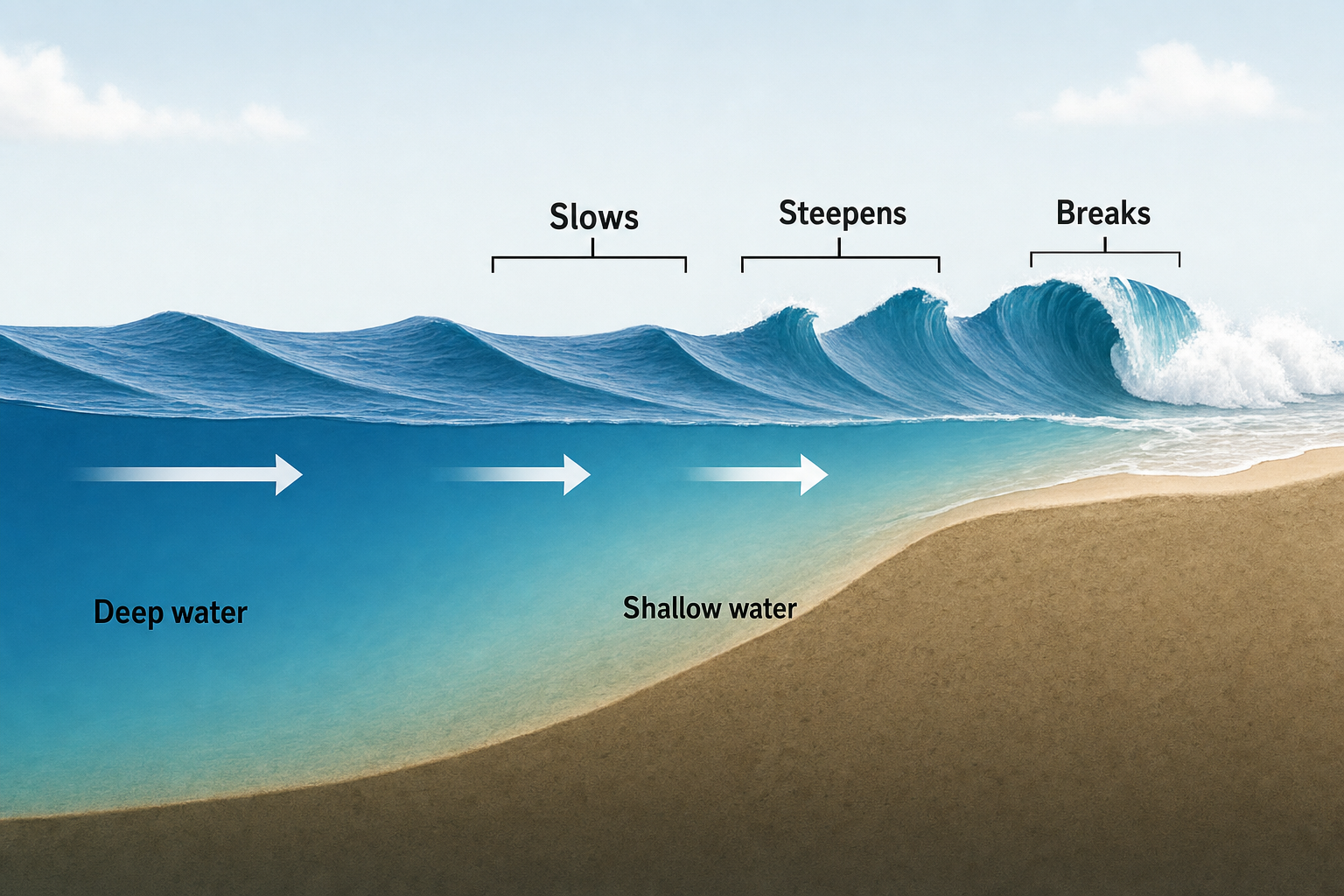
As swell travels away from the storm, it becomes more organized and sorted by period. Longer-period waves travel faster and carry more energy. When that swell reaches shallow water near shore, it slows down, steepens, and eventually breaks.
Why Wave Period Matters
Wave period is the time between passing wave crests, measured in seconds. It’s one of the most important numbers in any surf forecast.
A three-foot swell at 8 seconds may produce weak, crumbly surf. A three-foot swell at 16 seconds can produce much more powerful and defined waves, especially at spots that focus long-period energy. This is because longer-period swell reaches deeper into the water column and begins interacting with the seafloor much earlier.
As a general guide:
- Short-period swell (under 10 seconds): often local wind swell, weaker, and less organized.
- Mid-period swell (10–14 seconds): can be fun, workable, and consistent at many breaks.
- Long-period swell (15+ seconds): often more powerful and lined up, but more selective about which spots it works at.
Reading Waves in the Lineup
Reading waves means predicting what a wave will do before it breaks. Beginners often paddle for waves too late because they only react once the wave is already steep. Experienced surfers watch the water farther out and make their move earlier.
Key things to look for include:
- The peak: the first steep section of the wave where it begins to break.
- The shoulder: the unbroken face running away from the breaking section.
- The closeout: a wave that breaks all at once with no open face to ride.
A good wave usually has a defined peak and a shoulder that continues down the line. If the whole wave stands up evenly along its length, it’s likely to close out. If one end rises first, that usually indicates a right or left breaking wave.
Surf Forecast Basics: Waves, Wind, and Tides
A surf forecast isn’t a guarantee. It’s an educated prediction based on swell models, wind forecasts, tide charts, and local knowledge. Learning to read forecasts helps you choose better sessions and avoid wasting a drive to the wrong beach.
Swell Height, Direction, and Period
Surf forecasts typically show swell height, swell direction, and wave period together. These three numbers work as a system.
Swell height tells you the size of the swell in deep water, not necessarily the exact breaking wave height at the beach. Local seafloor shape can make breaking waves smaller or significantly larger than the open-ocean swell reading suggests.
Swell direction tells you where the swell is coming from. A beach must be exposed to that direction to receive it. A south-facing beach may miss a north swell entirely, while a west-facing beach could be wide open to it.
Wave period tells you how much energy the swell is carrying. Longer periods generally mean stronger waves and more dramatic interactions with the seafloor as swell moves into shallow water.
Wind Can Make or Break a Session
Wind is often the deciding factor between clean surf and messy surf. Offshore wind blows from land toward the ocean, holding up the wave face and creating smooth, groomed conditions. Onshore wind blows from the ocean toward land, making waves bumpy, crumbly, and difficult to read. Wearing a long-sleeve rash guard with UV protection is a good way to stay comfortable during longer sessions in any wind or sun conditions.
Light wind is usually best, especially for beginners. Strong offshore wind can make waves look beautiful but harder to paddle into because it pushes back up the face. Strong onshore wind usually means it’s time to pick a different spot or a different day.
Tides Can Completely Change a Surf Spot
Tides change the depth of water over sandbars, reefs, and rock shelves. Because waves break when they feel the bottom, the tide level can transform a spot from great to terrible — or vice versa — within a couple of hours.
Some beach breaks work best at low tide when waves break over shallow sandbars. Others need mid or high tide to cover rocks or to soften the wave shape. Point breaks may improve when the tide creates just the right balance of depth and speed.
The key takeaway is that “best on the push” or “works at mid tide” is local knowledge. Keep notes on your sessions and compare them with tide charts over time. Patterns will emerge, and you’ll start choosing your sessions with much more precision.
How Coastal Geography Shapes the Surf
Coastal geography is one of the most fascinating elements of surfing. The same swell can produce long, peeling waves at one location, heavy closeouts at another, and almost nothing just around the corner. The difference often comes down to the shape of the coast and seafloor.
Beach Breaks and Sandbars
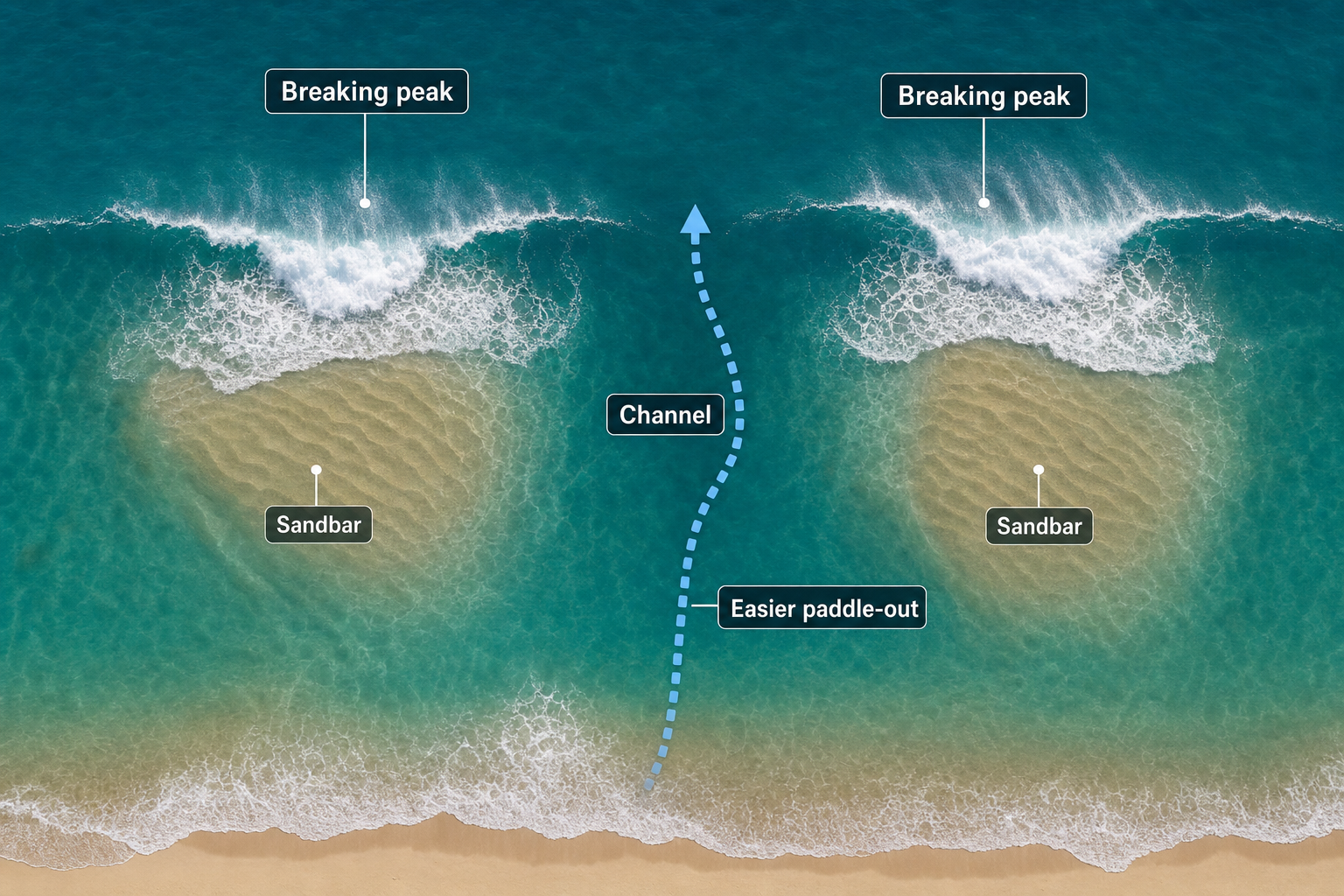
Beach breaks form over sand and can change frequently. Storms, currents, and seasonal swell constantly move sandbars around. A beach break may be excellent for a month and then shift dramatically after one big storm.
Sandbars create peaks where waves focus and break, while channels between bars allow surfers to paddle out more easily. This shifting quality makes beach breaks unpredictable, but also consistently interesting.
Point Breaks and Long Peeling Waves
Point breaks occur when waves wrap around a headland or coastal point and break along a curved section of shoreline. When swell direction and tide align, point breaks can produce long, organized rides that give surfers plenty of time to work on their technique.
Because the wave breaks in a more predictable line, point breaks are excellent places to study wave shape — you can watch how the peak moves, how sections speed up, and how surfers position themselves for maximum time on the wave.
Reef Breaks and Defined Wave Shape
Reef breaks form over rock, coral, or other hard seafloor. Because the bottom doesn’t shift like sand, reef breaks often have more consistent shapes from session to session. They can create powerful, hollow, or very clean waves depending on depth and swell direction.
Reef breaks also illustrate how precise underwater geography can be. A small change in swell angle or tide level can turn a perfect wave into one that’s too fast, too slow, or too shallow to work properly.
Headlands, Islands, and Swell Windows
Not every beach receives every swell. Headlands, islands, and offshore reefs can block or filter wave energy. Surfers often refer to the exposed angle of a beach as its swell window. If the incoming swell direction falls within that window, the beach receives waves. If not, it may stay flat while a nearby break fires.
This explains why two beaches just a few kilometers apart can look completely different on the same day.
Submarine Canyons and Wave Focusing
Underwater canyons can concentrate swell energy toward certain breaks. Deep water allows swell to travel quickly, while shallower surrounding areas slow it down. This contrast bends wave lines through a process called refraction, and it can make some spots receive noticeably more swell energy than the surrounding coastline.
Some well-known surf zones benefit directly from this effect, with waves arriving larger and more organized than you’d expect based on the open-ocean forecast alone.
Useful Resources for Learning Surf Forecasting
Surf forecasting gets easier when you combine several sources. Forecast apps are a helpful starting point, but the most experienced surfers also check wind models, buoy readings, tide charts, and live cameras — then compare all of it against what they actually see at the beach.
Surf Forecast Platforms
Surfline is one of the most widely used surf forecasting platforms. It offers spot-specific forecasts, live cameras at hundreds of locations, tide information, wind predictions, and expert regional analysis. It’s especially useful for comparing forecast conditions with what’s actually happening on camera before you make the drive.
Surf-Forecast.com provides global spot forecasts with swell height, period, wind, and tide data in one view. It can be particularly useful for travel planning or checking regions with fewer camera options.
Coastalwatch is a strong option in Australia, offering surf reports, cameras, and regional forecasts. Regional platforms like this are often valuable because they include local context that global apps can miss.
Wind and Swell Visualization Tools
Windy is excellent for visualizing wind, swell, pressure systems, and developing storms. It allows you to compare multiple forecast models and watch how weather patterns will generate surf days before the swell actually arrives.
Windguru is widely used for wind sports and surfing, presenting wind speed, direction, swell height, and period in a compact table format. Once you get familiar with the layout, it’s very quick to scan.
PredictWind is another useful wind forecasting tool, particularly in coastal areas where wind shifts can change the quality of a session very quickly.
Buoy Data and Marine Weather Services
Government marine data is one of the most reliable ways to understand what’s actually happening offshore, not just what the models predict.
In the United States, the National Data Buoy Center (NDBC) provides real-time buoy observations including wave height, dominant period, swell direction, and wind. The National Weather Service also publishes marine forecasts and coastal weather warnings. In Australia, the Bureau of Meteorology provides marine forecasts and tide predictions. In the United Kingdom, the Met Office offers marine forecasts and inshore waters information, and in New Zealand, MetService provides coastal forecasts and swell data.
Buoy readings are especially helpful because they show real swell, not model projections. If a forecast calls for a new swell to arrive at noon, a nearby buoy can tell you whether it’s running early, late, or weaker than expected.
Resources for Learning How to Read Waves
Forecasting helps you decide when to surf. Wave reading helps you once you’re out there. The best learning comes from time in and around the ocean, but books and coaching can meaningfully speed up the process.
Books on Waves and Surf Science
Surf Science by Tony Butt and Paul Russell is a well-regarded resource for understanding how waves form, travel, and break. It explains surf forecasting in a way that directly connects ocean science to real surf sessions. The Surfer’s Guide to Waves, Coasts and Climates, also by Tony Butt, is another solid read for anyone who wants to understand swell generation, coastal geography, and global surf patterns in more depth. Regional surf guides can also be worth seeking out — they often describe swell windows, seasonal patterns, and the specific conditions different coastlines favor.
Video Lessons and Online Surf Coaching
High-quality video tutorials can make wave reading much easier to understand visually. Look for content that shows real surf from the beach and explains why a surfer paddles for one wave but lets another pass. Coaching platforms like Surf Simply, Barefoot Surf, and Ombe Surf offer useful explanations of positioning, takeoff timing, and reading wave shape. The best videos use slow motion and clear real-world examples.
Local Surf Schools and Experienced Surfers
A good surf coach can shorten the learning curve significantly. In-person feedback is valuable in ways video can’t fully replicate — small changes in positioning or timing can make a big difference, and a coach can explain exactly why you missed a wave or why you’re sitting in the wrong spot. Experienced local surfers are also a valuable source of knowledge. Simple observations like “this bank works better on the mid tide” or “the south swell closes this beach out” can save you months of trial and error.
A Simple Routine for Better Surf Sessions
You don’t need to become a meteorologist to make better decisions about when and where to surf. A straightforward pre-session routine can improve your success rate quickly.
Check the Forecast Before You Go
Start with the predicted swell height, period, and direction. Ask whether your chosen beach is exposed to that swell direction. Then check the wind — light offshore or calm wind is usually a good sign, while strong onshore wind often means choppy, disorganized surf. Next, check the tide. If you already know the spot’s preferred tide, use that. If you don’t, make a note and build that knowledge over time.
Compare the Forecast With Live Data
Before you head out, compare the forecast with any available live cameras. Then check nearby buoys to confirm swell size and period. If the buoy readings are rising, the swell may still be filling in. If they’re already dropping, the best window may have passed.
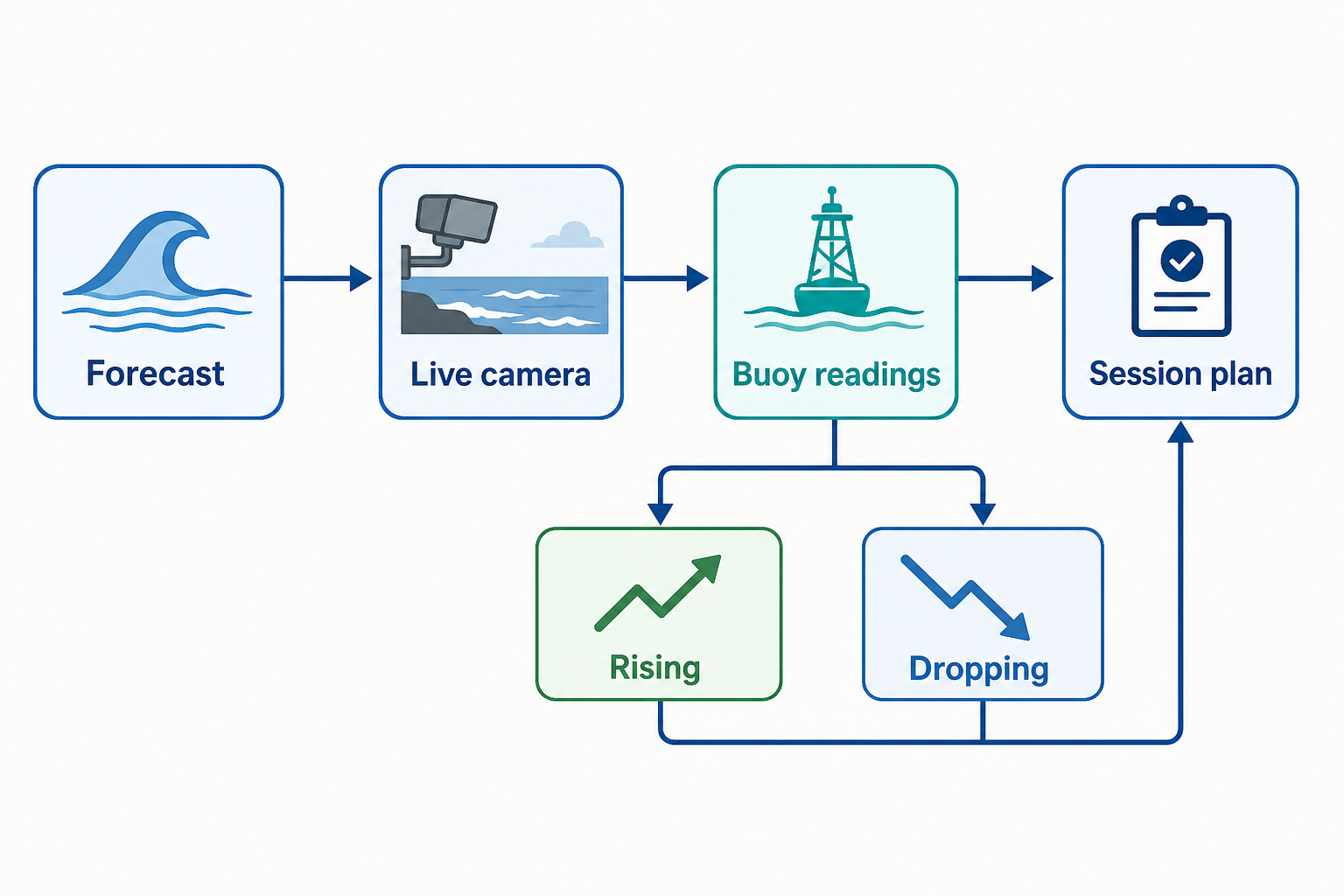
This habit teaches you which forecasts are reliable for your local area, and your own observations become part of your forecasting toolkit over time.
Watch the Ocean Before Paddling Out
Spend a few minutes on the beach observing before you paddle out. Look for where waves peak consistently, where most surfers are sitting, and which waves offer the longest open shoulders. Notice whether sets arrive in groups or as single waves. Watch whether the changing tide is making the waves fuller or more hollow.
This short pause can change your whole session. Instead of paddling out randomly, you enter the water with a clear plan. Having the right gear ready helps too — a reliable surfboard leash keeps your board close after a wipeout, and a surf changing poncho makes post-session transitions out of your wetsuit much easier in a car park or on the beach. For colder water, a pair of neoprene surf booties can keep your feet warm and protected. And a set of boardshorts is the obvious warm-water alternative when a wetsuit isn’t needed. It’s also worth keeping a compact waterproof first aid kit in your car for cuts from fins or reefs, and a waterproof phone pouch is handy for keeping your phone safe while you check the surf or snap a few shots from the water’s edge.
Why Surfing Stays Amazing for a Lifetime
Surfing remains fascinating because it never becomes fully predictable. You can study swell charts, learn every tide cycle, and know your local break intimately — and the ocean will still surprise you. That’s not a flaw in the sport. It’s the heart of the experience.
For beginners, surfing offers the genuine joy of small victories. For experienced surfers, it offers endless refinement and the pursuit of better waves. For returning surfers, it offers a path back to a feeling they may have missed for years. And for anyone willing to invest time in understanding waves, weather, tides, and coastlines, surfing becomes something much larger than riding a board. It becomes a lifelong conversation with the sea — one that rewards curiosity, patience, and a willingness to keep showing up.