
Dangerous Waves
Recognize hazardous wave types, extreme power, unpredictable sections, shallow water, currents, and other conditions that raise surfing risk.
Explore the shapes, speeds, power levels, breaking patterns, and hazards of different surfing waves, from soft peeling walls to hollow barrels, wedges, slabs, and extreme conditions.
Recognize hazardous wave types, extreme power, unpredictable sections, shallow water, currents, and other conditions that raise surfing risk.
Understand steep, high-speed waves and the positioning, equipment, line choice, and timing required to surf them successfully.
Learn how barrels form, what makes them open or close out, and how tide, swell period, angle, and bottom contours affect tube quality.
Learn why waves peel left or right, how sections connect, and what swell angle and bottom shape create long, rideable walls.
Explore the rare alignment of swell, wind, tide, and bathymetry that produces exceptionally clean, powerful, and makeable surf.
Study thick, powerful waves created by abrupt depth changes, including the forecasting, equipment, positioning, and risk management they demand.
Explore mellow, forgiving waves and learn how board choice, positioning, and technique help generate speed on weaker surf.
Understand converging wave energy, reflected swell, split peaks, and the coastal structures that create wedges and A-frame takeoffs.
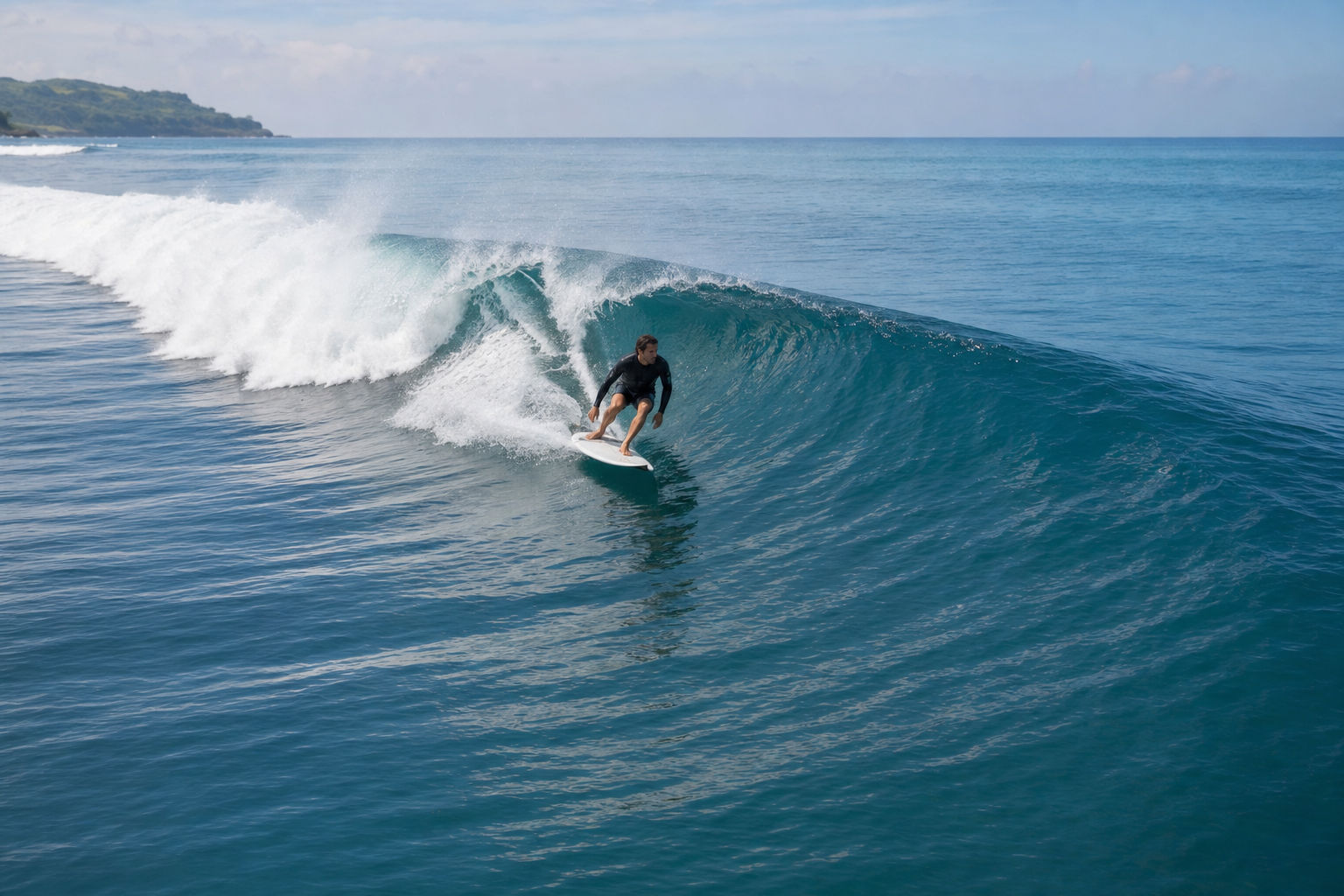
Peeling waves are what surfers dream about. A peak breaks first, then the lip runs steadily down the line while an open face stays clean in front of…
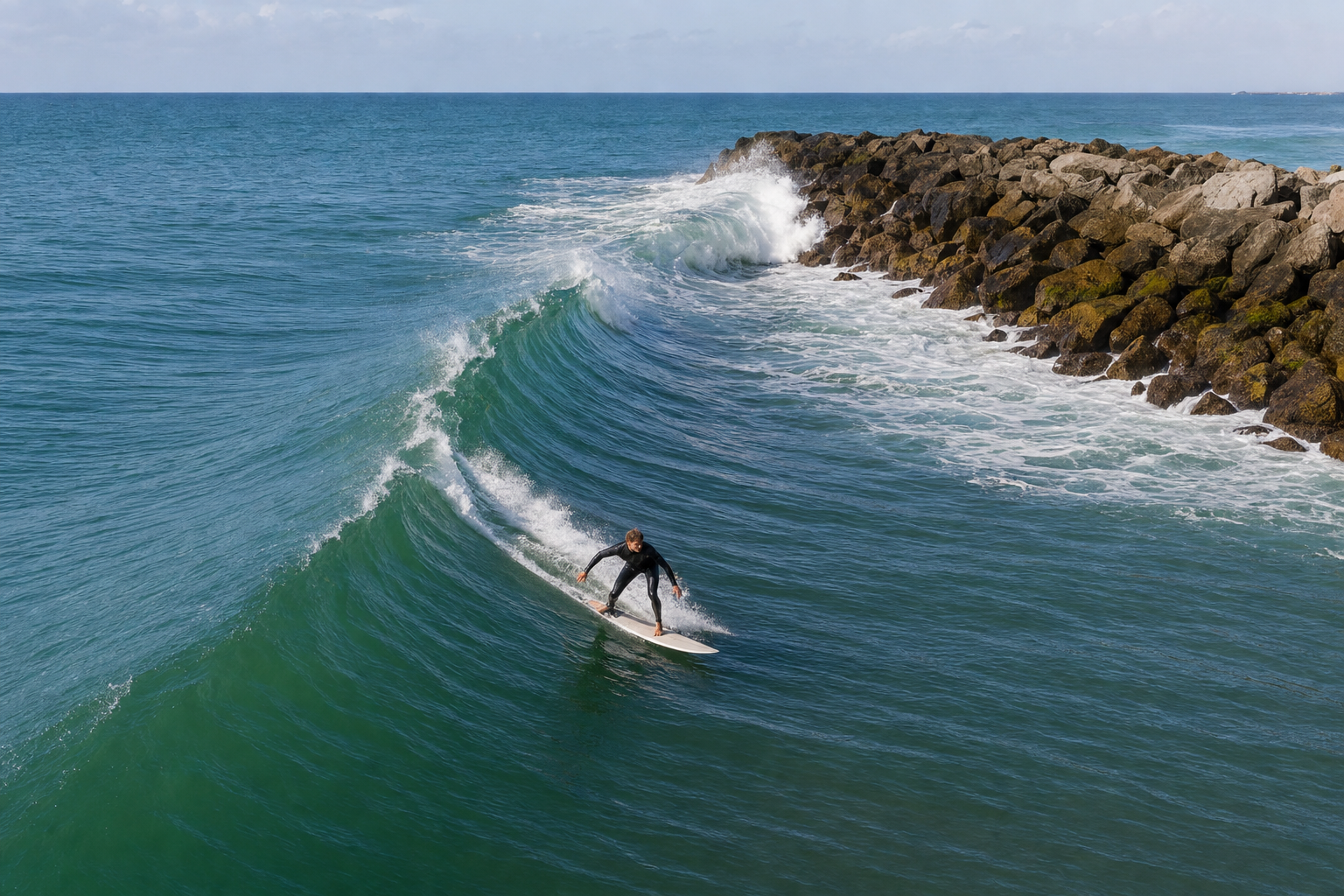
Wedge waves are some of the most exciting waves in surfing. Instead of arriving as a simple line of swell, a wedge forms when energy is focused into…

An A-frame wave is one of surfing’s most exciting and versatile wave shapes — a peak that breaks both left and right from the same takeoff zone. For…

A “perfect wave” looks simple from the beach: a clean wall stands up, throws a smooth lip, and peels down the line at exactly the speed a surfer…

Some waves crumble in one big curtain of whitewater, while others peel cleanly for hundreds of meters like a zipper opening across the ocean. That peeling shape is…