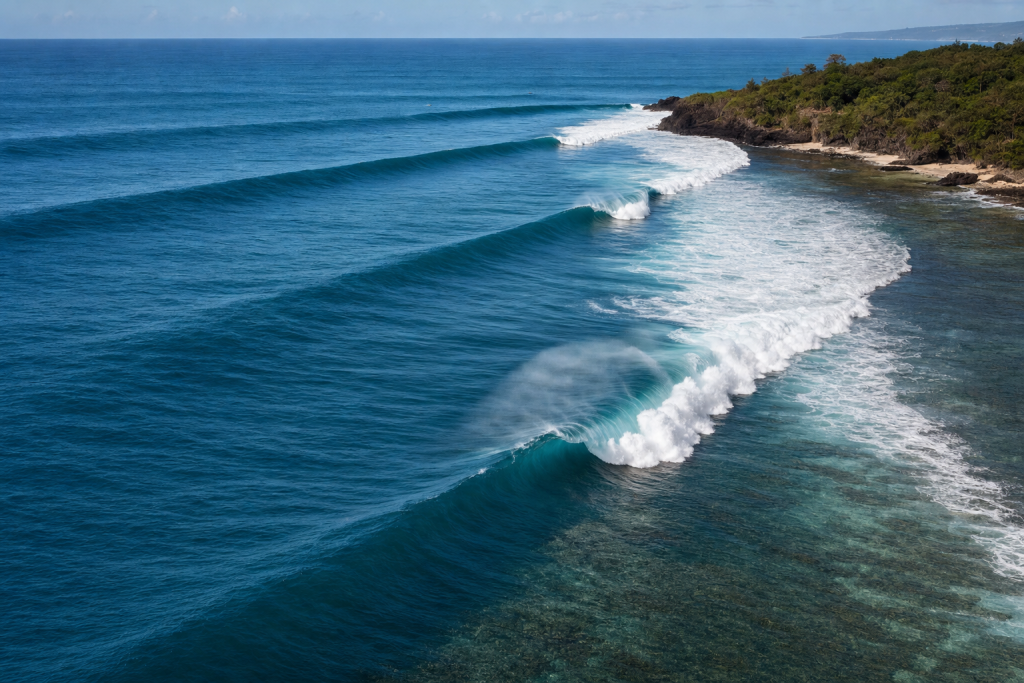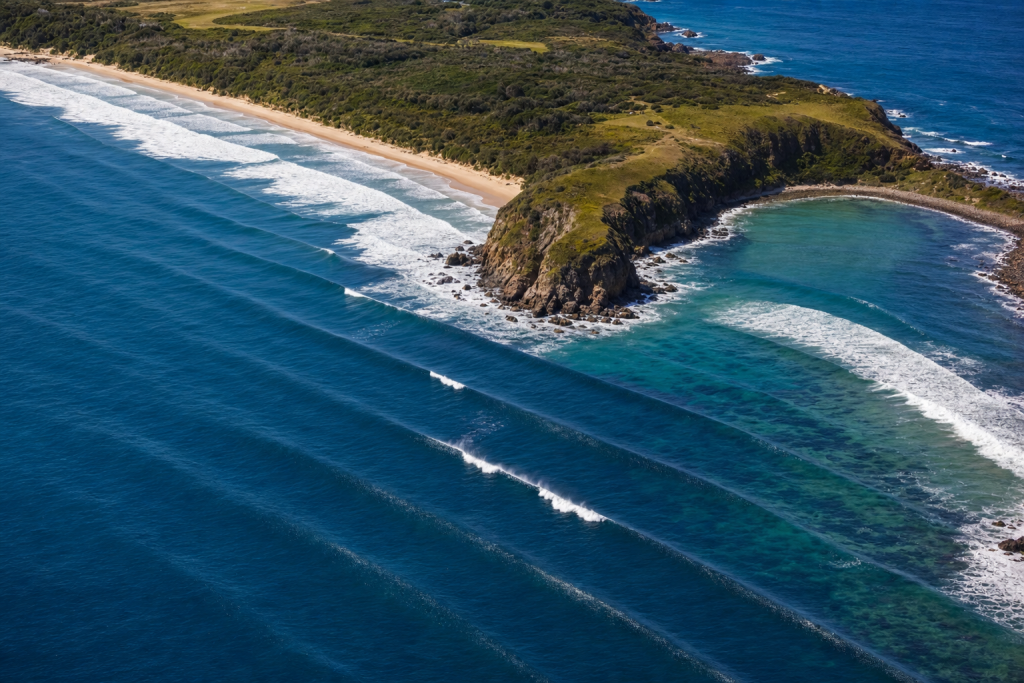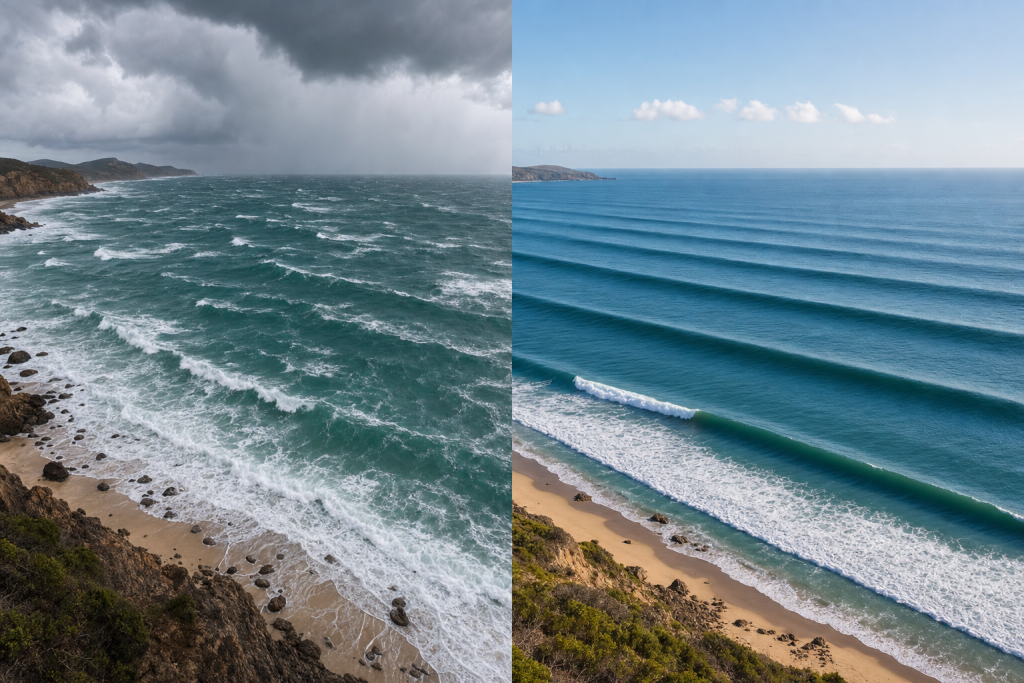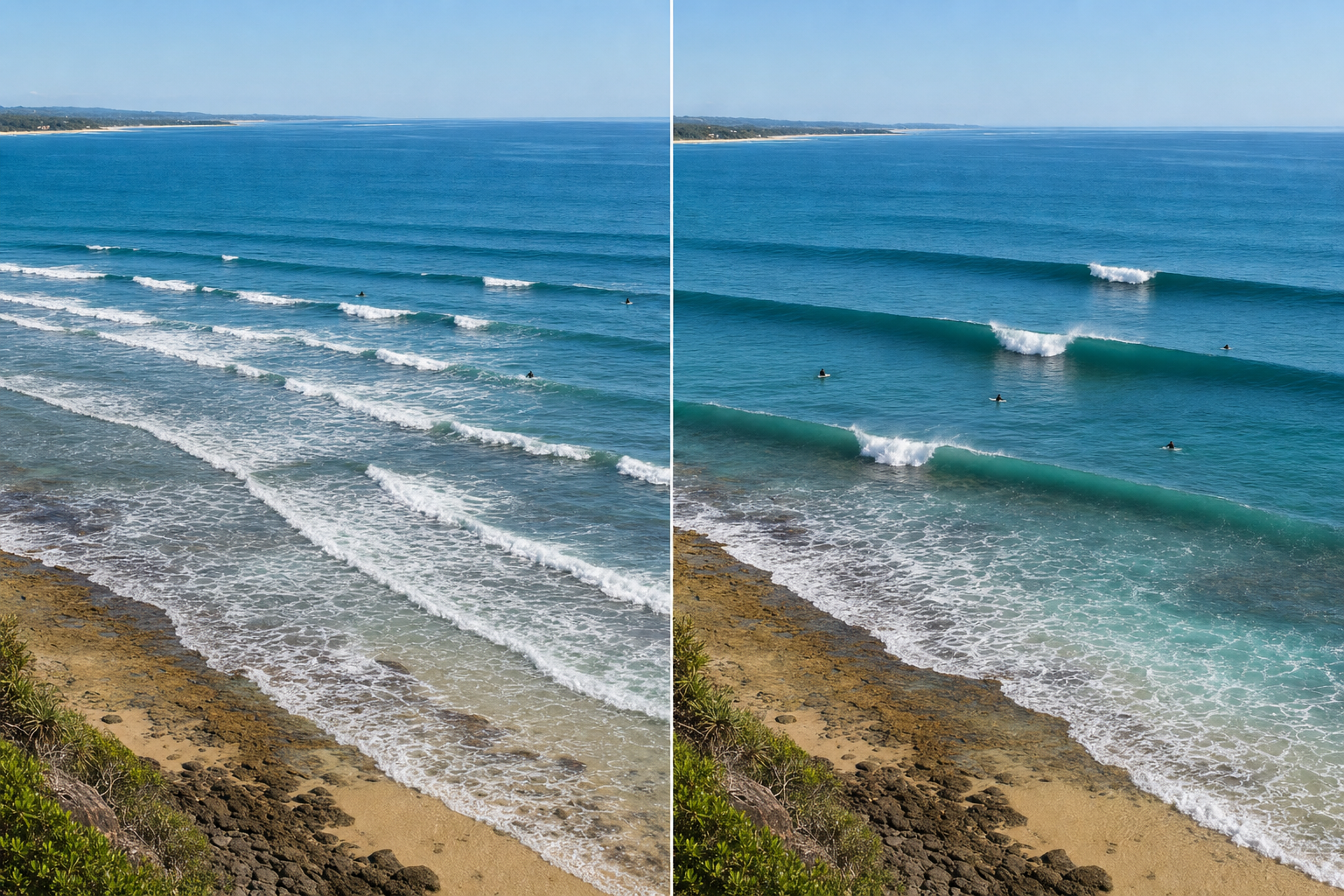
Swell period is one of the most important numbers in a surf forecast, yet it’s often overlooked. Most surfers look first at swell height, but the seconds between waves can tell you just as much — and sometimes more — about how the surf will actually break. A 3-foot swell at 16 seconds can produce powerful, well-spaced waves, while a 5-foot swell at 6 seconds may be weak, jumbled, and difficult to surf. Learning to read swell period helps you interpret forecasts more accurately, choose the right spots, and predict whether conditions will be clean and powerful or messy and inconsistent. If you want to go deeper on this topic, this surf forecasting guide covers swell, weather patterns, and ocean behavior in detail worth reading.
Understanding swell period also makes you a better observer at the beach. Once you know what to look for, you can start connecting what the forecast says with what you’re actually seeing in the water. Tools like a waterproof phone pouch let you check buoy data and forecast apps from the sand or the lineup without worrying about your device. The more you observe and record, the better your read on local conditions becomes over time.
What Swell Period Means in Surf Forecasting
Swell period is the time, measured in seconds, between two successive wave crests. If one crest passes a buoy and the next crest passes 12 seconds later, the swell period is 12 seconds.
In surfing, swell period is discussed alongside swell height and direction. Together, these three characteristics describe the basic shape and behavior of incoming surf:
- Swell height: the size of the swell in deep water.
- Swell period: the time between wave crests.
- Swell direction: the angle from which the swell is approaching the coast.
Swell period is sometimes called wave period or swell interval. Forecast sites may show several periods at once if more than one swell is in the water. For example, a beach might have a short-period local windswell mixing with a longer-period groundswell from a distant storm.
Swell Period vs. Wave Height
Wave height tells you how tall the swell is offshore, but swell period tells you how much structure and energy that swell actually carries. Two swells of the same height can create completely different surf if their periods differ.
For example:
- 4 feet at 7 seconds often means short, weak, locally generated surf.
- 4 feet at 12 seconds usually means more organized waves with better shape.
- 4 feet at 18 seconds can produce powerful surf that breaks much larger than expected at certain spots.
This is why experienced surfers don’t judge a forecast by swell height alone. Period changes how the swell travels, how it feels under the board, and how it transforms when it reaches shallow water.
How Swell Period Is Measured
Swell period is measured by wave buoys, coastal instruments, and forecast models. In practical surf forecasting, buoy data is especially valuable because it reports real ocean conditions rather than purely predicted ones.
How Buoys Measure Swell Period
A wave buoy rises and falls as waves pass beneath it. Sensors record that movement and calculate wave statistics from the motion. The simplest approach is measuring the time between successive crests, but modern buoys use spectral analysis to separate different wave energies within the sea state.
Forecasts may show different types of period, including:
- Peak period: the period with the most wave energy.
- Dominant period: the strongest or most noticeable period in the data.
- Average period: a mean value calculated across many waves.
For surfing, peak period and dominant period are usually the most useful because they indicate which swell is doing the most work. The ocean can contain multiple swells at once, though, so a single number may not tell the full story.
How to Estimate Swell Period at the Beach
You can estimate period by watching lines of swell approach a fixed point — a rock, jetty, or outside peak. Count the seconds between one wave crest and the next. This is easier when the surf is organized and harder when multiple swells are overlapping.
At the beach, you’re seeing the nearshore wave period, not the exact deep-water period. As waves approach the coast, they slow down in shallow water and change shape. Still, counting seconds can help you connect what the forecast says with what the ocean is actually doing. If you want to keep notes on what you’re seeing, a surf log book is a simple way to track swell period, conditions, and how different spots respond over time.
Why Swell Period Affects Surf So Much
Swell period matters because it’s directly connected to wavelength, travel speed, and energy transport. Longer-period waves aren’t just spaced farther apart — they behave differently from short-period waves as they cross the ocean and eventually break near shore.
Longer Swell Period Means Longer Wavelength
Wavelength is the distance between two wave crests. In deep water, longer-period swells have much greater wavelengths. A rough estimate is:
Wavelength in meters ≈ 1.56 × period²
Using that formula:
- A 7-second swell has a wavelength of about 76 meters.
- A 12-second swell has a wavelength of about 225 meters.
- An 18-second swell has a wavelength of about 505 meters.
This longer wavelength is one reason long-period swell feels more powerful. The wave motion extends deeper below the surface, so the swell starts interacting with the seafloor farther offshore. That interaction affects where the wave bends, steepens, and eventually breaks.
Longer Swell Period Means Faster Travel
In deep water, longer-period swells travel faster than shorter-period ones. Individual wave crests move at one speed, while the wave energy travels at a slower speed called group speed. For deep-water swell, group speed is roughly proportional to period.
A simplified estimate is:
Deep-water group speed in meters per second ≈ 0.78 × period
A 16-second swell can cross an ocean basin much faster than an 8-second swell. This is why long-period groundswell from a distant storm can travel thousands of miles, while short-period windswell typically remains closer to where it was generated. For a broader look at how the ocean moves energy — from tides to swell — this book on ocean science covers the topic in an accessible and engaging way.
Longer Swell Period Carries More Wave Power
Wave energy per unit of ocean surface is mainly tied to wave height. However, the rate at which wave energy moves — often called wave power or energy flux — increases with period. For waves of the same height in deep water, the longer-period swell delivers more energy toward the coast.
This distinction matters in practice. A small but long-period swell may not look impressive on a buoy, yet it can unload with surprising force at the right reef, point, or beachbreak. The period tells you how much energy is available to shoal, focus, and break.
Why Long-Period Swells Travel Farther
Long-period swells are usually produced by large, powerful storms with enough wind speed, fetch, and duration to build organized waves. Fetch is the distance over which wind blows across the ocean surface. The longer and stronger the wind acts, the more the waves grow and sort into longer periods.
Once the swell leaves the storm, the ocean acts like a filter. Longer-period waves move faster and separate from shorter ones through a process called dispersion. The longest-period energy typically arrives at a coastline first, with shorter periods filling in later.
Why Long-Period Swell Is Often Called Groundswell
Surfers use the term groundswell for longer-period swell that has traveled far from its generating storm. Groundswell tends to be cleaner and more organized than local windswell because it has had time to sort itself out over distance.
A classic groundswell might show up as 14, 16, or even 20 seconds on a forecast. These swells often arrive in distinct sets with long lulls between them. At the right spot, they can produce strong lines, long walls, and powerful breaking waves. A pair of compact binoculars is useful for reading lines from the cliff or beach before you paddle out, especially when you’re trying to identify set patterns on a long-period swell day.
Why Short-Period Swells Are Usually Weaker and More Local
Short-period swell is typically created by nearby wind. It has a shorter wavelength, travels more slowly, and is often less organized. This kind of swell is commonly called windswell.
Short-period surf isn’t always bad. Some beaches respond well to it, especially when local wind is favorable and the sandbars are shaped for peaky waves. However, short-period swell usually has less push than a longer-period swell of the same height.
Why Short-Period Swell Is More Affected by Wind
Short-period waves are typically steeper and closer together. Because they’re often generated nearby, they may still be mixed with local chop and wind texture. They also lose energy more quickly through breaking, whitecapping, and interaction with other surface movement.
This is why a short-period forecast can look sizable on paper but feel underwhelming in the water. The waves may arrive close together, break without much wall, and lack the deeper energy that helps longer-period swell stand up on reefs and sandbars. Wind speed can tell you a lot about whether short-period surf is likely to clean up — a handheld anemometer lets you check conditions on the spot rather than relying solely on the forecast.
Common Short-Period Swell Ranges
Period ranges vary by coastline, but these general categories are a useful starting point:
- Under 8 seconds: local windswell, usually weaker and less organized.
- 8 to 11 seconds: mid-period swell, often fun when conditions align.
- 12 to 15 seconds: organized groundswell with more power.
- 16 seconds and above: long-period swell that can transform strongly over shallow water.
These are guidelines, not hard rules. A coastline exposed to a large nearby sea can have excellent surf at 9 seconds, while a sheltered coast may need a much longer period to come alive.
Why Swell Period Can Matter More Than Swell Height
Swell height gets most of the attention because it’s easy to visualize, but period often explains why a forecast overperforms or underperforms. A long-period swell can break much larger than its offshore height suggests, while a short-period swell may struggle to produce quality waves despite a higher buoy reading.
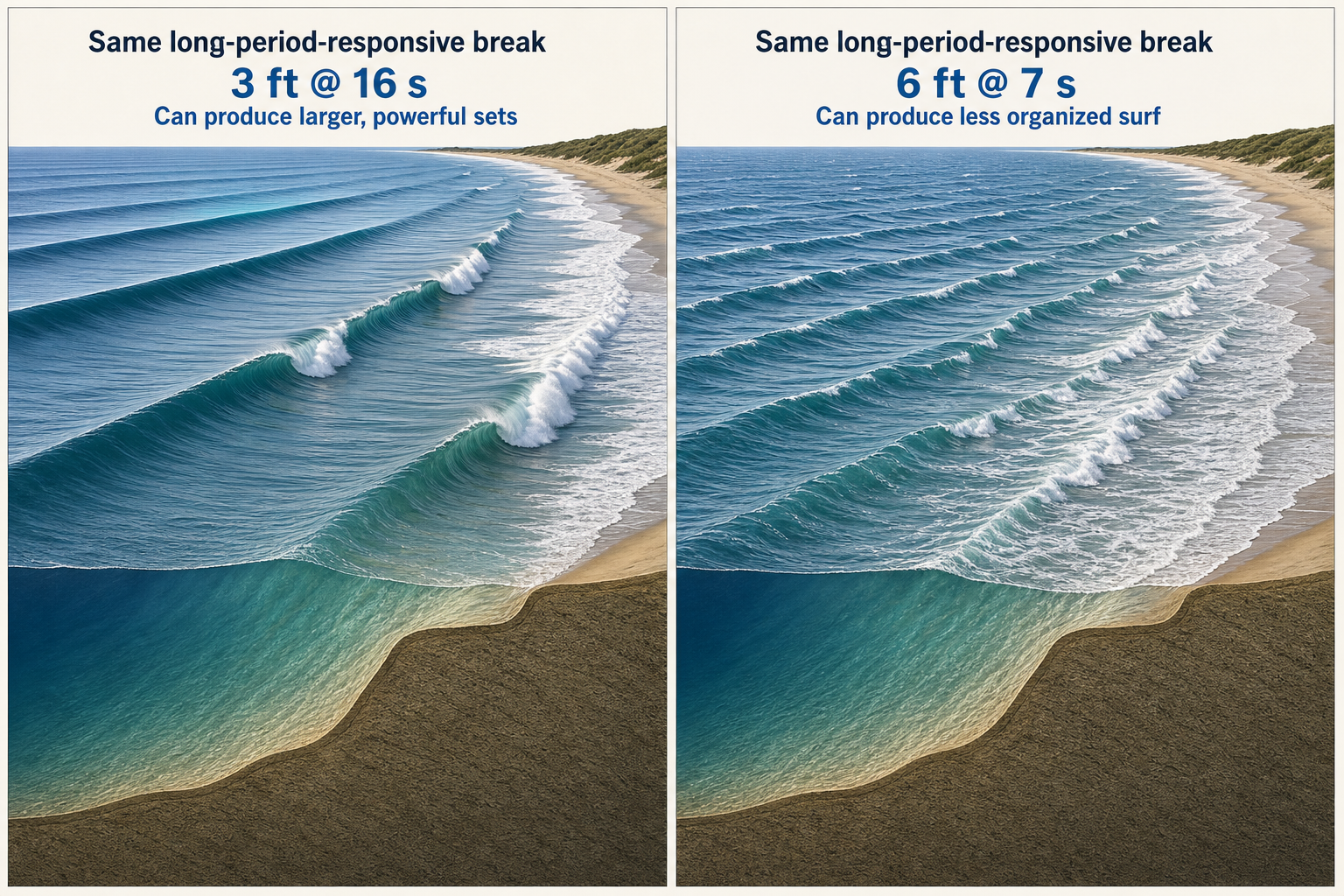
The 3-Foot at 16 Seconds vs. 6-Foot at 7 Seconds Example
Imagine two forecasts:
- 3 feet at 16 seconds
- 6 feet at 7 seconds
The 6-foot swell is taller offshore, but it’s short-period energy. It may create messy, close-spaced surf with limited power. The 3-foot swell is smaller offshore, but its longer period gives it more speed, deeper water movement, and greater ability to shoal over the seafloor.
At a spot that responds well to long-period swell, the 3-foot at 16-second reading could produce larger and more powerful breaking waves than expected. At a less exposed beach, it might be inconsistent but still deliver strong sets. This is why period has to be interpreted together with local bathymetry and swell direction.
How the Seafloor Changes the Effect of Swell Period
The seafloor is a major reason period matters so much. As swell enters shallower water, it slows down, compresses, and steepens — a process called shoaling.
Long-period waves feel the bottom earlier because their wave motion reaches deeper. They may begin bending and focusing energy farther offshore. Depending on the spot, that can make the surf larger, hollower, or more lined up.
Short-period waves interact with the bottom later and more abruptly. They often break closer to shore and may not wrap as well into protected areas. That said, they can create fun peaks at open beachbreaks where long-period swell might close out completely.
How Swell Period Changes Breaking Waves
Swell period affects not only wave size but also spacing, consistency, shape, and power. Two swells with the same height and direction can produce very different surfing conditions if their periods differ significantly.
Swell Period and Wave Spacing
Long-period swell has more distance between crests. In the lineup, this often means longer lulls between sets and more space between waves within a set. The ocean may look flat for several minutes, then produce a group of significant waves seemingly out of nowhere.
Short-period swell has tighter spacing. Waves arrive more frequently, and lulls are shorter. This can make the surf feel more consistent, but it can also create a more chaotic lineup as waves interfere with each other.
Swell Period and Wave Power
Longer-period waves generally produce more powerful surf because they carry energy over a greater wavelength and interact with the bottom more deeply. When that energy compresses over a reef, point, or sandbar, the wave can stand up quickly and break with real force.
Short-period waves usually have less push. They may look steep at first glance, but the energy is concentrated closer to the surface. As a result, they often break softer and lose shape faster. A well-matched surfboard fin set can help you generate drive and hold in softer, short-period surf where waves lack that natural push.
Swell Period and Wave Shape
Long-period swell often creates more defined lines. At pointbreaks and reefs, this can mean longer walls and more organized breaking sections. At some beachbreaks, though, long-period swell may close out because the wave lines are too straight for the sandbar configuration.
Short-period swell tends to be peakier and more broken up, which can actually work well at beachbreaks where shorter lines create more corners to work with. The trade-off is usually less power and less organization overall.
Why Long-Period Waves Are Generally Bigger and More Powerful
Long-period waves are generally bigger and more powerful when they break because of how they shoal. As a wave approaches shallow water, the lower part slows down due to friction with the bottom while the upper part keeps moving. The wave face steepens and eventually breaks.
Because long-period swells have longer wavelengths, they begin this transformation in deeper water. They gather, bend, and focus energy over a larger area before breaking. If the seafloor is shaped to receive that energy, the resulting surf can be significantly larger than the offshore swell height would suggest.
Swell Period and Refraction
Refraction is the bending of waves as they move across changing depths. Long-period swells refract more strongly because they interact with the bottom earlier. This can focus energy onto specific reefs, points, and beach zones.
That’s why certain spots are known as long-period swell magnets. They may look average on a short-period swell but become much more significant when a distant groundswell arrives from the right angle. Understanding coastal geography plays into this — a guide to reading nautical charts can help you interpret bathymetry and understand why certain spots light up on specific swell angles and periods.
Why Long-Period Swell Can Be Inconsistent
Long-period swell often arrives in stronger groups with extended breaks between them. The surf can feel inconsistent even when individual waves are powerful — sets may be excellent, but the wait between them can stretch for several minutes.
This inconsistency isn’t a forecast error. It’s part of how long-period energy travels across the ocean and organizes into groups before reaching the coast.
Why Waves Arrive in Sets
Waves arrive in sets because ocean swell is not made of identical, evenly spaced waves. A swell is a mixture of many wave components with slightly different heights, periods, and directions. As these components travel together, they interfere with one another.
When wave components align, they combine to create larger waves. When they’re out of phase, they partially cancel and produce smaller waves or lulls. This pattern of reinforcement and cancellation is what creates the groups of waves that surfers experience as sets.
Wave Groups and Swell Period
In deep water, individual wave crests move through a group, but the energy of the swell travels with the group as a whole. A set is not a random batch of waves — it’s a moving packet of wave energy.
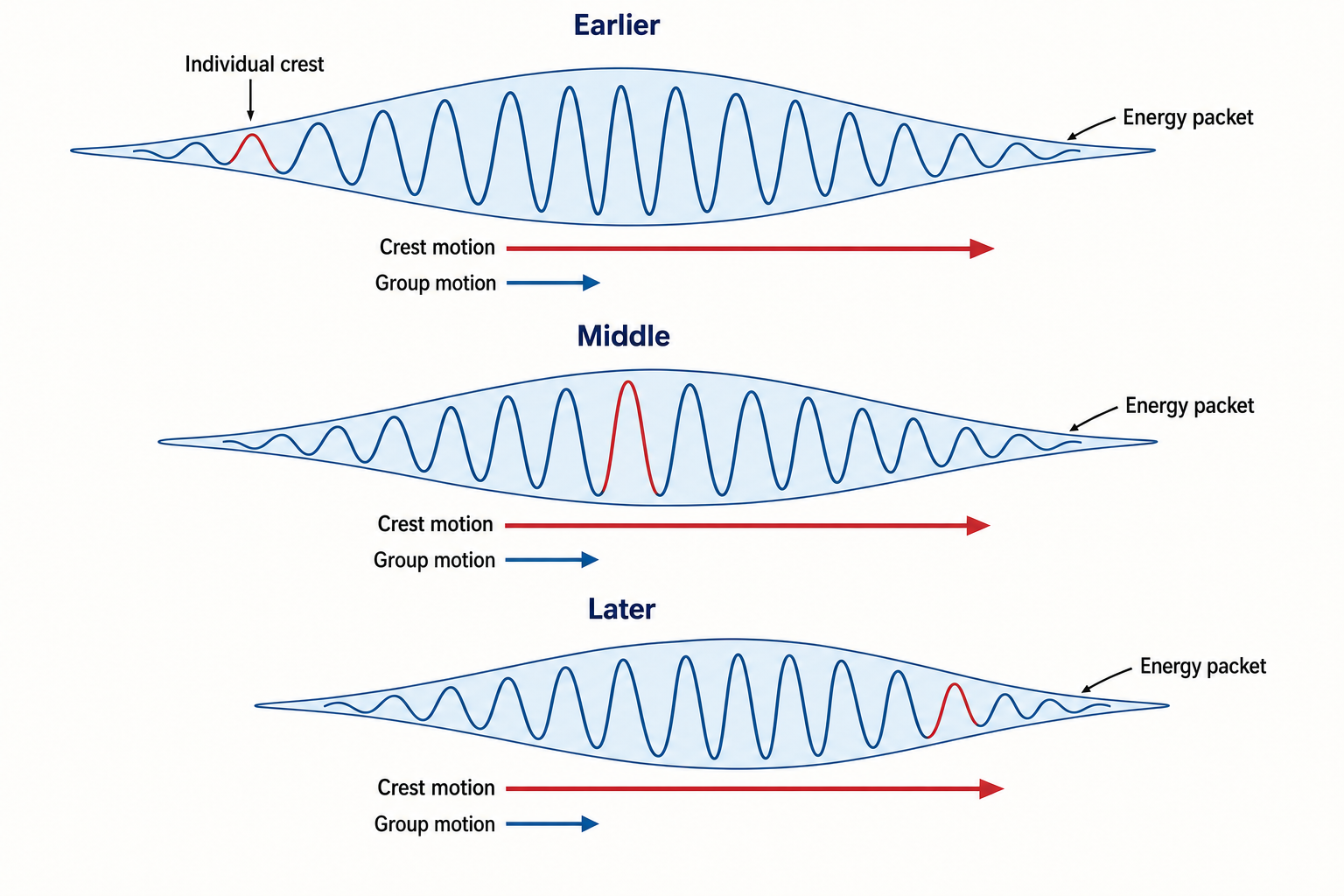
Long-period swells tend to produce more noticeable sets because the wave energy is more organized and has had a long distance to sort itself out. Short-period swell can also arrive in groups, but the pattern is often less defined because the sea state is more mixed. A portable weather station at home can help you track barometric pressure and wind trends, which gives you a head start on understanding whether a building swell is organized groundswell or local wind chop.
Why There Is Usually One Bigger Wave in a Set
There is usually at least one bigger wave in a set because the set has an energy peak. As several wave components come into phase, the waves grow larger toward the strongest part of the group. Then, as the components fall out of phase again, the waves get smaller.
The biggest wave often appears near the middle of the set, but not always. Depending on the mix of swell periods and directions, the largest wave may arrive first, last, or somewhere in between. The key point is that a set is a group of uneven waves, not a row of identical ones.
This is also why surfers talk about “set waves” as distinct from the smaller waves between sets. They represent moments when the incoming swell energy is most strongly focused — worth waiting for on a solid long-period day.
How to Use Swell Period in a Surf Forecast
To use swell period effectively, don’t read it in isolation. Combine it with swell height, direction, tide, and local spot knowledge. Period tells you the type of energy approaching the coast, but the coastline ultimately decides how that energy turns into breaking waves.
Match Swell Period to the Surf Spot
Different breaks respond differently to period:
- Beachbreaks: may prefer short to mid-period swell if it creates peaks rather than long closeouts.
- Reefs: often come alive with longer-period swell that can interact with the bottom early.
- Pointbreaks: usually benefit from organized swell with enough period to wrap and line up properly.
A long-period swell is not automatically better at every spot. Some beaches close out in long, straight lines. Some reefs need a minimum period to break properly. Learning how each local break responds to different swell intervals is one of the most valuable things you can develop as a surfer. A coastal navigation chart of your area can help you study offshore bathymetry and start connecting underwater geography to what you observe in the surf.
Watch for Multiple Swells
Forecasts often show more than one swell. You might see a primary swell of 2 feet at 16 seconds alongside a secondary swell of 4 feet at 8 seconds. The larger short-period swell may dominate the surface texture, but the smaller long-period swell could still produce the best set waves.
When multiple swells overlap, look at which one has the best direction for the spot you have in mind. A long-period swell that misses the bay won’t matter much. A smaller swell from the right angle can produce better surf than a bigger swell aimed the wrong way. Using a compass to check swell direction relative to your break is a simple habit that adds real clarity to your forecast reading.
Compare Forecasts with Buoy Readings
Forecast models are useful, but buoy readings show what’s actually in the water. If a buoy offshore starts reporting a rising period before swell height increases, a new groundswell may be arriving. Often, the longest-period energy shows up first, with the main body of the swell filling in later.
By comparing forecasts, buoy data, and your own observations at the beach, you build a more accurate picture of how swell period affects your local surf. Keeping a weatherproof notebook in your bag for jotting down conditions, buoy readings, and what the surf actually did is one of the best habits you can develop as a student of the ocean. If you like capturing sessions on camera to review later, an action camera paired with a high-capacity microSD card gives you footage to review and connect wave behavior to the forecast numbers you were looking at that morning.
Practical Swell Period Takeaways for Surfers
If you want a quick reference for interpreting swell period, keep these principles in mind:
- Longer period usually means more energy, more spacing, and more powerful surf.
- Shorter period usually means weaker, more local, and more wind-affected surf.
- Small long-period swell can outperform larger short-period swell.
- Long-period swell can be inconsistent, with longer lulls between sets.
- The ideal period depends on the surf spot and its bathymetry.
Swell period is not just a number on a forecast app — it’s one of the clearest clues to how the ocean’s energy will behave when it reaches the coast. It shapes how far swell travels, how strongly waves shoal, how much power they carry, and why they arrive in sets with one wave bigger than the rest. Once you learn to read period alongside height and direction, surf forecasting becomes a much richer and more accurate skill. Instead of simply asking how big the swell is, you start asking a better question: what kind of energy is coming, and how will this coastline turn it into waves?