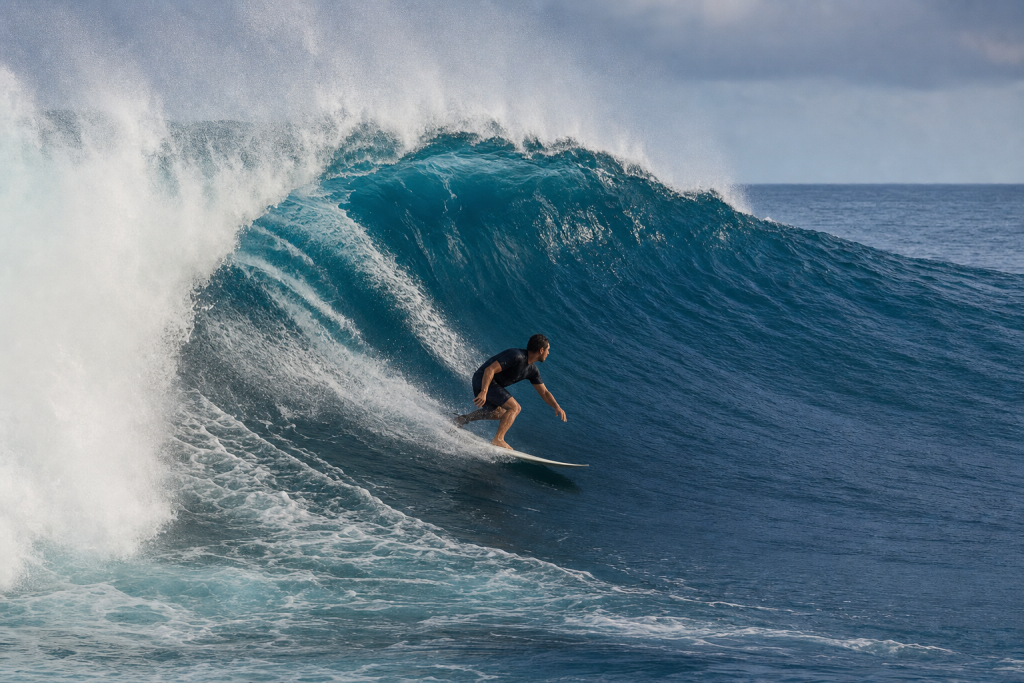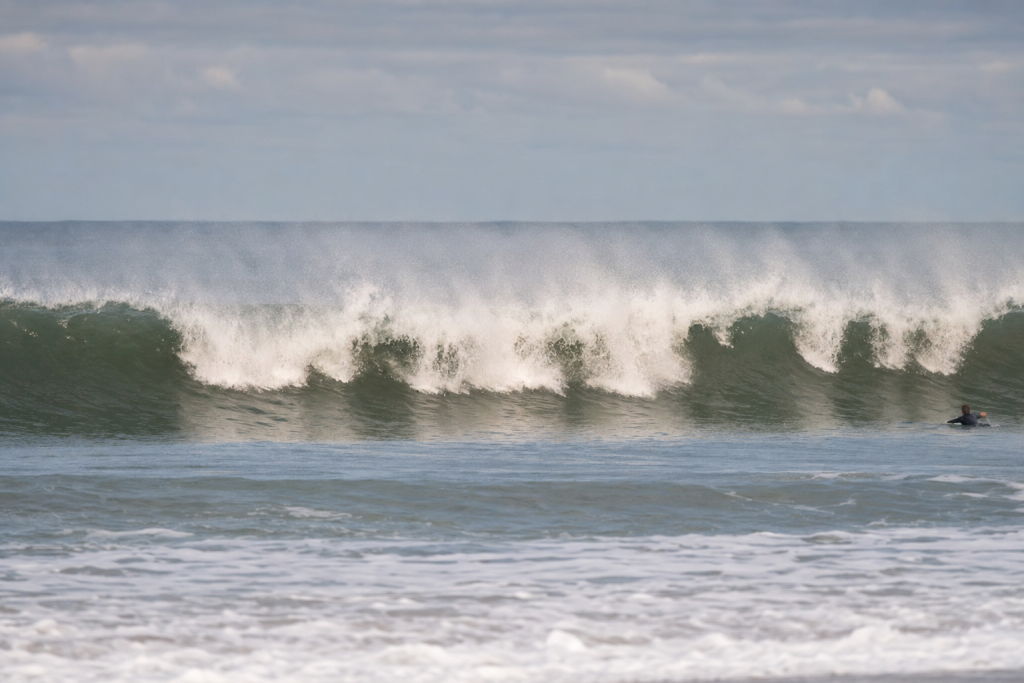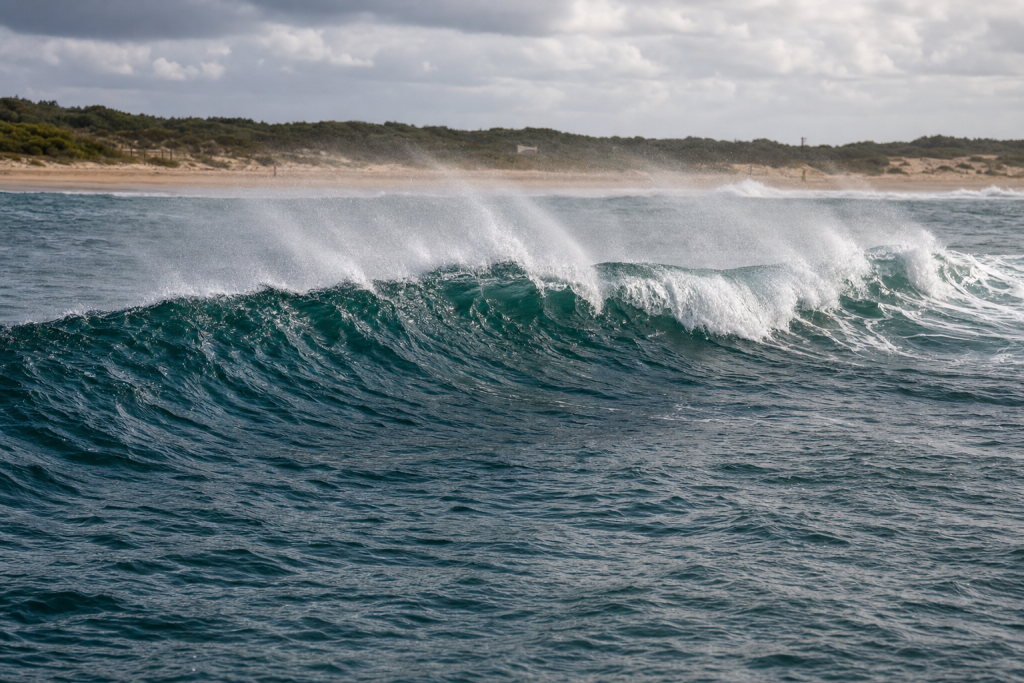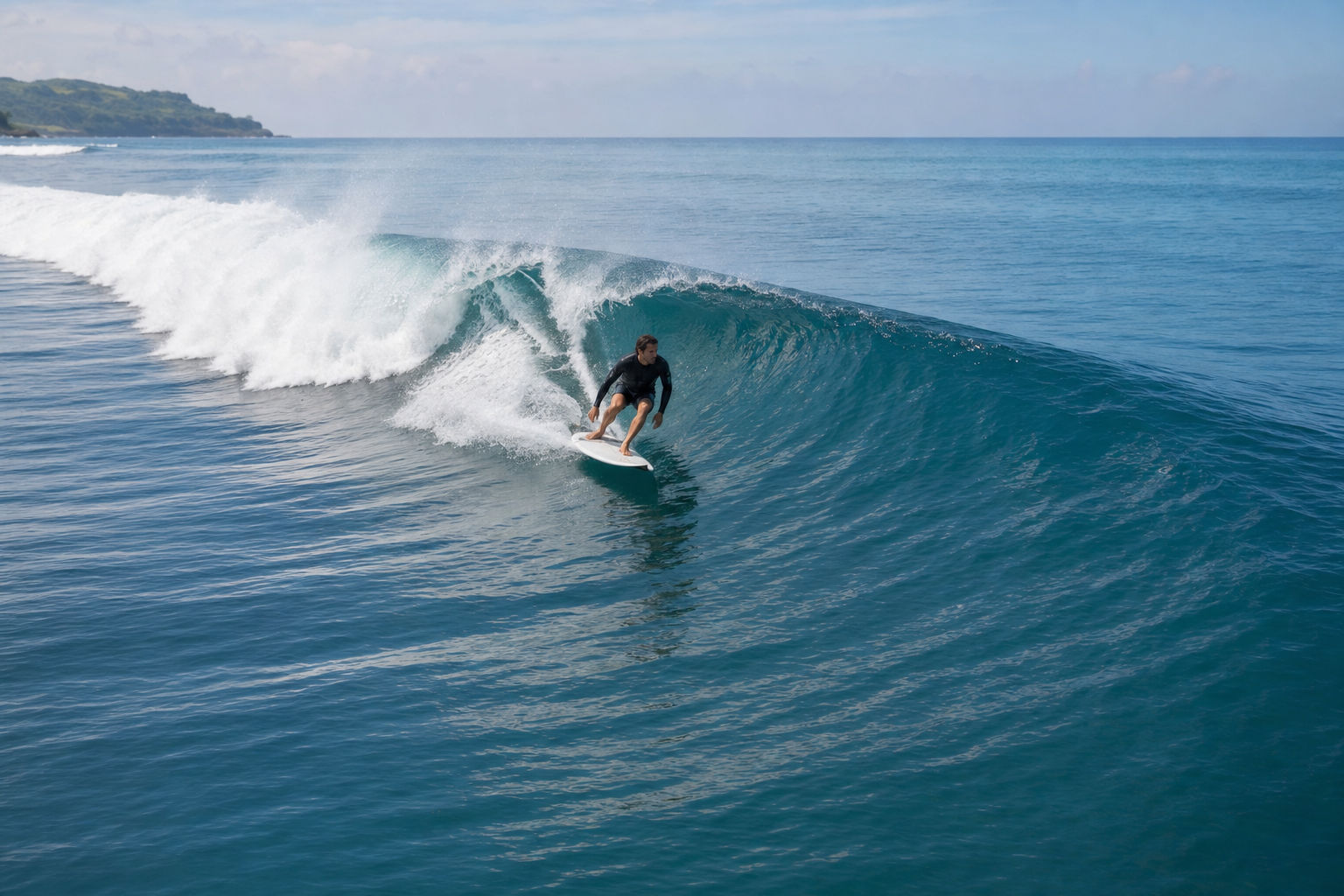
Peeling waves are what surfers dream about. A peak breaks first, then the lip runs steadily down the line while an open face stays clean in front of you. Instead of simply dropping in and outrunning whitewater, you can trim, carve, pump, stall, and sometimes tuck into a barrel. Understanding what makes a wave peel helps you choose better surf spots, read conditions more accurately, and surf each wave with more intention. If you want to go deeper into the mechanics of wave riding, this surf technique book is a solid reference for building that understanding. Before you paddle out, make sure your board is dialed in too — applying fresh cool-water surf wax helps keep your feet planted on the face.
What Is a Peeling Wave?
A peeling wave is a wave that breaks progressively from one section to the next rather than all at once. The breaking part travels sideways along the crest, creating a clean shoulder that a surfer can ride. If the wave breaks to the surfer’s right, it is called a right-hander. If it breaks to the left, it is a left-hander.
The key feature is the open face — the unbroken wall of water ahead of the whitewater. A good peeling wave gives the surfer enough time and space to travel across that face before the lip catches up.
The Anatomy of a Peeling Wave
- Peak: The first and steepest part of the wave to break.
- Pocket: The powerful area just ahead of the whitewater.
- Face: The smooth, unbroken wall where most maneuvers happen.
- Shoulder: The softer, more open part farther from the breaking section.
- Lip: The top of the wave as it pitches or spills forward.
- Peel line: The moving line along which the wave continues to break.
The best peeling waves balance speed and shape. They break fast enough to feel alive, but not so fast that the rider cannot keep up.
What Creates Peeling Waves?
Peeling waves form when different parts of the same swell line reach breaking depth at different times. A wave breaks when the water becomes shallow enough that the wave can no longer support its own height and speed. If one section of the wave reaches that critical depth first, it breaks first. If the bottom continues to shallow at an angle, the wave keeps breaking sideways down the line.
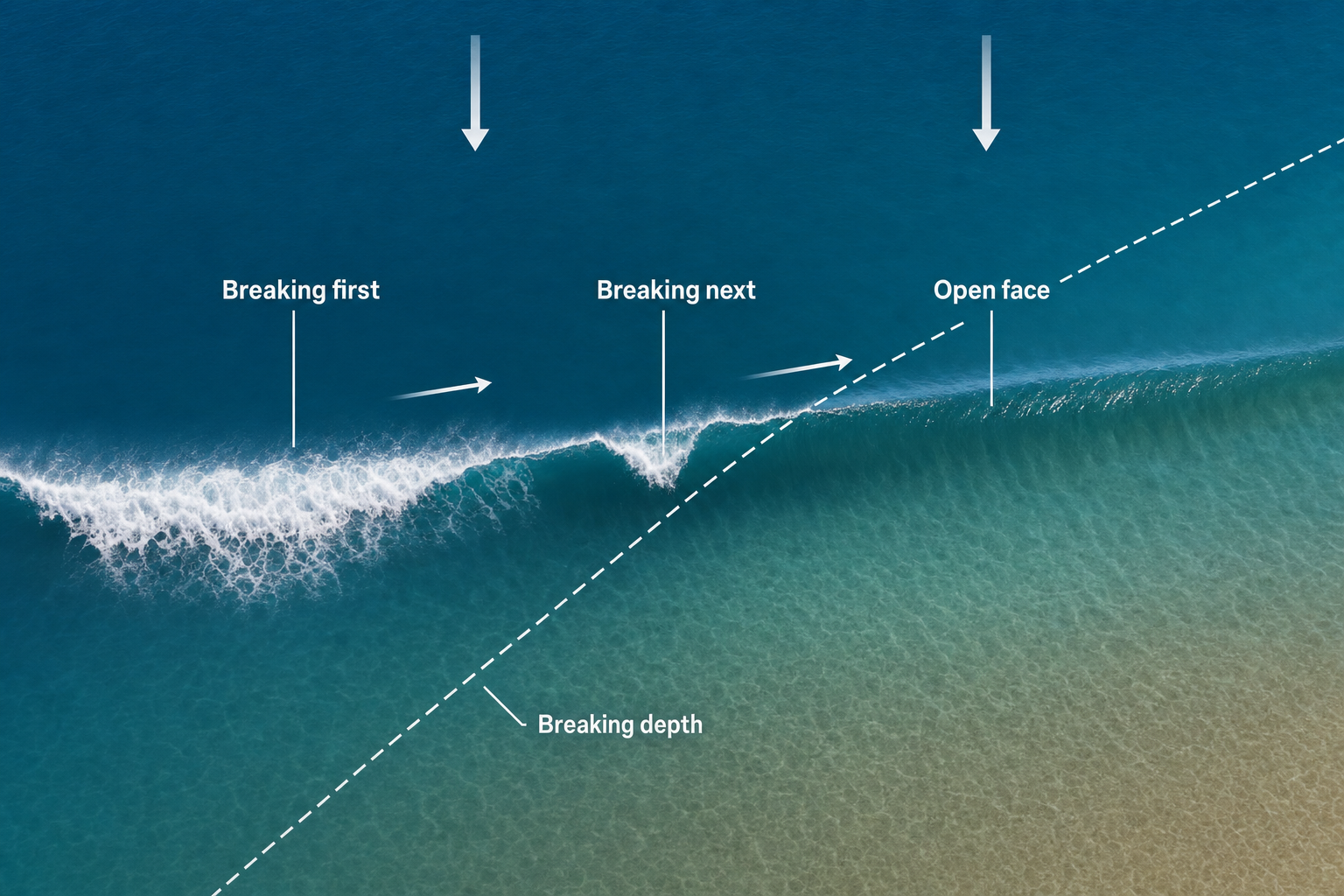
This is why peeling waves are so closely linked to bottom shape. The ocean floor guides swell energy, bends wave lines, and determines whether a wave will peel cleanly or close out.
Bottom Contour and the Breaking Sequence
The most important ingredient is a bottom contour that causes a gradual, progressive breaking sequence. Instead of a straight depth line where the entire wave hits shallow water at once, a peeling wave needs a depth pattern that lets the peak break first and the shoulder break later.
Common setups include:
- Point breaks: Waves wrap around a headland and peel along rock, sand, or cobblestone.
- Reef breaks: Swell hits a fixed reef shelf, producing consistent peeling sections.
- Sandbars: Bars formed by currents and wave action create temporary peaks and angled shoulders.
- River mouths: Sand deposited by rivers builds long bars that can produce excellent lefts or rights.
Point breaks and reef breaks tend to be more predictable because the bottom structure changes slowly. Sandbars can be excellent, but they shift after storms and strong currents.
Peel Angle: The Difference Between Makeable and Impossible
The peel angle describes how quickly the breaking section runs down the line relative to the open face. A low peel angle creates a very fast wave. A higher peel angle gives the surfer more time to draw lines and make sections.
Too little peel angle can make a wave look exciting from the beach but feel impossible in the water — the lip races down the line faster than the surfer can generate speed. Too much openness makes the wave weak and slow. The sweet spot depends on the surfer’s ability, the board being ridden, and the power of the swell.
Refraction and Swell Wrapping
As waves move into shallower water, they slow down and bend. This process is called refraction. It is one reason point breaks can peel so consistently. A swell may approach the coast from one direction, then wrap around a headland and line up cleanly with the bottom contours.
Longer-period swells refract more strongly than short-period swells, which means they can wrap into protected points and reef passes more effectively. They also tend to arrive with more focused energy, which can make the resulting wave faster, steeper, and more powerful.
How Peeling Waves Look and Feel
Peeling waves are not all the same. Some are soft, playful, and easy to cruise on. Others are fast, hollow, and demanding. Their character depends on swell energy, wind, tide, and the exact shape of the seabed.
Shape and Surfing Quality
A high-quality peeling wave has a defined peak, a clean wall, and a shoulder that stays open long enough to ride. It may offer several distinct sections: a steep takeoff, a running wall, a softer cutback zone, and an inside bowl.
For surfing, this shape is valuable because it allows more than just survival. You can choose lines, accelerate, slow down, and use the pocket. This makes peeling waves ideal for progression because they reward both technical control and creative surfing.
Power and Speed
The power of a peeling wave comes from swell size, swell period, and how abruptly the bottom rises. A long-period reef wave can feel heavy even at moderate size because more water is moving beneath the surface. A short-period beachbreak may look steep but lack the same push.
Speed is mostly controlled by peel angle and wave period. Fast peelers require immediate down-the-line speed. Slower peelers allow smoother turns and easier recovery after maneuvers. Advanced surfers often love fast peelers because they create high-performance walls and barrel sections. Beginners usually progress faster on slower, softer peeling waves.
Height, Steepness, and Hollowness
Peeling waves can be knee-high or triple overhead — “peeling” describes the breaking style, not the size. Still, size changes the character of the wave considerably. A waist-high point wave may be mellow and forgiving. That same spot at double overhead can become fast, powerful, and far more technical.
Steepness and hollowness are closely tied to the seabed gradient:
- Gentle gradient: Softer waves that spill and peel slowly.
- Moderate gradient: Balanced waves with open faces and workable speed.
- Steep gradient: Hollow waves with pitching lips and barrel sections.
A hollow peeling wave forms when the wave moves from deep to shallow water quickly enough for the lip to throw forward. A softer peeling wave breaks more gradually, with the lip crumbling or spilling down the face rather than pitching out.
Ideal Bottom Structure for Peeling Waves
The best peeling waves usually form over a bottom that is consistent but angled. The wave needs a predictable path of decreasing depth. If the bottom is too flat across the swell line, the wave may close out. If it is too irregular, the wave may break in disconnected sections with no clear path to follow.
Point Breaks
Point breaks are classic peeling-wave machines. Swell wraps around a headland and breaks along a curved shoreline or underwater shelf. Because the wave meets the bottom progressively, it can peel for a very long distance.
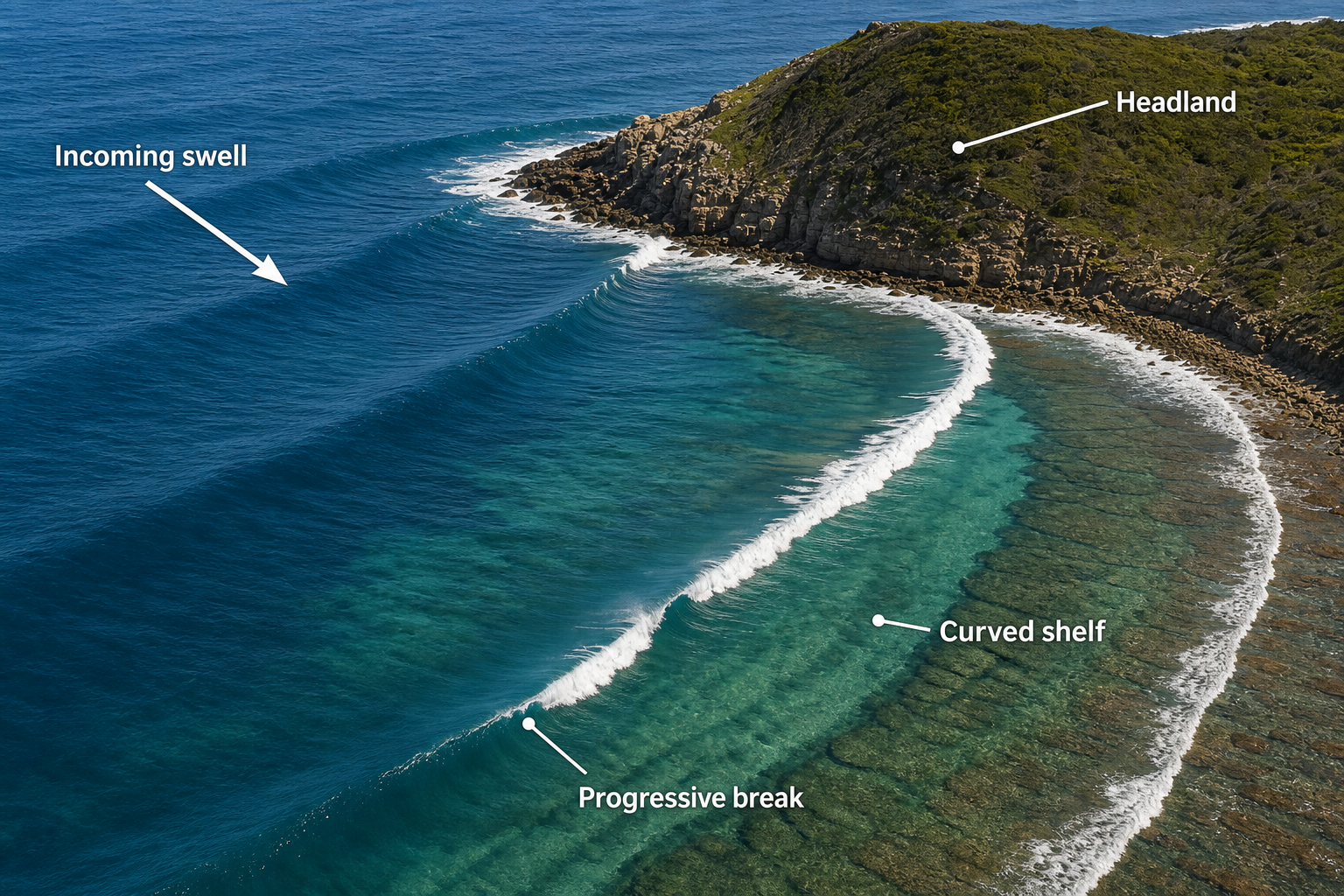
A gentle point may produce long, user-friendly walls. A steeper point with rock or reef can create faster sections and barrels. Sand-bottom points can be especially smooth when the sand is shaped correctly by recent swell and current activity.
Reef Breaks
Reefs produce some of the most consistent peeling waves because the bottom does not move. Coral, lava, and rock shelves can all create precise breaking zones. When a reef has the right angle to the swell, the wave peels with near-mechanical regularity.
Reef peelers are often more powerful than sand-bottom waves because the transition from deep to shallow water can be abrupt. This is why many world-class barrel waves break over reef. If you are surfing reef regularly, a pair of reef booties can protect your feet on shallow takeoffs and wipeouts.
Sandbars and River Mouths
Sandbars create some of the most accessible peeling waves, especially at beachbreaks and river mouths. An angled bar can turn an ordinary beach into a fun, rippable wave. A crescent-shaped bar can create an A-frame with a left and a right peeling from the same peak.
The challenge is that sandbars change. A perfect bank can disappear after one big storm, and can reform just as quickly when swell direction, currents, and tide start moving sand into the right shape again.
Best Conditions for Peeling Waves
There is no single formula that works for every spot. Each break has its own ideal swell window and tide range. Still, certain patterns consistently help waves peel better.
Best Swell Direction
The best swell direction is usually one that approaches the bottom contour at an angle rather than head-on. A swell that hits a straight beach directly often causes many waves to break all at once. If it approaches an angled reef or point correctly, one section breaks first and the wave peels from there.
At point breaks, the ideal swell wraps around the point rather than hitting it too squarely. At reefs, the best direction lines up with the takeoff zone and then runs along the shelf. At beachbreaks, a slightly angled swell can create better peaks than a straight-on swell. That said, too much angle is also a problem — if the swell runs too parallel to the coast, it may not break properly and the wave can become weak or sectiony.
Best Swell Period
Swell period is the time between successive waves in a set, and it is one of the most important factors in wave quality.
- 8 to 10 seconds: Shorter-period swell can produce fun beachbreak peelers but is generally weaker.
- 11 to 14 seconds: A strong range for balanced, workable peeling waves at most breaks.
- 15 seconds and above: Long-period swell brings more power, more refraction, and often more speed.
Long-period swell can turn a quality reef or point into a classic setup. It can also overwhelm straight beaches and produce closeouts. Shorter-period swell is less powerful but can fit smaller sandbars more comfortably.
Best Wave Height
The best height depends on both the spot and the surfer. For learning how to surf peeling waves, waist-high to head-high surf is usually ideal. The wave has enough push to ride across the face, but it is not so fast that every decision feels rushed.
For experienced surfers, head-high to double-overhead peeling waves often provide the best mix of speed, power, and maneuvering space. Some famous reefs and points only come alive at larger sizes. Others become too fast or too sectioned when the swell exceeds their ideal range.
Best Tide
Tide changes the depth over the bottom, so it can completely transform how a peeling wave breaks. A reef that is perfect at mid tide may become dangerously shallow at low tide and too soft at high tide. A sandbar that closes out at low tide may peel beautifully with a little more water over it.
Common patterns include:
- Low to mid tide: Often better for hollow reef waves and defined sandbars.
- Mid tide: Frequently the most balanced window for points and beachbreaks alike.
- Mid to high tide: Can improve rocky or cobblestone points and softer longboard waves.
The best tide is the one that puts enough water over the bottom for the wave to hold shape while still being shallow enough to break with energy.
Wind and Surface Conditions
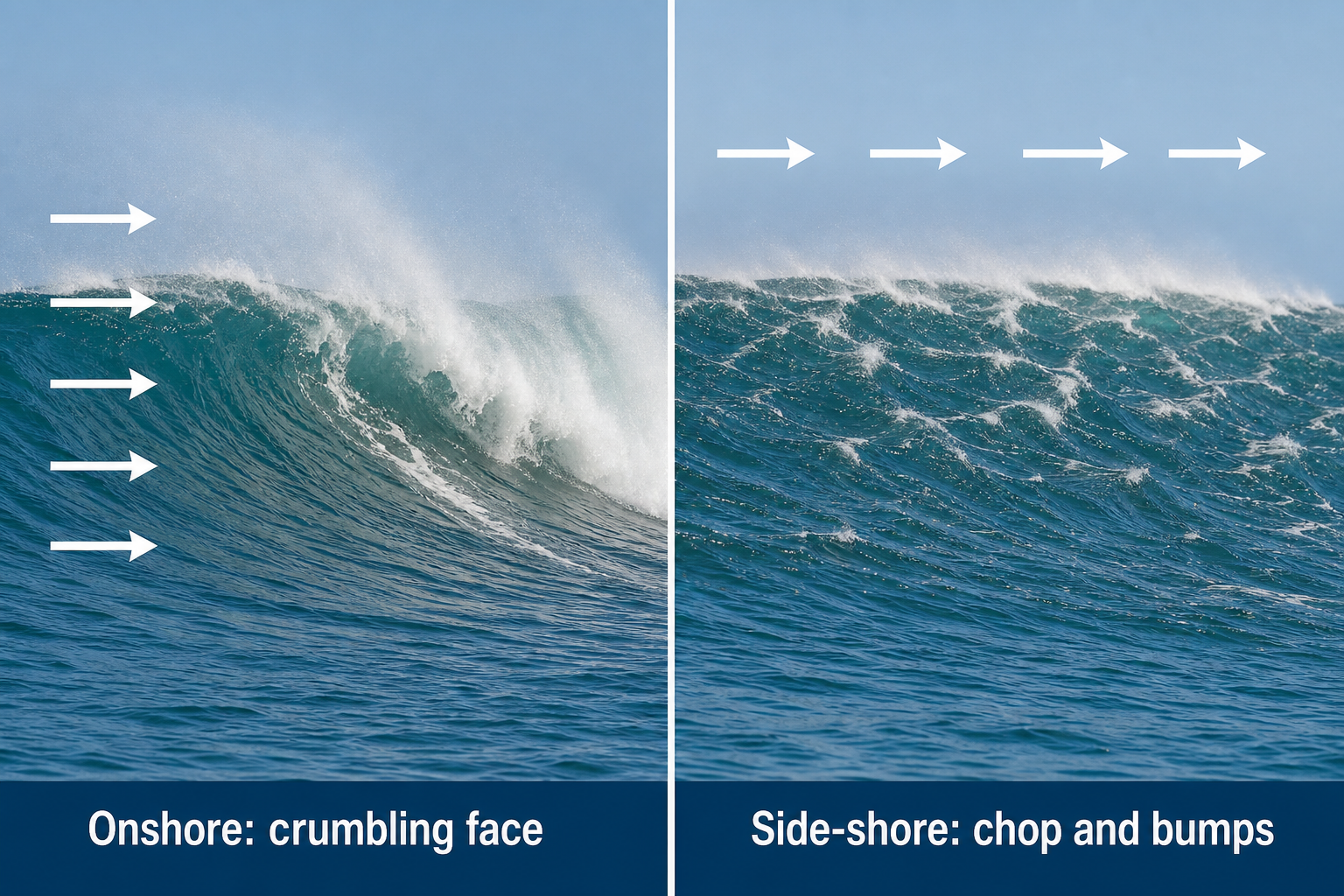
Light offshore wind helps hold the face open and encourages the lip to pitch more cleanly. Light cross-offshore wind can also work well, especially if it grooms the face without blowing too hard into the barrel.
Onshore wind makes peeling waves crumble and lose definition. Strong side-shore wind creates chop and bumps that disrupt takeoffs and turns. A perfect bottom will not produce a quality peeling wave if the wind is tearing the face apart.
How Easy or Hard Are Peeling Waves to Surf?
Peeling waves are generally easier to surf than closeouts because they provide a direction to ride and a clean face to work with. However, “peeling” does not automatically mean easy. Difficulty depends on speed, steepness, and how critical the takeoff zone is.
Beginner-Friendly Peeling Waves
Soft point breaks, mellow sandbars, and small reef passes can be excellent for developing surfers. These waves peel slowly and allow time to angle the takeoff, practice trimming, and read sections. A beginner-friendly peeler usually has a spilling lip rather than a throwing one, and the shoulder stays open with manageable speed.
A reliable surfboard leash is essential when you are learning on peeling waves, especially at points where the wave can carry your board a long way down the line if you fall. Wearing a UPF rash guard during long sessions helps protect your skin from the sun and reduces irritation from the wax.
Advanced Peeling Waves
Fast reef waves, hollow sand points, and heavy ledges are far more demanding. The surfer must paddle into the correct spot, pop up quickly, and commit to a line immediately. Hesitation on these waves usually means getting caught behind the section.
Advanced peeling waves may require deep bottom turns, high-speed pumping, and precise tube positioning. The open face is still there, but it may only be accessible to surfers who can match the wave’s pace. Wearing an impact vest adds protection during heavy wipeouts on bigger, hollower peelers. If you are surfing over reef, consider a low-profile surf helmet for added head protection.
How to Recognize Rideable Versus Unmakeable Peeling Waves
Reading peeling waves is one of the most valuable skills in surfing. From the beach, two waves may look similar. In the water, one offers a perfect wall while the other shuts down before you can get around the section.
Signs of a Rideable Peeling Wave
- The wave starts breaking from a clear, defined peak.
- The lip runs sideways instead of detonating all at once.
- The shoulder stays smooth and open ahead of the whitewater.
- The steepest section moves at a speed you can match.
- Other surfers are completing rides from takeoff to shoulder.
- There is a visible exit before the inside section closes.
A rideable peeler often looks like a zipper being pulled along the crest. The whitewater chases the surfer but does not instantly overtake the entire line.
Signs of an Unmakeable Peeling Wave
- The lip breaks across a wide section all at the same time.
- The shoulder bends away and closes before the surfer can reach it.
- The first section is too fast immediately after takeoff.
- The wave looks square, flat-faced, and walled-up with no open shoulder.
- The barrel has no visible exit down the line.
The best way to distinguish rideable from unmakeable is to watch several sets from the beach before paddling out. Notice which waves people complete, where they take off, and which sections repeatedly shut down.
How to Surf Peeling Waves
Surfing a peeling wave is about matching its speed while staying close to its energy source. The pocket gives you power. The shoulder gives you room. Good surfers move between both.
Position Yourself Near the Peak
Start by identifying where the best waves begin to break. On a point or reef, the takeoff zone may be very specific. On a sandbar, it may shift from set to set. Line yourself up with reference points on shore so you can return to the right spot after each wave.
For most peeling waves, you want to sit close enough to the peak to catch the wave early, but not so deep that the first section breaks on top of you. If you are too far out on the shoulder, the wave may pass under you without enough steepness to paddle into.
Angle Your Takeoff
On a peeling wave, a straight-ahead takeoff wastes valuable momentum. As you paddle, angle your board slightly in the direction the wave is breaking. This helps you enter the face with down-the-line speed already built in.
For a slow peeler, a slight angle may be enough. For a faster wave, you may need to pop up already pointing down the line. The steeper the wave, the more carefully you must balance angle with control. Too much angle can cause you to lose your rail. Too little can leave you trapped behind the lip.
Use the First Bottom Turn Wisely
The first bottom turn sets the tone for the entire ride. After the takeoff, compress low and look down the line. On a steep, fast wave, drive your bottom turn forward rather than straight back up the face. On a softer wave, you can draw a rounder arc and set up a maneuver.
Your eyes matter more than most surfers realize. Look where you want to go, not at the breaking lip behind you. Peeling waves reward anticipation because the next section is often visible well before you reach it.
Trim and Pump for Speed
Trimming means finding the part of the wave where your board runs naturally fast. On many peeling waves, this is the upper third of the face. A high line reduces drag and helps you outrun fast sections.
Pumping generates extra speed by moving up and down the face rhythmically. Climb high, compress, then drive down with pressure through your front foot and rail. Fast peelers often require pumping immediately after takeoff. Having well-matched fins makes a real difference in how efficiently you can generate and hold speed — a set of FCS performance fins or a Futures-compatible thruster set can help your board respond more predictably on faster walls. A quality surf traction pad also improves grip when you need to shift weight quickly during pumping sequences.
Stay Connected to the Pocket
The pocket is the engine of the wave. If you race too far out onto the shoulder, the wave flattens and speed disappears. If you lag too far behind, the whitewater catches you. The goal is to stay close enough to the power source while remaining just ahead of the breaking section.
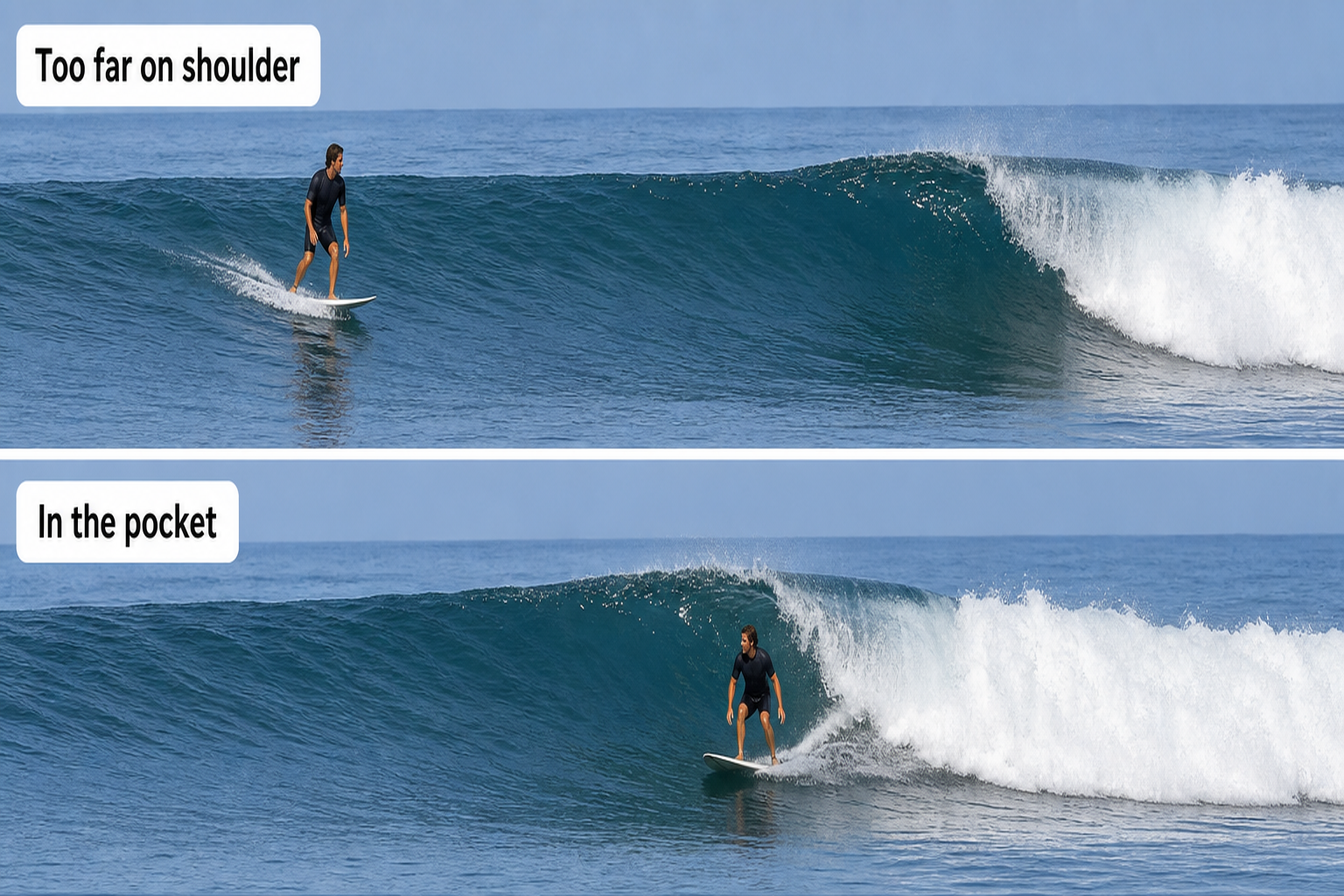
Cutbacks are useful when you drift too far onto the shoulder. Turn back toward the pocket, rebound off the foam, and redirect down the line. On a long peeling wave, this rhythm can repeat several times in a single ride.
Surfing Hollow Peeling Waves
On hollow peelers, the line becomes more critical. Rather than driving straight to the bottom, you may need to hold a high line under the pitching lip. If the barrel forms, control your speed with subtle stalls — drag a hand, shift weight back slightly, or compress lower to fit the curve of the tube.
A makeable barrel usually has a tapered opening and a clear path down the line. If the lip throws far out in front with no visible exit, it is often better to straighten out or find a quick escape before the section shuts you down. Wipeouts happen even on well-read waves, so keep a ding repair kit in your bag for any reef or rock contact that leaves a mark on your board.
Choose the Right Board
Board choice changes how makeable a peeling wave feels. A longboard or mid-length carries speed through flat sections and suits softer, slower peelers well. A shortboard works better when the wave is steep enough for tight turns and quick acceleration.
For fast, hollow waves, surfers often choose boards with enough rocker to handle steep drops and enough rail length to hold a high line through the barrel. For long points, a board with good paddling efficiency and smooth projection helps connect distant sections. A cold-water 3/2mm wetsuit keeps you comfortable during extended sessions at points and reefs where the water runs cool.
Famous Peeling Wave Surf Spots
Many of the world’s most celebrated surf spots are famous precisely because they peel with unusual length, consistency, or power. Each one has its own swell window and personality.
Rincon, California
Rincon is one of the most well-known right-hand point breaks in North America. Winter swells wrap into the point and peel through several connected sections. On the right day, it offers long walls that suit everything from high-performance shortboarding to stylish longboarding.
Malibu, California
Malibu is known for long, smooth right-hand peelers. Its gentle shape makes it one of the most iconic longboard waves in the world. South swells and favorable tides can create rides that run far down the point with a relaxed, flowing character.
Jeffreys Bay, South Africa
Jeffreys Bay is a fast right-hand point break with long, ruler-edged walls. The Supertubes section is particularly known for speed, powerful barrels, and high-performance down-the-line surfing. It is a global benchmark for quality peeling waves.
Chicama, Peru
Chicama is often cited as one of the longest left-hand point waves on the planet. It peels along a desert coastline and can produce extremely long rides when the swell direction aligns correctly. Its length makes it a textbook example of how bathymetry and swell angle create exceptional peeling waves.
Snapper Rocks and the Superbank, Australia
The Superbank is a sand-bottom right-hander shaped by an extraordinary sand-pumping system. When the banks align, waves peel from Snapper Rocks through multiple connecting sections. It is fast, crowded, and highly performance-oriented.
Raglan, New Zealand
Raglan is a series of left-hand point breaks that can link into very long rides. The waves peel along rocky points and offer a mix of workable walls, speed sections, and powerful pockets depending on the swell and tide.
Mundaka, Spain
Mundaka is a world-class left that breaks over a sandbar near a river mouth. It is famous for hollow, fast, barreling sections. The wave depends heavily on sand placement, swell direction, and tide — a combination that can make it exceptional when everything aligns.
Skeleton Bay, Namibia
Skeleton Bay is one of the fastest and most dramatic sand-bottom lefts on Earth. It produces incredibly long barrel sections but is extremely demanding. The wave’s speed illustrates how a peeling wave can be both visually stunning and nearly impossible to make without serious ability.
Cloudbreak, Fiji
Cloudbreak is a powerful left-hand reef break that can peel with exceptional size and force. It offers open, workable walls at moderate size and extremely heavy barrels when the swell is large. Its reef structure creates a precise, consistent breaking line that rewards committed surfing.
Desert Point, Indonesia
Desert Point is a long, hollow left breaking over reef on the island of Lombok. On the right swell and tide, it produces extended barrel sections and fast walls. It is a classic example of a high-quality peeling wave shaped entirely by reef contour and swell angle.
Putting It All Together: Finding Better Peeling Waves
To find good peeling waves, look for spots where swell meets the bottom at an angle and breaks progressively along a defined contour. Study maps, check surf reports, and observe how each tide and swell direction changes the lineup. The same spot can be exceptional on one swell direction and completely ordinary on another.
The most useful habit is patient observation. Before paddling out, watch the sets. Identify the peak, the makeable line, and the section that ends the ride. Notice whether the best waves break wider, deeper, or farther inside than the average ones. If you want to film sessions to review your positioning and technique, a waterproof action camera mounted to your board or helmet can be a useful tool — just make sure you have a high-capacity microSD card so you never run out of storage mid-session.
A peeling wave is not just a pretty line on the ocean. It is the result of swell energy meeting the right bottom shape at the right angle, with tide and wind helping rather than hurting. Once you understand those ingredients, you can recognize better waves and surf them with more purpose. Whether the wave is a mellow point runner or a fast reef barrel, the goal is the same: find the open face, match its speed, and stay connected to the part of the wave that keeps peeling ahead.