Fast waves are the ones that make surfing feel urgent. They stand up quickly, throw a steep wall down the line, and demand that you generate speed immediately rather than cruising from turn to turn. For experienced surfers, fast waves can be the most rewarding waves in the ocean — they create long high-speed lines, powerful barrels, and critical sections. For beginners and intermediates, they can also be confusing: some look perfect from the beach but close out instantly, while others seem impossible until you learn how to read the angle, the bottom, and the rhythm of the swell. If you want to sharpen your approach to fast waves, a resource like this surf technique book can help you build a solid foundation before paddling out. Having the right gear matters too — a reliable surfboard leash is essential when fast waves send you over the falls.
What Creates Fast Waves?
A fast wave is not simply a wave moving quickly through deep water. In surfing, “fast” usually means the breaking section peels down the line quickly, so the surfer must travel at high speed across the face to keep up with the open shoulder or barrel.
Fast waves are created by a combination of swell energy, seabed shape, wave angle, and how the wave breaks along the bottom contour. The key ingredients are:
- Long-period swell that carries more energy and feels the bottom earlier.
- Steep or abrupt bottom changes that make the wave jack up quickly.
- Angled bathymetry that causes the wave to peel instead of closing out all at once.
- Focused swell energy from reefs, points, canyons, or sandbars.
- Clean wind conditions that hold the face open and allow hollow sections to form.
The Difference Between Wave Speed and Peel Speed
In deep water, longer-period waves travel faster. A 16-second groundswell moves much faster through the open ocean than a short-period windswell. As that swell reaches shallow water, it slows down, steepens, and eventually breaks. But for surfers, the important speed is the peel speed — how quickly the breaking part of the wave runs sideways along the crest.
A wave with a wide peel angle is easier to surf because the shoulder peels at a manageable pace. A wave with a tight peel angle creates a racing wall. If the wave breaks almost all at once, it becomes a closeout. The best fast waves sit in the narrow zone between those two extremes: fast enough to be exciting, but angled enough to be makeable.
How Fast Waves Look and Feel
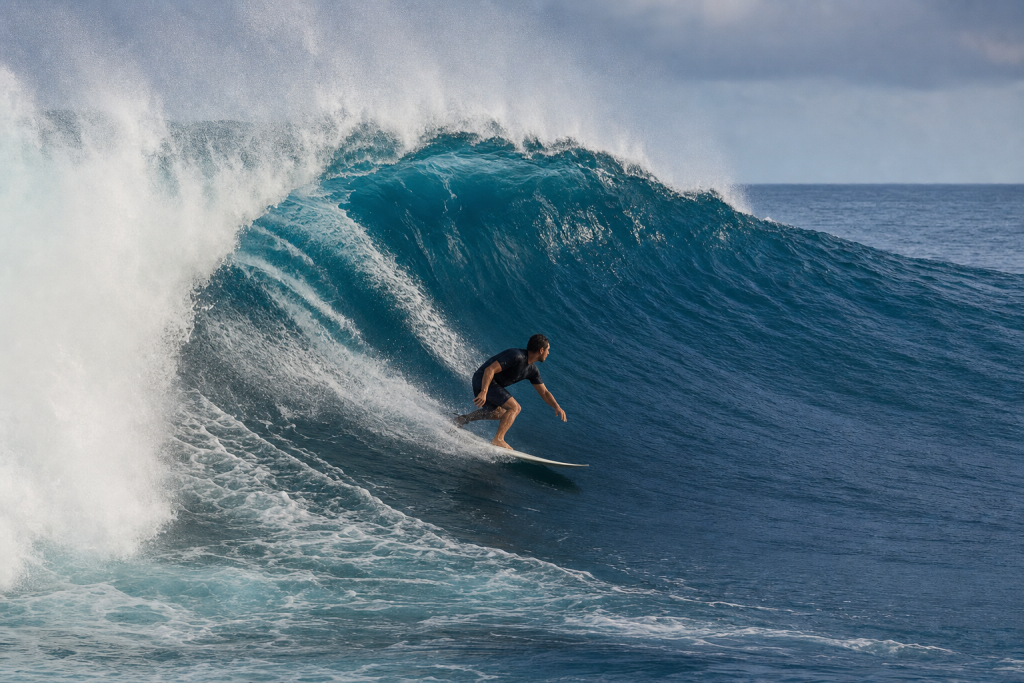
Fast waves have a distinct appearance. They often rise suddenly, draw water off the reef or sandbar, and project a clean wall down the line. Instead of a soft shoulder, they show a steep face that seems to run away from the takeoff zone.
Shape and Steepness
The classic fast wave has a steep entry, a long wall, and a lip that throws forward rather than simply crumbling. The face usually has a strong diagonal line running from the peak toward the shoulder. On the best waves, that diagonal is smooth and tapered. On the worst ones, it is too straight and closes out.
Fast waves can be high-performance walls, hollow barrels, or heavy slabs. What they all share is projection — the wave does not just break toward the beach; it runs laterally along a reef, point, or sandbank.
Power and Hollowness
Many fast waves are powerful because the bottom forces swell energy upward quickly. A shallow reef, abrupt sandbar, or steep rock shelf compresses the energy into a smaller area, creating a thicker lip and a more explosive breaking motion.
Fast waves are often hollow, but not always. Some fast pointbreaks produce open walls with occasional tube sections. Some reef passes create long barrels. Some sand-bottom waves produce square, heavy tubes that are only makeable on the right swell angle and tide.
Height and Quality
Fast waves can appear at almost any height, but they become more defined as the swell gets large enough to properly interact with the bottom. A waist-high wave over a good sandbar may race down the line. A double-overhead reef wave may become a long, hollow freight train.
Quality depends on balance. If the swell is too small, the wave may not connect across the bottom. If it is too big or too straight, the wave may outrun the surfer or shut down entirely. The best fast waves have enough size to stand up, enough angle to peel, and enough shape to leave an open line.
How Hard Are Fast Waves to Surf?
Fast waves are generally harder to surf than slow, rolling waves because they give you less time to think. The takeoff is more critical, the first turn matters more, and bad positioning is punished quickly. On a slow wave, you can recover from a weak pop-up or a poorly timed bottom turn. On a fast wave, that hesitation usually means getting left behind.
Why Fast Waves Challenge Beginners
Beginners often struggle with fast waves because they require early reading and instant commitment. The wave may look rideable for a second, then race ahead before the surfer is on their feet. Many beginners also aim too straight toward the beach, which sacrifices down-the-line speed at the exact moment it is needed most.
Fast waves also demand a clean stance. Standing too tall, leaning back, or setting the wrong rail slows the board down. Even if the takeoff is successful, a beginner may lose speed before reaching the open section.
Why Advanced Surfers Love Fast Waves
Advanced surfers value fast waves because speed creates options. A fast wall can produce drawn-out carves, high-line racing, and powerful rebounds off the lip. The wave supplies energy, and the surfer’s job is to convert that energy into controlled, fluid movement.
On a high-quality fast wave, the best surfing often looks simple. The surfer takes off in the right place, holds a precise line, and lets the wave’s speed do the work. The difficulty is hidden in the timing.
How to Surf Fast Waves
Surfing fast waves well starts before you ever paddle. You need to identify where the wave begins, how quickly it peels, and where the first fast section appears. Once committed, the goal is to get in early, angle correctly, and build speed before the wave starts running away.
Positioning for Fast Waves
On fast waves, positioning is more important than paddling power alone. Sitting too far inside can put you under the lip with no room to set a line. Sitting too far out can make you miss the wave or enter too late on the shoulder.
Look for the true takeoff zone, not just the highest part of the swell. On reef and point waves, this may be near a boil, ledge, or rock marker. On beachbreaks, it may shift with each set. The best position is usually slightly behind the peak but not so deep that the first section is already unmakeable.
Angle the Takeoff
A straight takeoff is one of the most common mistakes on fast waves. If you drop straight down to the flats, you may have to climb back up the face while the section races away. Instead, paddle and pop up with a down-the-line angle when the wave allows it.
The steeper the wave, the more subtle the angle needs to be. Too much angle on a hollow wave can make the rail catch. Too little can leave you behind. The aim is to enter with enough direction to start trimming immediately while still completing the drop cleanly.
Use a Compact Bottom Turn
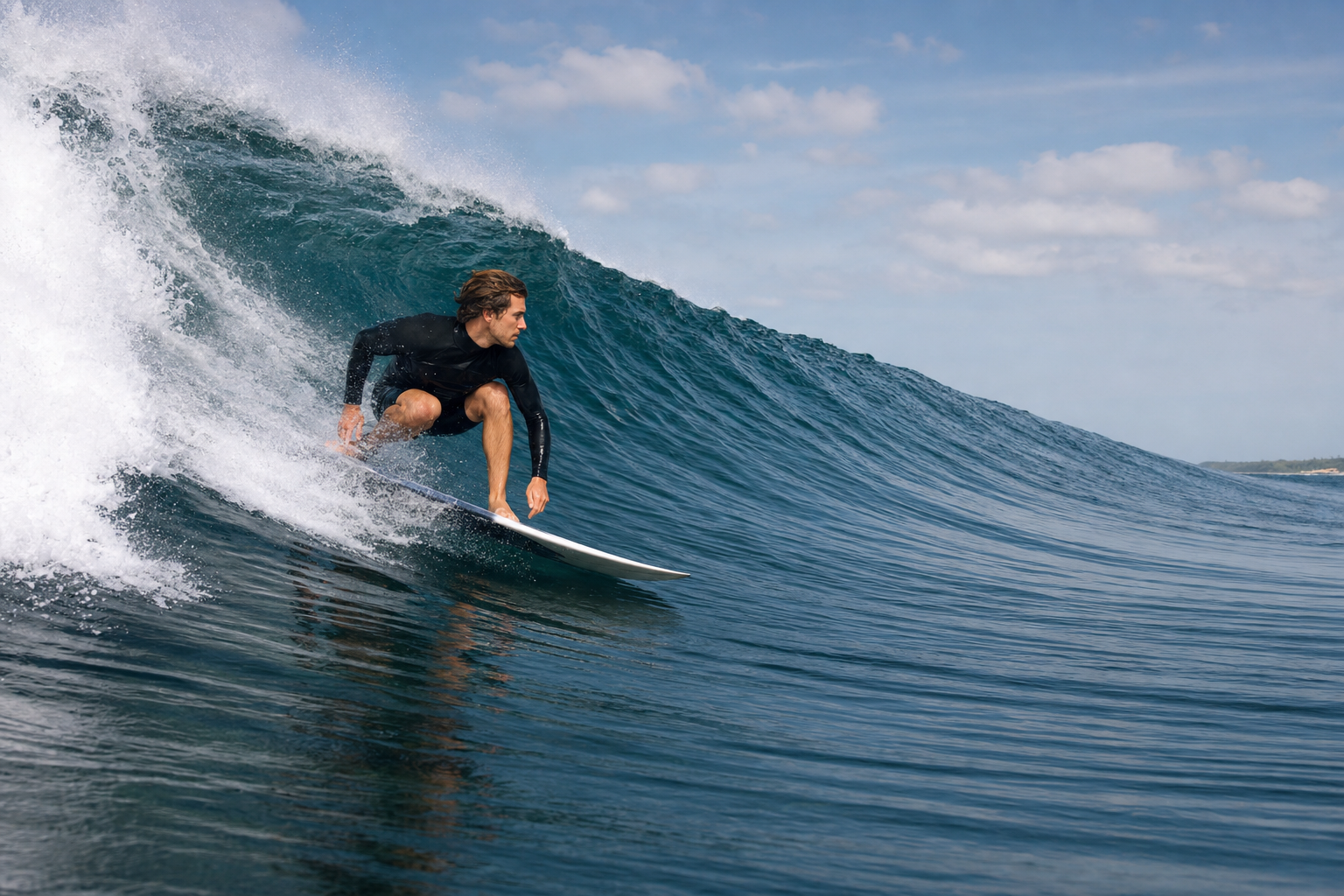
Big, drawn-out bottom turns are beautiful on open-faced waves, but they can be too slow for fast sections. On a racing wall, use a compact bottom turn that redirects the board without wasting distance. Think of it as setting your line rather than performing a full turn.
Stay low, keep the rail engaged, and project back toward the upper part of the face. The top third of the wave usually holds the most speed. Dropping too low may feel powerful, but it often puts you behind the section. Your fin setup plays a big role here — a well-matched set of FCS fins can give you the hold and drive you need to project out of a fast bottom turn. If you ride a Futures-compatible board, a set of performance futures fins is worth considering for the same reason.
Generate Speed With the Wave, Not Against It
Fast waves reward efficient speed generation. Pumping should be smooth and connected to the shape of the face. Compress low as you come down the wave, then extend as you climb. Avoid frantic bouncing, which breaks trim and slows the board.
Good fast-wave surfing uses three main speed lines:
- High line: staying high on the face to race over a fast section.
- Mid-face trim: holding a clean rail line through open wall.
- Low-line projection: dropping lower only when setting up a barrel or turn.
A well-placed surf traction pad on your tail can also help you feel more connected to the board when shifting between these lines under speed.
Surfing Hollow Fast Waves
When a fast wave is hollow, speed control becomes as important as speed generation. You may need to stall slightly to stay in the barrel, then accelerate to beat the next section. Small adjustments matter — a hand drag, a subtle weight shift, or a higher line can change the entire ride.
In the tube, avoid over-turning. Set the rail, keep your body compact, and look toward the exit rather than at the lip. On very fast barrels, the makeable line is often higher than it appears from the beach.
How to Recognize Rideable Fast Waves
The hardest part of fast-wave surfing is judging whether a wave is actually makeable. A fast wave can look perfect and still be impossible if the peel angle is too tight. The best surfers are often the best readers of waves, not just the strongest paddlers.
Signs a Fast Wave Is Rideable
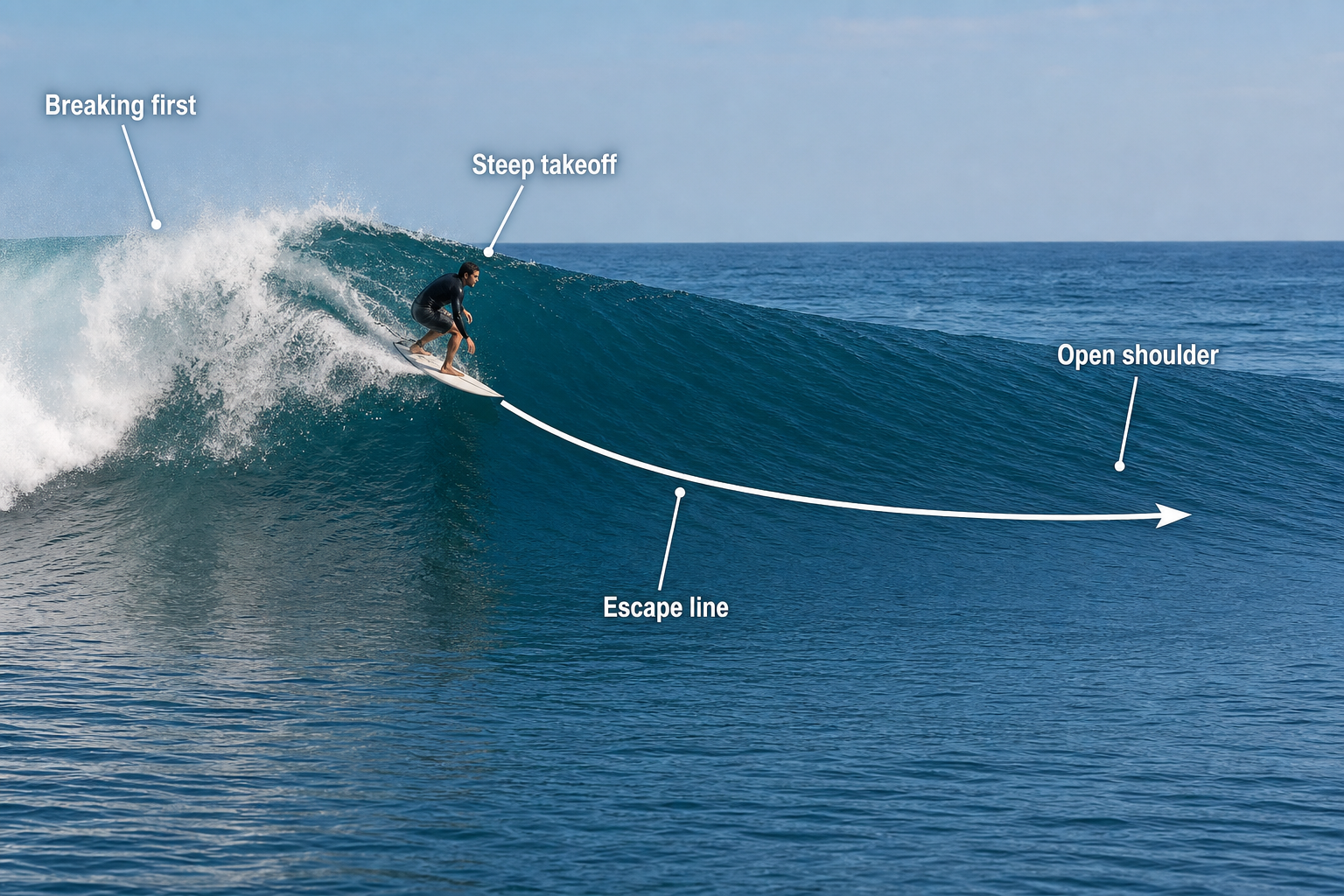
A rideable fast wave usually shows a clear corner. One part of the wave breaks first, and the shoulder begins to taper away down the line. The lip may be pitching, but it is not detonating across the entire wave at once.
Look for these signs:
- The wave feathers at one end before the rest of the line.
- The shoulder stays open for at least a few seconds after takeoff.
- The wall has a diagonal taper rather than a straight horizontal line.
- The lip throws forward into open face, not into flat water.
- Previous waves from the same set produced makeable sections.
From the water, a rideable fast wave often has a visible escape line. You can see where the board needs to go after the drop. If the wave is steep but the shoulder is still drawing open, it may be fast but makeable.
Signs a Fast Wave Is Unmakeable
An unmakeable fast wave usually breaks too straight, too quickly, or too far ahead of the surfer. It may look like a perfect barrel from the beach, but if the exit pinches shut before anyone can reach it, it is not truly rideable.
Watch for these clues:
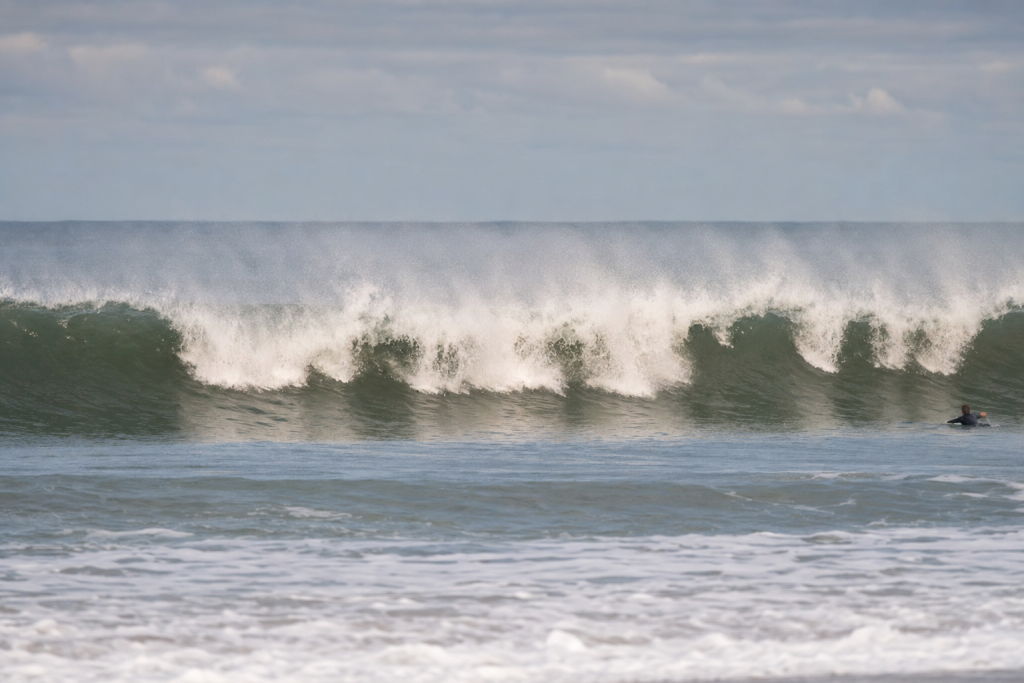
- The entire crest feathers at the same time across the lineup.
- The lip lands far out on the flats with no open shoulder.
- The tube pinches shut well down the line.
- The first section races faster than any surfer can trim.
- The wave doubles up and collapses unevenly.
Closeout-prone beachbreaks often produce waves that look tempting but offer no real exit. At reef and pointbreaks, unmakeable waves often happen when the swell direction is too straight or when the tide makes the wave too shallow and square.
Best Bottom Structure for Fast Waves
Bottom structure is one of the biggest factors in creating fast waves. The ocean floor determines where a wave slows, where it steepens, and how it peels. Great fast waves are usually formed over a bottom that is abrupt enough to create power but angled enough to create a peel line.
Fast Waves Over Reefs
Reefs create some of the fastest and hollowest waves in the world. Coral, lava, and rock ledges do not shift like sand, so the wave can break with remarkable consistency. A shallow reef shelf causes a wave to stand up suddenly, while a nearby channel helps the wave peel and provides a clean shoulder.
The most powerful reef waves often break where deep water meets a very shallow ledge. If the ledge is too square to the swell, the wave closes out. If the reef bends or tapers, it can produce a fast, makeable barrel. Surfing reef waves carries more physical risk, and wearing reef booties is worth considering if you are surfing shallow water. A surf helmet and an impact vest can add meaningful protection on heavier days.
Fast Waves Over Sandbars
Sandbars can create excellent fast waves, but they change constantly. A good sandbar may form a long angled bank, a defined peak, or a hollow wedge near a rip channel. When the sand is arranged correctly, the wave can peel quickly and produce clean barrels.
Sand-bottom fast waves are more sensitive to tide and swell direction than reef waves. A bank that is perfect at low tide may be too deep at high tide. A slight shift in swell angle can turn a flawless runner into a closeout.
Fast Waves at Pointbreaks
Pointbreaks create fast waves when swell wraps along a headland and breaks over a rock, sand, or cobblestone bottom. The point shape naturally gives the wave a peeling angle. When the swell direction is right, the wave can run for a long distance with repeated speed sections.
Fast pointbreaks often have distinct sections. The takeoff may be steep, the middle may race, and the inside may barrel or reform. Learning the behavior of each section is part of surfing these waves well.
Seabed Gradient and Fast Waves
A steeper seabed gradient makes waves rise and break more abruptly, which typically produces steeper, hollower waves. A gentler gradient creates slower, softer waves because the swell loses energy gradually over a longer stretch of seafloor.
For fast waves, the ideal gradient depends on the type of break. A hollow reef may need a dramatic ledge. A long pointbreak may work better with a moderate, even slope. A beachbreak may need a steep inside bank with just enough angle to prevent total closeouts.
Best Swell Conditions for Fast Waves
Swell direction, period, and size determine whether a fast-wave setup becomes world-class or frustrating. The same reef or sandbar can produce perfect barrels one day and impossible closeouts the next.
Best Swell Direction for Fast Waves
Fast waves usually work best when the swell hits the bottom feature at an angle. If the swell approaches too directly, the wave may break all at once. If it approaches from too far around the corner, it may be weak or inconsistent.
For reefs and points, the best swell angle is often one that lines up with the contour of the bottom — the wave should bend along the reef or point rather than slam squarely into it. For beachbreaks, the best angle often creates peaks and corners rather than long, straight sections.
There is no universal perfect swell direction because every coast faces a different way. The principle is universal though: the swell must be direct enough to bring energy and angled enough to create a makeable line.
Best Wave Period for Fast Waves
High-quality fast waves often prefer groundswell in the 12- to 18-second range. This period range carries enough energy to wrap, focus, and stand up over the bottom. Longer-period swells can create exceptional waves at reefs and points because they feel the bottom earlier and bend more dramatically around features.
Very long-period swell, such as 18 to 22 seconds, can also overpower some beachbreaks, closing out long stretches of coast if the sandbars are not well shaped. Short-period swell of 8 to 10 seconds can still make fast waves, but they tend to be less organized and less powerful.
Best Wave Height for Fast Waves
The best height depends on the break. Some sandbars produce fast, fun waves at chest-high. Many reef and point waves need overhead swell before they connect properly. Big-wave reefs may not show their true speed until the surf is well overhead.
As a general guide:
- Chest-high to overhead: good for learning fast sections at manageable spots.
- Overhead to double-overhead: common range for serious reef and point waves.
- Double-overhead and larger: typically requires specialized equipment and solid local knowledge.
Too much size can ruin a fast wave. A reef that peels perfectly at six feet may become an unrideable closeout at ten feet if the swell direction is wrong. Size only helps when the bottom can hold it.
Best Tide, Wind, and Other Factors for Fast Waves
Fast waves are especially sensitive to small environmental changes. Tide can alter the depth over the break. Wind can open or destroy the barrel. Currents can shift the takeoff zone. The best sessions usually happen when several factors align at once.
Best Tide for Fast Waves
Many fast waves are best on low to mid tide because shallower water makes the wave stand up and pitch. This is especially true for reef ledges and sandbars that need less water over them to break properly.
However, tide is highly spot-specific. Some shallow slabs need a bit more water to become rideable. Some pointbreaks run better on a pushing tide because the incoming water helps the wave connect through sections. Some beachbreaks are best around mid tide because low tide makes them too hollow and high tide makes them too soft.
A useful general rule: lower tide usually makes waves faster, steeper, and hollower. Higher tide usually makes waves slower, softer, and less critical. The ideal tide is whichever gives the wave shape without making it too shallow or too fat.
Best Wind for Fast Waves
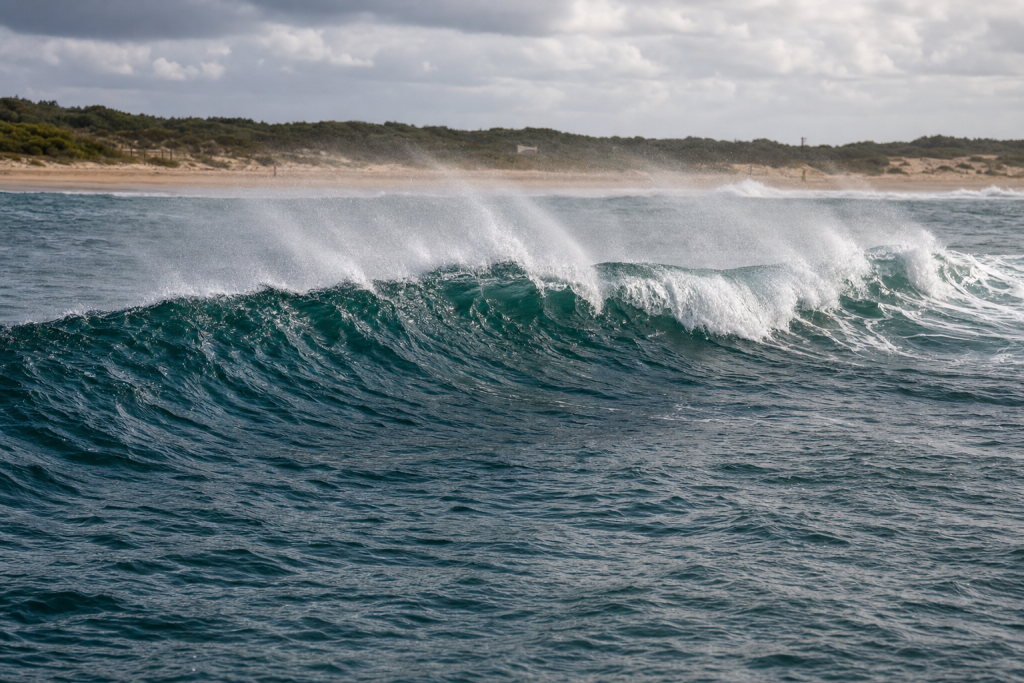
Light offshore wind is ideal for most fast waves because it holds the face open and helps the lip throw cleanly. Cross-offshore wind can also work well, particularly at points where the wind blows into the barrel.
Strong offshore wind can make drops harder by holding the surfer up the face or blowing spray into their eyes. Onshore wind breaks up the face and makes fast waves harder to read. A light texture is manageable, but clean conditions reveal the true shape of a fast wave.
How Currents and Swell Consistency Affect Fast Waves
Currents can either help or hurt a fast-wave setup. A rip beside a sandbar can sculpt an excellent peak, but a strong side current can pull surfers away from the takeoff zone. At reef passes, current flowing through the channel can affect where the wave bends and how it breaks.
Swell consistency also matters. Long-period groundswell often arrives in defined sets with clear lulls between them. Short-period swell may produce more constant waves, but the shape tends to be less organized. The best fast waves usually come from groomed swell with enough interval between sets for the lineup to reset.
Board Choice for Fast Waves
The right board for fast waves depends on size, power, and hollowness. The goal is to combine paddle speed, hold, and projection. A board that feels loose in small surf may feel unstable on a powerful fast wall. A board that is too long or too stiff may be difficult to fit into the curve of the wave.
Shortboards for Fast Waves
For head-high and overhead fast waves, a high-performance shortboard with enough rocker is often the best choice. Rocker helps the board fit into steep drops. A refined rail helps hold the face. A rounded pin, squash, or swallow tail can all work depending on the wave.
On smaller fast waves, boards with a little extra width or flatter rocker can help generate speed quickly. But if the wave is hollow, too much width or a rocker that is too flat can make the board difficult to control in the pocket.
Step-Ups for Bigger Fast Waves
When fast waves become powerful and well overhead, many surfers move to a step-up. A step-up is typically longer than a standard shortboard, with more paddle power and extra hold. The added length helps with early entry, while the narrower outline helps maintain control at speed. Pin tails and rounded pins are common on hollow fast waves because they hold well in steep faces.
Whatever board you ride, having a fresh coat of surf wax suited to your water temperature helps you stay connected to your board through critical sections. If you take a beating on a reef and come up with a ding, carrying a ding repair kit in your bag means you can patch it quickly and get back out.
Famous Fast Waves Around the World
The world’s best fast waves come in many forms. Some are reef barrels, some are sand-bottom freight trains, and some are long pointbreak runners. Each one has its own preferred swell direction, tide, and rhythm.
| Surf Spot | Type of Fast Wave | Why It Is Fast |
|---|---|---|
| Pipeline, Hawaii | Hollow reef left and right | North Pacific groundswell hits shallow reef ledges and creates steep, powerful barrels. |
| Teahupo’o, Tahiti | Heavy reef pass left | Long-period South Pacific swell unloads over an abrupt coral shelf, producing a thick-lipped barrel. |
| Cloudbreak, Fiji | Long left reef | South and southwest swells wrap along a reef platform with multiple fast barrel sections. |
| Desert Point, Indonesia | Fast left point reef | Southwest swell runs down a shallow reef, creating long high-speed tubes. |
| Jeffreys Bay, South Africa | Fast right pointbreak | Southwest groundswell peels along a long point with racing walls and barrel sections. |
| Skeleton Bay, Namibia | Left sand-bottom point | Long-period South Atlantic swell meets a desert sandbar and produces extremely fast barrels. |
| Kirra, Australia | Right sand-bottom point | Well-shaped sandbanks and cyclone swell can create long, fast, hollow rights. |
| G-Land, Indonesia | Left reef point | Indian Ocean groundswell runs along a long reef with several fast sections. |
| Mundaka, Spain | Left river-mouth sandbar | Sand shaped by the river mouth creates a fast, hollow left on the right swell and tide. |
| Puerto Escondido, Mexico | Heavy beachbreak | Powerful south swells hit steep sandbars, producing fast barrels and frequent closeouts. |
How to Choose the Right Fast Wave for Your Level
Not all fast waves are equally demanding. A chest-high pointbreak with a predictable shoulder is very different from a shallow reef barrel. The best way to progress is to choose waves that are fast enough to teach speed but not so critical that every mistake ends the ride immediately. If you are still building your fast-wave repertoire, a full-length wetsuit or a rash guard will keep you comfortable during long sessions spent figuring out the lineup.
Good Fast Waves for Progression
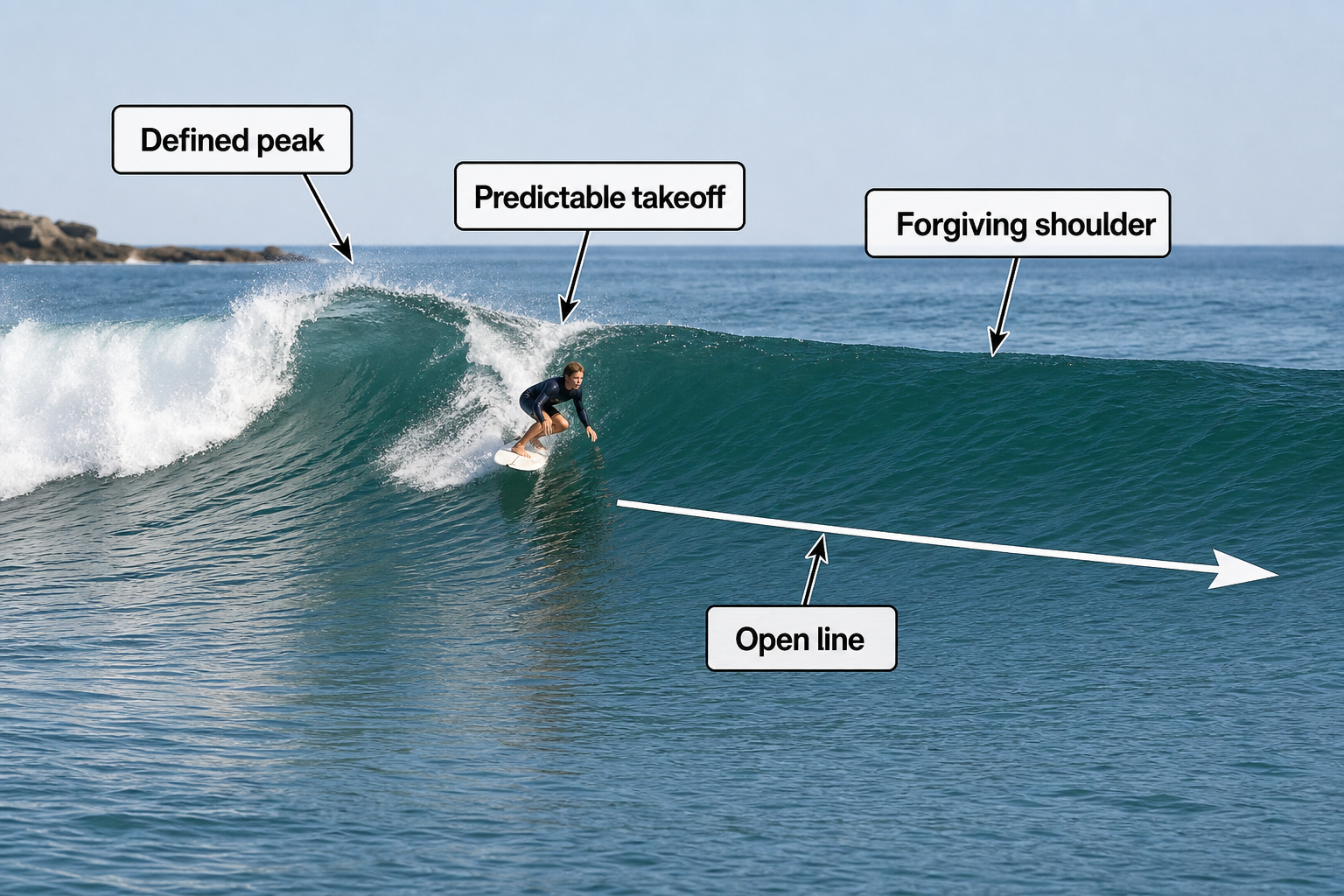
For learning, look for waves with a defined peak, a forgiving shoulder, and a predictable takeoff. A fast but open-faced pointbreak is often better than a hollow beachbreak. The goal is to practice angling takeoffs, trimming high, and making sections without dealing with extreme hollowness or shallow reef consequences.
Advanced Fast Waves
Advanced fast waves usually have more consequence at takeoff and less room for recovery. These include shallow reef passes, powerful beachbreaks, and long sand-bottom barrels. On these waves, success depends on reading the set, committing early, and choosing the correct line from the first second of the ride. If you want to document sessions at serious fast waves, an action camera is a great way to review your positioning and technique afterward. Pair it with a high-capacity microSD card so you never run out of storage mid-session.
Fast waves are created when swell energy, bottom shape, and wave angle combine to form a steep, racing wall. The best ones are not just quick — they are makeable, organized, and shaped by a bottom that allows the wave to peel. Learning to surf them means learning to read corners, take off with purpose, and use the upper part of the face for speed. Once you understand how fast waves work, they stop looking chaotic and start revealing lines, sections, and opportunities that slower waves simply never offer.