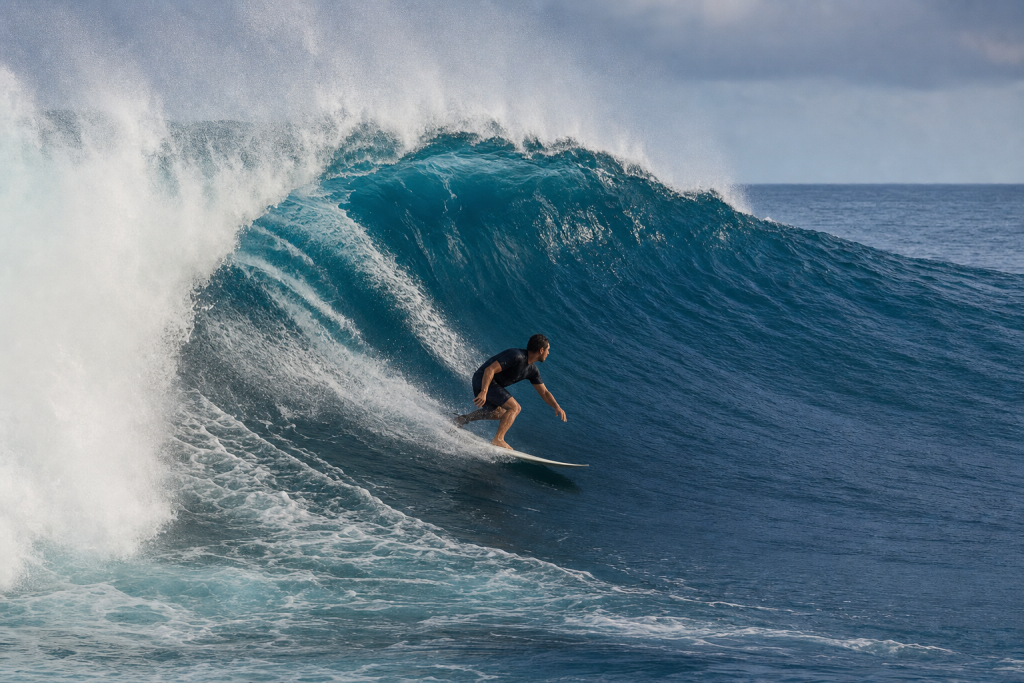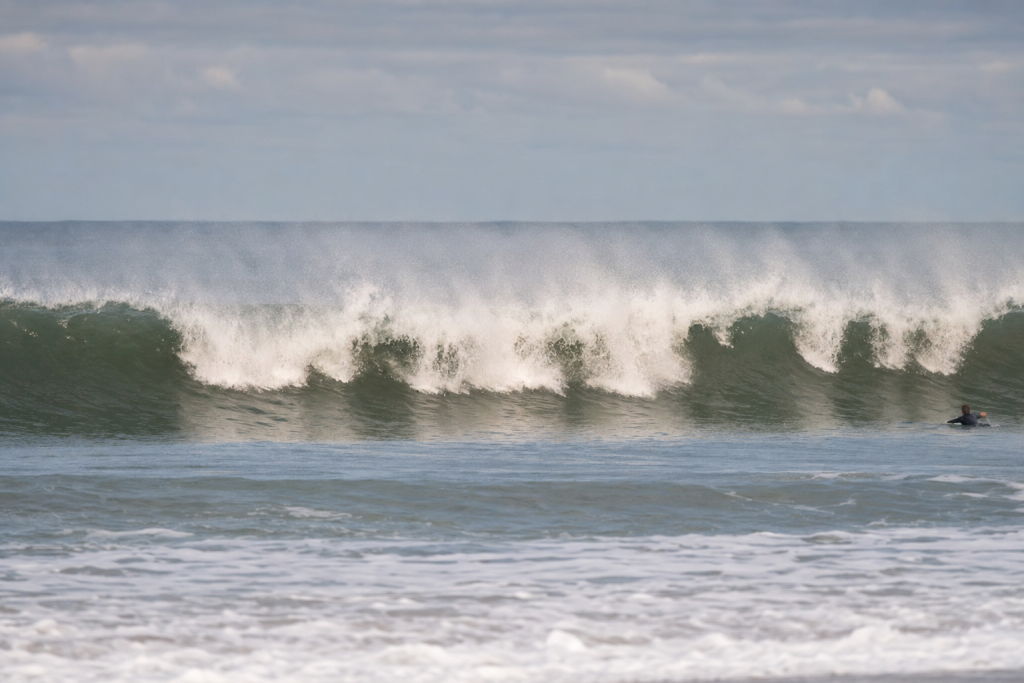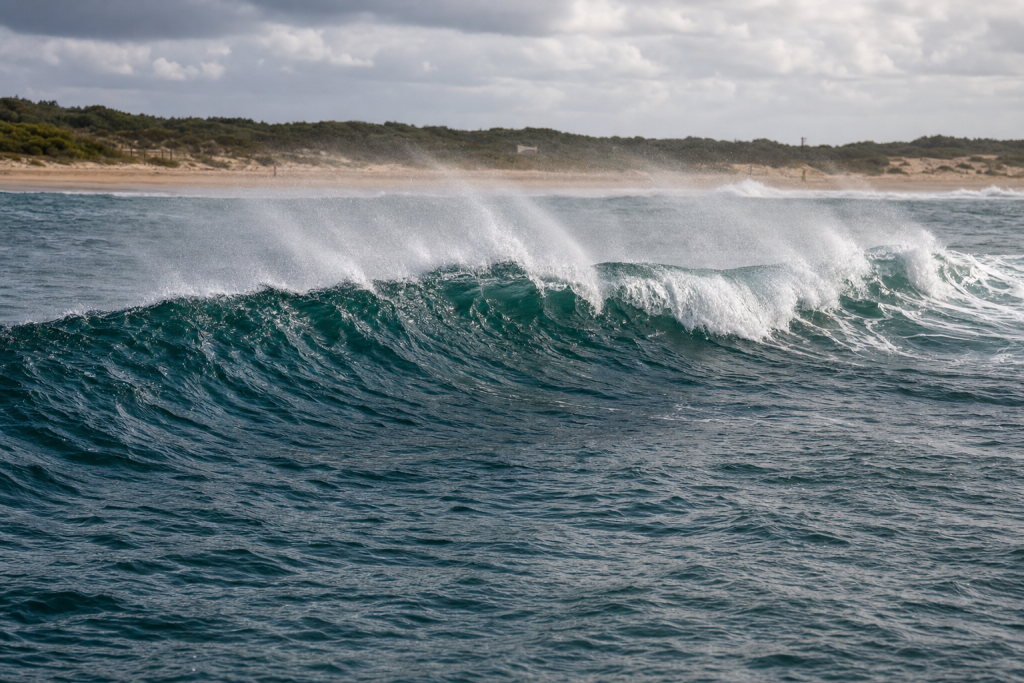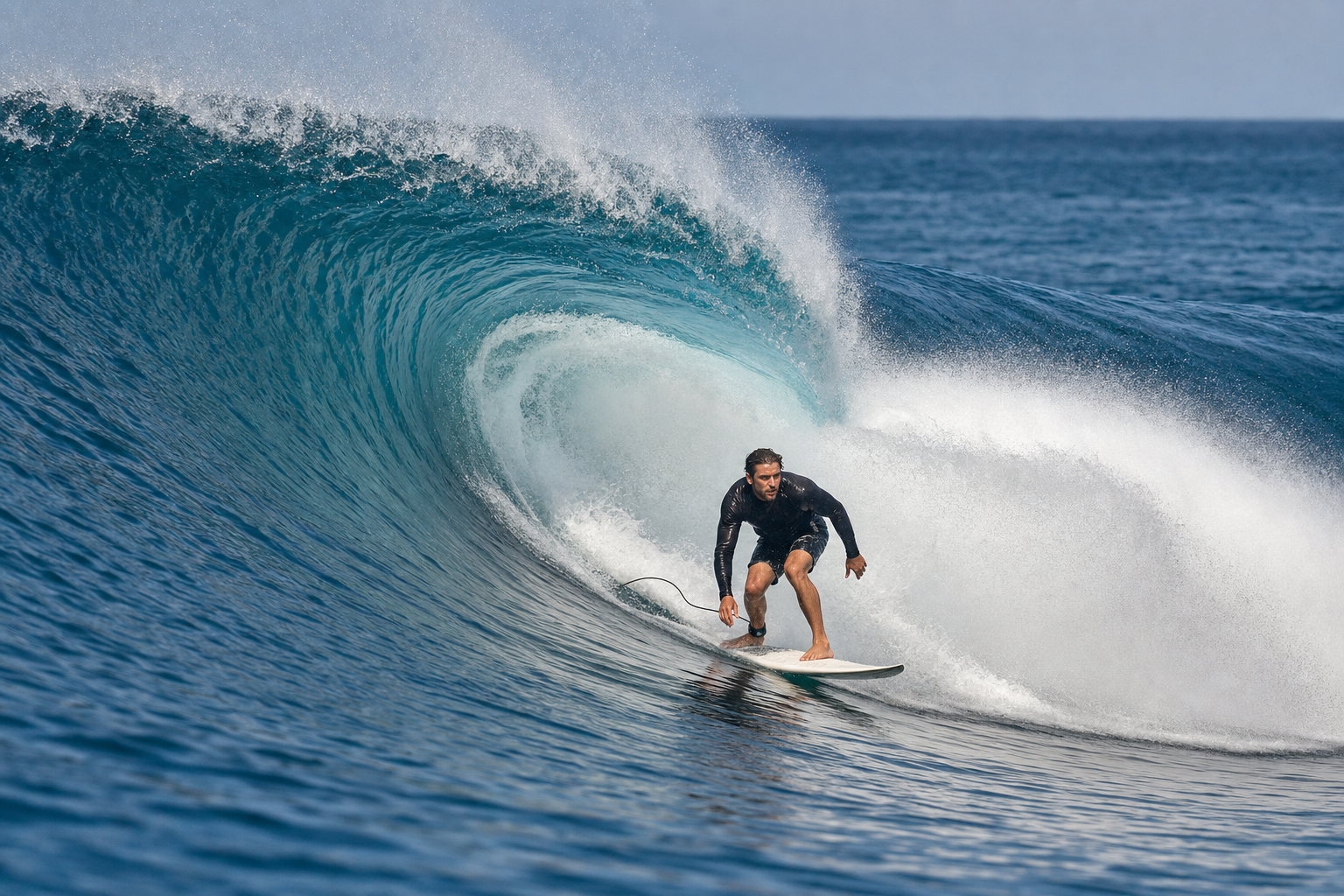
A wave that “spits” is one of surfing’s most dramatic sights: a hollow barrel throws over, seals into a tube, then blasts a plume of mist and compressed air out of the opening. That burst is more than visual theater. It tells you the wave has power, a defined tube, and enough lip speed to create a pressurized hollow section. For surfers, understanding what makes waves spit helps with reading conditions, choosing the right takeoff spot, and knowing when a barrel is makeable rather than a fast-moving trap. If you want to go deeper on tube-riding technique, a resource like this surf technique book is worth having on your shelf.
What Makes Waves Spit?
Waves spit when a hollow breaking wave forms a barrel, traps air inside the tube, and forces that air out through the open end as the lip lands and the tube tightens. The “spit” is a mix of air, spray, and fine droplets ejected from the barrel. Getting comfortable in these kinds of waves takes the right gear too — a reliable surfboard leash is essential when you’re surfing powerful hollow surf.
The basic process looks like this:
- The wave steepens quickly. This usually happens when swell energy hits shallow water or a sudden change in bottom contour.
- The lip pitches forward. Instead of crumbling, the top of the wave throws out ahead of the base.
- A hollow tube forms. The falling lip encloses space between the wave face and the curtain of water.
- Air gets compressed. As the lip lands and the barrel narrows, the trapped air is pushed toward the exit.
- The wave exhales. Spray blasts out of the barrel, creating the spitting effect.
Not every barreling wave spits. A soft barrel may stay open without much pressure. A crumbly barrel may collapse before air can build. A true spitting wave usually needs a clean, powerful lip and a tube that briefly seals or narrows enough to force air outward.
The Spitting Wave Shape: Steep, Hollow, and Fast
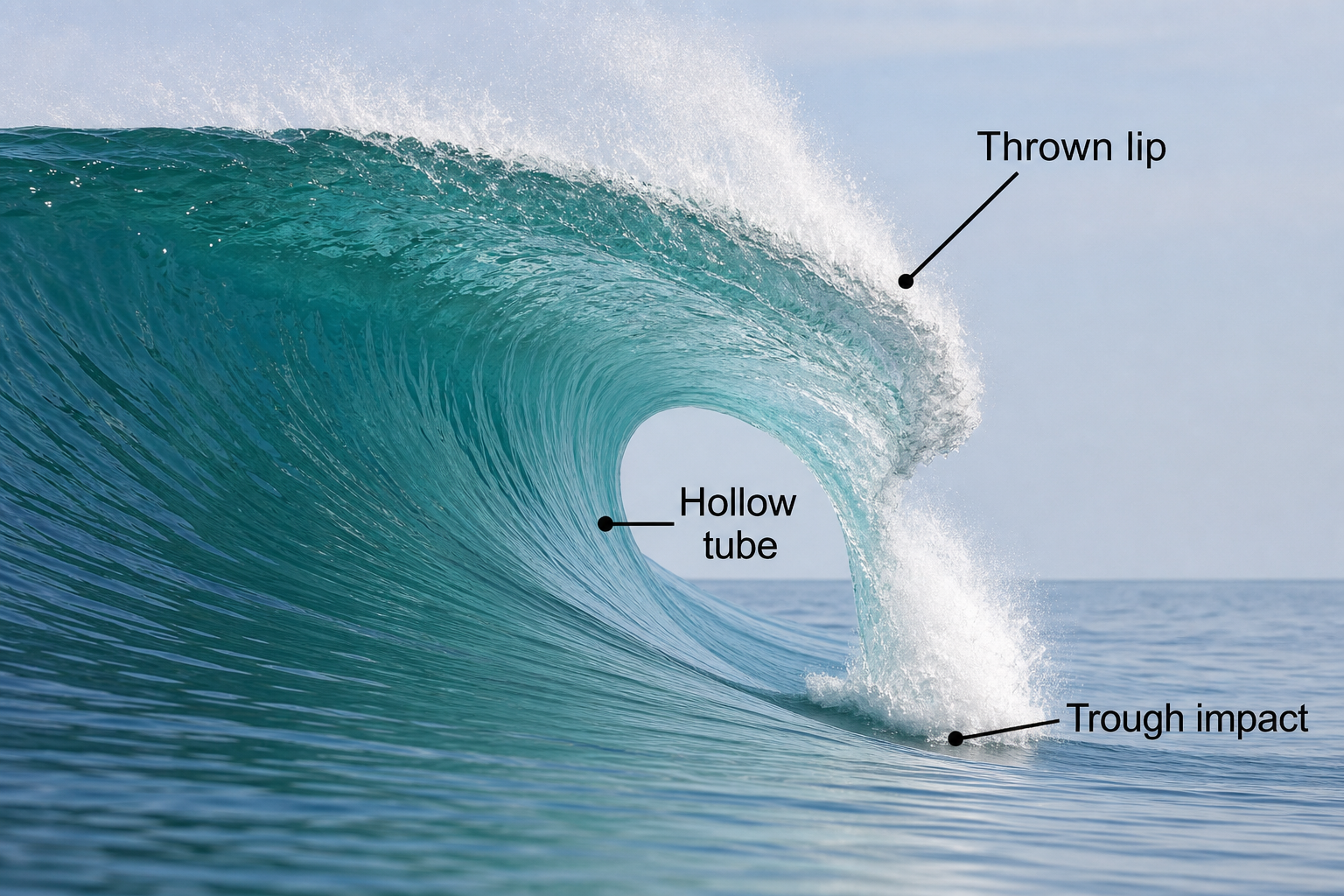
Spitting waves belong to the hollow and barreling wave family. Their defining feature is not just that they break, but how they break: the lip throws outward with force, creating a round or oval tube before detonating in the trough.
Steepness and Hollowness
The wave face on a spitting wave is steep because the bottom of the wave slows down in shallow water while the upper part keeps moving forward. When this happens rapidly, the lip cannot simply spill down the face — it pitches out.
The hollowness comes from the distance between the pitching lip and the wave face. A very hollow wave has a lip that lands far out in front of the base. The farther the lip throws, the deeper the barrel. If the lip throws too far and the shoulder does not keep peeling, the wave may become unmakeable.
Power and Lip Thickness
Spitting waves are powerful because a lot of water is moving over a shallow or focusing bottom. The lip is often thick, especially at reef breaks and slab waves. A thick lip creates more compression inside the barrel, which produces a stronger spit.
Power is not only about height. A head-high wave over a shallow reef can be more intense than a larger but softer wave over a deep sandbar. What matters is how quickly the swell energy is forced upward and forward.
Speed Down the Line
Most spitting waves are fast. The breaking section moves laterally along the reef, point, or sandbar while the surfer has to match that speed from inside the tube. A wave can be hollow but slow, which makes it more forgiving. A classic spitting wave usually combines hollowness with speed, so the surfer must set a precise line early.
Why Some Barreling Waves Spit and Others Don’t
The difference between a normal barrel and a spitting barrel often comes down to pressure, cleanliness, and geometry.
A Clean Lip Creates a Sealed Tube
Clean conditions help the lip throw in one smooth sheet. Offshore or light cross-offshore wind can hold the face open and groom the lip. When the lip lands cleanly, it can seal the barrel for a moment. That temporary seal increases pressure inside the tube, causing the wave to spit through the opening.
The Barrel Must Have an Exit
A closeout can spit, but that doesn’t mean it’s rideable. The most desirable spitting waves have an open exit down the line. The tube compresses behind the surfer, then releases spray forward through the remaining opening. This is the classic “getting blown out of the barrel” effect.
The Wave Needs Enough Energy
Weak waves can form small tubes, but they rarely spit with force. Long-period groundswells and powerful local swells carry more energy. When that energy hits a suitable bottom, the lip throws harder and the barrel has more internal turbulence.
Are Spitting Waves Good for Surfing?
For experienced barrel riders, spitting waves can be among the best waves in surfing. They offer speed, power, and a clear tube-riding canvas. For beginners and many intermediate surfers, they are usually difficult because the takeoff is steep and decisions must be made immediately.
Surf Quality
A high-quality spitting wave has a clean face, a defined shoulder, and a barrel that peels rather than shuts down all at once. The best versions are predictable enough that the surfer can choose a line, stall or accelerate, and find the exit.
Lower-quality spitting waves may look impressive from shore but be difficult to ride. If the wave is too square, too sectiony, or too shallow, the barrel may be more spectacle than opportunity.
How Hard Are Spitting Waves to Surf?
Spitting waves are generally advanced to expert-level waves. The difficulty comes from several factors:
- Late takeoffs: The surfer often has to paddle into a steep face just as the lip starts throwing.
- High speed: Once standing, there is little time to adjust.
- Critical positioning: Too high, too low, or too deep can end the ride quickly.
- Limited exits: The surfer must read whether the barrel will stay open down the line.
That said, not all spitting waves are equally hard. A small, sand-bottom tube with a tapered shoulder may be approachable for a confident intermediate surfer. A thick reef slab or heavy tropical reef pass is a completely different challenge.
How to Surf Spitting Waves
Surfing a spitting wave is mostly about positioning before the barrel forms. Once inside, small adjustments matter more than dramatic turns.
Choose the Right Takeoff Spot
The ideal takeoff spot is usually close to the peak but not so deep that the lip lands in front of you. On many hollow waves, the best surfers sit slightly inside the pack and closer to the critical section. This lets them enter early enough to control the drop while still being deep enough for the barrel.
Watch several sets before paddling into one. Notice where the best waves bend, where the lip first throws, and where the exit opens. Spitting waves often have a boil, ledge, or sandbar corner that marks the takeoff zone.
Angle Into the Drop
On a hollow wave, going straight to the bottom can be too slow. Angling the takeoff helps match the wave’s down-the-line speed. The more hollow and fast the wave is, the more important that early angle becomes.
On very steep waves, the surfer may need to commit to a controlled free-fall, land with weight centered, and immediately set the rail. On smaller barrels, a smoother angled entry is usually enough.
Set Your Line in the Barrel
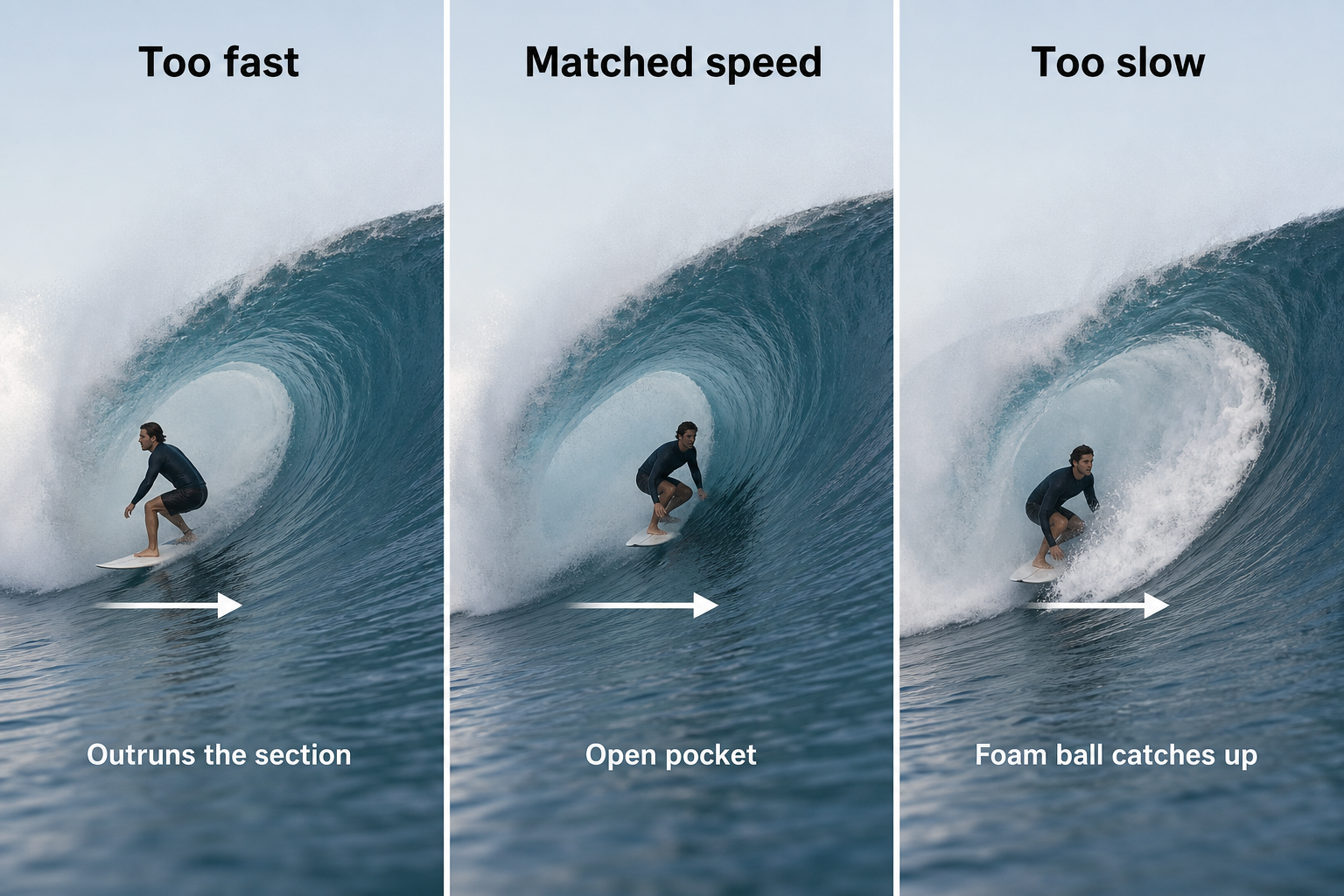
Once the tube forms, the goal is to travel at the same speed as the barrel. Too fast and you outrun the section; too slow and the foam ball catches you.
Common adjustments include:
- High line: Riding higher on the face creates speed and keeps you above the collapsing foam.
- Stall: Dragging a hand or compressing low can slow you down when you are too far ahead.
- Pump: Subtle rail-to-rail movement can add speed when the exit is racing away.
Good grip underfoot is essential in this kind of surfing. A quality surf traction pad on your tail gives you something to push against when you need to stall or drive through a section. Pairing that with well-suited fins also makes a difference — a set of FCS fins can help you find drive and hold on a steep wave face.
Read the Spit, But Don’t Rely on It
If a wave spits while you are inside, the barrel is compressing and the exit may be nearby. However, spit can also come from a section closing out behind or ahead of you. The more useful clues are the shape of the opening, the speed of the shoulder, and whether the wave continues to peel.
How to Recognize Rideable Spitting Waves
From the beach or lineup, rideable spitting waves have a few recognizable traits. They may look intense, but they still offer a path through the barrel.
Signs of a Makeable Spitting Wave
- A tapered shoulder: The wave breaks from the peak into a defined open face instead of shutting down evenly.
- An almond-shaped barrel: The opening is round enough to fit through and angled down the line.
- A peeling lip line: The lip throws progressively rather than all at once.
- A visible exit: Even if the barrel is deep, the shoulder stays open ahead.
- Consistent bottom contour: The wave breaks predictably over the reef, point, or bar.
Makeable spitting waves often have a rhythm. The peak stands up, the lip throws, the tube breathes, and the shoulder continues down the line. That rhythm lets the surfer anticipate where to be.
Signs of an Unmakeable Spitting Wave
- A straight swell line: If the whole wave breaks at the same time, it is likely a closeout.
- No taper: A square wall with no shoulder usually offers no exit.
- A lip landing too far out: If the curtain detonates far beyond the base, the tube may be too wide to outrun.
- Heavy chandeliers: Falling water inside the barrel can block the line.
- Random boils or backwash: Disturbed water can make the tube unpredictable.
A wave can spit beautifully and still be unrideable. For surfers, the key question is not “Does it spit?” but “Does it peel with an open door?”
Ideal Bottom Structure for Waves That Spit
The seabed is one of the biggest reasons some surf spots produce spitting barrels. The best setups force swell energy to rise quickly while allowing the wave to peel along a line.
Reef Breaks
Reefs are the classic bottom for spitting waves. Coral or rock creates a fixed contour, so the wave breaks in a similar way on each set. A sudden transition from deep water to a shallow ledge can make the lip pitch hard and hollow.
Some reefs have channels next to the breaking zone that help shape the wave, absorb whitewater, and create a clean exit. Pipeline, Teahupo’o, and Cloudbreak are famous examples of reef waves that can spit with tremendous force. Surfing over reef also comes with real risks, so wearing reef booties is a smart precaution at shallow breaks.
Sandbars
Sandbars can also create spitting waves, especially when storms or currents sculpt a steep bar with a deep trough beside it. The advantage of sand is that the setup can become excellent for a period of time. The disadvantage is that it changes constantly.
Beachbreak barrels often depend on a combination of swell angle and sandbar shape. Puerto Escondido and Hossegor are well-known for heavy sand-bottom tubes that can spit when the banks line up.
Points and Reef Points
Point breaks can produce long, hollow sections when swell wraps along the contour at the right angle. These waves may not always be as square as slabs, but they can offer longer tubes and more makeable exits.
Kirra, Desert Point, and sections of G-Land are examples where the wave peels along a defined line and can spit during the best conditions.
Slabs
Slabs are extreme hollow waves that break over abrupt shallow ledges, often rising out of deep water and unloading suddenly. Slabs can spit violently because the lip is thick and the barrel compresses quickly.
Many slabs are short, square, and highly technical. They may produce spectacular barrels, but makeability depends on whether the ledge creates an exit rather than a sudden explosion. Surfing slabs is where protective gear really earns its keep — an impact vest can absorb the blow if a heavy lip catches you, and a surf helmet is worth serious consideration at shallow, consequence-heavy spots.
Seabed Gradient and Why It Matters
Seabed gradient controls how quickly a wave changes shape as it enters shallow water. A gradual slope tends to create softer, spilling waves. A steep transition tends to create hollow, plunging waves.
For waves that spit, the ideal gradient is usually steep enough to make the lip throw, but not so abrupt that the wave simply detonates. The best setups often include:
- Deep water close to the break: This allows swell energy to approach with less loss.
- A shallow ledge or bar: This forces the wave to stand up quickly.
- A peeling contour: This turns raw power into a rideable line.
In simple terms, the wave needs a ramp and a runway. The ramp makes it hollow. The runway makes it surfable.
How Swell Direction Affects Waves That Spit
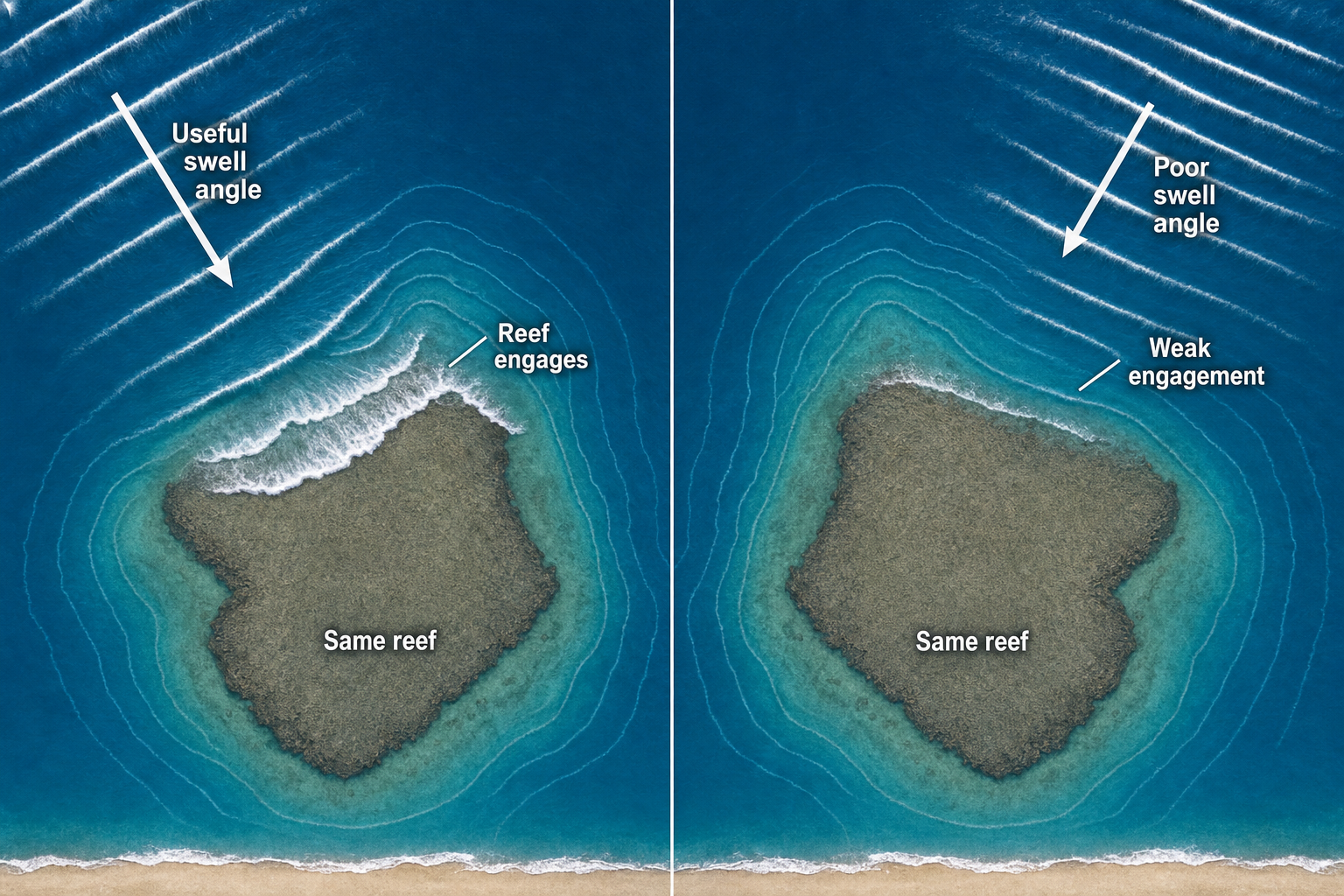
Swell direction determines how the wave meets the bottom. The same reef or sandbar can be perfect on one swell angle and completely flat on another.
The Best Swell Angle
The best swell angle is usually one that hits the bottom contour at a diagonal rather than straight on. A diagonal approach allows the wave to peel. If the swell is too straight, the wave may close out. If it is too angled, the energy may miss the reef or produce a weak shoulder.
At many hollow reefs, the ideal swell angle is slightly oblique to the reef line. At many beachbreaks, a mix of swell directions can create crossed-up peaks that help prevent long closeouts.
There is no universal best compass direction because every surf spot faces a different way. The principle is universal though: the swell should hit the bottom with enough direct energy to barrel, but enough angle to peel.
Swell Direction and Focusing
Underwater canyons, reef bends, and offshore shelves can focus swell energy into certain spots. This is why one peak may be double overhead and spitting while a nearby peak stays soft. Bathymetry bends swell lines through refraction, concentrating power where contours aim the energy.
How Swell Period Affects Waves That Spit
Swell period is the time between passing wave crests. Longer-period swells carry more energy and feel the bottom earlier. This can make waves stand up more dramatically over reefs and ledges.
Short-Period Swell
Short-period swell, generally below about 10 seconds, is usually weaker and more affected by local wind. It can still create hollow beachbreaks if the sandbar is steep and the wind is clean. However, it often lacks the organized power needed for classic spitting reef barrels.
Mid-Period Swell
Mid-period swell, roughly 10 to 14 seconds, can be excellent for many sandbars and points. It may create punchy, hollow waves without overloading the break. Some beachbreaks actually prefer this range because very long-period swell can close them out.
Long-Period Swell
Long-period swell, around 15 seconds and above, is often associated with powerful reef barrels. These swells move with more deep-water energy, refract strongly, and can draw hard off shallow bottoms. Many famous spitting waves come alive on long-period groundswell.
Longer is not always better, though. A swell that is too long for a particular break may break too wide, focus too much energy, or create unmakeable sections. The best period always depends on the spot’s bathymetry.
Best Wave Height for Spitting Waves
The best wave height depends on the break, but spitting waves usually need enough size to engage the bottom properly. Too small and the wave may not throw. Too large and it may close out or break beyond the ideal ledge.
General patterns include:
- Small hollow beachbreaks: Chest-high to overhead can be enough if the bar is steep.
- Reef passes and reef points: Overhead to double overhead is often a prime range.
- Heavy slabs: Some need serious size to break correctly, while others become too dangerous or chaotic when oversized.
A wave’s thickness matters as much as its face height. A six-foot wave with a thick lip over a shallow reef can spit harder than a taller wave with a soft shoulder.
Best Tide for Waves That Spit
Tide changes water depth over the breaking bottom. Since hollow waves depend on depth, tide can completely change whether a wave spits.
Low Tide
Lower tide often makes waves hollower because there is less water over the reef or sandbar. Many spitting waves are best from low to mid tide. The risk is that too little water can make the wave shut down, section too hard, or break unevenly.
Mid Tide
Mid tide is often the most balanced window. There may be enough water for the wave to hold shape, but not so much that it becomes fat. Many reef and beachbreak barrels are best on a pushing or dropping mid tide, depending on the local setup.
High Tide
High tide can soften a wave by adding depth. Some spots stop barreling when the tide gets too high. However, certain slabs and reefs need more water to break properly, especially if the ledge is extremely shallow. At those spots, high tide may make the barrel more rideable while still allowing it to spit.
The best tide is highly local. A one-foot difference can turn a perfect spitting barrel into a flat-faced wall or a closing ledge.
Wind and Surface Conditions That Help Waves Spit
Wind does not create the main barrel shape, but it strongly affects whether the lip throws cleanly.
Offshore Wind
Light offshore wind is usually ideal. It blows up the face of the wave, holds the lip open slightly longer, and smooths the surface. This can create a cleaner tube and a more visible spit.
Strong offshore wind can be a mixed blessing. It may make the wave look perfect, but it can also hold surfers up on the takeoff and blow spray into their path.
Cross-Offshore Wind
Cross-offshore wind can be excellent at some breaks, especially if it matches the direction of the barrel. It can groom the face while helping the tube stay open down the line.
Onshore Wind
Onshore wind usually breaks up the lip and turns barrels into crumbly sections. Some heavy waves can still barrel in light onshore wind, but the spit is often less clean and the exit harder to read.
Other Factors That Contribute to Spitting Waves
Swell Consistency
Consistent swell gives the lineup a rhythm. Surfers can learn which waves are wide, which ones bend, and which ones spit with an open exit. Inconsistent swells can still produce great barrels, but they are harder to read.
Multiple Swell Directions
At beachbreaks, two swell directions can create peaks instead of closeouts. A main swell may provide power while a secondary swell adds shape. When the angles combine well, the result can be a wedging barrel that spits.
Currents and Channels
Currents can sculpt sandbars, create wedges, or hold open a section. Channels beside reefs can help organize the wave and give the barrel a cleaner exit. Too much current can make positioning difficult and disturb the face.
Backwash
Backwash occurs when water rebounds off a beach, cliff, or reef and meets incoming waves. Sometimes it makes a barrel more dramatic. More often, it adds bumps and unpredictability. A little wedge can help a wave spit; too much backwash can ruin the line.
Famous Surf Spots Where Waves Spit
Many world-class barrel spots are known for spitting waves when the conditions align. Each one works differently, but all combine swell energy with a bottom that creates hollow, pressurized tubes.
| Surf Spot | Location | Why It Spits |
|---|---|---|
| Pipeline and Backdoor | Oahu, Hawaii | Powerful North Pacific swell hits shallow reef ledges, creating thick barrels with explosive exits. |
| Teahupo’o | Tahiti, French Polynesia | Long-period swell rises abruptly over a shallow reef, producing an extremely thick and compressed barrel. |
| Cloudbreak | Fiji | A long reef pass turns strong South Pacific swell into fast, hollow, spitting sections. |
| Desert Point | Lombok, Indonesia | A long left reef point peels over shallow coral, creating extended tubes and strong spit on the best swells. |
| Padang Padang | Bali, Indonesia | A focused reef barrel that needs the right swell direction and size to produce its famous left-hand tubes. |
| G-Land | Java, Indonesia | Long reef sections turn Indian Ocean groundswell into fast, hollow barrels. |
| Kirra | Queensland, Australia | A sand-bottom point setup can create long, fast, sand-dredging tubes when the banks are good. |
| Puerto Escondido | Oaxaca, Mexico | Powerful beachbreak swell hits steep sandbars, producing heavy A-frame barrels that often spit. |
| Skeleton Bay | Namibia | A long sand point creates incredibly fast left barrels with multiple spitting sections. |
| The Box | Western Australia | A shallow slab ledge throws a square, thick-lipped barrel that can spit violently. |
If you ever make it to one of these spots, having a reliable futures fins set dialed in for the conditions can make a real difference. Surfers heading to warmer destinations will want to think about sun protection too — a UPF rash guard is worth packing for long sessions in tropical light. For colder-water barrel spots, a well-fitting full wetsuit keeps you comfortable enough to stay in the water and wait for the right sets.
The Ideal Recipe for Waves That Spit
Spitting waves happen when several factors align. The exact recipe changes from spot to spot, but the general ingredients are consistent:
- A hollow breaking shape created by a steep seabed transition.
- A clean lip helped by light offshore or cross-offshore wind.
- Enough swell energy to make the tube compress and exhale.
- A good swell angle that lets the wave peel rather than close out.
- The right tide to balance hollowness and rideability.
- A defined bottom contour such as a reef, point, or quality sandbar.
If you score a session in waves like these, it’s worth documenting. An action camera mounted to your board or helmet can capture tube time in real detail, and a high-capacity microSD card means you won’t run out of storage mid-session. Heavy surf has a way of finding weaknesses in your equipment too, so keeping a surfboard ding repair kit handy after sessions over reef is always a good call. And if you’re heading out in cold water, a reliable cool-water surf wax will keep your grip solid even when the temperature drops.
The best spitting waves are not simply the heaviest waves. They are the waves where power is shaped into order. A steep bottom makes the lip throw, swell angle gives the barrel direction, and clean wind lets the tube breathe. When all of that comes together, the wave does more than break — it opens, compresses, spits, and delivers one of the most memorable rides in surfing.