Some surf days feel almost engineered: sets arrive at readable intervals, waves stand up in the same spot, and each wall peels with a clear line down the point, reef, or sandbar. Other days, even with similar size on the forecast, the ocean looks confused and hard to surf. The difference usually comes down to how the swell was generated, how it travels, and how the seafloor turns that moving energy into breaking waves. Understanding why some swells produce consistent surf helps you choose better sessions, read waves more accurately, and surf them with more confidence. If you’re still dialing in the fundamentals, a resource like this surf technique book can help you connect the theory to what you actually feel on the water.
What “Consistent Surf” Really Means
Consistent surf has two related meanings. The first is set consistency: surfable waves arrive often enough that you’re not waiting through long dead patches. The second is wave-shape consistency: each wave breaks in a predictable way, with a reliable takeoff zone and a makeable shoulder. A truly good consistent swell usually delivers both. The sets are regular, and the waves share a similar shape from one set to the next. That doesn’t mean every wave is identical — it means the ocean has a clear pattern. You can watch for ten minutes, understand where the best waves break, and then position yourself with a reasonable chance of being in the right place. Having reliable gear matters here too. A quality surfboard leash keeps you connected to your board so you can focus on reading the lineup rather than swimming after it.
Inconsistent surf often suffers from one or more of the following problems:
- Waves arrive from several directions and break unevenly.
- The swell is too small to activate the main reef, point, or sandbar.
- The swell is too big or too straight, causing closeouts.
- The tide puts too much or too little water over the bottom.
- Local wind chops up the face before waves can properly organize.
Why Some Swells Create Consistent Surf
It Starts With a Well-Formed Swell
Swell begins as wind blowing over the open ocean. The strongest, cleanest surf usually comes from storms with three key ingredients: strong sustained wind, long duration, and a large area over which the wind blows. That area is called the fetch. When a storm has a broad, steady fetch aimed toward a coastline, it sends organized wave energy across the ocean. As the swell travels away from the storm, waves sort themselves by speed. Longer-period waves travel faster and often arrive first, while shorter-period waves follow. This sorting process is one reason distant groundswells can look far cleaner than local windswells.
A short-lived storm can still produce powerful surf, but the sets may be uneven and the swell may fade quickly. A long-lived, well-aimed storm can send several days of surf with fewer gaps between sets.
Period Is a Major Reason Some Waves Are More Consistent
Swell period is the time between wave crests, measured in seconds. It affects how deep the swell energy reaches into the water column and how strongly it interacts with the seabed as it approaches shore. Short-period swell, roughly 6 to 9 seconds, is often local windswell. It can be fun but tends to be weaker and more disorganized. Mid-period swell, around 10 to 13 seconds, can produce very good beachbreak surf and playful point waves. Long-period swell, from around 14 to 20 seconds, carries more energy and refracts more strongly around points, reefs, and underwater contours.
For consistent surf, the best period depends on the break. Many classic point and reef breaks come alive in the 12 to 18 second range. Very long-period swells can be excellent, but they can also create long lulls, heavy closeouts, or waves that focus on only a narrow section of coast.
Swell Direction Controls Whether Waves Hit the Break Correctly
Every surf spot has a swell window. Islands, headlands, offshore reefs, and the angle of the coastline all determine which swells can reach it. Even a powerful swell can produce weak surf if most of the energy passes by the break or gets blocked before arriving. Direction also controls the peel. A swell that strikes a beach too directly may break all at once. One that approaches a point or reef at the right angle can wrap along the bottom contours and create a long, tapering wall.
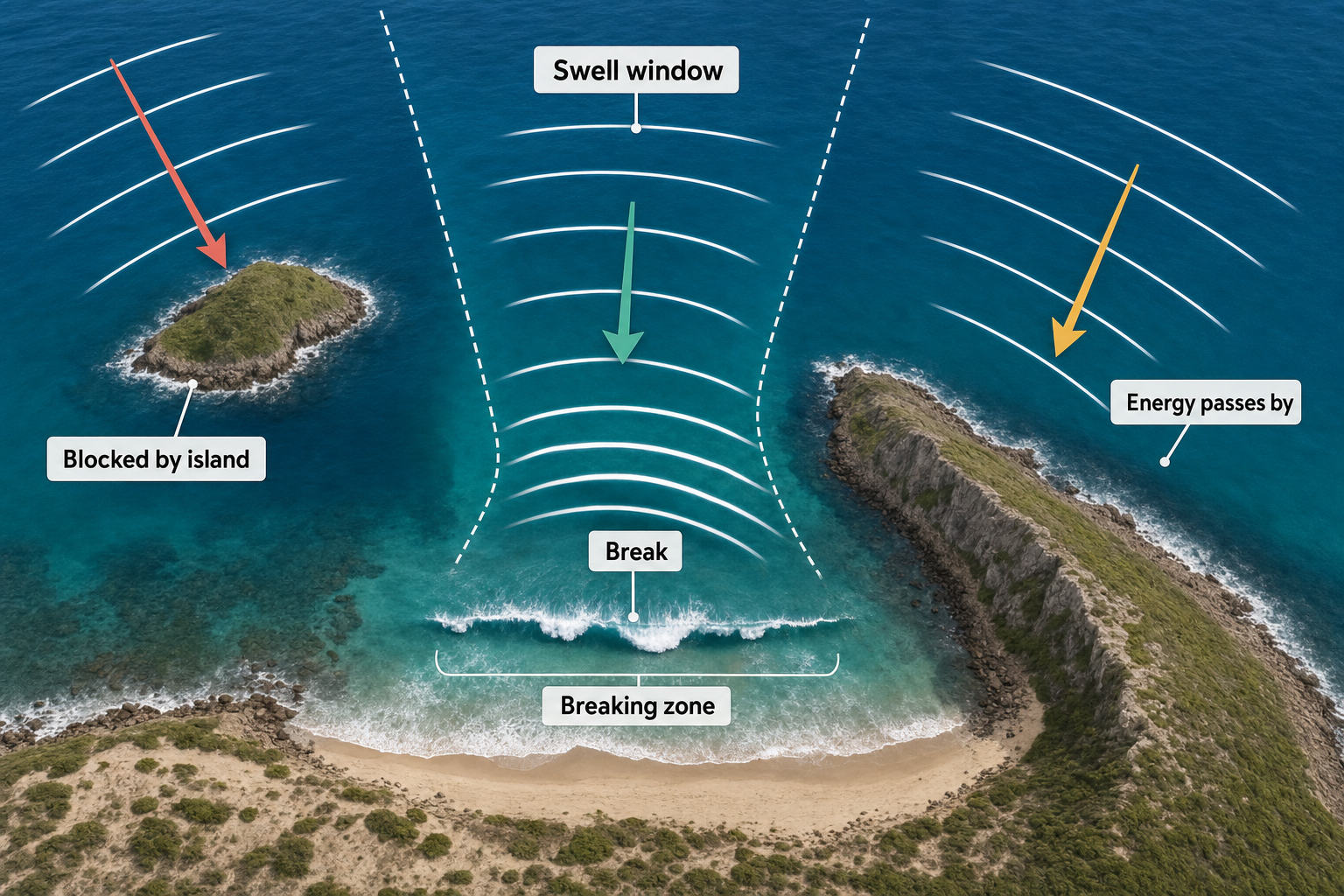
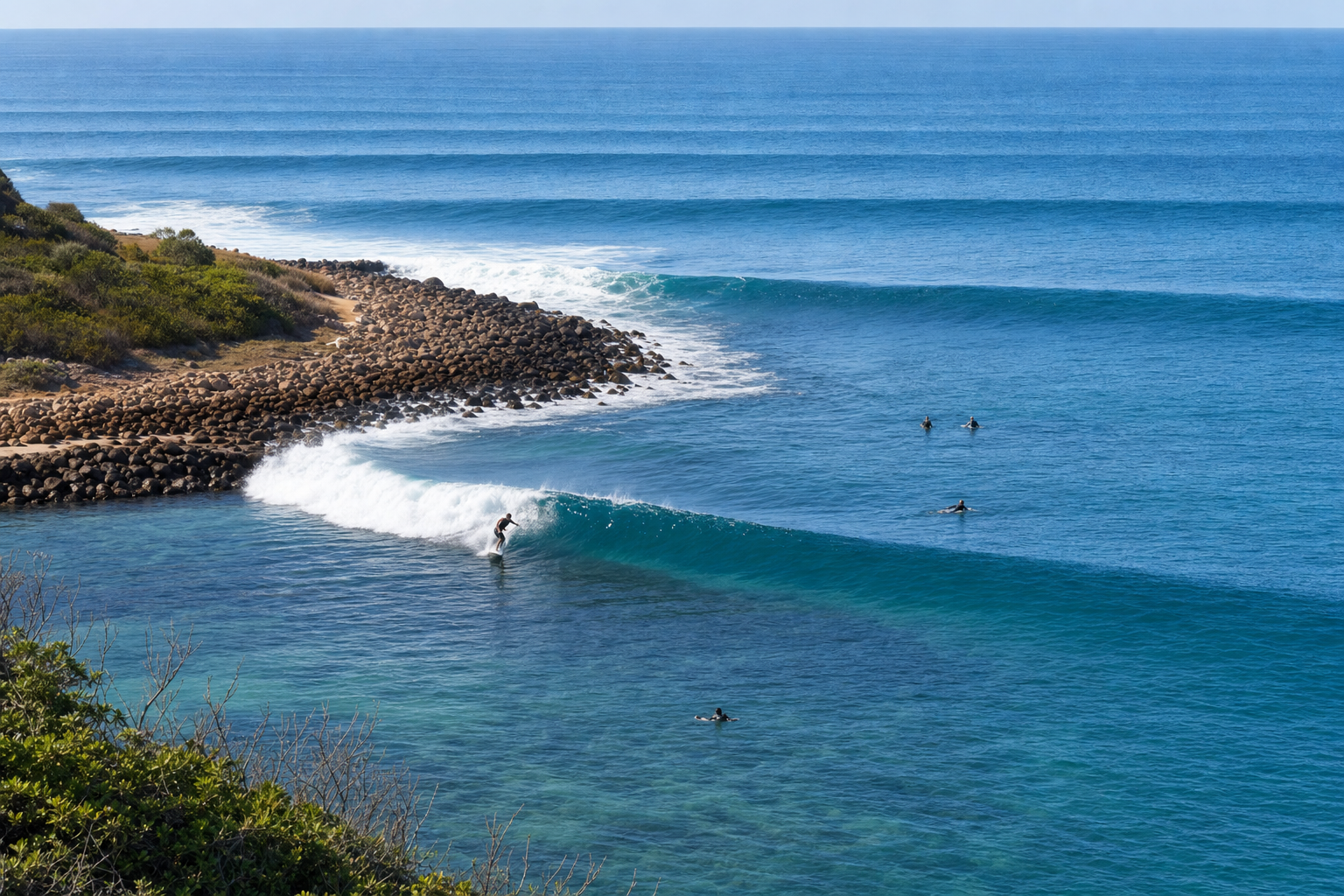
The best swell angle is rarely the most direct. It’s the angle that lets the wave break progressively rather than all at once. For many points, that means the swell approaches from slightly outside the point, bends around it, then peels down the line. For reefs, it means the swell hits the takeoff ledge while still leaving room for the shoulder to run into deeper water.
Clean Swell Is Easier to Read Than Mixed Swell
Consistency improves when one dominant swell controls the lineup. When two or three swells arrive from different directions simultaneously, waves can double up, go flat, or break in odd sections. Mixed swell can occasionally create good peaks at beachbreaks, but it usually reduces predictability. The cleanest consistent surf typically happens when a dominant groundswell arrives with light local wind and minimal secondary swell. The wave lines become easier to see, the peaks repeat in the same spot, and the best takeoff zone becomes clear.
The Shape and Feel of Consistent Surf Waves
Shape: A Defined Peak With a Peeling Shoulder
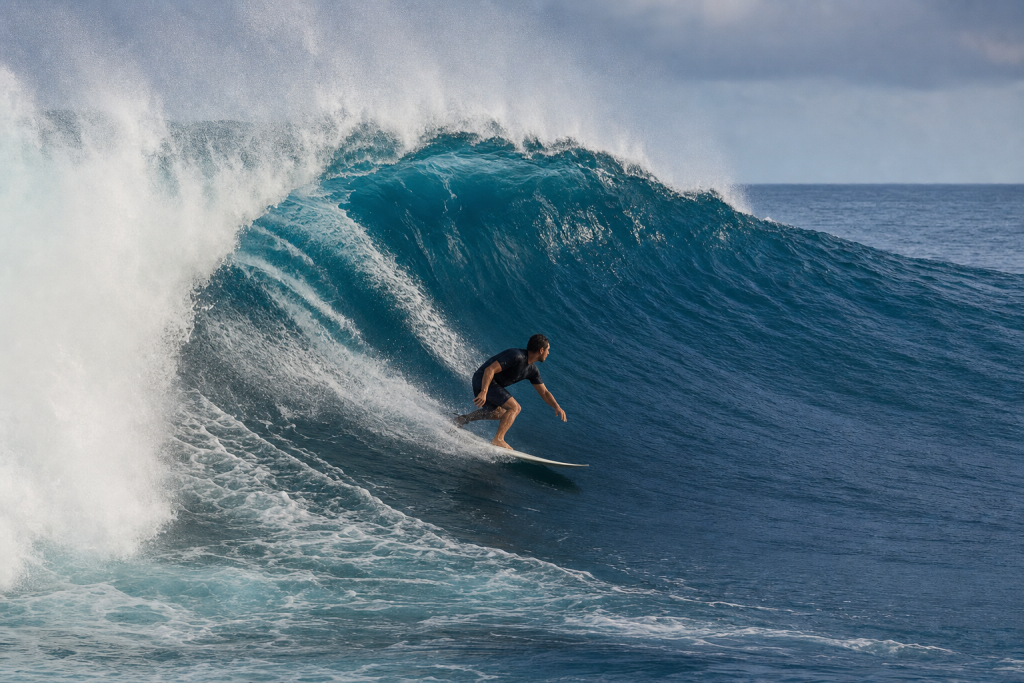
Good consistent waves usually have a clear peak and a shoulder that opens down the line. The peak is where the wave first stands up and begins to break. The shoulder is the unbroken face that gives the surfer room to trim, turn, and build speed. On a classic point break, the wave may start at an outside section, wrap through the middle, then soften on the inside. On a reef, it may pitch over a ledge before easing into a channel. On a quality sandbar, the wave may wedge into an A-frame, offering both a left and right from the same peak.
Predictability Creates Better Rides
Consistent waves are valuable because they let surfers make decisions earlier. You can paddle to a known takeoff spot, angle into the wave, and anticipate sections you’ve already watched. That predictability helps beginners catch more waves, but it also allows experienced surfers to surf faster and more critically. The best consistent surf balances speed and space — fast enough to be exciting, but not so fast that most waves outrun the surfer. It’s steep enough for turns, but not so steep that every takeoff drops into a closing section.
Power, Speed, Height, Steepness, and Hollowness
The power of a wave is closely tied to swell height and period. A four-foot, 16-second groundswell can feel far stronger than a four-foot, 8-second windswell because longer-period waves carry more energy and shoal more dramatically as they reach shallow water. Wave speed has two parts: the swell moving through deep water, and the peel speed — how fast the breaking lip travels down the line. A wave becomes difficult to surf when the peel speed exceeds what a surfer can realistically match.
Height depends on the incoming swell, but also on refraction and bottom shape. Submarine canyons, reef passes, and curved points can focus energy into one spot, making it much larger than a nearby beach. Steepness comes from the relationship between swell energy, tide depth, and seabed gradient. A wave breaking over a gradual slope may crumble softly, while one hitting a sudden ledge may stand up quickly and throw out. Hollowness happens when the lip pitches forward to create a barrel. Hollow, consistent waves usually require a shallow reef, a well-shaped sandbar, or a ledge with deeper water nearby. Long-period swell and light offshore wind can increase hollowness, but too much energy can make the wave too fast or too square to ride cleanly.
Bottom Structure That Turns Swell Into Consistent Surf
Point Breaks Often Produce the Most Consistent Surf
Point breaks are famous for consistency because the coastline itself helps organize the wave. When swell wraps around a headland and runs along a curved or angled bottom, the wave can peel for a long distance. The most reliable point breaks often have a stable bottom made of rock, reef, or cobblestone. Cobblestone points are especially good at producing smooth, even walls because the stones form a textured but stable seabed. The wave breaks in stages rather than detonating all at once. Point waves can range from mellow and forgiving to fast and demanding, depending on how steep the bottom is and how much energy the swell carries.
Reef Breaks Create Mechanical, Repeatable Waves
Reefs are consistent because the bottom doesn’t shift. Coral, lava, and rock ledges create fixed takeoff zones. When the right swell arrives, the wave often breaks in nearly the same place every set. A good reef break usually has a shallow platform where the wave stands up, plus deeper water nearby where the shoulder can run. Channels and reef passes help shape the wave by giving energy somewhere to unload without closing out the entire line. Reef waves can be very hollow because the transition from deep to shallow water is often abrupt — and that same abruptness can make them harder to surf than a point or beachbreak of equivalent size.
If you’re surfing shallow reef breaks, it’s worth thinking about protection. A pair of reef booties can protect your feet during wipeouts, and an impact vest adds a layer of protection to your torso if you’re getting worked over shallow bottom. For more critical reef sessions, a low-profile surf helmet is worth considering as well.
Sandbars Can Be Excellent but Less Permanent
Sandbars can produce extremely consistent surf when the banks are well shaped. A good bar has a clear shallow zone for the wave to break over, with deeper gutters or channels nearby. River mouths, groynes, and longshore drift can all help create organized banks. The challenge is that sand moves. A beach that is perfect one month may be average the next after a storm, a seasonal current change, or a run of different swell directions. When sandbars are good, they can create quality peaks with excellent shape. When they shift, that same swell can turn into nothing but closeouts.
Seabed Gradient Decides Whether Waves Are Soft, Steep, or Hollow
Seabed gradient is the slope of the bottom as it rises toward shore, and it has a significant effect on wave shape:
- Gradual slope: waves break slowly, with softer faces and spilling lips.
- Moderate slope: waves stand up with enough push for turns while staying makeable.
- Steep slope or ledge: waves pitch quickly, often becoming hollow and powerful.
There is no single ideal gradient for all surfers. Beginners usually benefit from softer, slower-breaking waves. Advanced surfers often prefer a steeper bottom because it creates speed, power, and more critical sections to work through.
How Swell Direction, Period, Height, and Tide Affect Consistent Surf
Best Swell Angle for Consistent Waves
The best swell angle is the one that matches the break’s geometry. For a point break, the swell should wrap along the point rather than slam directly into the coast. For a reef, it should hit the ledge at an angle that creates a defined peak and an open shoulder. For a beachbreak, a slight angle often helps create peaks, while a dead-straight swell may close out across a uniform sandbar. If the swell is too far off the ideal angle, the spot may be small and inconsistent. Too direct, and the wave may have size but poor shape. The sweet spot is where enough energy reaches the lineup while still allowing the wave to peel cleanly.
Best Wave Period for Consistent Surf
The best period depends on the bottom and exposure:
| Break type | Often good period range | Typical result |
|---|---|---|
| Beachbreak | 8 to 13 seconds | Peaky, manageable surf when sandbars are well shaped |
| Point break | 11 to 17 seconds | Longer walls with better wrap and cleaner lines |
| Reef break | 12 to 20 seconds | More power, stronger refraction, and increased hollowness |
Longer is not always better. A 20-second swell can over-focus on reefs, miss sheltered points, or turn open beaches into long closeouts. The best period is simply the one the break can handle without losing shape.
Best Wave Height for Consistent Surf
Every surf spot has a size range where it works best. Too small, and the swell may not engage the main part of the bottom. Too big, and sections may connect too quickly or break in the wrong location. Many high-quality breaks are most consistent when working at a moderate percentage of their maximum size — enough energy to peel cleanly, but not so much that it overwhelms the shape. For many everyday spots, that means waist-high to head-high faces. For serious reefs and exposed points, it may mean well-overhead surf.
A useful rule of thumb: does the wave have enough size to stand up, but not so much that the shoulder disappears? If the answer is yes, the swell is probably in the spot’s best range.
Best Tide for Consistent Waves
Tide changes the depth of water over the reef, rocks, or sandbar — and that depth controls where waves break and how steep they become.
- Low tide often makes waves steeper, faster, and hollower.
- Mid tide is often the most balanced and reliable for most breaks.
- High tide can soften waves, but may improve performance at shallow reefs or rocky points.
Some waves are best on a pushing tide because added water helps them run through inside sections. Others are best on a dropping tide because the bar or reef becomes shallow enough to properly focus the swell. Tidal range also matters. A spot with a large tidal swing can change character completely within two hours.
Wind and Surface Conditions Still Matter
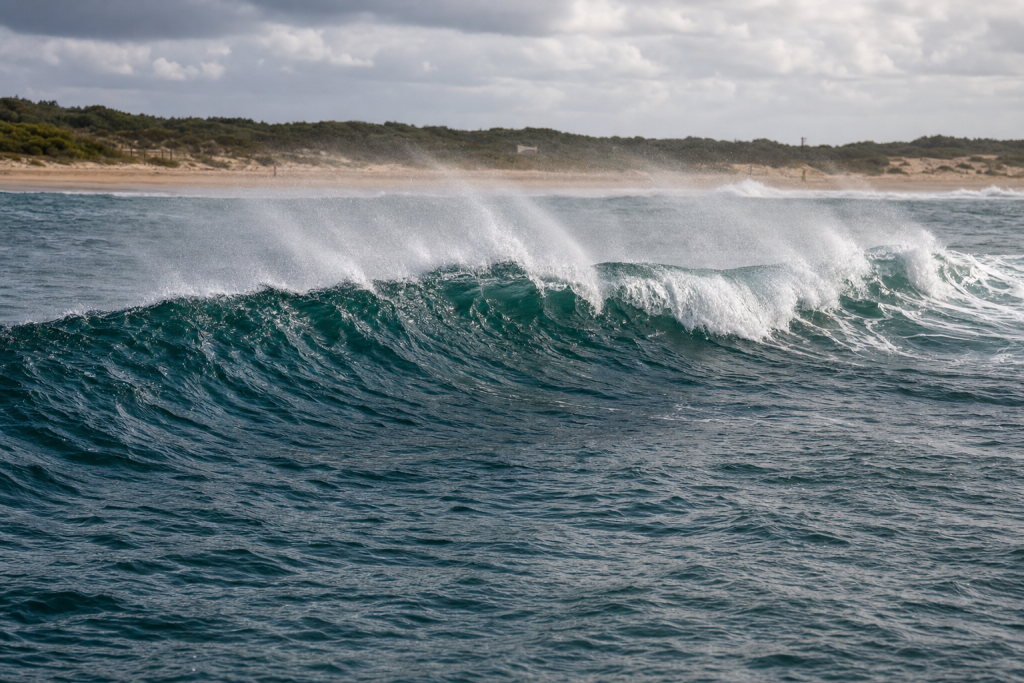
Even a perfect swell can be spoiled by poor local wind. Light offshore wind holds up the face and grooms the surface. Light cross-offshore wind can be excellent at long points because it smooths the wall or blows into the barrel. Onshore wind typically crumbles the lip and makes the face bumpy and hard to read. Too much offshore wind isn’t always ideal either — it can make takeoffs difficult, hold the lip up too long, or create heavy spray that slows you down. The cleanest consistent surf usually combines light wind, organized swell, and a tide that suits the bottom.
How to Recognize Rideable Consistent Waves Versus Unmakeable Lines
Rideable Consistent Waves Have a Clear Shoulder
A rideable wave doesn’t just break — it peels. Look for a section where the lip starts breaking at one point, then travels down the line with an open face ahead of it. The shoulder should stay unbroken long enough for a surfer to angle across it. Good signs include a peak that feathers before the rest of the wave breaks, a shoulder that tapers instead of folding all at once, and previous waves breaking in the same place with makeable exits. On a point or reef, rideable waves often show a smooth diagonal line where the lip throws or crumbles in sequence. On a beachbreak, the best waves often peak slightly unevenly, giving one side a better angle to work with.
Unmakeable Waves Break Faster Than You Can Surf
An unmakeable wave may look impressive from the beach, but the section outruns the surfer. The most obvious example is a closeout, where the entire line breaks at once — no open face, just a wall of whitewater. Other unmakeable waves are less obvious. A wave can have a shoulder but still be too fast if the peel angle is too tight. If the lip races far down the line before you can reach the open face, the wave is more of a shutdown than a ride.
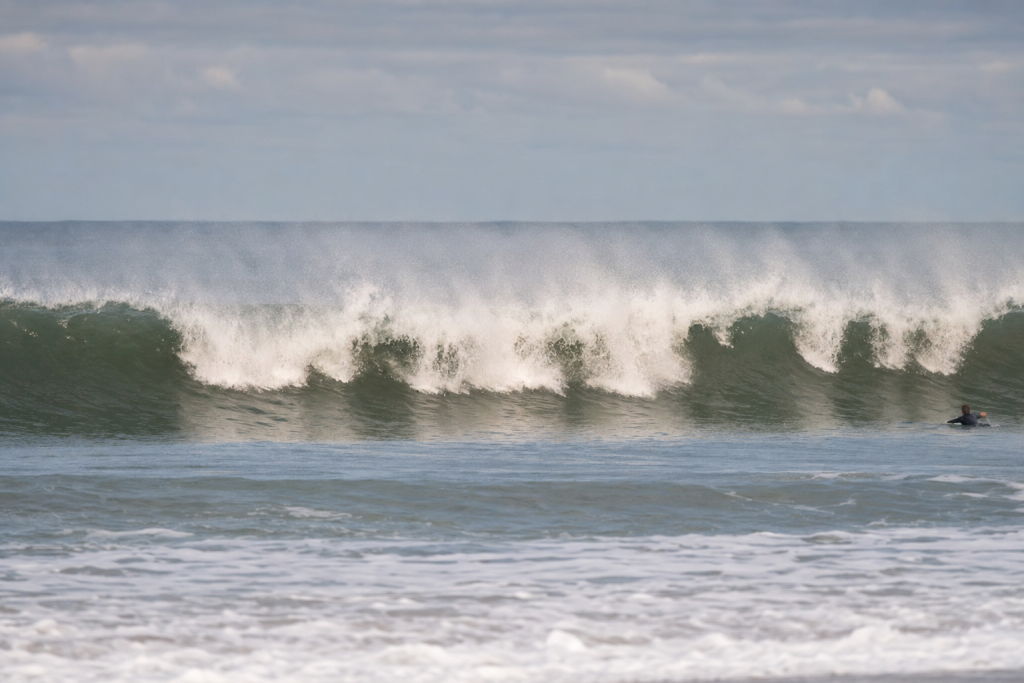
Signs of unmakeable surf include the wave feathering evenly across the whole sandbar, the shoulder pinching shut immediately after takeoff, or backwash creating bumps in the takeoff zone. Long, straight swell lines don’t automatically mean good waves. At a straight beachbreak, they can mean closeouts. The key is not the length of the line — it’s whether the line has angle, bend, or variation that allows the wave to peel.
How Hard or Easy Consistent Waves Are to Surf
Consistent waves are often easier to read, but they’re not always easy to surf. Difficulty depends on the speed, power, steepness, and crowding at the takeoff zone. A soft, waist-high point wave with a predictable shoulder is one of the best types of surf to learn on. The wave gives you time to paddle, stand, trim, and correct mistakes. A head-high reef wave with the same level of consistency may be far more demanding because the takeoff is steeper and the first section is faster.
Consistency can also raise the performance level at a break. When the wave repeats, skilled surfers know exactly where to sit and which line to take. At famous point breaks and reefs, the wave may be predictable, but the pace can be intense — you may need to take off deeper, generate speed immediately, and link turns through long sections without losing momentum.
How to Surf Consistent Waves Well
Study the Pattern Before Paddling Out
Consistent surf rewards observation. Watch several sets before deciding where to sit. Notice where the best waves first feather, where they wall up, and where they slow down. Use landmarks on shore to hold your position once you’re out. Also watch the difference between set waves and smaller inside waves. At many breaks, the biggest wave of the set is not always the best ride. The second or third wave sometimes has a cleaner wall because it breaks with slightly different water movement across the bottom.
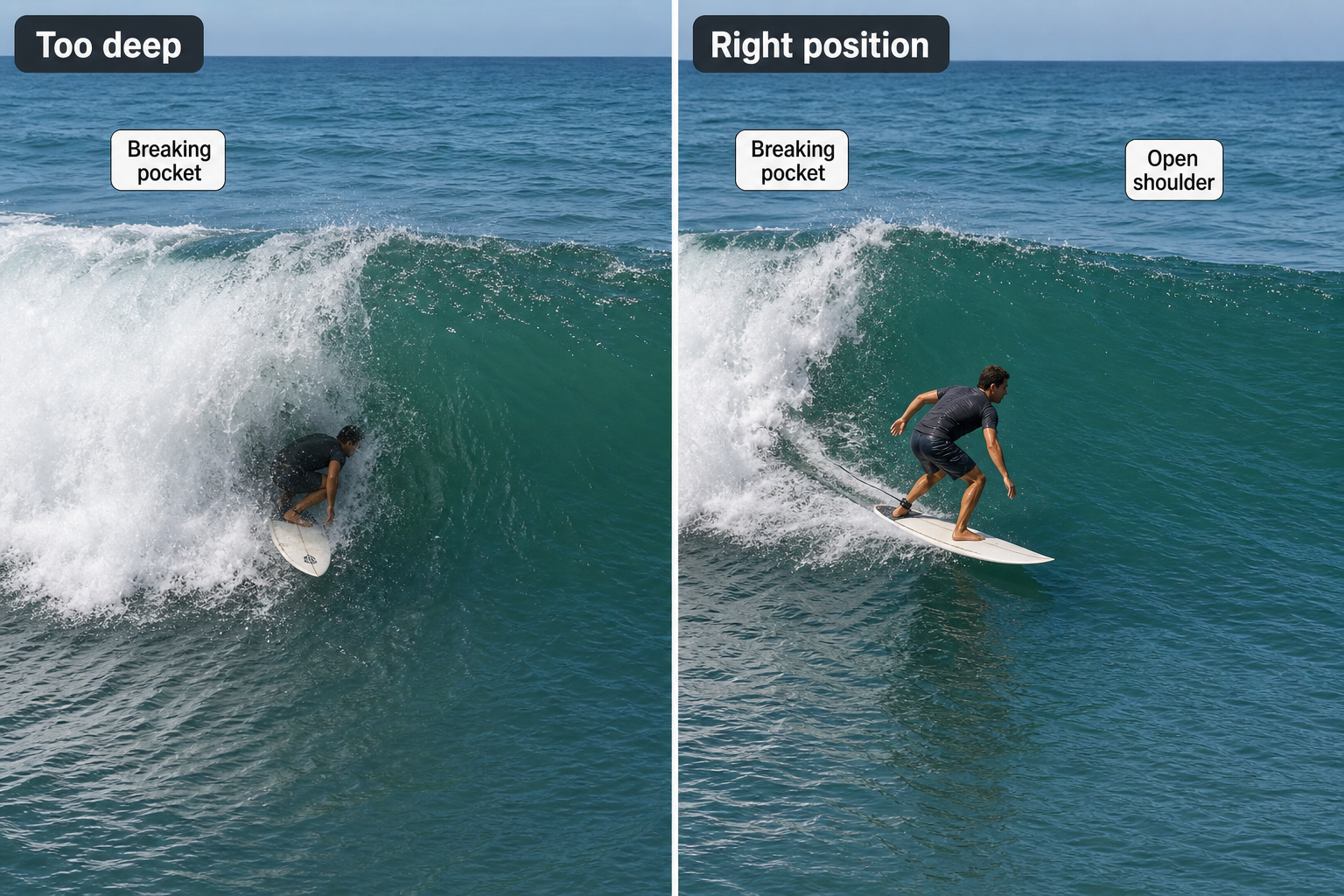
Position Deeper, But Not Too Deep
On a peeling wave, “deep” means closer to the breaking part of the wave. Taking off deeper gives you access to the most powerful section, but going too deep can put you behind the curtain before you’ve built any speed. The right position lets you enter early enough to set a line while still staying close to the pocket. On softer waves, you can take off near the peak and trim high. On faster waves, angle your takeoff and start moving down the line immediately after your feet hit the board.
Match Your Line to the Wave’s Speed
Consistent waves often have recognizable sections, and your line should match each one. A soft wall may call for a high trim and cutbacks to stay in the power zone. A fast wall may require pumping high on the face to generate speed. A hollow section may require a lower line, a stall, or a committed drive through the barrel. Don’t surf every consistent wave the same way. Let the wave’s steepness guide your line. If the shoulder is running, climb higher and build speed. If the wave slows down, return toward the pocket and use a cutback to stay near the energy.

Use the Whole Wave, Not Just the Takeoff
The real advantage of consistent surf is that you can plan beyond the drop. On a long point wave, the first section may be fast, the middle may open for turns, and the inside may bowl up again. On a reef, the takeoff may be hollow before the wave settles into a workable wall. Watch where other surfers gain speed, where they get stuck, and where the best turns happen. The more mechanical the wave, the more valuable each observation becomes. Good equipment also helps you make the most of these waves. The right fins make a big difference in how you handle speed and transitions — a set of FCS fins or Futures-compatible fins can help you stay connected through longer, faster sections. A reliable surf traction pad on your tail gives you confident footing when the wave picks up speed. And if you’re surfing in cooler water, a good wetsuit or a rash guard in warmer conditions keeps you comfortable across longer sessions.
Keeping your board in good shape matters too, especially at rocky points and reef breaks. A compact ding repair kit lets you patch small cracks before they become bigger problems. Some surfers also like to document their sessions at quality waves — an affordable action camera mounted to your board or helmet can capture the whole ride, especially useful for reviewing your line on a long, mechanical wave. Pair it with a high-capacity microSD card so you don’t run out of storage mid-session. Before paddling out, a fresh coat of surf wax on your deck ensures your feet stay planted through every turn.
Famous Surf Spots Known for Consistent Waves
No famous wave is perfect every day. Each one depends on season, swell direction, period, tide, and wind. Still, some breaks are celebrated worldwide because the right swell turns them into highly consistent, high-quality surf.
| Surf spot | Wave type | Why it produces consistent surf |
|---|---|---|
| Rincon, California | Right point break | Winter northwest swells wrap along a cobblestone point, creating long, sectioned walls. |
| Malibu, California | Right cobblestone point | South and southwest swells peel over a classic point setup with a smooth, forgiving shoulder. |
| Jeffreys Bay, South Africa | Fast right point | Southern Ocean swells run down a long, angled reef and sand point, producing exceptional speed and length. |
| Snapper Rocks, Australia | Right sand point | Well-shaped sand and east to southeast swell can create long, linking sections through the Superbank. |
| Chicama, Peru | Long left point | Southwest swells wrap down multiple point sections, forming some of the longest rideable waves in the world. |
| Pavones, Costa Rica | Left point break | Long-period south and southwest swells wrap into a long left wall with repeated sections. |
| Lower Trestles, California | Cobblestone reef peak | A consistent cobblestone bottom and well-angled swells create high-performance rights and lefts. |
| Cloudbreak, Fiji | Left reef break | Long-period southwest swells focus over a reef ledge, creating powerful walls and hollow sections. |
These waves show that consistency can take very different forms. Malibu is often soft and elegant. Jeffreys Bay is fast and demanding. Cloudbreak is powerful and hollow. Chicama is known for extraordinary length more than raw power. The shared trait is that the swell and seabed combine in a repeatable, predictable way — and that’s what separates a truly good break from just another stretch of coastline.
What Makes Waves Consistent: The Full Picture
Consistent surf isn’t caused by any single magic factor. It happens when the swell, wind, tide, and bottom all align. A well-aimed groundswell provides organized energy. The right period lets that energy interact with the seabed properly. The correct swell angle creates peel instead of closeout. The tide puts the right amount of water over the bottom. Light wind keeps the face clean enough to read and ride. The most important lesson is that surf quality is intensely local. A 16-second southwest swell may be perfect for one reef, too direct for a nearby beach, and mostly blocked from a sheltered bay just down the coast. A mid-period swell that looks average on a chart may be ideal for a sandbar that needs less energy and more manageable lines.
Once you understand the pattern at a specific break, forecasts become far more useful. Instead of simply asking whether the swell is big, you start asking better questions: Is the angle right? Is the period within range? Will the tide match the bottom? Is the wind light enough to keep the face clean? Those details are what turn raw ocean energy into the kind of consistent surf that stays with you long after the session ends.