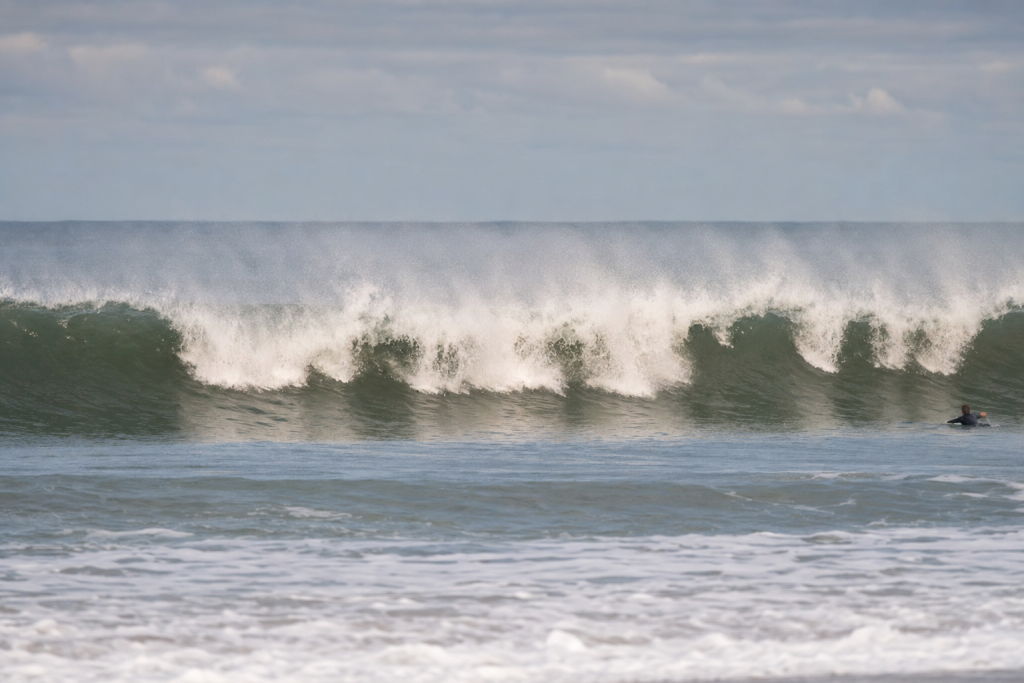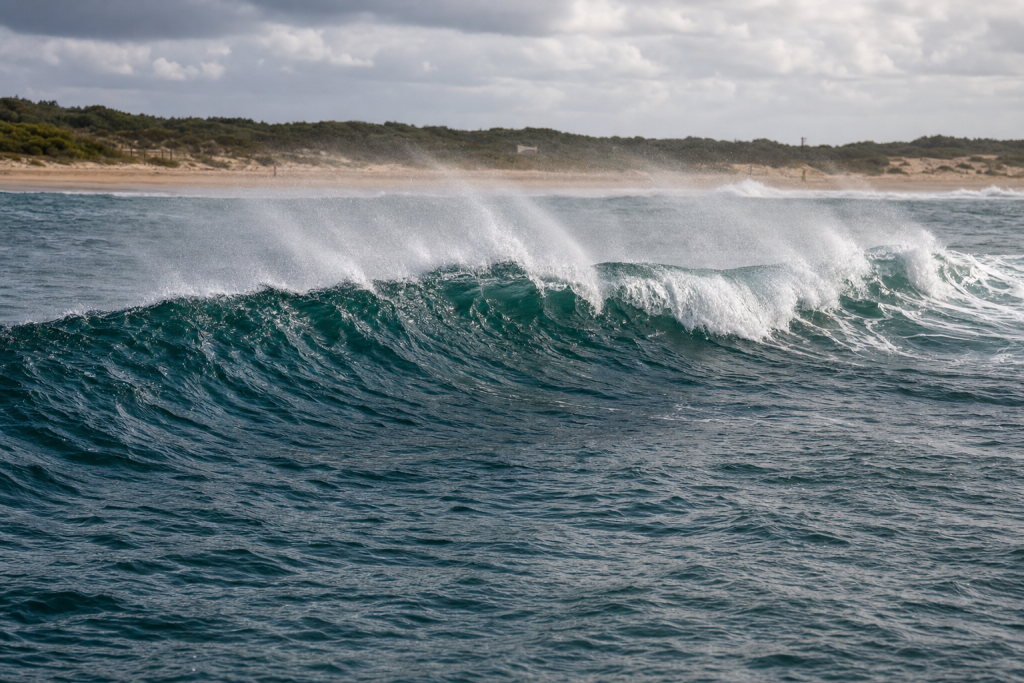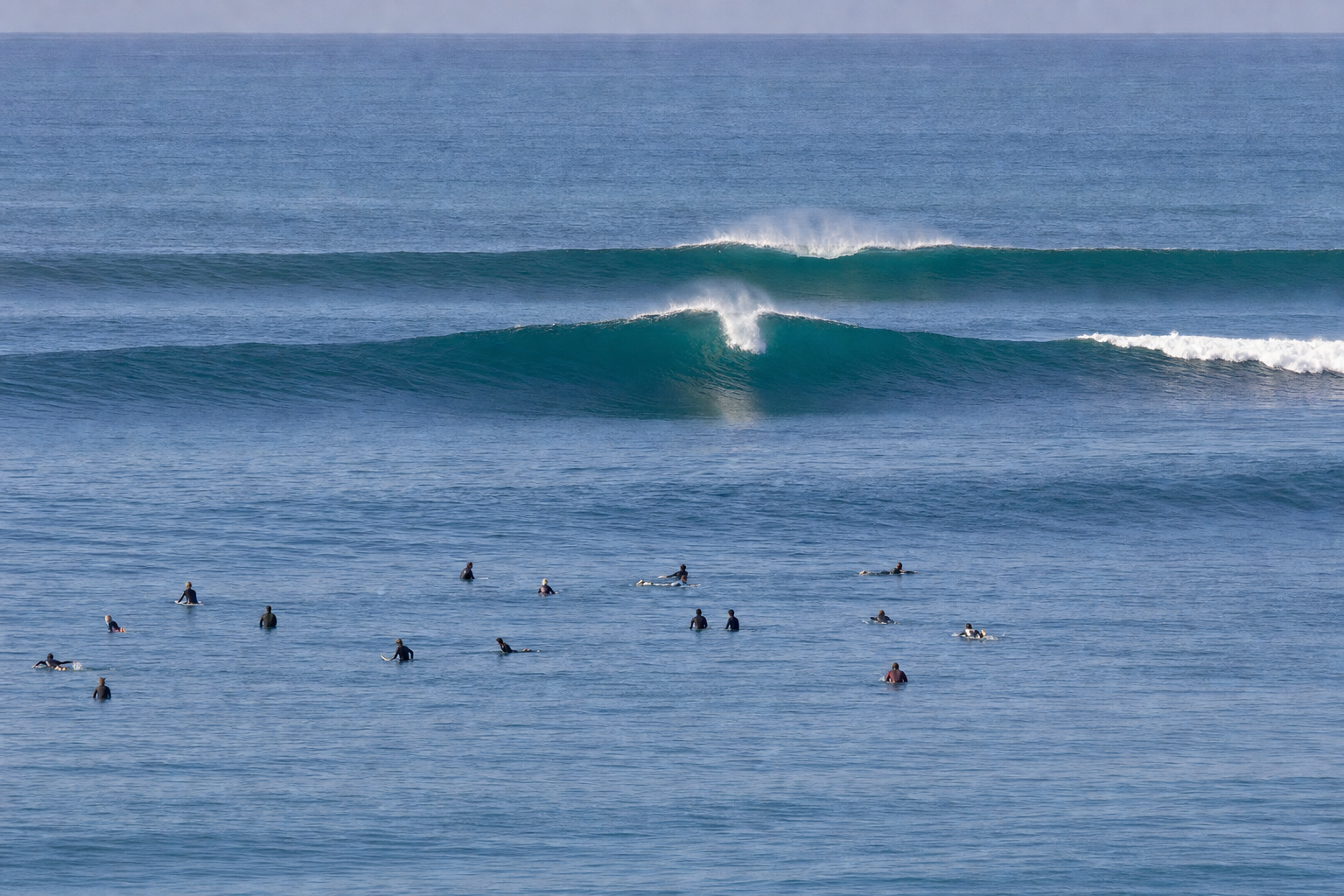
Inconsistent surf is one of the most frustrating things a surfer can face: long lulls, sudden cleanup sets, shifty peaks, and waves that look perfect until they wall up and close out. But inconsistency is rarely random. It usually comes from a specific mix of swell behavior, tide, wind, and seabed shape. Learning why some swells produce inconsistent surf helps you choose better spots, read waves more accurately, and turn difficult sessions into productive ones. A good surf technique book can also help you build the wave-reading skills that make these conditions more manageable. If you are heading into cold or rough water, having a quality full-length wetsuit will keep you comfortable enough to stay patient and wait for the right waves.
What “inconsistent surf” really means
Inconsistent surf is surf that does not deliver rideable waves in a steady, predictable pattern. The inconsistency can show up in several different ways.
- Timing inconsistency: Long lulls are followed by sudden sets.
- Size inconsistency: One wave is waist-high, then the next set is overhead.
- Position inconsistency: Peaks shift up and down the beach or reef between sets.
- Quality inconsistency: Some waves open up into rideable walls, while others close out or go fat.
A spot can be inconsistent even when the waves are powerful and well-formed. A long-period groundswell may produce excellent waves, but only every 15 minutes or so. A beachbreak may have constant waves, yet only one out of ten offers a makeable shoulder. Both are inconsistent, but for different reasons.
What makes waves inconsistent?
Swell period and wave grouping create lulls
The most common reason for inconsistent surf is the way swell energy travels in groups. Ocean swells are not single, evenly spaced lines marching toward shore. They are made up of many wave trains with slightly different periods and heights. When those wave trains overlap, they form sets and lulls.
Long-period swells often feel especially inconsistent because the energy is spread into distinct groups. A 16-second swell carries much more energy than an 8-second swell of the same height, but the rideable waves may arrive in pulses. That is why a lineup can look completely flat for several minutes, then suddenly receive a thick, powerful set.
Short-period wind swell can also be inconsistent, but in a different way. Instead of long lulls, it tends to produce jumbled peaks, weak shoulders, and uneven wave faces. The waves arrive more frequently, but fewer of them are cleanly organized.
Mixed swell directions create shifty peaks
When two or more swells arrive from different directions at the same time, they interfere with each other. This can create wedges and A-frames in some situations, but it can also produce confused takeoff zones where the water surface is difficult to read. A wave that looks rideable from the horizon may be crossed by another swell line as it reaches shallow water.
Mixed swell can make peaks move unpredictably. One set may break 50 meters up the beach, while the next breaks directly in front of the rip. On reefs, mixed swell can turn a clean wall into a warped double-up. At sandbars, it can create fast sections that appear without warning.
Swell angle can make waves break unevenly
Swell direction is one of the biggest factors in inconsistent surf. If the swell is near the edge of a spot’s swell window, only the larger set waves may bend into the break. This creates long lulls, because smaller waves pass by or miss the reef entirely.
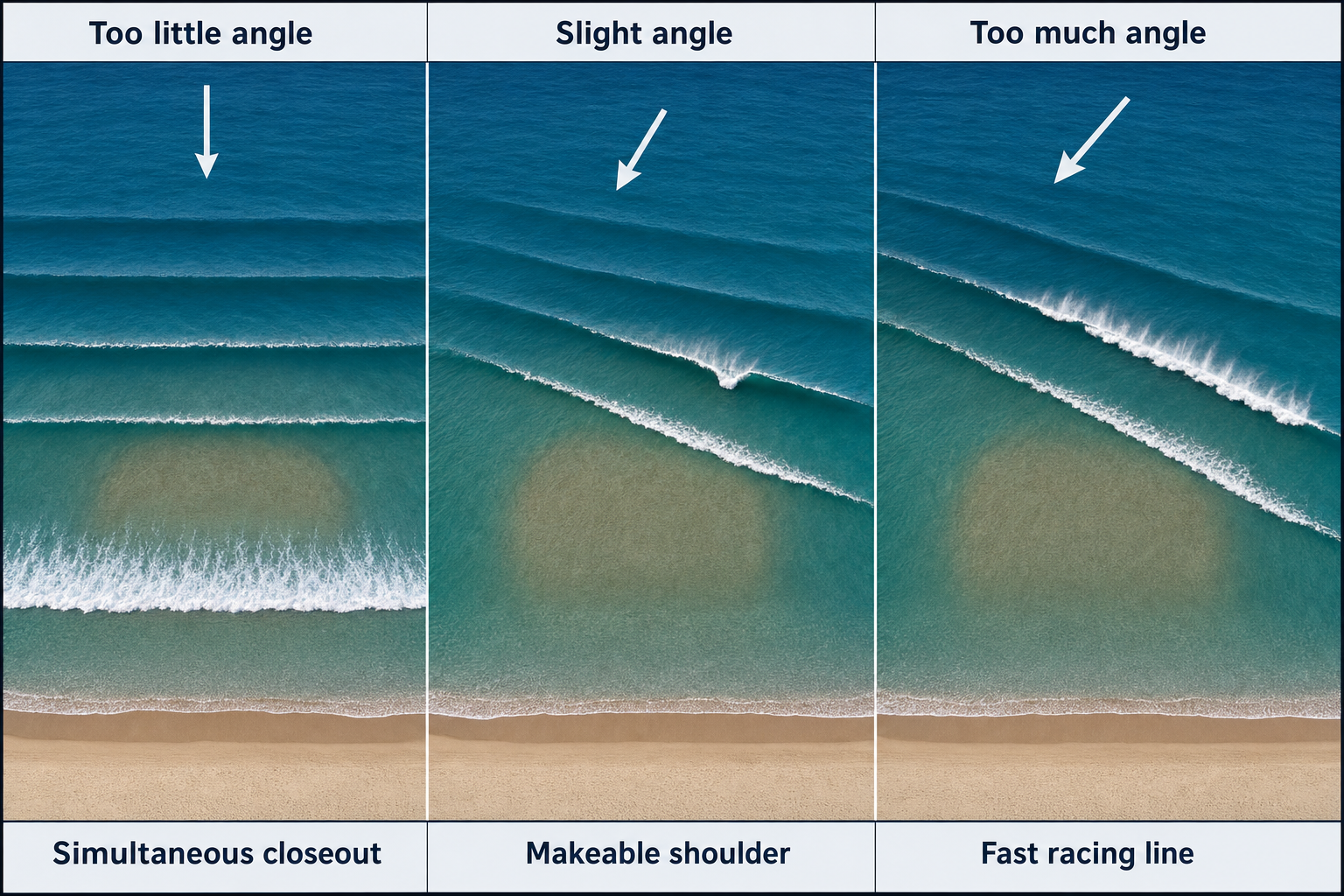
A very oblique swell angle can also create fast, sectiony waves. Instead of breaking evenly along the bank, the wave may run sideways across shallow water. This can produce excellent down-the-line speed at points and reefs, but at beachbreaks it often creates unmakeable sections. A reliable surfboard leash is worth having on days like these, when unexpected closeouts and wipeouts are more likely.
A swell that is too direct can cause a different problem: closeouts. Straight-on swell hitting a straight beach often breaks all at once, leaving no open shoulder. In that case, the surf may be consistent in terms of wave frequency, but inconsistent in rideable quality.
Bathymetry focuses some waves and ignores others
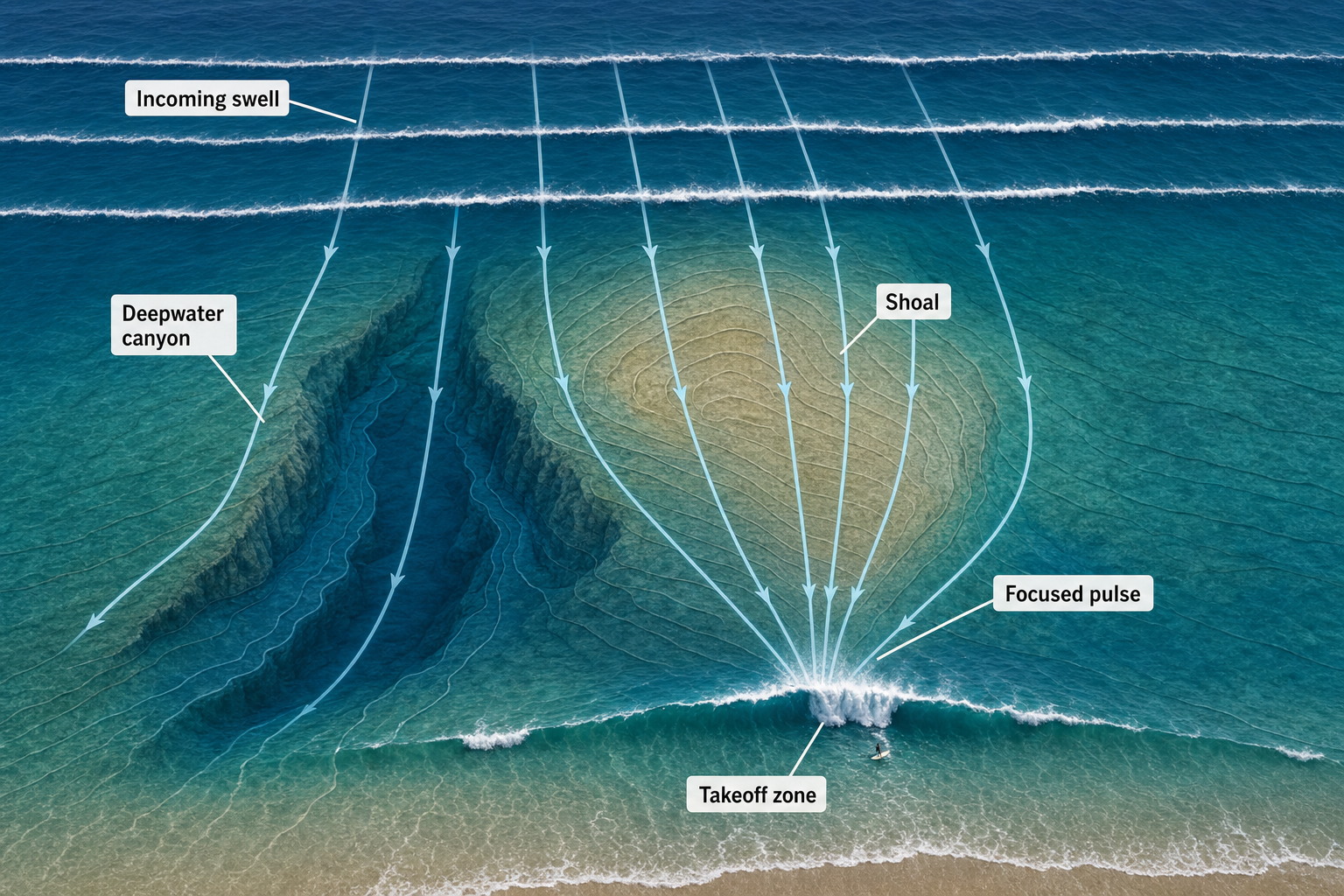
Bathymetry is the shape of the seafloor, and it controls how swell bends, slows, steepens, and breaks. A reef ledge, sandbar, canyon, or shoal can focus swell energy into a specific zone. When that focus only works for certain wave sizes or directions, the surf becomes inconsistent.
For example, a deepwater canyon may bend long-period swell toward one peak while smaller waves miss the spot entirely. On a reef, a wave may only stand up properly when enough water draws off the ledge. On a shifting sandbar, one set may hit the bank perfectly while the next wave hits a deeper channel and goes soft.
Tide changes can turn consistent swell into inconsistent surf
Tide affects how much water sits over the bottom. Even with a steady swell, the breaking pattern can change dramatically as the tide moves through its cycle.
- Too much tide: Waves may roll through without breaking properly, go fat, or only break on the largest sets.
- Too little tide: Waves may jack up suddenly, dump hard, or close out over very shallow bottom.
- Moving tide: Tidal currents can shift the peak and create uneven faces throughout the session.
Some inconsistent breaks are simply tide-sensitive. They have a short window when the water depth is just right. Before that window, the surf looks weak. After it, the same swell may become too fast or too hollow to make.
Wind, current, and backwash add surface-level inconsistency
Even when the swell and bottom are working well together, wind and water movement can disrupt wave quality. Cross-shore wind can crumble one section while leaving another clean. Onshore wind tends to make peaks break early and unpredictably. Offshore wind holds up the lip, which often improves shape but can also make steep waves harder to enter cleanly.
Currents matter too. Longshore current can drag surfers away from the takeoff zone and make peaks appear to shift position. Tidal current can hold waves open or cause them to double up unexpectedly. Backwash from cliffs, seawalls, or steep beaches can collide with incoming waves and create sudden lumps in the face.
What inconsistent waves look like
Shape and surfing quality
Inconsistent waves often look tempting from a distance because some of them are genuinely excellent. The problem is that the good ones are mixed in with many poor ones. You may see a clean wall followed by a closeout, then a soft mushy wave, then a hollow wave that shuts down after two seconds.
Common shapes in inconsistent surf include:
- Shifty peaks: The takeoff zone moves between sets, making positioning difficult.
- Sectiony walls: The wave opens briefly, then races ahead of you.
- Closeouts: The lip breaks across the whole line at once.
- Double-ups: Two pieces of swell merge and suddenly steepen without warning.
- Fat shoulders: The wave breaks, then loses power as it moves into deeper water.
The quality of waves in inconsistent surf can range from poor to exceptional. Many world-class reef and point breaks are technically inconsistent because they need the right swell direction, period, and tide to fire properly. Inconsistency does not always mean bad surf. It means the ratio of good waves to poor waves is low.
Power, speed, and height in inconsistent surf
Inconsistent surf can be either weak or extremely powerful depending on what is causing the inconsistency.
- Weak inconsistency: Small swell, deep water, or high tide means only the biggest waves break properly.
- Powerful inconsistency: Long-period swell hits shallow reef or sand after extended lulls.
- Chaotic inconsistency: Mixed swell and current create unpredictable, uneven peaks.
Long-period inconsistent surf is often more powerful than it appears during the lull. The ocean may seem calm between sets, but when a group of waves arrives, they can stand up quickly, draw water off the bottom, and break with much more force than the average wave height suggests. Having fins with good drive and hold helps in these conditions. A set of quality FCS tri fins gives you the control you need when the surf suddenly jumps in size.
Speed depends on swell angle and bottom shape. Oblique swell running down a point can produce long, fast walls. The same angle at a beachbreak may produce racing closeouts. At reefs, speed often increases as the wave bends into shallow water and accelerates along the ledge.
Steepness and hollowness
Steepness comes from how quickly the wave rises as it hits shallow water. A gentle seafloor slope usually creates slower, softer waves. A steep ledge or abrupt sandbar makes the wave jack up suddenly. This is where inconsistent surf becomes particularly tricky: a wave may look manageable from outside, then double in steepness at the actual takeoff spot.
Hollowness depends on wave energy, bottom contour, tide, and local wind. Long-period swell over a shallow reef can create thick, hollow barrels with long gaps between sets. A low-tide beachbreak can also produce hollow waves, but many of them may be unmakeable because the sandbar is too straight or too shallow to allow a clean shoulder.
Bottom structure and seabed gradient
Irregular reefs and ledges
Reefbreaks can be consistent when the reef is uniform and the swell direction is ideal. They become inconsistent when the reef has uneven ledges, holes, boils, or channels. Some waves hit the shallowest section perfectly and stand up. Others miss the ledge and fade into deeper water without breaking properly.
Long-period swell exaggerates this effect because it feels the bottom earlier and refracts more strongly. That can make the best waves bend into the reef from far offshore, but it can also mean that smaller waves in the same swell pass wide of the takeoff zone altogether. If you are surfing over shallow reef, a pair of reef booties is worth wearing, especially when wipeouts become harder to predict.
Shifting sandbars and beachbreaks
Beachbreaks are naturally prone to inconsistency because sandbars change with storms, currents, and tides. A well-shaped bank needs the right mix of shallow sand for breaking and deeper water for the shoulder to peel into. If the bank is too straight, waves close out. If it is too broken up, the surf becomes peaky but hard to predict.
Inconsistent beachbreak often follows one of two patterns. It may be too soft on most waves, with only the larger sets hitting the bank with enough energy to break well. Or it may be too fast, offering a few good corners between many unmakeable closeouts.
Deepwater canyons, shoals, and swell focusing
Offshore features can make surf very inconsistent in specific ways. A canyon can refract swell away from one stretch of coast while focusing it onto another. A shoal can cause certain wave periods to stand up more than others. This is why two beaches close to each other can behave completely differently on the same swell.
Focused swell often arrives in dramatic sets. The lineup may look quiet, then a pulse bends into the takeoff zone and produces some of the best waves of the session. These setups reward patience and precise positioning far more than constant movement.
Seabed gradient: gentle, steep, and uneven bottoms
The slope of the seabed strongly affects wave consistency across all break types.
| Seabed gradient | Typical wave behavior | Effect on consistency |
|---|---|---|
| Gentle slope | Soft shoulders and slowly peeling waves | Only larger sets may be rideable |
| Steep slope | Sudden pitching and shorebreak-style waves | Many waves close out or dump heavily |
| Uneven slope | Double-ups, boils, and shifting sections | Wave quality changes significantly from wave to wave |
Typical swell and tide patterns that produce inconsistent surf
Inconsistent surf can happen across a wide range of conditions, but several patterns come up again and again.
| Factor | Common inconsistent pattern | Why it matters |
|---|---|---|
| Swell period | 6–9 seconds or 14–20+ seconds | Short period creates jumbled surf. Long period creates long lulls and powerful sets. |
| Swell angle | Near the edge of the swell window | Only certain sets bend into the break properly. |
| Wave height | Marginal small surf or solid overhead surf | Small waves may not break. Large waves may overpower the bank. |
| Tide | Very high or very low tide | High tide can make waves fat. Low tide can make waves shut down too fast. |
| Bottom shape | Irregular reef or shifting sandbar | The wave breaks well only when it hits the right section of bottom. |
| Local water movement | Strong current or backwash | The face gets warped and the peak position shifts. |
Typical swell period for inconsistent waves
There is no single “inconsistent wave period,” but certain ranges are associated with specific problems. Short-period surf around 6 to 9 seconds often produces frequent waves, but many are weak or disorganized. Mid-period surf around 10 to 13 seconds is generally more manageable, though it can still be inconsistent if the direction is off.
Long-period surf from 14 to 20 seconds tends to produce more powerful waves with longer waits between sets. At exposed reefs and points, this can mean excellent but infrequent waves. At beachbreaks, the same swell can mean heavy closeouts separated by extended lulls.
Typical swell angle for inconsistent surf
Inconsistent surf often appears when the swell angle is slightly wrong for the spot. If a break works best on a south swell and the swell is too far west, only a few waves may wrap into the lineup. If a point needs an angled swell and the direction is too direct, the wave may lose its clean peeling shape entirely.
At beachbreaks, a slight angle often helps create shoulders. Too much angle can make waves race along the bank faster than you can keep up with them. Too little angle tends to make the whole line break simultaneously.
Typical wave height and tide
Small, marginal surf can be inconsistent because only the biggest waves in the set carry enough energy to break properly. This is common at high tide, over deep reefs, and on gently sloping beaches.
Overhead surf can be inconsistent for the opposite reason. The swell has plenty of energy, but the bottom may not be able to organize it into clean rideable waves. Some waves hold open while others close out or break too far outside the normal takeoff zone.
Tide is often the deciding factor at most spots. Many inconsistent breaks have a narrow tide window where the water depth creates the best balance between power and shape. A high tide softens things out, while a low tide can make the same spot too steep or too fast to surf well.
Why inconsistent surf can be dangerous
Inconsistent surf is dangerous mainly because it is hard to predict. Long lulls can make the ocean look much smaller than it actually is. Then a larger set arrives and breaks farther outside than anyone expected. These cleanup sets are common during long-period swells, especially at exposed reefs and beaches with deepwater access nearby.
Shifty peaks also make positioning harder. A surfer can sit in what looked like the channel, only to find that the next set is breaking right on top of them. At beachbreaks, inconsistent waves often come with closeouts, heavy shorebreak, and strong rips. At reefs, the bigger hazard is often sudden ledging waves that draw off very shallow bottom with little warning.
If you are surfing a spot with known hazards, wearing an impact vest adds a layer of protection against hard wipeouts, and a surf helmet is a sensible choice at shallow reef breaks where unexpected wipeouts are part of the deal. The danger is not only wave size. It is the gap between what the lineup appears to be doing and what the next set can actually deliver.
How hard are inconsistent waves to surf?
Inconsistent waves are generally harder to surf than predictable waves of the same size. The challenge is not just riding the wave once you are on it. It is choosing the right wave, being in the right place at the right moment, and reacting quickly when the shape changes beneath you.
For beginners, inconsistent surf is difficult because the takeoff zone is unclear and shifts constantly. Learning to surf requires repetition, and inconsistent waves provide the opposite. Long lulls can also lead beginners to drift inside or lose track of where sets are arriving from.
Intermediate surfers often struggle most with wave selection. They may paddle for waves that look good from behind but close out when viewed from the front. They may also burn energy chasing shifting peaks around the lineup. In inconsistent surf, patience is often more valuable than constant paddling.
Advanced surfers can find excellent waves even in inconsistent conditions, particularly at wedges, reefs, or tide-sensitive sandbars. The advantage comes from reading subtle patterns in the swell and committing only to waves that show a clear, makeable line. Making sure your board has fresh wax before heading out helps with grip during critical takeoffs. Cool and cold water surf wax is worth keeping in your bag if you are surfing in cooler conditions where grip matters most. A deck traction pad on your tail gives you consistent rear foot grip regardless of water temperature.
How to recognize rideable versus unmakeable inconsistent waves
Signs of a rideable inconsistent wave
A rideable wave usually has one clear feature: an open section of face that stays ahead of the breaking lip. Even a fast wave can be makeable if the shoulder is tapering down the line rather than breaking all at once.
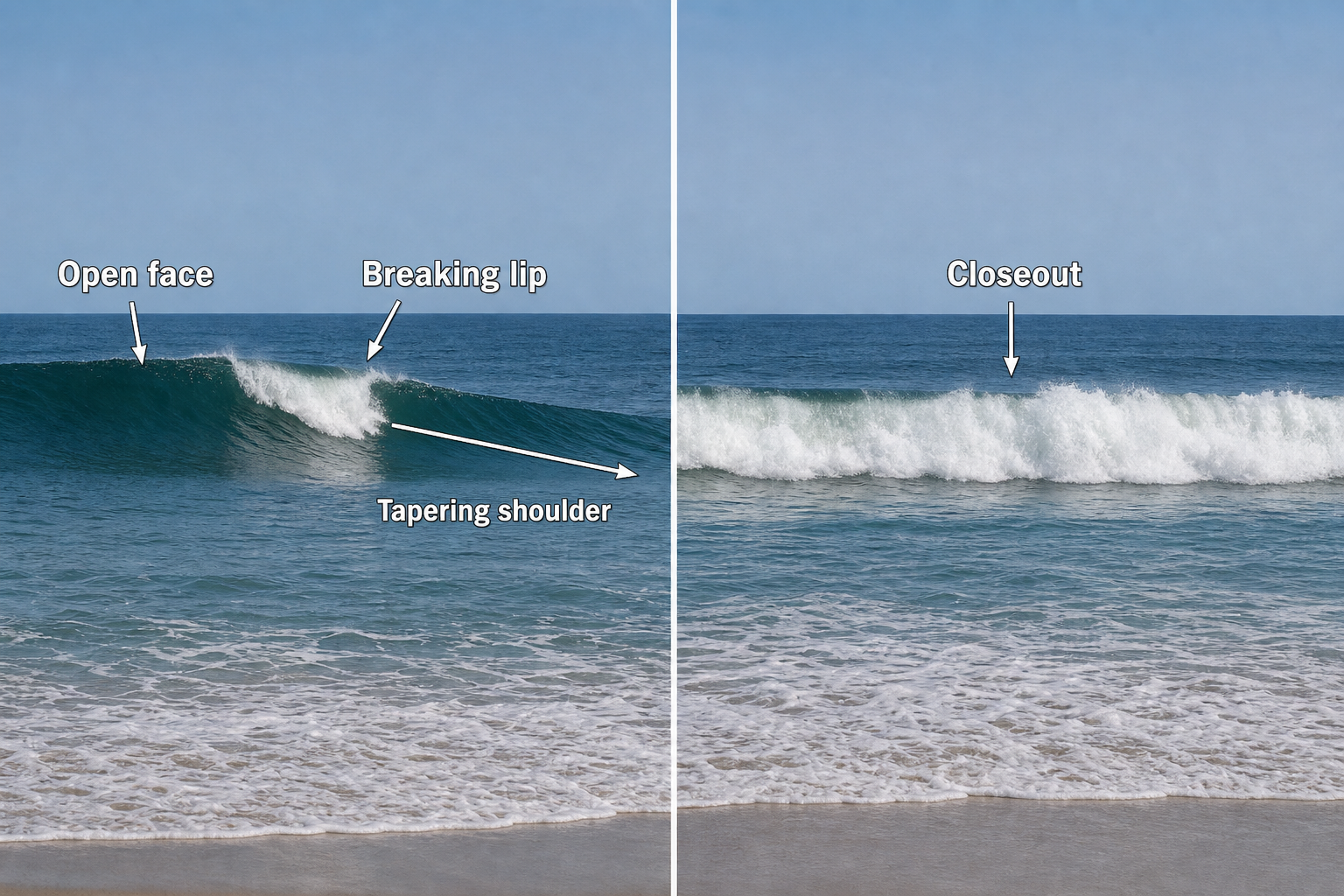
Look for these signs before committing to a wave:
- One end breaks first: The wave has a clear direction and a shoulder to work toward.
- The shoulder stays lower: The section ahead is not already pitching when you take off.
- The peak has a corner: There is a defined spot to angle into the face from.
- The foam line travels sideways: The wave is peeling along the bank, not shutting down.
- Previous waves ran along the bank: The bottom is shaping the wave in a repeatable way.
On hollow waves, the key is whether the barrel has an exit. A pitching lip is not automatically unmakeable. It becomes unmakeable when the section ahead throws too far, too fast, or too evenly across the whole line at once.
Signs of an unmakeable inconsistent wave
Unmakeable waves often reveal themselves early if you watch the whole line rather than just the peak. A steep, inviting peak can look perfect, but the shoulder may already be breaking 20 meters down the line before you even stand up.
Common warning signs include:
- A horizon-wide wall: The wave has no lower shoulder anywhere along the line.
- Simultaneous pitching: The lip throws across the entire section all at once.
- Sudden warble in the face: Cross swell or backwash is distorting the wave surface.
- A dry-looking inside section: The wave may be running into water that is too shallow to hold open.
- No clear exit down the line: The channel closes out with no makeable escape route.
The best approach is observation before paddling out. Watch several full sets from shore. If most surfers are straightening out, pulling back, or getting trapped behind sections, the waves likely look better than they actually are from outside.
How to surf inconsistent waves
Watch the surf before choosing a spot
Before paddling out, spend enough time watching to see at least a few complete sets. In long-period surf, this may take 20 minutes or more. Identify where the best waves start breaking, where they tend to shut down, and how often the bigger sets arrive.
Use fixed landmarks on shore to track the peak between sets. If the good waves repeatedly break in the same zone, the inconsistency is mostly about timing and patience. If every set breaks somewhere different, the inconsistency is spatial, and positioning throughout the session will be harder.
Position for patterns, not single waves
Do not chase every lump on the horizon. In shifty surf, constant repositioning often leaves you out of place when the good wave finally arrives. Instead, find the most reliable section of the bank or reef and accept that some waves will go unridden while you hold position.
At beachbreaks, this often means sitting near a rip bowl or sandbar corner. At reefs, it may mean waiting near the boil where the set waves first stand up. At points, it can mean sitting slightly wider if the bigger sets swing in with more angle than the average waves.
Take off decisively and angle early
Inconsistent waves often change shape quickly, so hesitation is costly. If the wave is steep, commit early and angle into the open face. If it is fast, take a high line and generate speed immediately. If it is soft, paddle earlier and use a board with enough volume to enter the wave before it fades beneath you.
On long-period waves, the takeoff can be deceptive. The wave may draw water off the bottom before it breaks, making the ledge feel like it suddenly drops away underfoot. Start paddling early, match the wave’s speed, and avoid being caught flat-footed at the lip. A set of fiberglass performance fins compatible with Futures boxes can help with the drive and hold you need during fast, committed takeoffs in heavier surf.
Surf the sections instead of forcing a perfect line
Inconsistent waves rarely offer a predictable canvas from start to finish. The best approach is to surf section by section. Make the first drop, gain speed, and read the next part of the wave as it forms ahead of you.
If the wave opens up, stay close to the pocket. If it goes flat, cut back toward the power source. If the section ahead starts to shut down, look for a clean exit rather than racing into a dead end. Flexibility matters more than commitment to a single line in these conditions.
Choose equipment that suits the type of inconsistency
Board choice depends on the wave, not just the wave height. For soft, high-tide inconsistency, extra volume helps you catch the occasional waves that break properly. For powerful long-period surf, a step-up can give you the paddle speed and hold you need. For tight, punchy beachbreak, a responsive shortboard often fits the wave better than a longer board.
Gear maintenance matters too. An inconsistent session puts you in and out of the water more, which means more chances for dings. Keeping a surfboard ding repair kit in your car means you can patch small cracks before they get worse. If you are wearing a rash guard under your wetsuit or surfing in warm water, a long-sleeve UPF rash guard keeps you protected from the sun during those extended lulls when you are just sitting out the back waiting.
How to read forecasts for inconsistent surf
Forecasts can hint at inconsistency before you ever reach the beach. The key is to look beyond the headline wave height. The details in a forecast often explain why a particular swell may be frustrating or excellent at your local spot.
- Check the dominant period: Very long periods often mean stronger sets and longer waits between them.
- Compare swell directions: Multiple directions can create wedges at some spots but pure confusion at others.
- Know the swell window for your break: A borderline angle often means fewer waves reach the lineup.
- Match tide to the bottom type: A reef, point, or sandbar may need a specific tide range to work properly.
- Watch nearby buoys: A rising period or shifting direction can signal changes in set behavior during the session.
Local knowledge is especially important here. Two spots can receive the same swell forecast but behave completely differently. One beach may close out on a long-period northwest swell while a nearby reef turns the same energy into rare but excellent peaks. If you want to document the good waves when they do arrive, an action camera mounted on a helmet or board is a good way to review your surfing after the session. Pairing it with a high-capacity microSD card means you will not run out of storage mid-session when the swell finally starts firing.
Turning inconsistent surf into better sessions
Inconsistent surf is not simply bad luck. It is the visible result of swell grouping, direction, period, bottom shape, tide, and local water movement all interacting at once. Some inconsistent waves are weak and frustrating. Others are powerful, hollow, and absolutely worth the wait. The difference comes from understanding what the ocean is doing and choosing waves that have a real chance of opening up into something rideable.
If you learn to spot patterns, read the shoulder, and wait for the right set, inconsistent surf becomes far less mysterious over time. You will still miss waves, and some sessions will remain difficult no matter how well you read things. But you will make better decisions, waste less energy chasing the wrong waves, and recognize when the rare good wave is finally lining up and heading your way.