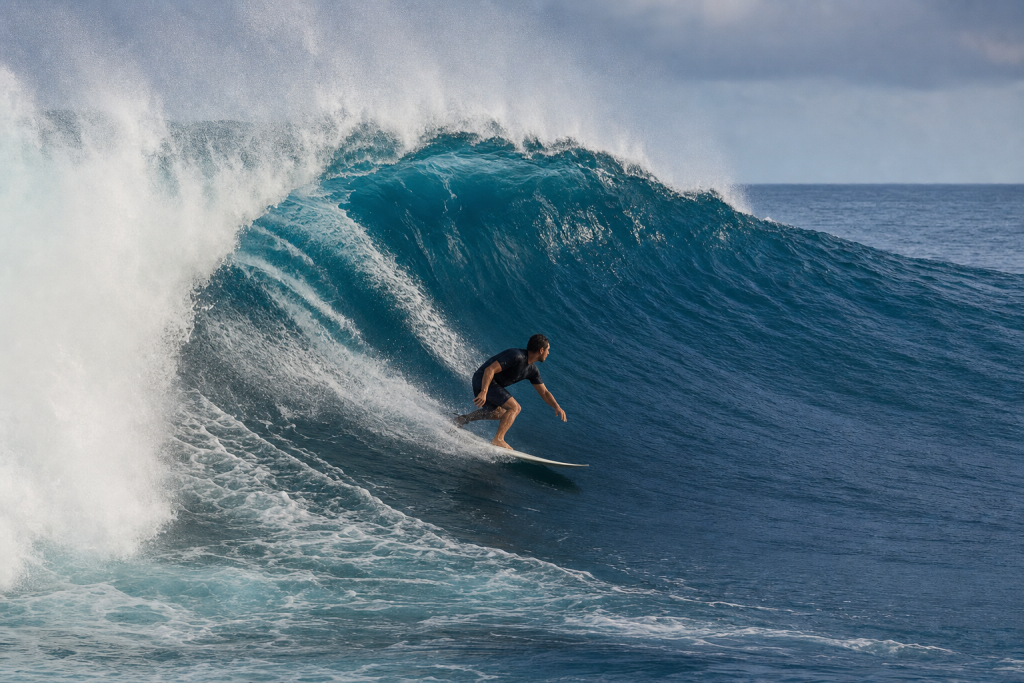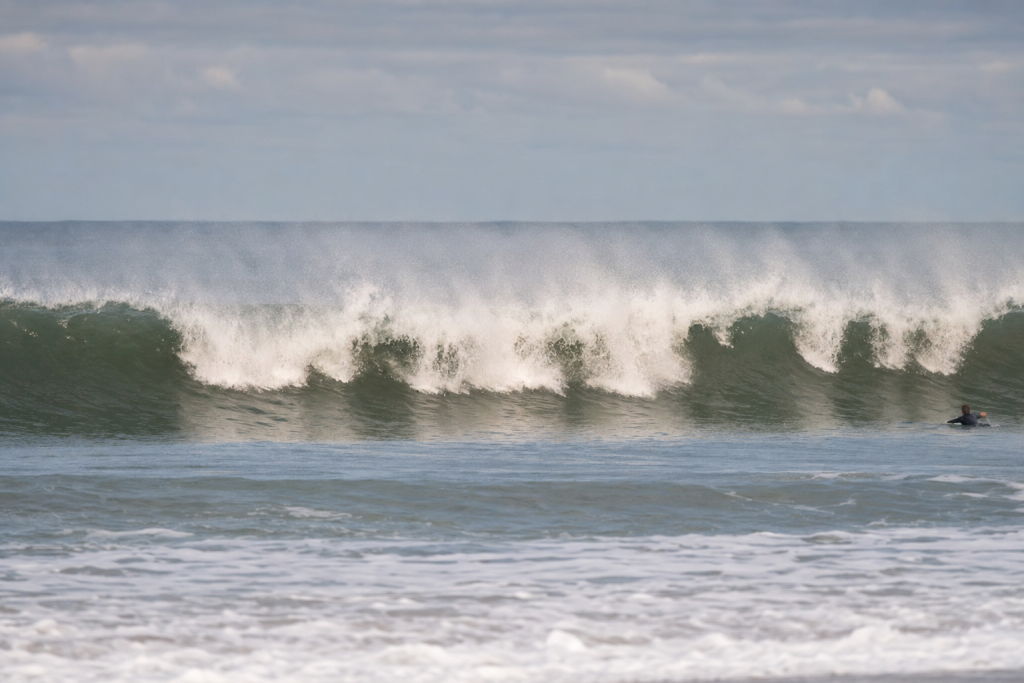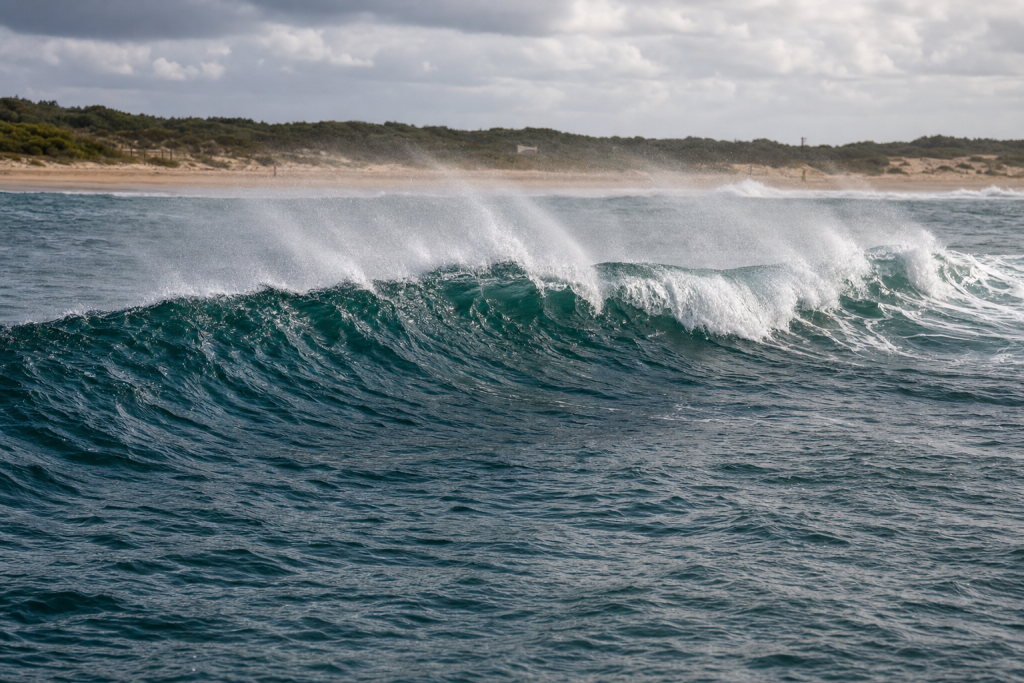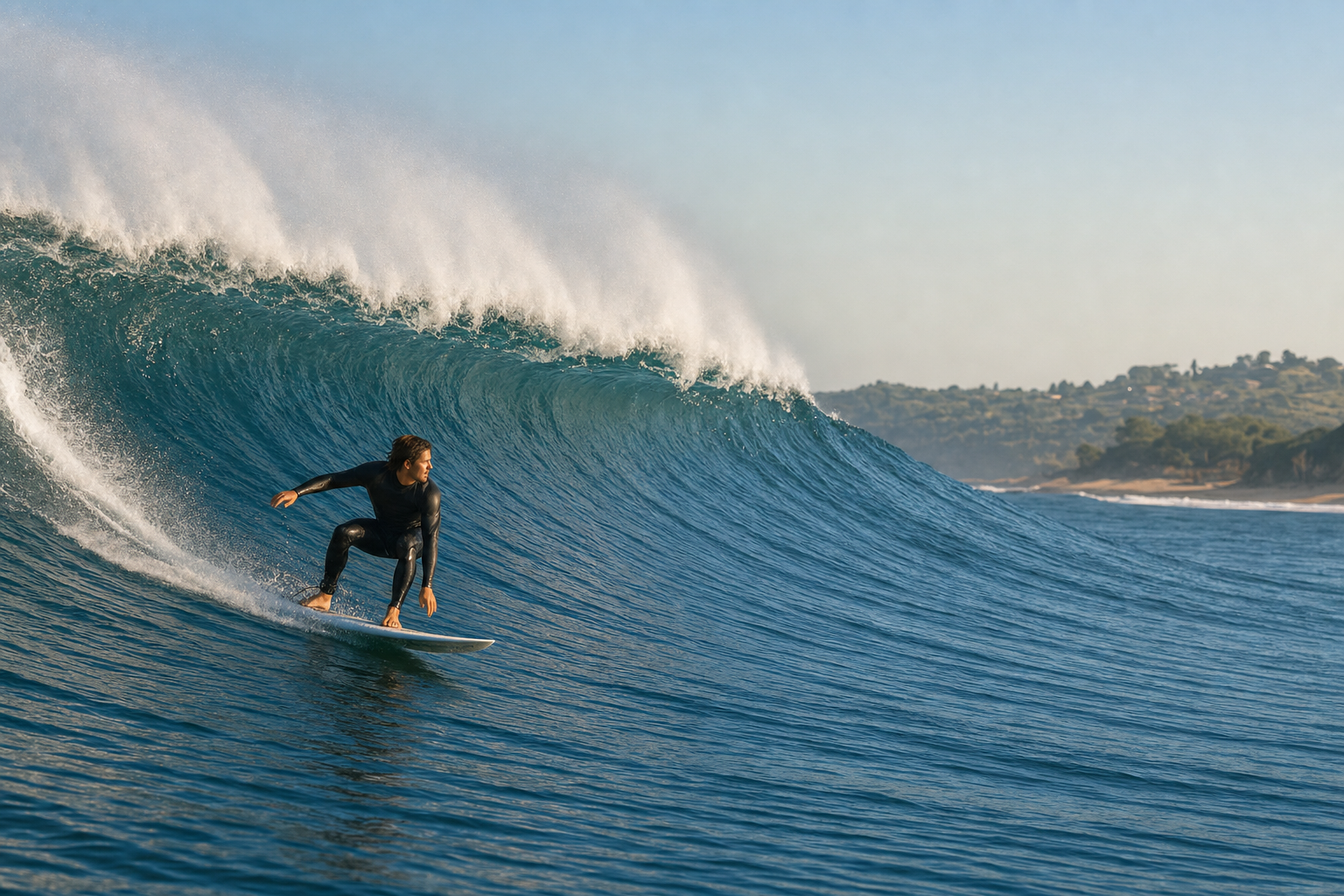
Offshore wind is one of surfing’s great quality filters. The same swell that looks bumpy, weak, or shapeless under onshore wind can become smooth, steep, and beautifully organized when the wind blows from land toward the ocean. Offshore wind doesn’t magically create perfect surf on its own, but it can transform the way a wave breaks — holding the lip up, cleaning the face, and giving a wave that prized “open” look surfers associate with barrels and long, makeable walls. If you want to get the most out of these conditions, having well-matched gear matters. A good set of FCS tri fins can make a real difference when you’re trying to hold a rail through a steep offshore drop. For warm-water sessions, wearing a quality UPF 50+ rash guard helps protect you during long lineups waiting for those perfect sets.
What Creates Offshore Waves?
“Offshore waves” isn’t a reference to waves generated by offshore wind. In surfing, the phrase simply describes waves breaking under offshore wind conditions. The swell energy itself comes from distant storms, where strong winds blow over a large stretch of ocean long enough to generate organized wave trains. Those waves then travel toward the coast as groundswell.
Offshore wind is the local wind blowing from land out to sea — against the direction of the incoming swell. When a wave moves shoreward and the wind blows into its face, that’s the key dynamic that makes offshore conditions so desirable. It’s also worth thinking about your equipment before paddling out in these sessions. A reliable straight surfboard leash keeps you connected to your board on those steep, committed offshore takeoffs.
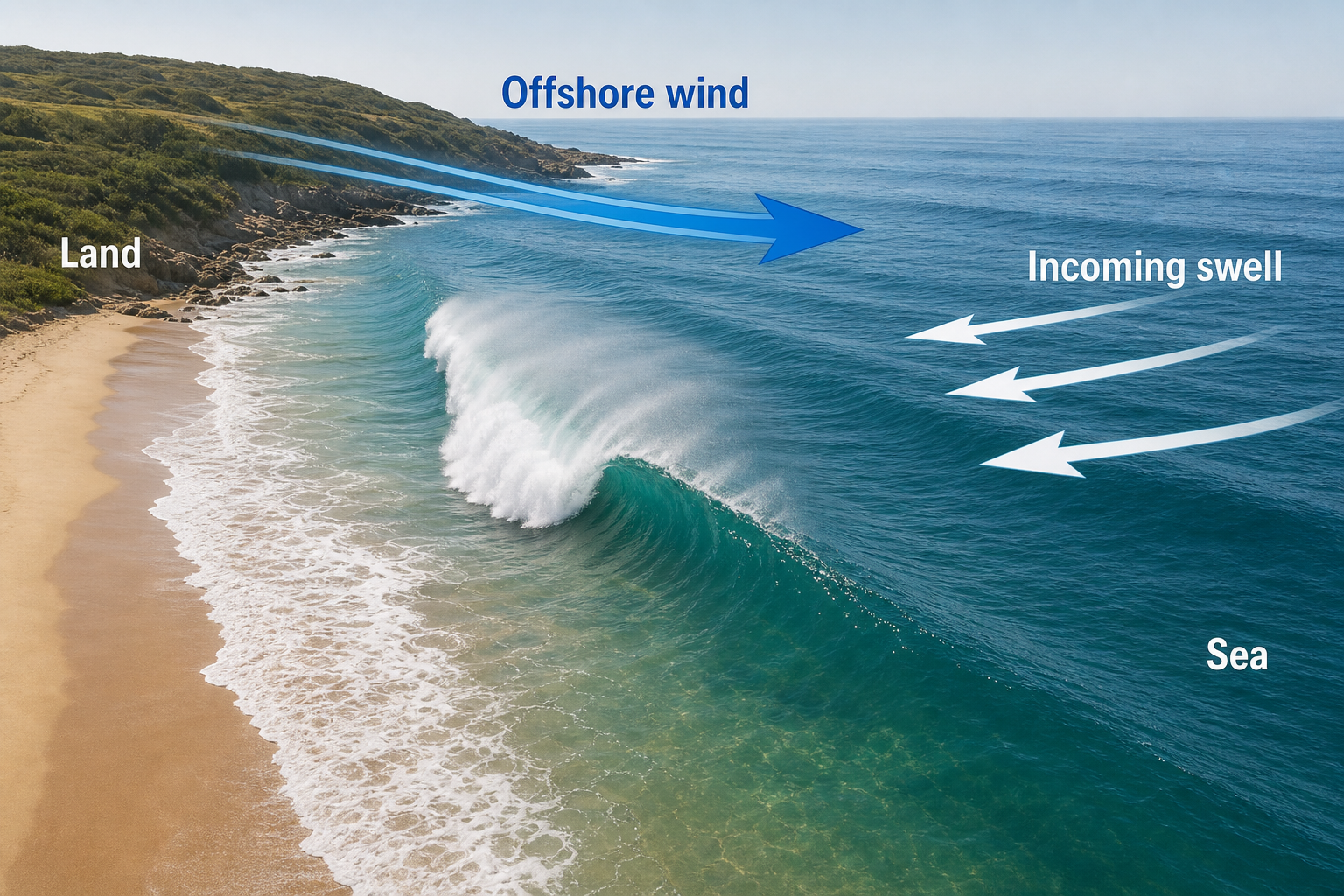
Offshore Wind Versus Swell Generation
A surfable wave needs swell energy and a bottom contour that forces it to break. Offshore wind mainly affects the final stage, when the swell reaches shallow water and pitches over. If offshore wind blows strongly far out to sea, it can create seaward-moving chop, but that’s not what surfers mean by offshore waves. The best offshore surf happens when quality swell arrives from the ocean while the local wind blows steadily from land.
Why Offshore Winds Happen
Offshore winds often develop in the early morning, particularly near coasts where the land cools overnight faster than the ocean. Cooler, denser air drains from land toward the sea, creating a land breeze. Offshore winds can also result from large weather systems, mountain gaps, valleys, or dry inland wind events — such as California’s Santa Ana winds.
Coastal geography plays a big role. A beach backed by hills, cliffs, or valleys may receive clean offshore wind from one direction, while a nearby beach faces the wind differently and ends up with cross-shore or onshore conditions.
How Offshore Wind Affects Wave Shape and Quality
Offshore wind improves surf because it works directly against the breaking part of the wave. As swell shoals over a reef, sandbar, or point, the lower portion slows down in shallow water while the top continues forward, steepens, and eventually pitches. Offshore wind pushes against that upper section, shaping the result in several distinct ways.
Offshore Wind Creates Cleaner Wave Faces
Because offshore wind blows from land, it typically has a very short fetch near the beach. Fetch is the distance wind travels over water before reaching the wave. A short fetch means less room for local chop to develop, so the wave face stays smooth and glassy. This is why offshore surf often looks polished rather than lumpy — a clean face gives surfers more usable rail line, better speed control, and a clearer read of the wave’s sections.
Offshore Wind Holds Up the Lip
The most recognizable offshore effect is the way it holds the lip up before the wave breaks. The wind blows into the pitching crest, delaying the break slightly and helping the lip throw outward. This makes waves steeper, hollower, and more barrel-shaped. On the right bottom contour, even a relatively ordinary peeling wave can transform into a tube when offshore wind is present.
Offshore Wind Can Make Waves Break Later
Because the lip is held up longer, offshore waves may break slightly later and in shallower water than the same swell under calm or onshore conditions. This makes them feel more powerful, even though the wind hasn’t added energy to the swell — the energy is simply released in a more abrupt, concentrated way.
Strong Offshore Wind Can Reduce Quality
Light to moderate offshore wind is usually ideal. Strong offshore wind can make waves difficult to catch, blow spray directly into a surfer’s face, and cause the lip to hang too long before detonating. In extreme cases, a wave becomes “too offshore”: beautiful from the beach but hard to enter and even harder to make.
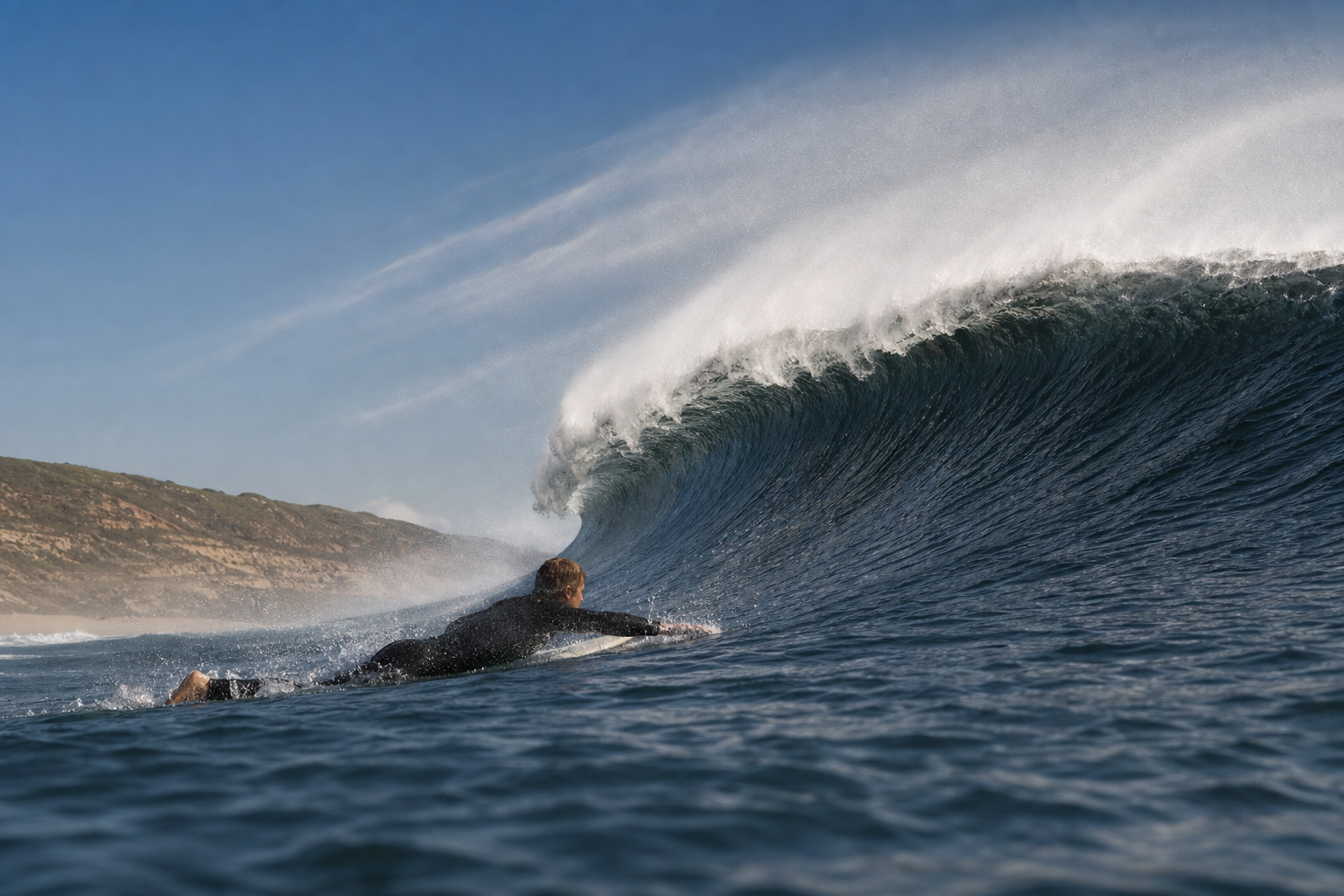
Strong gusts can also create ribbed texture on the face, flatten smaller waves, and break a lineup into inconsistent sections. The best offshore wind is strong enough to groom the wave, but not so strong that it overpowers the swell.
The Shape and Feel of Offshore Waves
Offshore waves are often described as clean, steep, fast, and hollow. The exact shape depends on swell direction, swell period, tide, and seabed — but offshore wind tends to emphasize the most surfable qualities of a good wave.
| Wave Feature | How Offshore Wind Affects It |
|---|---|
| Shape | Creates smoother walls, sharper lips, and more defined peeling lines. |
| Quality | Improves surface texture and makes sections easier to read. |
| Power | Does not add swell energy, but makes the break feel more explosive. |
| Speed | Produces faster down-the-line waves because the face stands up longer. |
| Height | May make waves appear taller and more vertical, though actual swell size is unchanged. |
| Steepness | Increases steepness by holding the lip back as the lower wave slows. |
| Hollowness | Encourages barrel formation when bottom contour and tide are right. |
Are Offshore Waves Easy or Hard to Surf?
Offshore waves can be either easier or harder to surf depending on their size and shape. Small offshore surf is often beginner-friendly because the faces are clean and predictable. A waist-high wave with light offshore wind can be one of the most readable and enjoyable waves to learn on.
As offshore waves become steeper and hollower, they demand much more precise timing. The wind slows a paddling surfer, holds the board near the top of the wave, and makes takeoffs feel later than expected. On fast reef breaks or shallow sandbars, offshore wind often produces the best waves of the day — but also the least forgiving ones. The general rule is simple: offshore wind makes soft waves cleaner, but it makes powerful waves more technical.
How to Surf Offshore Waves
Surfing offshore waves well is about adjusting to the wind’s effect on your entry, speed, and timing. The wave may look perfect from the lineup, but the takeoff can be deceptively challenging because the wind is pushing directly against you as you paddle in. If you’re keen on understanding these dynamics in more depth, a surf technique book focused on wave reading and positioning is worth having on your shelf.
Paddle Earlier and With More Commitment
Start paddling slightly earlier than you would in calm conditions. Offshore wind can slow your board as the wave lifts you, especially on a steep takeoff. Keep your chest low, paddle through the gusts, and avoid sitting too high on the peak unless you’re fully prepared for a late drop. On hollow offshore waves, a half-hearted paddle often leaves you stuck in the lip. A committed entry gives you the speed needed to get down the face before the wave throws over.
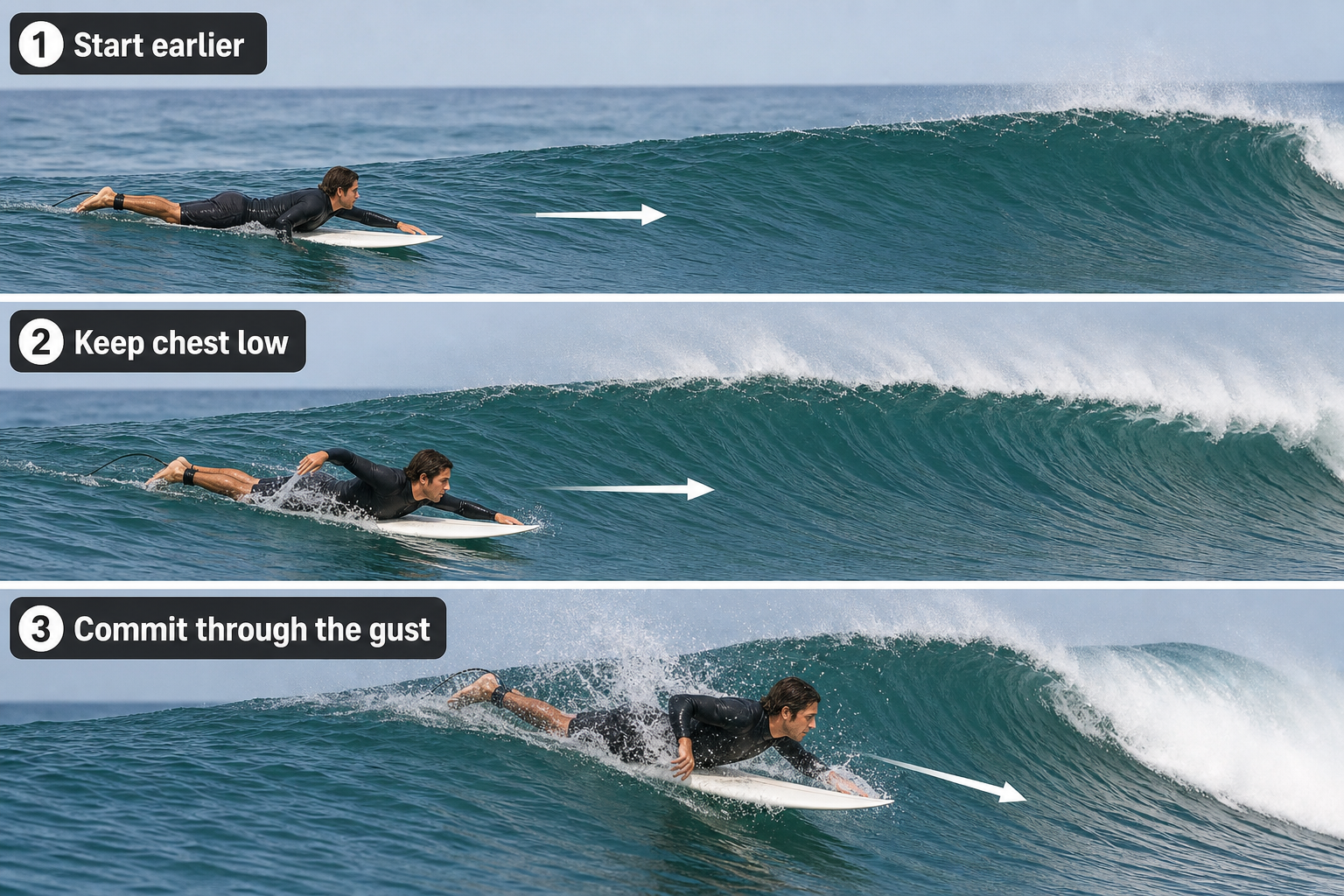
Angle the Takeoff on Fast Offshore Waves
Many offshore waves are faster than they first appear. If the wave is peeling quickly, angle your board slightly down the line during the last few strokes. This helps you enter with direction rather than dropping straight to the bottom and losing momentum. On a barreling wave, the right angle can be the difference between sliding into the pocket and getting trapped behind the lip. On a softer point wave, a straighter takeoff may work fine because the wall gives you more time to set up.
Use a Low Stance and Set Your Rail
Offshore waves often have clean, steep faces that reward good rail work. After the takeoff, stay compact and let the board engage with the face. A strong bottom turn sets up the rest of the ride, but on very hollow waves, a smaller setup turn may be better than a deep bottom turn that sends you too far into the flats. Having the right fins under your board helps here — fiberglass performance fins compatible with Futures boxes offer a good combination of drive and release on steep faces.
For tube riding, hold a high line when the barrel is fast and drop lower when you need to stall. Offshore wind can keep the barrel open, but it can also blow spray through the tube, so line choice and feel become more important than visibility.
Generate Speed Before the Wave Runs Away
Clean offshore faces make pumping efficient. Stay near the power source of the wave — usually the upper third of the face just ahead of the breaking pocket. If the wave starts to outrun you, climb high, compress, and drive forward down the line. Good grip underfoot is essential in these moments. A quality EVA traction pad with a kicker gives you something solid to push off when the wave accelerates.
On long point waves, use the open face for drawn-out turns. On short beachbreak barrels, speed comes first — turns are secondary unless the wave slows or opens onto a shoulder.
How to Recognize Rideable Versus Unmakeable Offshore Waves
Offshore wind can make almost any wave look impressive from the beach, but not every offshore wave is actually makeable. The key is watching how the wave breaks across the bank, reef, or point rather than how it looks from shore.
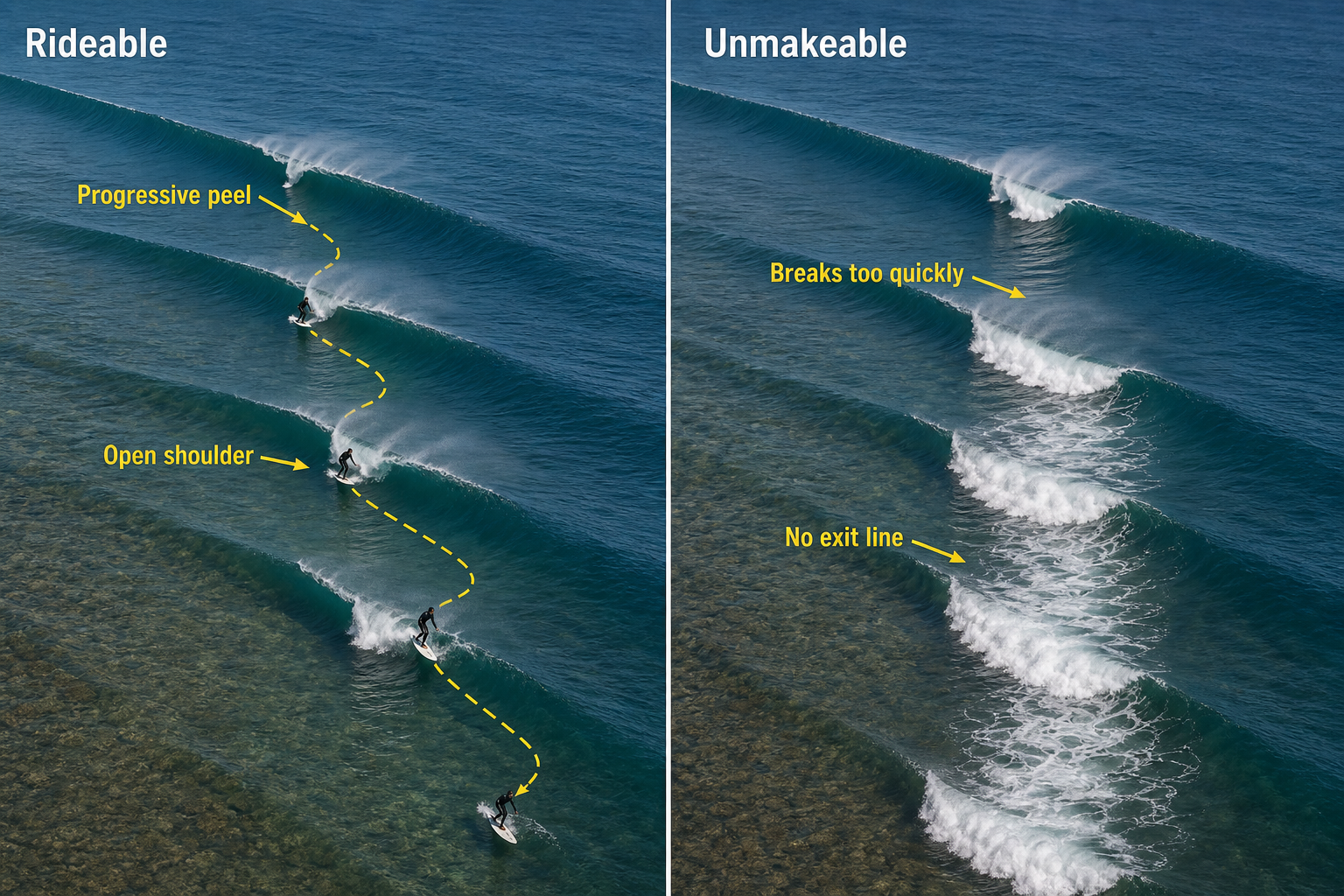
Signs of a Rideable Offshore Wave
- A visible shoulder: The wave has an open, tapering wall rather than a straight closeout line.
- A peeling lip: The breaking section moves progressively down the line.
- A defined takeoff zone: The peak breaks in roughly the same place each set.
- A manageable barrel line: The lip throws out, but the exit remains open.
- Consistent speed: The wave runs fast, but not faster than a surfer can travel.
Signs of an Unmakeable Offshore Wave
- Ruler-straight closeouts: The whole wave breaks at once with no rideable shoulder.
- A lip that hangs too long: Strong offshore wind holds the crest until it pitches violently at the base.
- No exit from the barrel: The tube pinches shut immediately after takeoff.
- Wrong swell direction: The swell hits the bank too squarely and closes out.
- Too much period for the bottom: Long-period swell can overwhelm beachbreaks better suited to shorter-period lines.
A useful test is to watch the experienced surfers in the lineup. If they’re making sections consistently, the wave is likely rideable. If even well-positioned surfers are being outrun, the shape is probably unmakeable rather than just challenging.
The Best Conditions for Offshore Waves
Offshore wind is only one ingredient. The best offshore waves happen when wind, swell, tide, and bottom shape all come together. A perfect wind direction can’t fix a bad swell angle, and a great swell can be wasted by the wrong tide.
Best Offshore Wind Direction and Strength
The ideal wind blows from land toward the sea — either directly offshore or slightly cross-offshore. Direct offshore wind gives the cleanest face and the strongest lip-holding effect. Cross-offshore wind can be excellent on peeling waves because it cleans the face while helping the tube stay open down the line.
Light offshore wind, roughly 3 to 8 knots, is best for clean, approachable surf. Moderate offshore wind, around 8 to 15 knots, can create classic barrel conditions. Stronger wind may still work at powerful reefs or points, but it often makes beachbreaks harder to catch and less consistent.
Ideal Bottom Structure for Offshore Waves
Offshore wind works best when the seabed already creates a good wave. The bottom determines where the wave stands up, how fast it peels, and whether the lip spills or throws.
- Point breaks: A long, angled seabed creates peeling walls. Offshore wind adds smoothness and definition to what’s already there.
- Reef breaks: A firm, predictable bottom creates consistent takeoff zones and hollow sections that benefit greatly from offshore grooming.
- Beachbreaks: Sandbars can produce excellent offshore barrels, but they shift with storms and tides, so the quality can vary.
The best seabed gradient depends on the desired wave. A gentle slope produces softer, spilling waves. A moderate slope creates versatile, rippable walls. A steep or abrupt ledge creates hollow, powerful barrels. For quality offshore waves, the bottom should be even enough to peel progressively, but steep enough to make the wave stand up with force.
How Swell Direction Affects Offshore Wave Quality
Swell direction controls whether the wave peels or closes out. A swell that hits a beach or reef too directly often breaks all at once. A swell that approaches at a better angle will break progressively, creating a rideable wall.
For point breaks, the best swell angle wraps into the point and runs along the contour. For reefs, the swell needs to hit the ledge in a way that creates a defined takeoff zone and a clear exit. For beachbreaks, a slightly angled swell often generates peaks, while a swell arriving too straight causes closeouts. There’s no single universal best swell angle, but the principle holds: the swell should meet the bottom diagonally enough to peel, without losing so much angle that it loses power.
Best Swell Period for Offshore Waves
Swell period is the time between successive waves. Longer-period swells carry more energy and interact with the seabed earlier, which generally makes them stronger and better organized.
- 8 to 10 seconds: Fun for smaller beachbreaks, but usually less powerful and less organized.
- 11 to 14 seconds: A versatile range for many beaches, reefs, and points.
- 15 to 18 seconds: Excellent for reefs and points, but can close out some beachbreaks.
- 18 seconds and above: Powerful and highly refracted, best suited for spots built to handle long-period groundswell.
For many surf spots, the best offshore waves fall in the 11 to 16 second range. That period provides enough push to create quality walls without so much energy that every wave shuts down at once.
Best Wave Height for Offshore Waves
The ideal wave height depends on the specific break. Light offshore wind can improve almost any size, but very small waves may become harder to catch if the wind is too strong. Waist-high to head-high offshore surf is often the most playful and accessible range.
Overhead offshore waves become faster, steeper, and more powerful. Double-overhead surf can be exceptional at reefs and points with a clear channel or tapering wall. At many beachbreaks, however, too much size under offshore wind can mean heavy closeouts rather than makeable barrels. At spots like these, protection matters as much as equipment. A well-fitted neoprene impact vest adds a useful layer of protection on heavier days, and a low-profile surf helmet is worth considering if you’re surfing near shallow reefs or rocky breaks.
Best Tide for Offshore Waves
Tide changes the water depth over the bottom and, as a result, changes the wave’s shape. Lower tide typically makes waves steeper and hollower because there is less water over the bank or reef. Higher tide tends to soften waves and slow them down. Many offshore waves are at their best around mid tide — enough depth for shape, but not so much that the wave becomes fat and slow.
Some reef breaks need a specific tide to cover the ledge properly, while some beachbreaks only produce barrels on lower tides. Some points need more water to connect sections. The best tide is always spot-specific, but the pattern is consistent: tide controls how the swell interacts with the bottom, while offshore wind controls how cleanly the wave throws.
Other Factors That Improve Offshore Wave Quality
A few smaller details can determine whether offshore surf becomes truly exceptional or merely good.
- Wind consistency: Steady wind grooms waves more reliably than gusty, variable wind.
- Coastal shelter: Cliffs, dunes, or headlands can protect the lineup from side wind.
- Swell spacing: Clean, well-organized sets allow the bottom to work properly between waves.
- Sandbar quality: At beachbreaks, the best offshore days depend heavily on well-formed banks.
- Morning timing: Offshore land breezes often fade as daytime sea breezes develop, so early sessions are usually the cleanest.
Gear and Preparation for Offshore Sessions
Offshore conditions often produce some of the best surf of the year, so it’s worth being prepared before you paddle out. In cooler water, a quality 3/2mm full wetsuit keeps you comfortable through a long session. If you’re surfing a reef break, a pair of reef booties protects your feet on entry and exit.
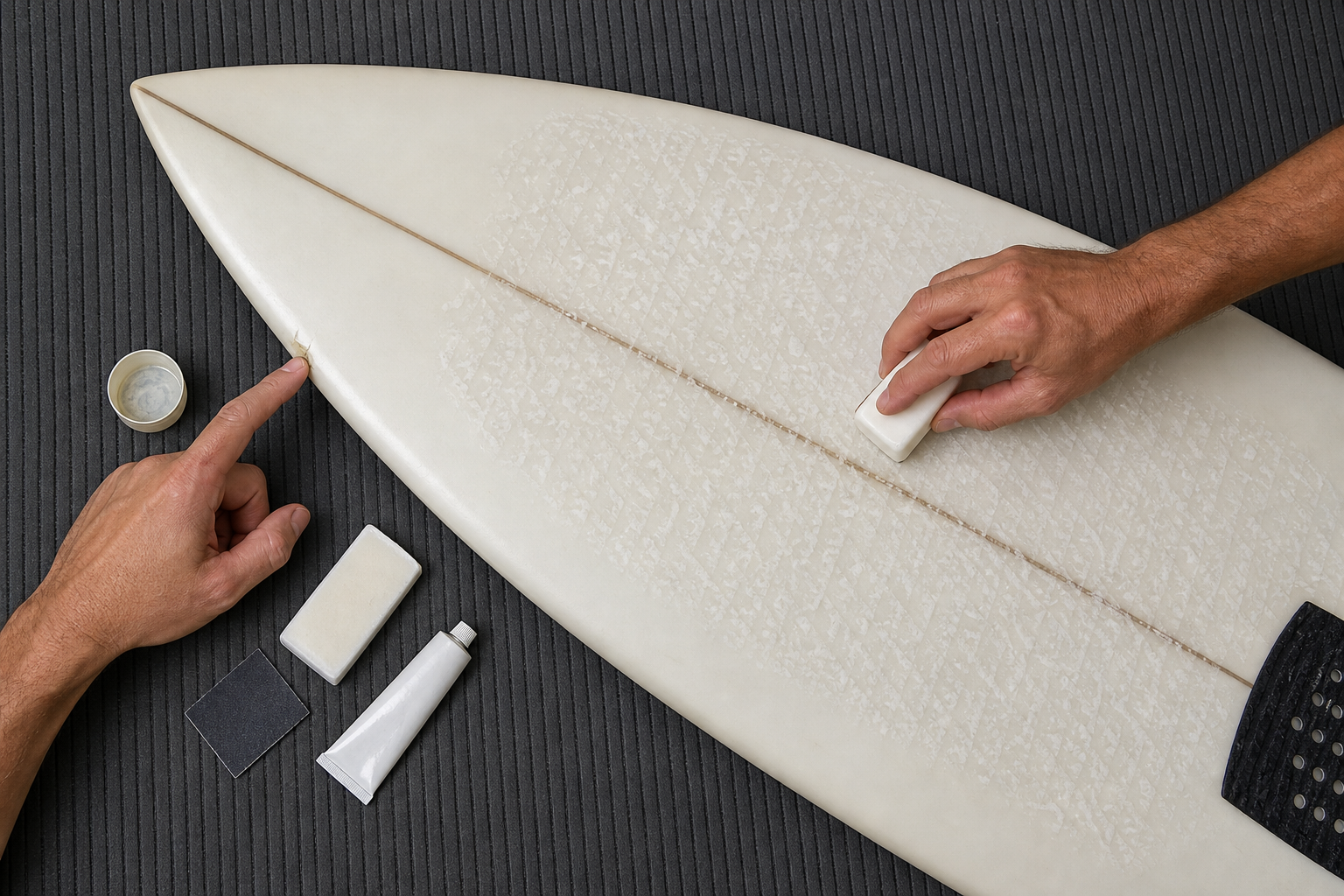
Keeping your board in good condition matters too. Before heading out, check for any water-logged areas or cracks and patch them with a surfboard ding repair kit. A fresh coat of cool-water surf wax gives you the grip you need on clean, steep offshore faces.
If you want to review your sessions afterward or capture the conditions on film, an action camera with image stabilization mounted on your board or helmet can give you great footage. Pairing it with a high-capacity microSD card means you won’t run out of storage mid-session.
Famous Surf Spots Known for Offshore Waves
Many of the world’s most celebrated waves have become iconic precisely because they combine reliable swell, quality bathymetry, and frequent offshore wind. These spots show just how varied offshore waves can be — from long, peeling point walls to short, violent reef barrels.
- Jeffreys Bay, South Africa: A world-class right-hand point that comes alive under west to southwest offshore wind and clean Southern Ocean groundswell. One of the longest rideable waves on the planet.
- Pipeline, Hawaii: A powerful reef barrel shaped by northwest swell, with light offshore or cross-offshore wind from the northeast helping groom its famous lips.
- Teahupo’o, Tahiti: A heavy reef wave where south to southwest swell meets a shallow ledge, with northerly offshore wind grooming what is arguably the thickest lip in surfing.
- Skeleton Bay, Namibia: A remarkably long left-hand sand point known for desert offshore winds and South Atlantic groundswell running for hundreds of meters.
- Mundaka, Spain: A rivermouth left that needs northwest swell, a shaped sandbar, and southerly offshore wind to produce its fast, hollow barrels.
- Hossegor, France: A beachbreak barrel zone where east offshore wind can turn powerful Atlantic swell into heavy, hollow peaks.
- Supertubos, Portugal: A fast sandbar wave that produces punishing barrels under offshore wind and west swell — sometimes called the “European Pipeline.”
- Snapper Rocks and Kirra, Australia: Sand-bottom right-hand points on the Gold Coast that thrive on east to southeast swell and west to southwest offshore wind.
- Uluwatu and Padang Padang, Indonesia: Reef waves on Bali’s Bukit Peninsula, consistently groomed by dry-season offshore trade winds blowing from the southeast.
- Rincon, California: A classic right-hand point that becomes exceptionally smooth and long under offshore or light cross-offshore wind during winter northwest swells.
Offshore wind is one of the clearest signs that quality surf may be on offer, but it’s never a guarantee on its own. The best offshore waves come from the meeting of clean swell, the right approach angle, a suitable tide, and a bottom that allows the wave to peel. When all those pieces align, offshore wind adds the finishing touch: a smooth face, a held-up lip, and the kind of shape that makes a wave feel faster, cleaner, and more alive than anything else the ocean can produce.