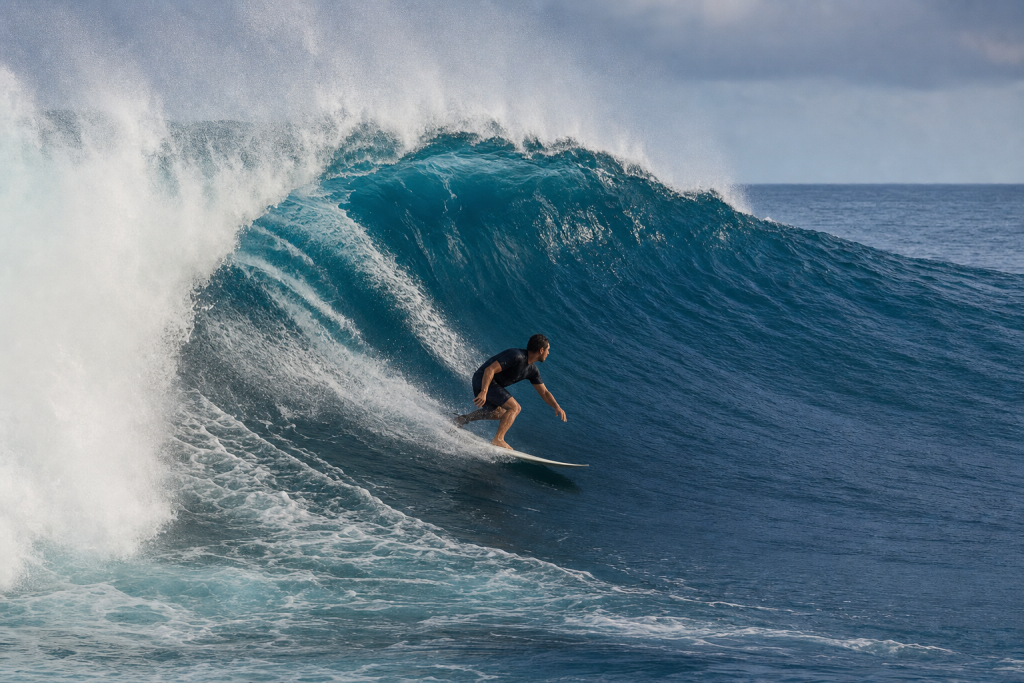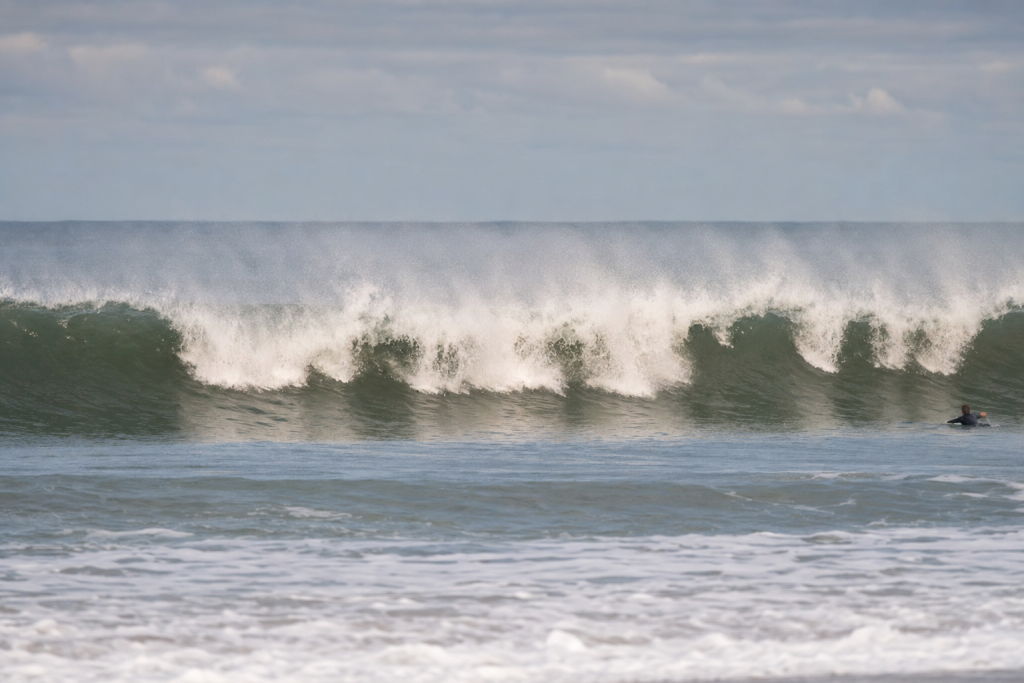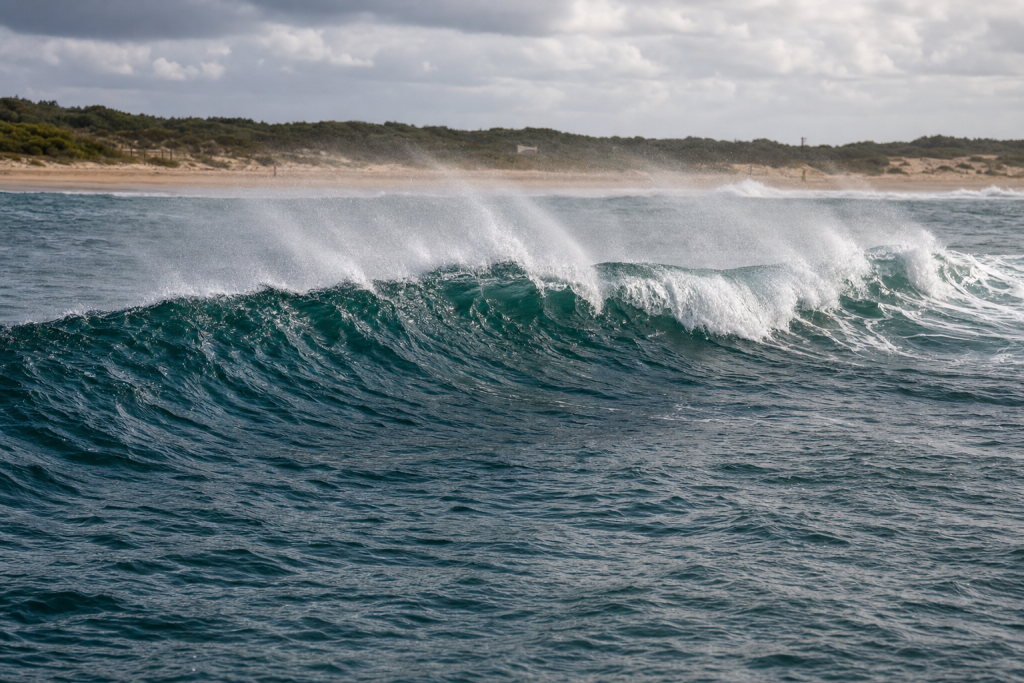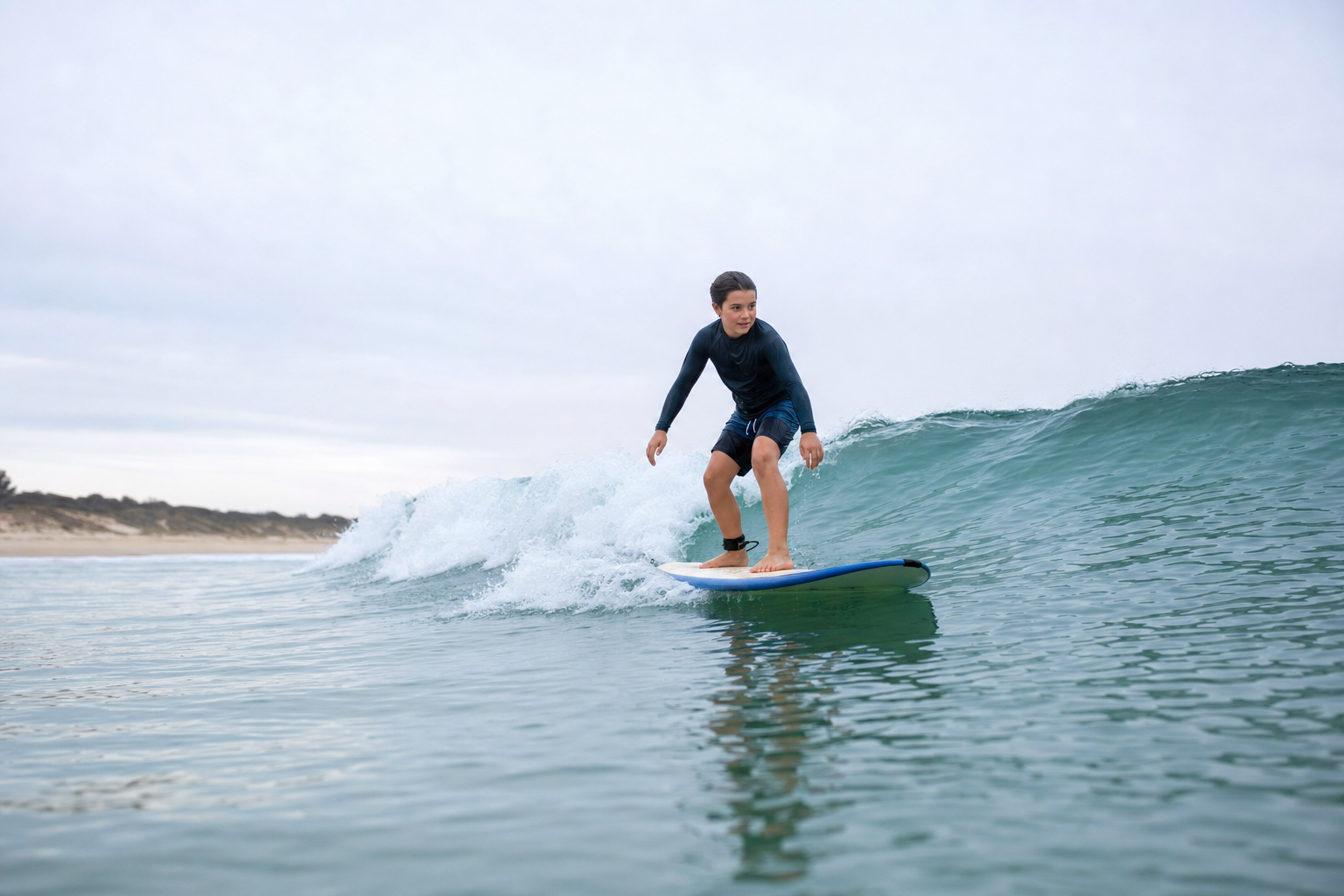
Soft waves are the friendly end of the surfing spectrum: rounded, slower-moving waves that break with a spilling crest rather than a pitching lip. They may not deliver dramatic barrels or explosive sections, but they are one of the best classrooms in surfing. For beginners, soft waves make it easier to catch waves, stand up, trim along the face, and learn how a surfboard responds. Choosing the right gear helps too — a reliable surfboard leash is one of those essentials you’ll want sorted before paddling out. For experienced surfers, soft waves reveal a different kind of skill: efficiency, timing, and smooth speed generation when the wave itself gives you very little for free.
What Are Soft Waves in Surfing?
In surfing, soft waves are waves with a gentle face, low steepness, and relatively modest power. They are often called mushy waves, fat waves, or slow waves, although those terms are not always identical.
A soft wave usually breaks as a spilling breaker. Instead of the lip throwing outward and creating a hollow tube, the crest crumbles down the face. The wave may still offer a clean open wall, but that wall is typically flatter and less forceful than the face of a steep reef break or punchy beach break. Before heading out, it’s worth applying fresh cool-water surf wax to keep your footing solid on those slower, gliding rides.
Soft Waves Versus Hollow Waves
A hollow wave breaks over shallower water or a sharper seabed change. The wave base slows suddenly, the top keeps moving, and the lip pitches forward — creating a steep face and sometimes a barrel.
A soft wave does the opposite. It shoals gradually, breaks more slowly, and releases its energy over a wider area. The result is a rounded shoulder, a crumbling lip, and a slower, more forgiving ride.
What Creates Soft Waves?
Soft waves are shaped by a combination of swell energy, seabed contour, tide level, wind, and how directly the swell reaches the break. No single factor explains every soft wave, but the same patterns appear at many beginner-friendly beaches and mellow point breaks.
Gentle Seabed Gradient Creates Softer Waves
The most important ingredient is often the bottom contour. When the seabed rises gradually toward shore, incoming swell slows down incrementally. This spreads the wave’s energy across a broader area and encourages a spilling break.
Soft waves are common over gently sloping sandy beaches, broad sandbars with no sharp ledge, and flat reef platforms covered by enough water. By contrast, a sudden jump from deep water to shallow reef tends to create steeper, faster, and hollower waves.
Deeper Water Over the Break Makes Waves Softer
A wave needs the bottom to “feel” shallow water before it can break. If there is too much water over the sandbar or reef, the wave may not stand up properly. It can look full and rounded, making it difficult to catch.
This is why many surf spots become softer on a higher tide. The same sandbar that creates a punchy shoulder at low tide may turn into a slow, rolling wave when the tide fills in.
Smaller Swell Often Produces Softer Surf
Soft waves are often associated with smaller swell. A knee-high to chest-high swell usually carries less energy than a larger groundswell, so the wave breaks with less force.
However, size alone does not define softness. A small wave can still be steep and hollow if it breaks over a shallow reef. A larger wave can still feel soft if it wraps into a protected bay or peels over a very gradual point.
Swell Period Affects Soft Wave Power
Swell period is the time between successive waves in a set, and it strongly affects how much energy a wave carries.
For many soft beach breaks, a typical period is around 8 to 12 seconds. This produces organized waves without too much power. Shorter-period wind swell may also be soft, but it is often messy or weak in shape.
At mellow point breaks, soft waves can also come from longer-period swell that has lost energy while wrapping around a headland. A 14-second swell may create powerful surf at an exposed reef, then produce smooth, softer lines inside a sheltered bay.
Soft Waves: Shape, Speed, Power, and Quality
Soft waves have a recognizable look once you know what to watch for. They tend to break slowly, crumble gently, and offer a forgiving face that is easier to read than a fast, hollow wave.
Soft Wave Shape
The classic soft wave has a rounded crest and a sloping shoulder. The lip usually spills down the face instead of throwing forward, and while the face may be clean and rideable, it is rarely vertical.
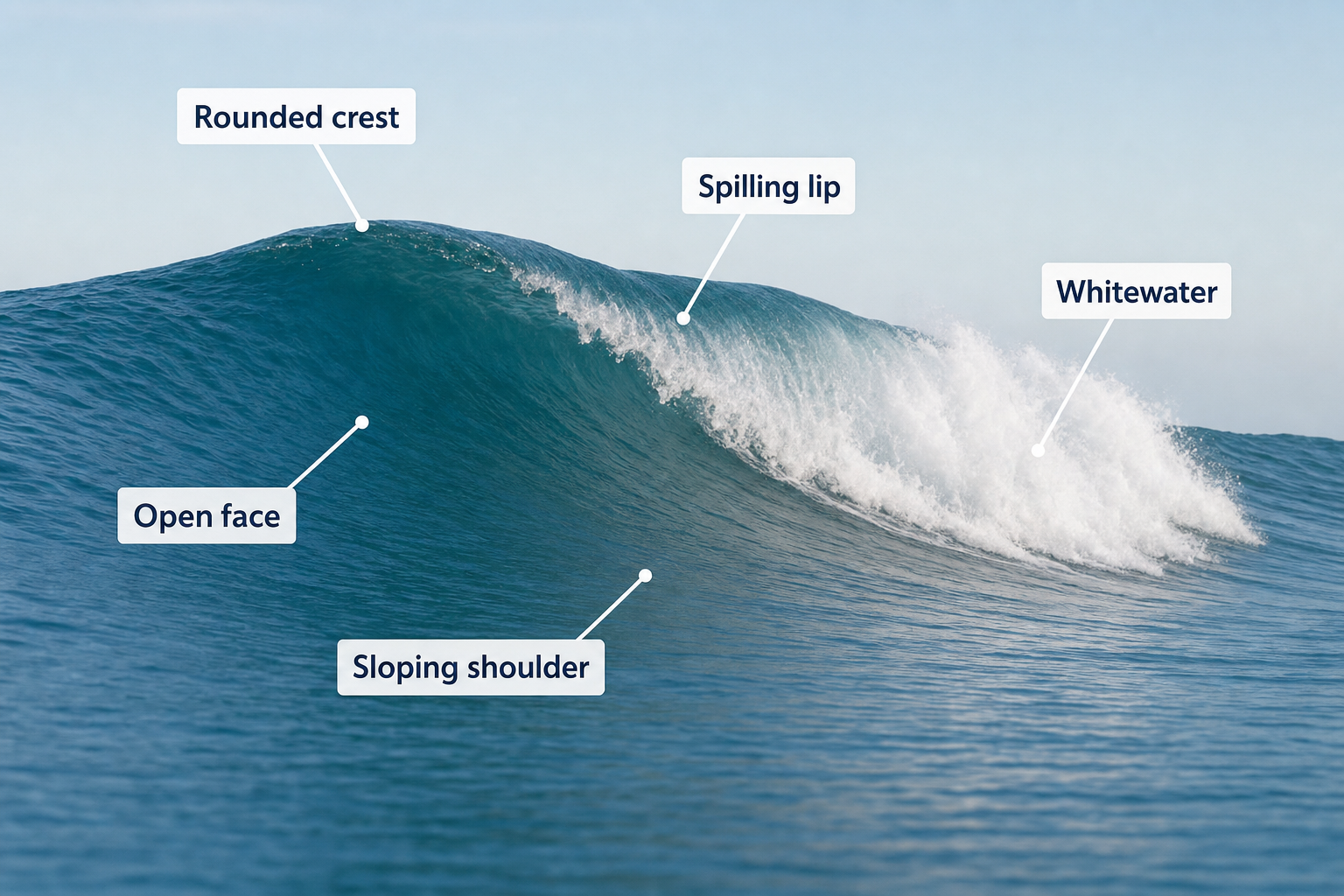
From the beach, a soft wave often looks like it is rolling rather than detonating. The takeoff zone is less dramatic, and the shoulder peels at a relaxed pace that gives surfers time to think.
Soft Wave Power
Soft waves are low to moderate in power. They do not push a surfer as aggressively as steep waves do, which makes them forgiving — but it also means the surfer must use good technique to stay moving. On a powerful wave, gravity and wave energy create instant speed. On a soft wave, speed comes from positioning, trimming, and choosing the right equipment.
Soft Wave Speed
Soft waves are usually slower than hollow or high-performance waves. The breaking section moves down the line at a more manageable pace, giving beginners more time to paddle, stand up, and adjust their stance.
That slower pace also gives longboarders time to trim, walk the board, and link smooth turns. On the wrong board, though, the same slow pace can feel frustrating if the wave lacks enough push to keep you moving.
Soft Wave Height
Beginner-friendly soft waves are commonly between knee high and chest high. Waist-high soft waves are often ideal for learning because they offer enough energy to ride without feeling overwhelming.
When soft waves get bigger, they become more challenging. A head-high soft point break may still be mellow compared with a hollow reef, but it can carry a lot of water and require stronger paddling to navigate.
Soft Wave Steepness and Hollowness
Soft waves are low in both steepness and hollowness. The face angle is gentle, and the lip rarely throws into a barrel. If there is a tube at all, it is usually brief, small, or found only on a specific section of the wave.
This lack of hollowness is one of the main reasons soft waves are approachable for newer surfers — the wave does not demand a late drop or an instant bottom turn.
Why Soft Waves Are Good for Beginners
Soft waves are good for beginners because they reduce the speed and precision required to complete basic surfing movements. They give learners time to make mistakes, recover balance, and start understanding how waves behave.
Soft Waves Make Takeoffs Easier
On a steep wave, the takeoff happens quickly. The surfer must paddle hard, match wave speed, pop up cleanly, and set a line before the lip breaks. On a soft wave, the entry is more gradual. The board has more time to glide into the wave, and the drop is less abrupt — helping beginners practice the pop-up without being immediately thrown down the face.
Soft Waves Give Beginners More Time
Time is one of the most valuable things in early surfing. Soft waves move slowly enough that a beginner can work through the basics step by step: paddle, feel the lift, stand, look down the line, then shift weight.
That slower pace helps new surfers build pattern recognition. They begin to understand where waves peak, when to paddle, and how the shoulder forms.
If you’re just getting started, picking up a surf technique book can help you make sense of what you’re feeling in the water and accelerate your learning between sessions.
Soft Waves Reward Good Board Choice
Soft waves work especially well with beginner boards because those boards are designed to glide. A foam board, mini-mal, or longboard has enough volume to catch waves early and maintain speed across flatter sections.
This is why beginners often progress faster on bigger boards in soft surf. A small shortboard may sink, stall, or miss waves that a high-volume board catches easily.
Why Soft Waves Are Not Ideal for High-Performance Surfing
Soft waves are excellent for learning, trimming, and longboarding, but they are not ideal for high-performance shortboarding. Modern high-performance surfing depends on speed, projection, and a steep face — and soft waves often lack all three.
Soft Waves Lack a Vertical Face
Many advanced maneuvers require a steep section. Snaps, critical re-entries, and vertical top turns depend on the board driving up a powerful face and rebounding off the lip. On a soft wave, the lip may crumble before the surfer reaches it, and the face may be too flat for a strong bottom turn.
Soft Waves Do Not Generate Easy Speed
High-performance shortboards need speed to work properly. In soft waves, the surfer often has to pump constantly or stay high on the face to avoid bogging. If the wave flattens out, a low-volume board may lose planing speed entirely. That is why skilled surfers often switch to a fish, twin fin, or mid-length when the surf turns soft. Swapping to more suitable performance surfboard fins can also help you generate drive in weaker, slower surf.
Soft Waves Rarely Offer Barrels
Because soft waves are not very hollow, they rarely provide proper barrel sections. A wave may have a small cover-up on the inside, but it usually lacks the pitching lip needed for a true tube ride.
How Hard Are Soft Waves to Surf?
Soft waves are generally easy to surf at a basic level, but they can be surprisingly technical when you want to surf them well. They are forgiving for takeoffs and turns, yet demanding when it comes to speed management.
Why Soft Waves Feel Easy
Soft waves feel easier because the consequences of poor timing are lower. The drop is gentler, the lip is less aggressive, and the shoulder usually gives more time to react. They are also easier to read than many fast beach breaks — a good soft wave often shows a visible peak and a clear shoulder before it breaks.
Why Soft Waves Can Still Be Difficult
The main difficulty is catching them. Because soft waves are less steep, they do not always pick up the board quickly. Beginners often paddle too far outside, where the wave is still too full, then watch it roll underneath them.
Soft waves can also be hard on shortboards. Without enough volume or technique, the surfer may catch the wave late, stand too far back, and stall immediately.
How to Surf Soft Waves Well
Surfing soft waves well is about efficiency. You want to catch the wave early, find the steepest available section, and use the cleanest line rather than forcing turns where the wave has no power.
Choose the Right Board for Soft Waves
A higher-volume board is usually best in soft surf. Good options include foam boards for first-time surfers, longboards for glide and trim, and fish shapes for added speed in flatter conditions. The common theme is paddle speed and planing area — in soft waves, those qualities matter more than radical maneuverability.
Fin setup also plays a role. A larger, more upright fin cluster helps generate drive when the wave isn’t handing you speed. A set of fiberglass tri fins can give a noticeable boost in flow and control across softer, slower faces.
Don’t overlook your deck grip either. A good surf traction pad keeps your back foot planted when you’re making small adjustments on a slow, rolling wave.
Position Closer to the Peak
On a hollow wave, sitting too deep can be punishing. On a soft wave, being too far out on the shoulder often means you miss the power source entirely. Try to sit near the peak or just inside the section that first begins to feather. You want the part of the wave that is steep enough to lift your board, but not so broken that you are riding only whitewater.
Paddle Earlier and Build Momentum
Soft waves do not always grab the board quickly, so start paddling a little earlier than you would on a steep wave. Build smooth momentum before the wave reaches you, and keep your chest positioned correctly on the board. Too far back and the nose will rise and drag. Too far forward and the nose may pearl. A balanced trim lets the board glide into the wave naturally.
Angle Your Takeoff on Soft Waves
A straight takeoff can work in whitewater, but an angled takeoff is usually better once you are riding green waves. Point the board slightly down the line as you paddle in. This helps you keep speed from the start and prevents you from dropping into the flat water at the bottom of a weak wave — where many beginners stall and lose momentum.
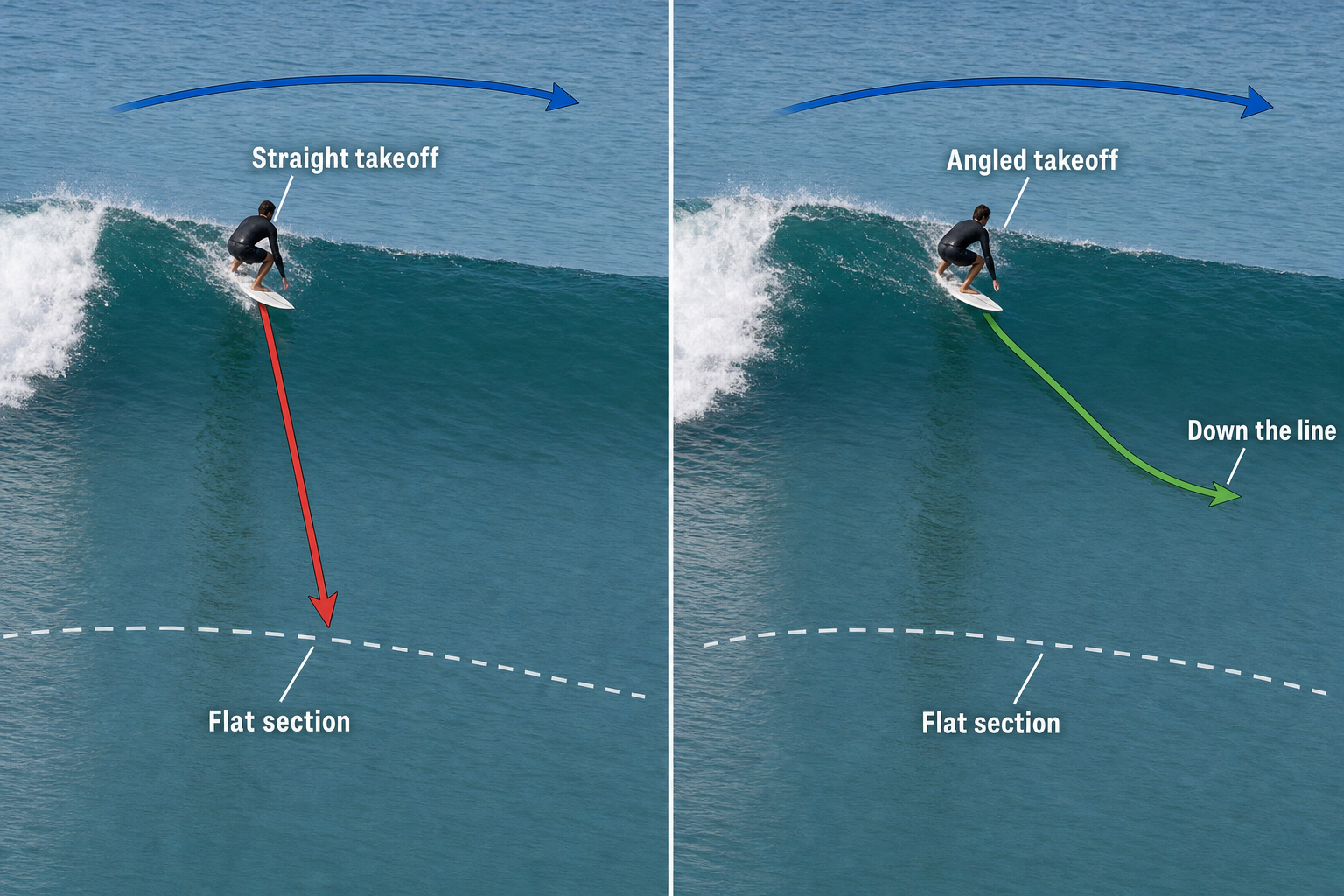
Stay High on the Face
The upper portion of a soft wave often has the most usable energy. If you drop too low, the board may lose speed in the flats. After standing, look down the line and hold a high trim. Make small weight shifts rather than heavy turns. If the wave steepens, you can drop lower and redirect. If it softens, climb back toward the pocket.
Use Gentle Turns and Cutbacks
Soft waves reward smooth surfing. Instead of forcing a hard bottom turn, use a shallow arc to stay with the pocket. When you get too far ahead of the breaking section, cut back toward the whitewater. A cutback is especially useful because soft waves often have slow shoulders — returning to the foam or pocket reconnects you with the wave’s energy and keeps the ride going.
How to Recognize Rideable Soft Waves
Not every soft wave is worth paddling for. Some are beautifully rideable, while others are too weak, too flat, or too broken to make. Learning the difference is one of the biggest steps in wave reading.
Signs of a Rideable Soft Wave
A rideable soft wave usually has a visible peak and a shoulder that peels away from it. The face may be gentle, but it should still have a defined slope. Look for a crest that feathers before breaking, an open green face next to the whitewater, and a breaking line that peels rather than closing all at once. If surfers around you are catching waves early and trimming along the face, conditions are likely rideable. If most are missing waves or sinking behind them, the waves may be too full to catch.
Signs of an Unmakeable Soft Wave
An unmakeable soft wave can fail in two main ways: it can be too fat to catch, or it can crumble without offering a clean face. Watch for waves that roll underneath surfers without breaking, sections that break then flatten and disappear, or a straight closeout with no peeling direction. The most deceptive soft waves look smooth from the beach but never become steep enough for the board to enter — they appear clean, yet offer no slope to generate speed.
How to Read the Peel Angle
The peel angle is the angle between the breaking whitewater and the unbroken shoulder. A wave with a good peel angle gives you a path down the line. A wave with no peel angle breaks all at once and leaves you nowhere to go.
For beginners, a soft wave with a moderate peel is ideal. It should not race away too quickly, but it should not be so flat that the shoulder dies before you can ride it.
Bottom Structure and Tide for Soft Waves
The bottom shape and tide level often decide whether a wave is soft, steep, rideable, or completely flat. The same surf spot can change character several times in one day.
Typical Bottom Structure for Soft Waves
Soft waves usually form over bottoms that slow the swell gradually. Sand is the most common material because it creates broad banks and mellow slopes. Cobblestone points can also produce soft waves when the contour bends swell down the line, and flat reefs covered by enough water will spill rather than pitch.
Typical Seabed Gradient for Soft Waves
A gradual seabed gradient is the classic soft-wave setup. The wave begins to feel the bottom well before it breaks, slowly steepening as it approaches shore. A very flat gradient can make waves too soft to ride. A moderate gradient often works best because it provides enough steepness for takeoff without creating a hollow, pitching break.
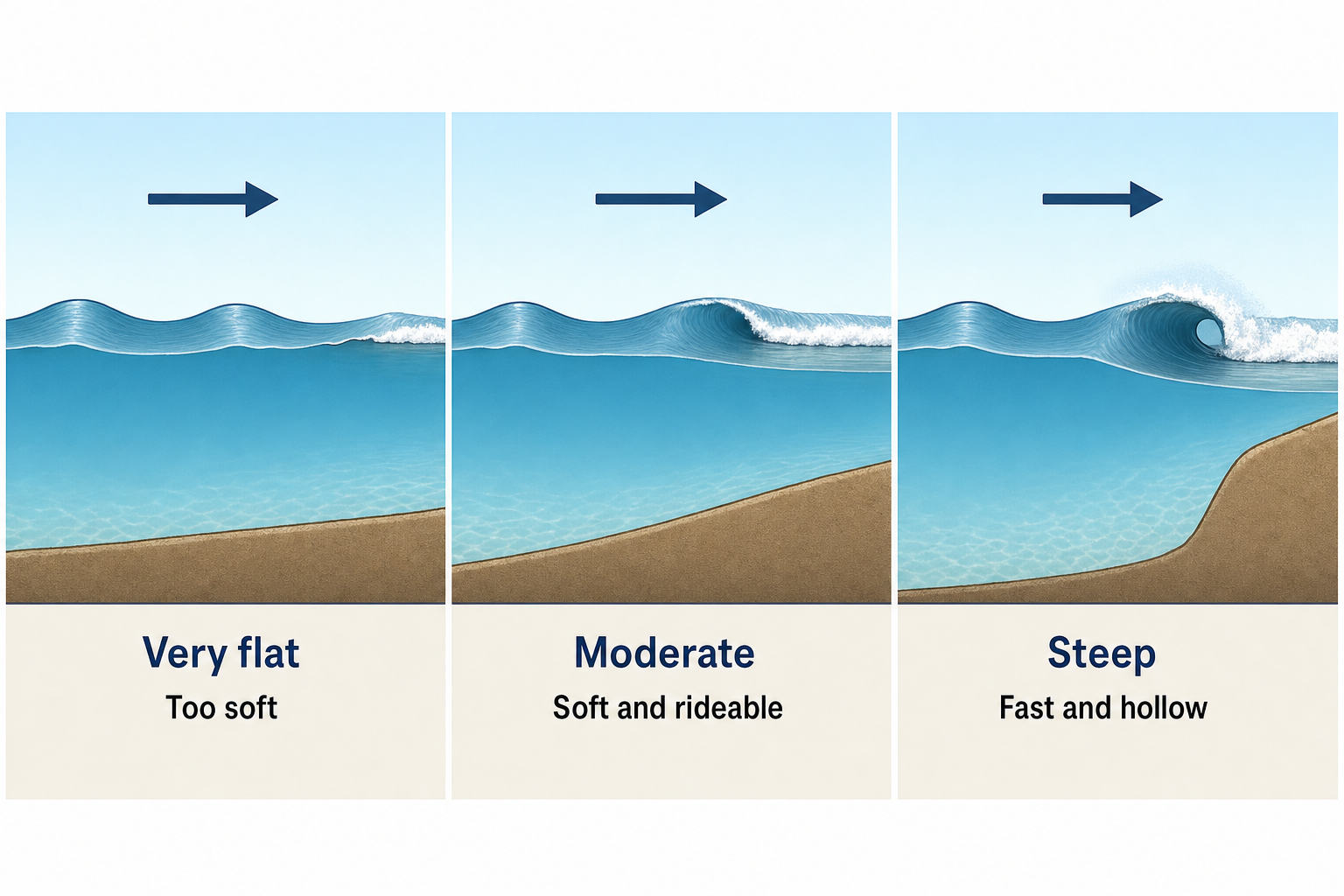
Typical Tide for Soft Waves
Soft waves are often associated with mid to high tide. More water over the bottom makes the wave fuller and less hollow, which can improve beginner conditions by softening the takeoff. However, too much tide can make a wave unrideable — if the water is too deep over the bank, the wave may not break until it reaches the shoreline.
Some flat beaches need a lower tide to break at all. In those cases, the best soft waves may happen on a pushing mid tide rather than a full high tide.
Swell Direction, Swell Angle, and Period for Soft Waves
Swell direction and angle shape the way soft waves break. They influence whether a wave peels gently, closes out, or simply fails to stand up.
Typical Swell Direction for Soft Waves
Soft waves often occur when swell reaches the break indirectly. A swell that wraps around a headland, filters into a bay, or bends along a point loses some of its raw energy — which can turn a powerful open-ocean swell into a softer, more manageable wave. At beach breaks, even a smaller direct swell can create soft waves if the sandbar is gradual enough.
Typical Swell Angle for Soft Waves
A slightly angled swell is often better than one arriving perfectly straight to the beach. When swell hits a straight beach head-on, the wave tends to close out. When it approaches at an angle, it has a better chance of peeling. At point breaks, the best soft waves often come from a swell direction that wraps along the point — too much angle may miss the break entirely, while too little may cause the wave to break in sections.
Typical Wave Period for Soft Waves
Many soft waves occur with periods in the 8 to 12 second range — long enough to produce shape, but not always powerful enough to become hollow. Longer-period swells can still create soft waves when they are reduced by refraction, tide, or a gentle bottom contour. Very short-period swell can be soft too, but often lacks clean shape because the waves arrive close together.
Typical Wave Height for Soft Waves
The most beginner-friendly soft waves are usually knee high to chest high. Waist-high waves are especially useful because they provide enough push for practice while still breaking slowly. When the surf gets shoulder high or larger, the same break may become faster and more demanding, even if it remains softer than a hollow reef break.
Wind and Other Factors That Shape Soft Waves
Wind can significantly improve or ruin soft waves. Light offshore wind holds the face open and makes the wave cleaner. Light onshore wind adds some crumble, but too much onshore wind makes the surf bumpy and disorganized. Strong offshore wind can make soft waves harder to catch because it blows against the face and holds the lip up — especially noticeable on small, weak days.
Sand movement is another major factor. A beginner beach can shift completely after storms, seasonal swell, or long periods of calm. One month the bank may be perfect; the next it may be too flat or too straight to produce rideable waves.
If you’re surfing regularly, keeping a surfboard ding repair kit in your bag is always a smart move — soft wave beaches are often high-traffic zones where boards take the occasional knock.
What to Wear in Soft Wave Conditions
Soft waves are common at beginner beaches and sheltered bays, but that doesn’t mean you can ignore the elements. Water temperature and sun exposure still matter, and the right kit makes a real difference to comfort and safety.
In cooler water, a well-fitting wetsuit is essential. A 3/2mm full wetsuit works well in temperate conditions, providing enough warmth and flexibility for longer sessions. In warmer water or tropical climates, a long-sleeve rash guard with UPF protection is a practical alternative that shields your skin from the sun.
If you’re surfing rocky or reef-covered areas — even at mellow breaks — a pair of reef booties can save you from a painful walk across the bottom. And for beginners who are still building confidence, wearing an impact vest provides useful protection against unexpected wipeouts and board contact.
At busier breaks where boards are flying around, a low-profile surf helmet adds another layer of protection without getting in the way.
Filming Your Progress in Soft Waves
Soft waves are ideal for filming your surfing. The slower pace and forgiving conditions make it easy to set up a camera and review your technique between sessions. An action camera like this waterproof 4K action camera can capture clean footage from the water or the shore. Pair it with a high-capacity microSD card so you never have to cut a session short because you’ve run out of storage.
Famous Surf Spots Known for Soft Waves
Many famous soft-wave spots are longboard waves, beginner beaches, or mellow points. Conditions vary by swell and tide, but these places are widely known for softer surf on typical days.
Waikiki, Hawaii
Waikiki is one of the world’s classic soft-wave zones. Breaks such as Canoes and Queens offer long, rolling waves over reef in relatively deep water. They are famous for longboarding, early surf lessons, and smooth trim lines — a genuine benchmark for what a soft, beginner-friendly wave looks like.
San Onofre, California
San Onofre is a benchmark mellow wave on the California coast. Old Man’s and Dogpatch are known for soft shoulders, long rides, and a relaxed longboard style. The waves can get bigger, but the general character is slow and forgiving.
Doheny State Beach, California
Doheny is a well-known beginner and longboard wave that breaks over a gentle sand and cobble setup. It produces soft waves that are often easier to catch on larger boards, making it a popular choice for lessons and early progression.
Tourmaline, California
Tourmaline in San Diego is famous for soft, slow waves and a strong longboard culture. It is a classic example of a spot where glide and positioning matter far more than raw power.
Muizenberg, South Africa
Muizenberg is one of South Africa’s best-known beginner beaches. Its long sandy shoreline and gentle waves make it a popular place to learn, especially when the swell is moderate and the wind is manageable.
Weligama, Sri Lanka
Weligama Bay is known for soft, beginner-friendly surf over sand. The bay shape filters swell and creates manageable waves that suit foam boards, longboards, and early progression — a popular stop on the Asian surf circuit.
Noosa, Australia
Noosa’s points can produce long, soft, beautifully shaped waves. First Point is especially famous for longboarding, offering clean walls that peel slowly with excellent shape on the right swell.
The Pass, Byron Bay
The Pass can provide long, user-friendly right-hand waves when conditions line up. It is not always soft, but many days offer a mellow wall that suits longboards and mid-lengths perfectly.
La Saladita, Mexico
La Saladita is a well-known long left that is often described as soft, long, and ideal for longboarding. When the swell direction is right, it can provide very long rides with a forgiving face that rewards trim and patience over power.
Soft Waves Build Better Surfing Fundamentals
Soft waves may not be the most dramatic waves in surfing, but they are among the most useful. They teach timing, wave selection, trim, and efficient board control in conditions where mistakes are manageable rather than punishing. For beginners, they offer the right balance of movement and forgiveness. For advanced surfers, they demand flow instead of force — a different skill set, but a valuable one.
The key is understanding what makes a soft wave work. Look for a defined peak, a peeling shoulder, and enough steepness to keep the board moving. Choose equipment with volume and glide, paddle early, and stay close to the wave’s energy source. When approached with the right mindset, soft waves stop being a consolation prize and become a foundation for stylish, intelligent surfing.