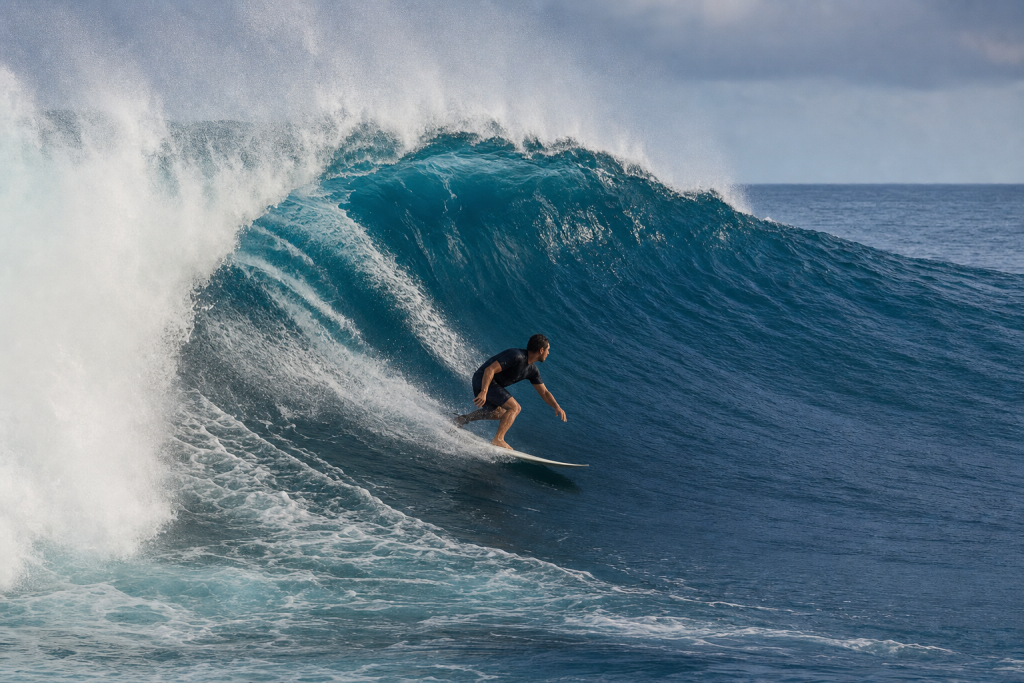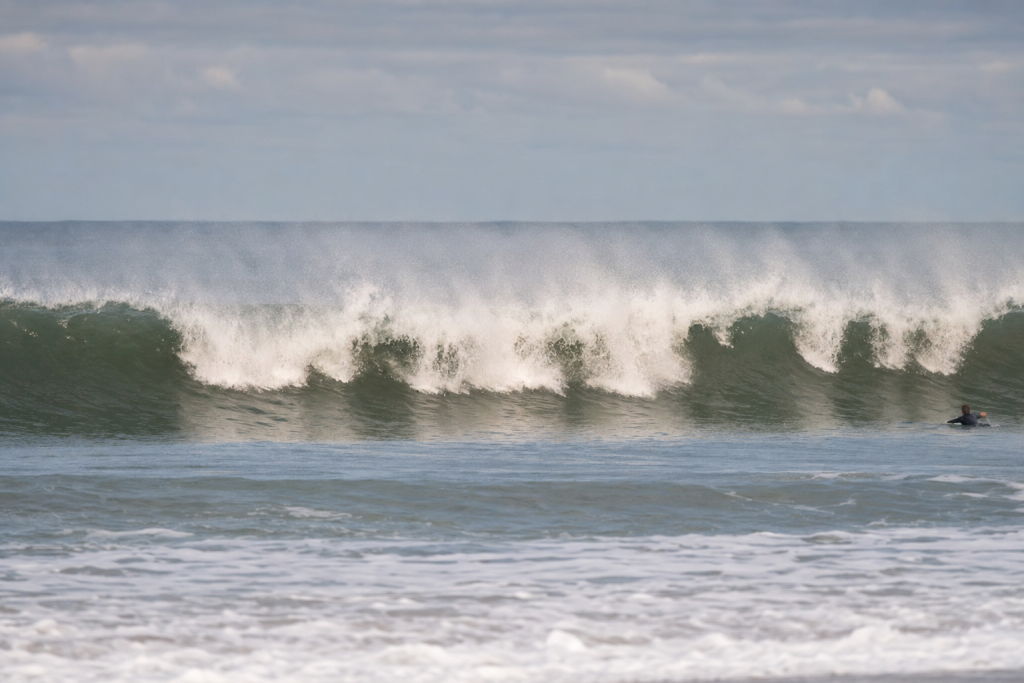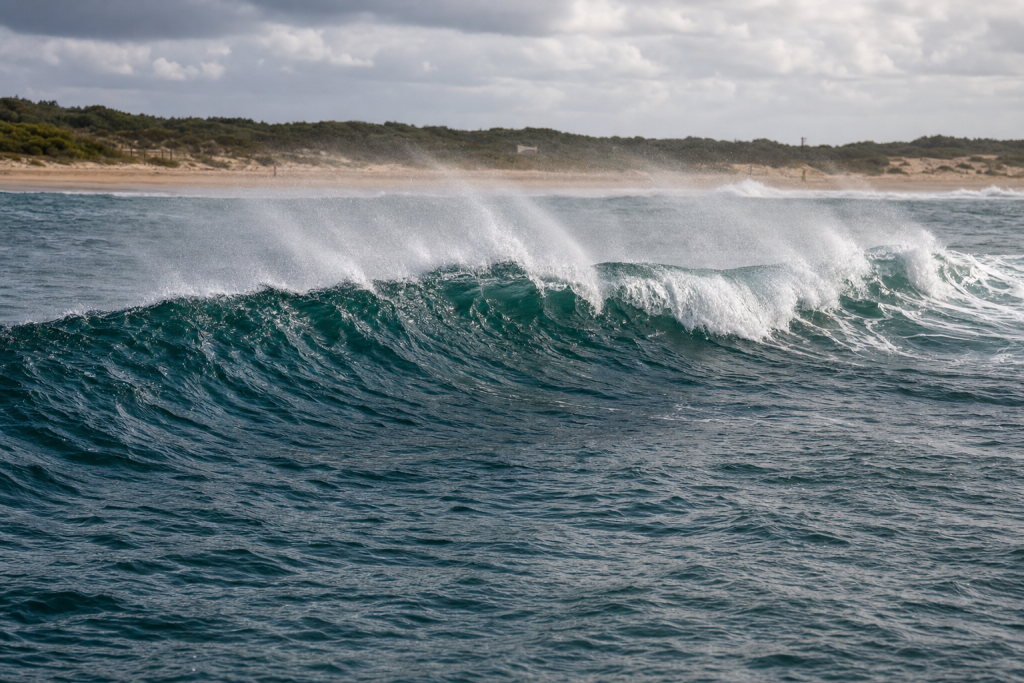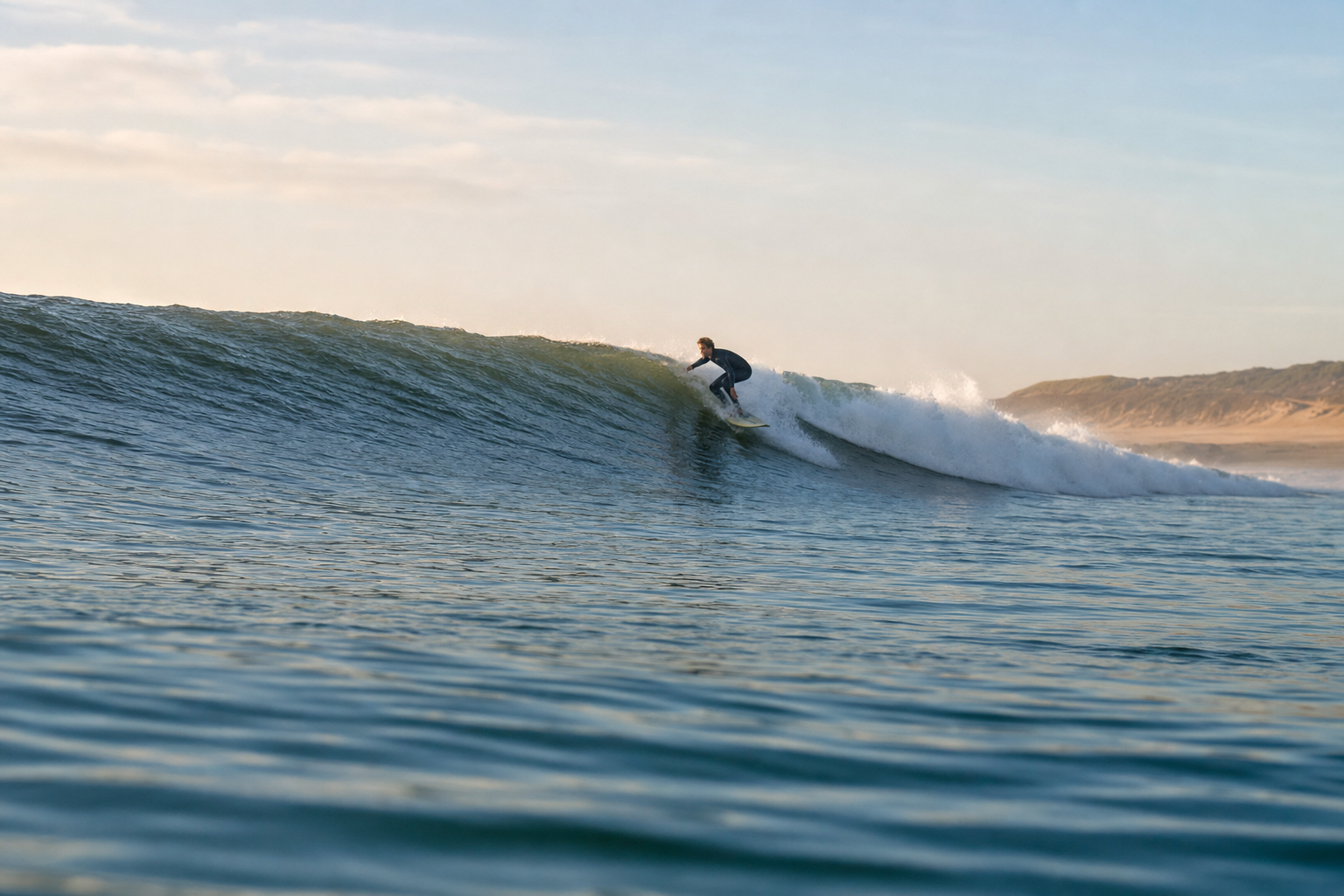
Mushy waves get dismissed as “burgers” by plenty of surfers, but they are one of the most common wave types you will actually deal with. They shape beginner sessions, longboard days, high-tide grovels, and those frustrating afternoons when a swell looks promising on the buoy but arrives soft at the beach. Understanding what creates weak and mushy waves helps you choose the right spot, pick the right board, and turn slow surf into something genuinely fun. If you are gearing up for softer conditions, having a reliable surfboard leash is always a good starting point before you head out.
What Mushy Waves Are
Mushy waves are soft, slow-breaking waves with a rounded face and a weak pocket. Instead of standing up sharply and throwing a lip, they crumble from the top and spill down the face. The energy is spread over a wide area, so the wave feels gentle rather than punchy. Keeping your board well-waxed in these conditions can help you maintain grip through sluggish sections, and something like cool-water surf wax is worth having in your bag depending on your local water temperature.
A mushy wave can be small or large, clean or bumpy, rideable or almost useless. The defining feature is not height alone. It is the lack of steepness, push, and hollow shape.
| Feature | Typical mushy wave behavior |
|---|---|
| Shape | Rounded crest, sloping face, soft shoulder |
| Power | Weak for its size, with little push from the pocket |
| Speed | Usually slow, though sections can still outrun you |
| Steepness | Low to moderate, with a gentle takeoff zone |
| Hollowness | Little to none; barrels are rare |
| Surf quality | Good for longboards, fishes, and grovelers |
What Creates Mushy Waves
Mushy waves are usually created by a combination of soft bathymetry, weak swell energy, excess water over the break, and poor swell alignment. A single factor can make a wave softer, but the classic mushy day usually happens when several of these elements overlap.
Gentle Seabed Gradient
The most important cause of mushy waves is a gentle seabed gradient. When the ocean floor rises slowly, the wave loses energy gradually. The crest becomes unstable and spills forward instead of pitching outward.
This is the classic spilling breaker pattern. The wave breaks over a long distance, so the power is spread across foam and turbulence rather than concentrated in a steep pocket.
Common mushy-wave bottom structures include:
- Flat sandbars that are too deep or too broad
- Gently sloping beach breaks
- Soft reefs with gradual transitions from deep to shallow water
- Points where the swell wraps too far before breaking
By contrast, hollow waves typically break where the bottom rises more abruptly. A steep reef ledge, shallow sandbar, or sudden rock shelf forces the wave to stand up quickly, creating a pitching lip. Mushy waves simply lack that sudden lift.
Too Much Water Over the Break
High tide is one of the most common reasons waves turn soft. When there is too much water over a sandbar, reef, or rock shelf, the swell does not feel the bottom strongly enough. The wave may lift and crumble, then back off before creating a usable face.
Surfers often describe this as “fat” or “swamped.” The wave may look like it has size from a distance, but when it reaches the takeoff zone, it rolls instead of breaks.
At many beach breaks, low to mid tide allows the sandbar to engage the swell properly. At high tide, the same bank may turn soft and slopey. On some reefs and points, however, a little more water can actually improve the wave by making it less ledgy. The key is whether the tide creates enough depth for smooth shape while still allowing the bottom to trip the wave effectively.
Weak or Short-Period Swell
Swell period has a major effect on wave power. Period is the time in seconds between wave crests. Longer-period swells carry more energy, travel faster in deep water, and feel the seabed from much farther out. Short-period swells are weaker and more easily disrupted.
Mushy waves commonly come from short-period local wind swell. These waves may have enough height to break but lack the organized energy needed to stand up with force.
Typical mushy-wave periods tend to fall in these ranges:
- 5 to 8 seconds: common for weak local wind swell
- 8 to 10 seconds: rideable but often soft at gently sloping beaches
- 10 to 12 seconds: can still be mushy if the tide is high or the bottom is too flat
Longer-period swell is not automatically hollow. A small long-period swell can still be soft if it is heavily refracted, blocked by land, or arriving over a very gradual bottom. But in general, more period means more organized power.
Poor Swell Direction
Swell direction matters because every surf spot has an ideal angle. When swell arrives from the wrong direction, the wave may lose energy before it reaches the peak, wrap too much, break too slowly, or miss the best part of the bottom entirely.
At an exposed beach break, a swell that comes in too straight may produce long, soft lines if the sandbar is flat. At a point break, a swell that wraps heavily around a headland may become clean but weak. At a reef, a swell approaching from the wrong angle may break on a deeper section and never reach the shallow ledge properly.
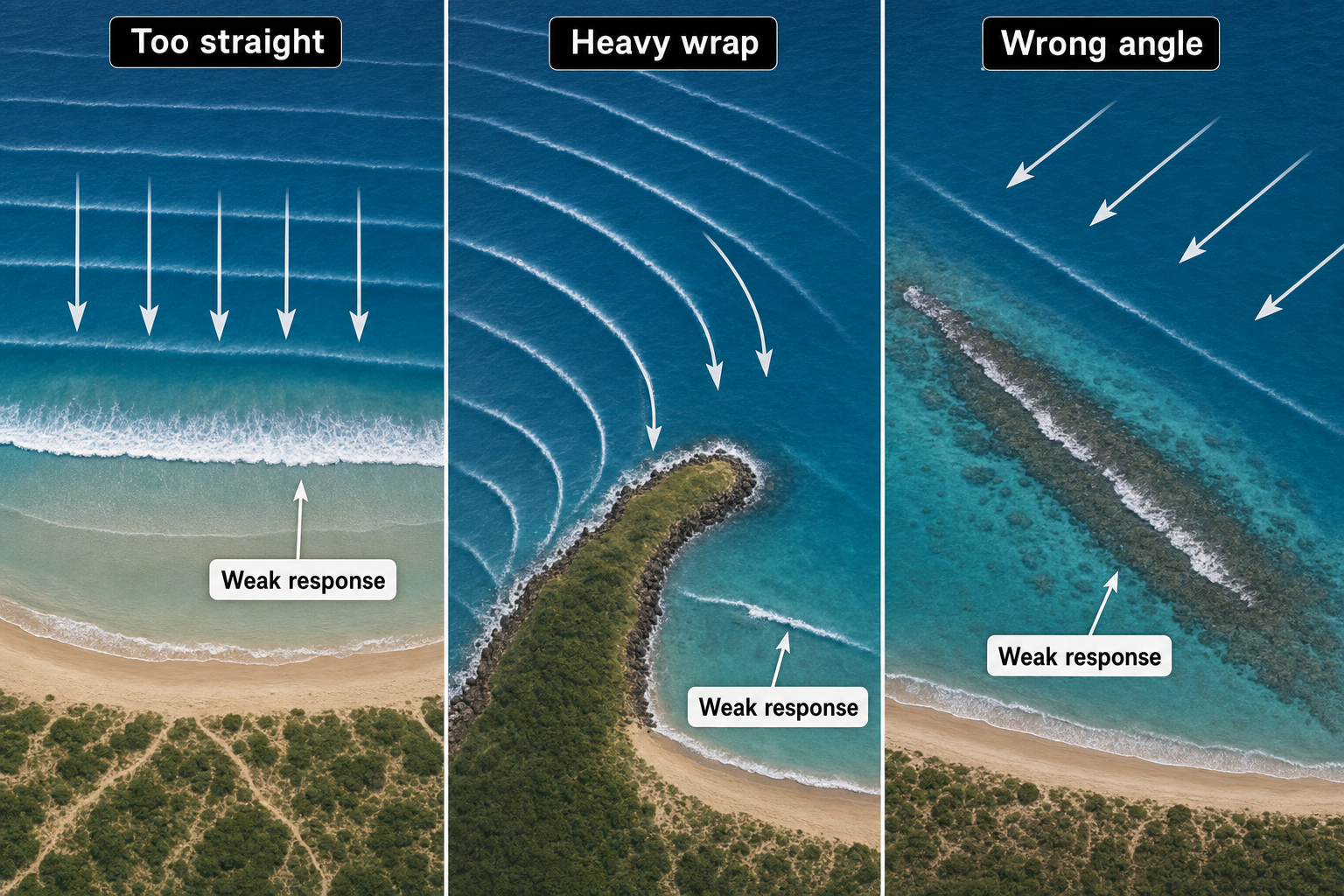
There is no universal mushy swell angle because every coastline faces a different direction. A useful rule of thumb is this: mushy waves often occur when the swell is partially blocked, heavily refracted, or poorly matched to the underwater shape of the break.
Wind Effects
Wind affects the surface texture and the way a wave breaks. Light offshore wind can hold the face open and make a wave cleaner. Light onshore wind causes the lip to crumble earlier and softens the face.
Onshore wind and mushiness are not the same thing, but they often appear together. A wave can be mushy and glassy at high tide, just as a wave can be steep and powerful while onshore and messy. Still, when a weak swell meets onshore wind, the result is usually soft, crumbly surf with little shape.
Strong offshore wind can also make some waves feel fat. It may hold the lip up too long, especially when the wave is already breaking in deeper water. Instead of pitching cleanly, the wave hesitates and loses shape.
Sandbar Shape
On sandy beaches, the sandbar is everything. A good sandbar has a defined shallow section that focuses the swell and creates a peak. A mushy sandbar is often too flat, too deep, or spread too wide.
Broad sandbars produce long spilling waves because the swell breaks gradually across a large area. Deep troughs can also soften a wave by allowing it to back off after the first crumble. This is why some waves break outside, fade into deeper water, then reform closer to shore.
Sandbars shift after storms, big tidal swings, and seasonal current changes. A beach that was punchy one month can become weak and mushy after the bar flattens out.
Typical Conditions That Create Mushy Waves
Mushy surf has many local variations, but certain patterns appear again and again. The following table outlines conditions that commonly produce soft waves, especially at beach breaks with gentle slopes.
| Factor | Typical mushy-wave setup |
|---|---|
| Bottom structure | Flat sandbar, gradual reef, or soft point |
| Seabed gradient | Gentle slope with slow depth change |
| Swell period | Often 5 to 10 seconds, sometimes longer on poor tides |
| Wave height | Commonly knee to chest high, though larger mushy surf exists |
| Tide | Often high tide or a tide that puts too much water over the bank |
| Swell angle | Poorly aligned, heavily refracted, or partly shadowed |
| Wind | Light onshore, weak local wind swell, or strong offshore holding waves up |
The typical mushy wave is waist high, short-period, and breaking over a gently sloping sandbar on a higher tide. That said, a wave can be overhead and still mushy if the bottom is soft and the energy is spread out.
How Mushy Waves Feel for Surfing
Mushy waves are forgiving, but they are not always easy to surf. The takeoff is usually less intimidating than on a steep wave, but catching the wave can actually be harder because there is less push. Once you are up and riding, the main challenge is generating and maintaining speed.
Why Mushy Waves Work Well for Beginners
For newer surfers, mushy waves offer real advantages. The takeoff is slower, the lip is less violent, and the face is less vertical. This gives beginners more time to paddle, pop up, and find their balance. If you are just starting out, wearing a UPF-rated rash guard can keep you comfortable through longer sessions in the water.
Mushy waves are also ideal for learning trim. Because the wave does not provide much automatic speed, surfers have to angle across the face and stay near the energy source. Longboarders often enjoy mushy surf because the slow face allows smooth cross-stepping and extended rides.
Why Mushy Waves Challenge Advanced Surfers
For performance shortboard surfing, mushy waves can be genuinely frustrating. There may not be enough steep face for sharp bottom turns, and the lip tends to crumble instead of offering a clean section to hit. A surfer who forces vertical turns on a soft wave almost always loses speed. Good surfers still perform well in these conditions, but they adjust their approach, creating speed through pumping, high lines, and efficient rail-to-rail transitions.
How to Surf Mushy Waves Well
The key to surfing mushy waves is matching your equipment and technique to the wave’s limited power. You want to catch waves early, maintain speed, and avoid wasting energy in flat sections. If you are thinking about your equipment setup, a three-piece surf traction pad can help you stay connected to your board through slower, less powerful turns.
Choose the Right Board
More volume helps in weak surf. A board that paddles easily and carries speed through flat spots will consistently outperform a narrow performance shortboard in mushy conditions.
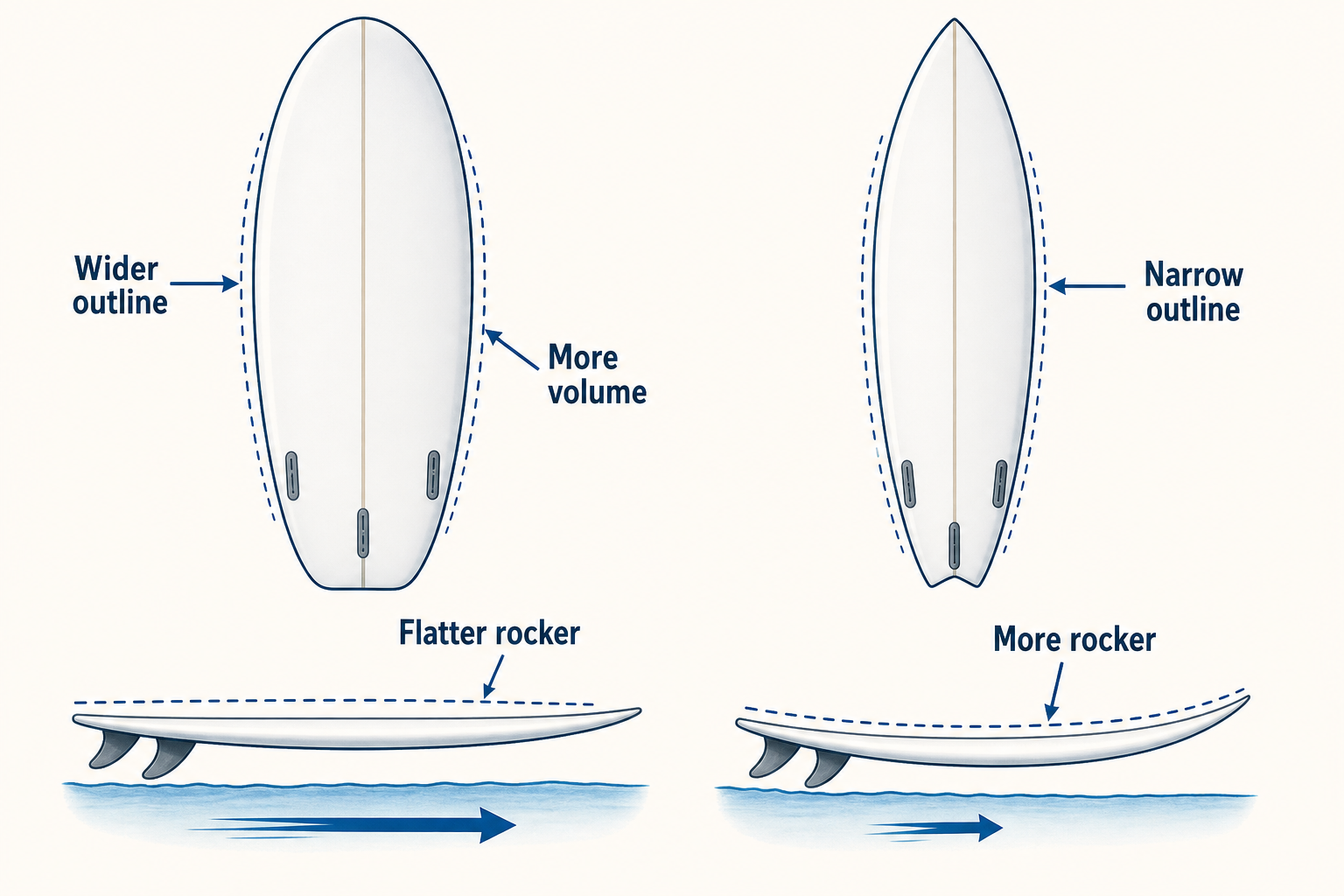
Good board choices for mushy waves include:
- Longboards: best for glide, trim, and early wave entry
- Mid-lengths: versatile for soft points and rolling beach breaks
- Fishes and grovelers: useful when you still want shortboard-style turns
- Foam boards: forgiving and fun in weak beginner surf
Look for width, a flatter rocker, and enough foam under the chest. A flatter rocker helps the board plane over slow sections, while a wider tail gives you lift and speed when the wave lacks push. Your fin setup also matters in soft surf. A set of FCS tri fins designed for speed and flow can help you drive through sections that would otherwise stall a stiffer setup. If you run a Futures-compatible board, a set of fiberglass performance fins in a twin or thruster configuration is worth considering for maximizing drive in slower waves.
Position Deeper and Paddle Earlier
In mushy surf, the wave may not pick you up unless you are in exactly the right spot. Sit near the first part of the wave that feathers or begins to crumble. If you sit too far out, the wave rolls under you. If you sit too far inside, you only catch whitewater.
Start paddling earlier than you would on a punchier wave. Build speed before the wave reaches you. Because the face is soft, an angled takeoff is usually better than going straight down. Angling immediately helps you stay with the open shoulder instead of dropping into flat water.
Stay High on the Face
The power in a mushy wave lives near the top third of the face and close to the breaking foam. If you drop too low after the takeoff, you may end up in flat water with no way back to the pocket.
After takeoff, set a high line and let the board run before attempting major turns. In weak surf, speed is more valuable than drama. A smooth trim often beats a hard bottom turn that scrubs all your momentum.
Generate Speed Instead of Waiting for It
Mushy waves reward active surfing. Use small pumps, weight shifts, and clean rail transitions to build speed. Keep your movements compact, because big turns that push too much water will stall you out.
On a shortboard, pump high on the wall and look for small, steeper sections. On a fish, use the board’s natural glide and avoid over-turning. On a longboard, trim from the center of the board, then step forward when the wave opens up.
Use Cutbacks to Return to the Pocket
Because mushy waves often have slow shoulders, surfers tend to outrun the pocket quickly. When the face starts to flatten, cut back toward the foam. The whitewater may be weak, but it is still the energy source.
A good mushy-wave cutback does not always need to be a huge carving arc. Sometimes it is a gentle redirection back toward the crumble, followed by another trim line down the face. If you want to sharpen your reading of wave energy and body positioning through these kinds of decisions, a resource like this natural surf technique book covers those concepts in depth.
Look for Reforms
Many mushy waves break in stages. They crumble on an outside bank, fade in deeper water, then reform on an inside bar. Instead of kicking out early, watch whether the wave stands up again closer to shore.
Reforms can be excellent for beginners because the second section is often smaller and slower. For more experienced surfers, reforms offer a chance to connect sections and practice generating speed from almost nothing.
How to Recognize Rideable Versus Unmakeable Mushy Waves
Not every mushy wave is worth paddling for. The skill is learning to tell the difference between a soft but rideable wave and one that will never produce a usable face.
Signs a Mushy Wave Is Rideable
A rideable mushy wave usually has at least one defined area of energy. It does not need to be hollow, but it must offer a face that lets the board move sideways along the break.
Look for these signs:
- A clear peak: one section feathers before the rest of the line
- A peeling shoulder: the wave breaks progressively rather than all at once
- A visible face: there is green water below the crumble
- Some steepness near the foam: the pocket has enough slope to generate speed
- Reform potential: the wave backs off, then stands up again inside
From the beach, watch the best surfers already in the water. If they can angle into the wave and travel along the face, the wave is rideable. If everyone goes straight and bogs, the wave is probably too soft to do much with.
Signs a Mushy Wave Is Unmakeable
An unmakeable mushy wave may look tempting from a distance but fails to offer a usable line. It either crumbles without a face or fades before the surfer can get moving.
Common signs include:
- No defined peak: the whole line lifts evenly and then collapses
- Too much shoulder: the wave slopes away without ever properly breaking
- Foam with no push: the whitewater spreads out sideways instead of driving forward
- Deep-water fade: the wave starts to break, then simply disappears
- Flat inside section: the rider enters dead water immediately after takeoff
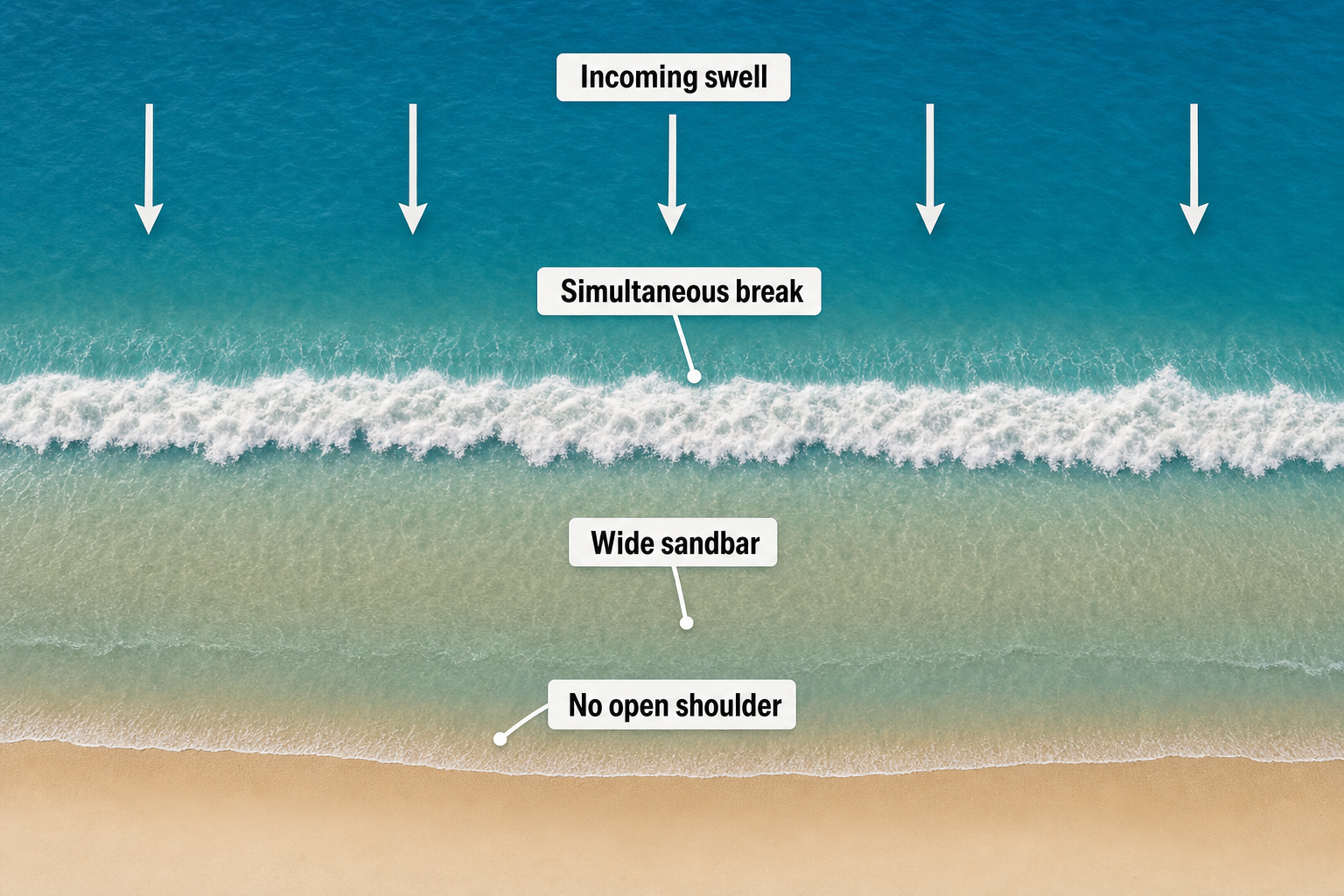
A mushy closeout can also be unmakeable. This happens when a soft wave breaks across a wide sandbar all at once. It is not hollow enough to race through and not peaky enough to turn on.
Mushy Waves at Different Types of Surf Breaks
Mushy waves are not limited to one kind of coastline. They can appear at beach breaks, reefs, and points, and the cause shifts depending on the setup.
Beach Breaks
Beach breaks become mushy when the sandbars are flat, too deep, or poorly shaped. High tide often makes this worse by adding too much water over the bank. Short-period wind swell is another common cause. The waves may break consistently but lack the organized energy needed to create steep peaks. These are classic grovel conditions: soft takeoffs, crumbly lips, and short shoulders.
Point Breaks
Point breaks can become mushy when the swell wraps too much before reaching the takeoff zone. Wrapping can make the wave cleaner, but it also tends to reduce size and power. A soft point wave can still be excellent for longboarding, offering long rides, easy trimming, and forgiving sections. But if the swell angle is too weak or the tide too high, the wave may become a slow roller with little usable wall.
Reef Breaks
Reefs are often associated with hollow waves, but not all reefs are steep. A gently sloping reef can create soft spilling waves, especially when the swell is small or the tide is high. Some reef waves are deliberately sought out for their soft, predictable shape. Others become frustrating when the swell does not reach the shallowest part of the reef with enough energy to create a proper face. If you are surfing reefs with rocky entries, a pair of reef booties can protect your feet during softer-swell sessions when the water is shallow. It is also worth having a surfboard ding repair kit nearby, since even slow mushy reef waves can leave your board scraped up after a wipeout.
When Mushy Waves Get Better
Mushy surf can improve quickly when one key variable changes. A dropping tide may expose more of the sandbar and give the wave a steeper face. A stronger groundswell may add enough period and energy to wake up a soft break. Cleaner wind can smooth the surface and help the wave hold its shape through the sections.
Watch how the waves change over a full tide cycle. If waves are rolling through without breaking, the spot may need less water. If they are breaking too far outside and fading before they reach the sandbar, a push of tide might help them connect. If the lines are weak and disorganized, the spot may simply need a better swell on a different day.
Why Mushy Waves Matter for Surf Forecasting
Surf forecasts typically show height and period, but those numbers alone do not tell the full story. A forecast might say three feet at eight seconds, which could mean fun soft peaks at one beach and barely rideable mush at another. The difference usually comes down to bathymetry, tide, and swell direction.
To predict mushy waves accurately, compare the forecast to your spot’s known behavior. Ask whether the tide puts too much water over the bank. Check whether the swell direction actually reaches the break cleanly. Consider whether the period is strong enough for that particular coastline. Over time, you will develop a feel for which combinations create fun, workable soft waves and which ones produce slow, weak rollers that are not worth paddling out for.
If you enjoy filming your sessions to study your surfing in different wave conditions, a waterproof 4K action camera mounted to your board or helmet can give you useful footage to review. Pair it with a high-capacity microSD card so you never run out of storage mid-session. And if you are surfing overhead-high mushy days at exposed breaks, adding a lightweight impact vest or a low-profile surf helmet is a sensible precaution even when the waves feel manageable.
Mushy waves are created when wave energy is spread out instead of focused. Gentle bottoms, high tides, weak swells, poor swell angles, and unfavorable winds can all contribute individually or in combination. For surfing, they are forgiving but often technically demanding because speed is never handed to you. With the right board, smart positioning, and a patient eye for rideable sections, mushy waves can become more than backup surf. They can be a reliable classroom for flow, trim, and wave reading that pays off when you eventually find yourself on something bigger and more powerful.