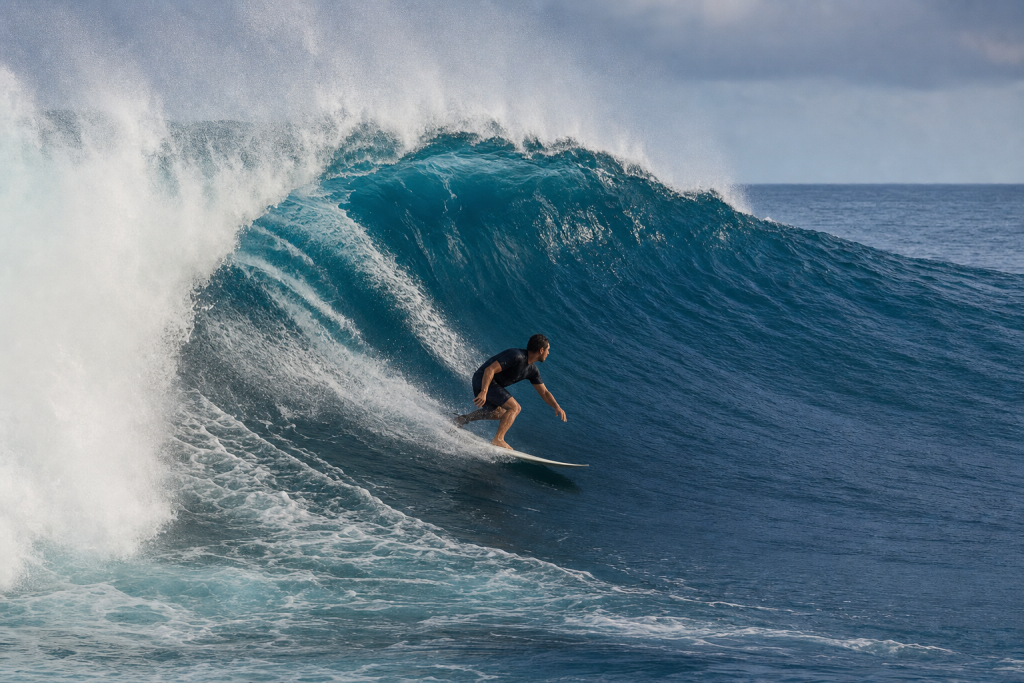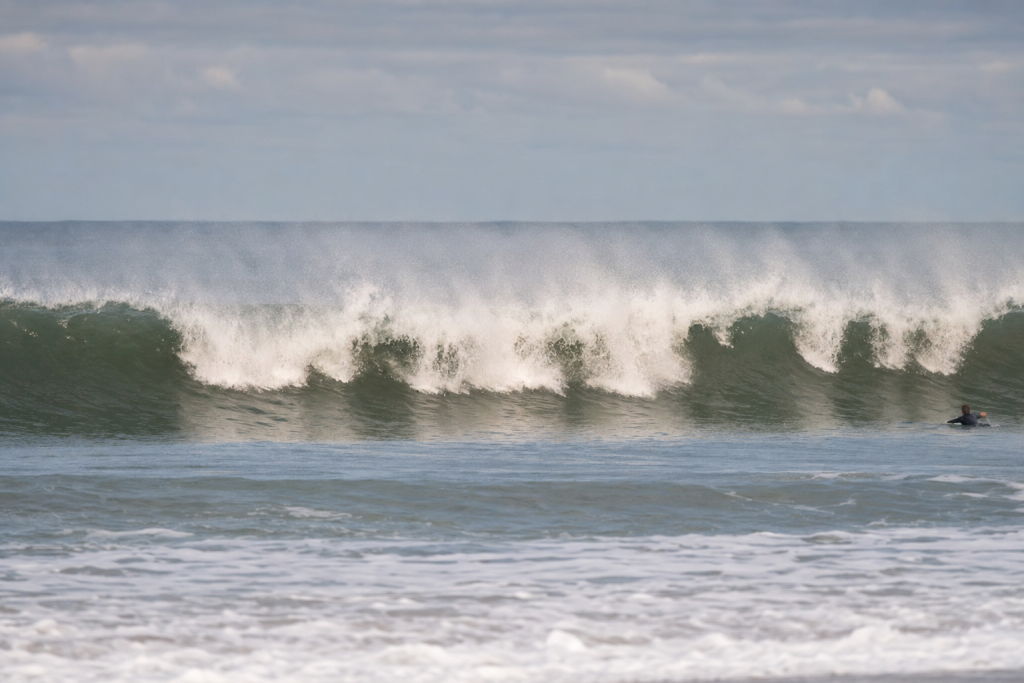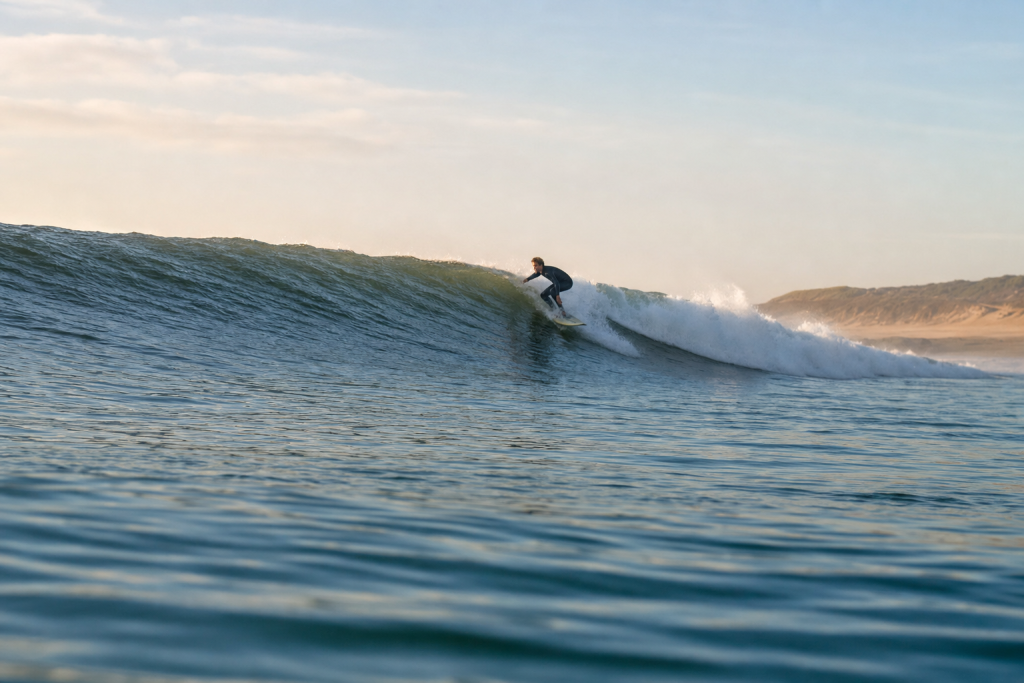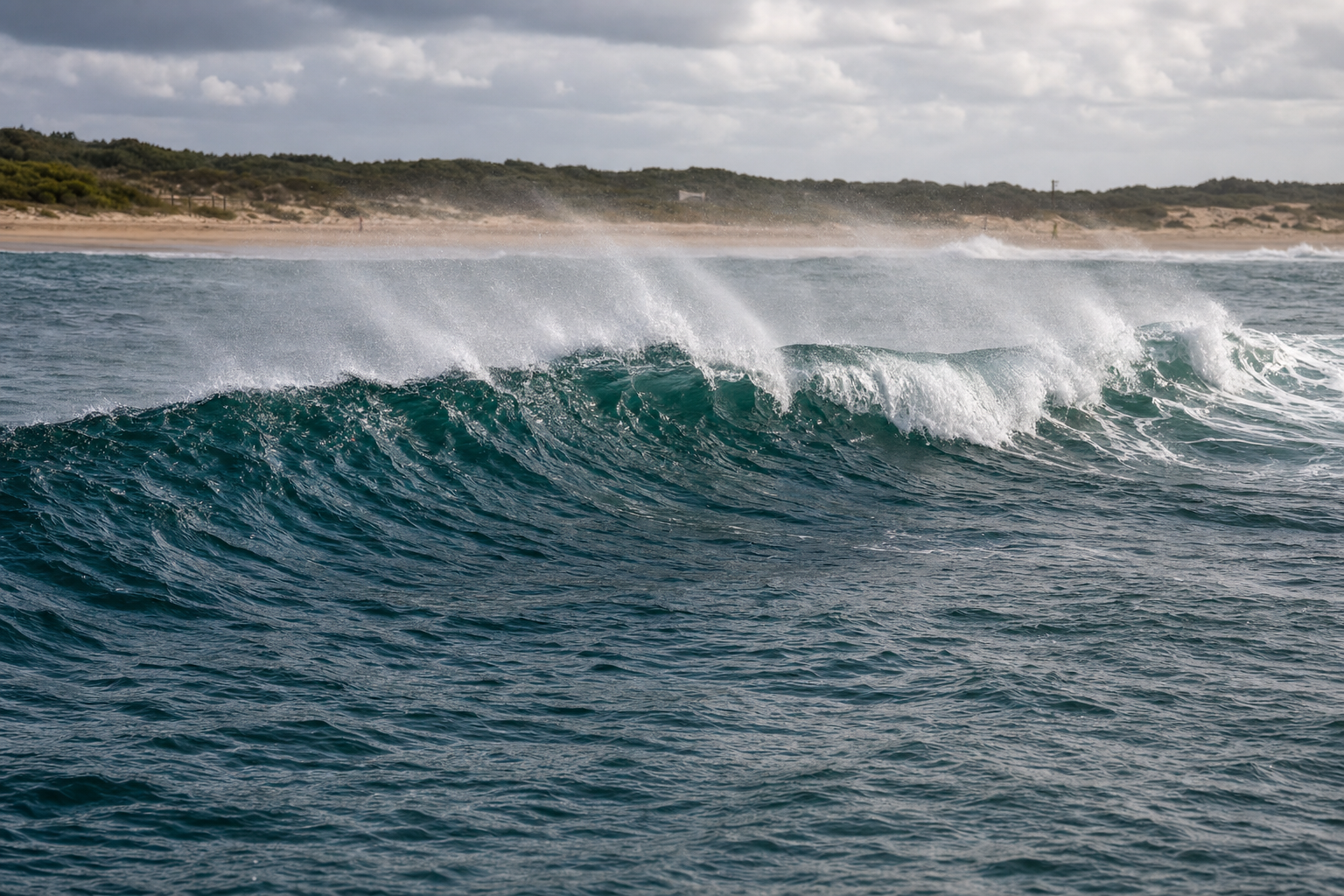
Choppy waves are what happens when wind stops being a background detail and becomes the main sculptor of the ocean surface. Instead of clean, organized lines rolling toward shore, the sea turns lumpy, broken, and unpredictable. For surfers, choppy waves can be frustrating, physical, and sometimes dangerous—but they are worth understanding because most surfers don’t get perfect glassy conditions every session. Learning what creates chop, how it changes a wave’s shape, and how to identify the few rideable sections inside the mess can turn a bad-looking day into useful practice. Having the right gear matters too—a reliable surfboard leash is especially important when waves are breaking unpredictably and hold-downs are longer.
What Creates Choppy Waves?
Choppy waves are mainly created by wind blowing across the surface of the water. As wind moves over the ocean, friction transfers energy from the air into the water. At first this creates tiny ripples, and if the wind keeps blowing, those ripples grow into small wind waves. When the wind is strong, inconsistent, or blowing from an unfavorable direction, the surface becomes uneven and disorganized. That rough, broken texture is what surfers call chop. Good grip on your board becomes even more critical in these conditions, and fresh surf wax can help you stay planted during unpredictable takeoffs.
Clean surf generally forms when swell energy travels from a distant storm and arrives at the coast in organized lines. Choppy surf usually forms when local wind interferes with that swell or generates its own short-period waves nearby. The result is a confused sea surface with bumps on the wave face, broken lips, shifting peaks, and unpredictable sections.
Wind Speed, Fetch, and Duration
Three wind factors are especially important in creating choppy waves:
- Wind speed: Stronger wind transfers more energy into the water and roughens the surface faster.
- Fetch: Fetch is the distance over water that wind travels in the same direction. A longer fetch gives waves more room to grow.
- Duration: The longer the wind blows, the more developed the wind chop becomes.
A light breeze may only wrinkle the surface. A steady onshore wind can put bumps across the face of otherwise good waves. A strong wind blowing for hours over open water can create short-period storm surf with whitecaps, peaks coming from multiple angles, and very little clean shape.
Why Onshore Wind Makes Waves Choppy
For surfing, the most common cause of choppy waves is onshore wind. Onshore wind blows from the ocean toward the land—the same general direction the waves are traveling as they approach the beach. This pushes against the back and face of the wave, causing the lip to crumble early and the face to become bumpy.
Offshore wind, by contrast, blows from land toward the ocean. It holds the lip up, smooths the wave face, and creates cleaner, more hollow surf. Too much offshore wind can make waves hard to paddle into, but moderate offshore wind is almost always cleaner than any onshore wind.
How Side Wind and Cross Chop Affect Waves
Side wind, also called cross-shore wind, blows across the wave rather than directly into or away from it. This creates cross chop, where small bumps move diagonally across the wave face and interrupt the clean line a surfer wants to draw.
Side-onshore wind is often worse than straight onshore wind because it both crumbles the lip and pushes bumps across the face, making the ride unstable. Side-offshore wind can be more manageable, especially at point breaks or reefs that are partially sheltered from the wind.
What Choppy Waves Look Like
Choppy waves are usually easy to identify once you know the visual signs. They don’t arrive in smooth, even sets. Instead, the ocean surface looks restless and uneven, with waves stacked close together and smaller lumps moving over larger swell lines.
Shape of Choppy Waves
Choppy waves often have irregular, broken shapes. A clean wave has a defined peak, an open face, and a predictable shoulder. A choppy wave may have several peaks on the same line, a warped face, and a lip that crumbles before the wave has a chance to stand up properly.
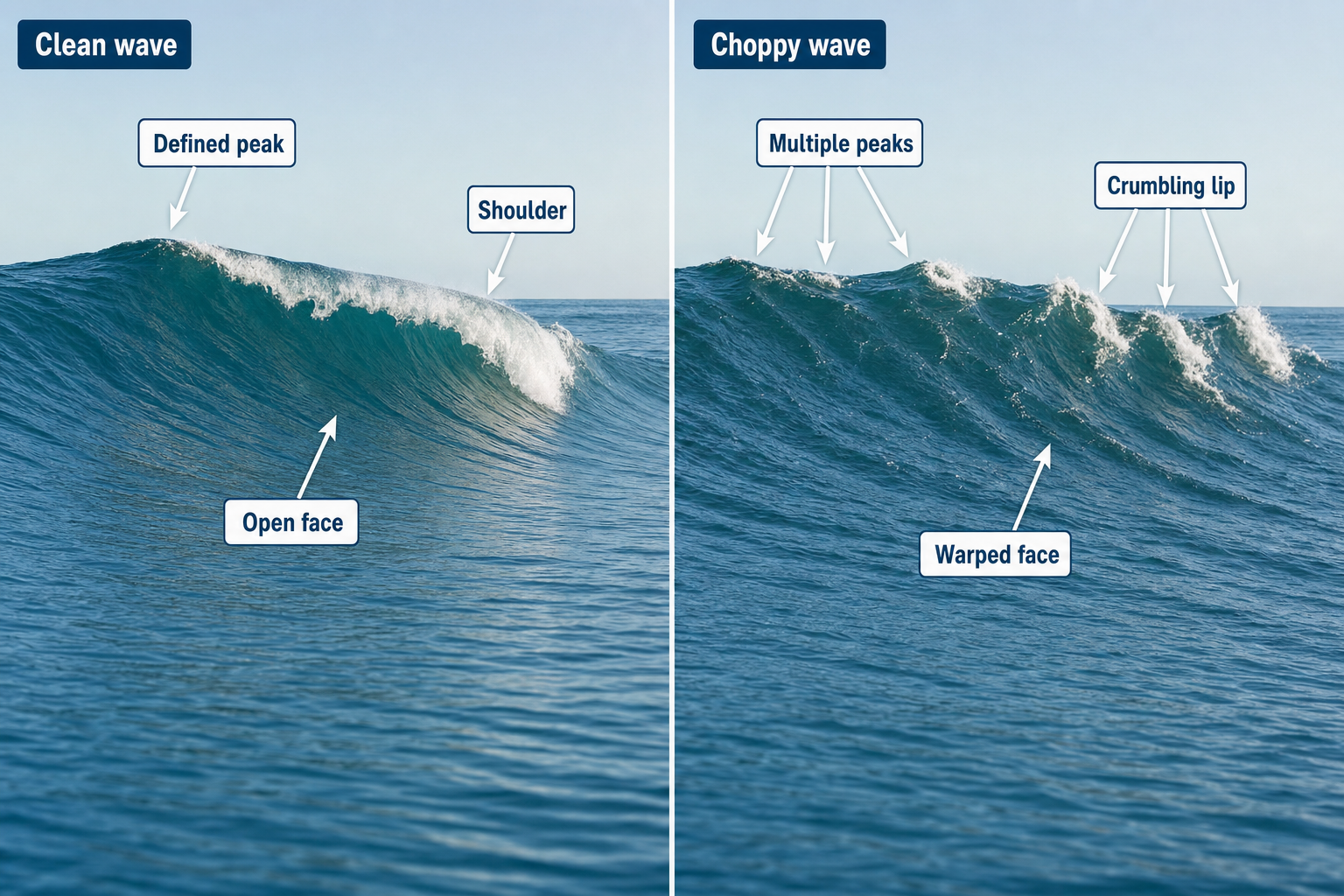
Common visual features include:
- Bumpy wave faces with small ridges or ripples.
- Peaks that shift quickly from one spot to another.
- Lips that crumble, feather, or blow apart unevenly.
- Whitecaps outside the main breaking zone.
- Short gaps between waves with no clear rhythm.
Chop can sit on top of a swell without completely destroying it. In that case, the main wave line is still visible but the face is textured and harder to surf. In more severe conditions, chop and swell blend together into confused storm surf with very few clean takeoff zones.
Height of Choppy Waves
Choppy waves can be any size, from knee-high wind slop to large storm surf. Their height depends on the swell and wind energy involved, but chop changes how wave height feels. A chest-high clean wave may feel smooth and approachable, while a chest-high choppy wave can feel unstable, fast-breaking, and difficult to read.
In smaller surf, chop often makes waves weaker and harder to catch because the energy is scattered. In larger surf, chop makes the ocean more intimidating because the waves break unpredictably and the paddle-out becomes more exhausting.
Steepness and Hollowness of Choppy Waves
Choppy waves are often steep in a messy way, but they are not always hollow. True hollowness usually requires a clean swell, adequate wave period, and a bottom contour that makes the wave pitch forward. Chop tends to break up that clean pitching motion.
Onshore wind usually makes waves crumble rather than barrel. The lip may throw briefly in small sections, but those sections often collapse quickly. This creates short, unpredictable pockets rather than clean tubes. At beach breaks, choppy waves may still produce quick hollow closeouts at low tide or over a shallow sandbar, but these are often impossible to make.
Are Choppy Waves Good for Surfing?
Choppy waves are generally considered poor-quality surf, especially compared with clean, glassy, or offshore conditions. That said, “poor quality” doesn’t always mean unsurfable. Some choppy days still have rideable peaks, short shoulders, and useful sections for practicing quick reactions.
Surf Quality in Choppy Waves
The quality of choppy surf depends heavily on how much underlying swell structure remains. If there is a clean swell beneath light chop, the waves may still be fun. If local wind has fully dominated the sea state, the surf becomes random and difficult.
Choppy waves tend to be lower quality because they often feature:
- Short rides with fewer open-face sections.
- Unpredictable takeoff spots.
- Bumpy faces that interrupt turns.
- Weak shoulders or sudden closeouts.
That said, choppy surf can reward surfers who stay adaptable. Beach breaks may still produce wedgey peaks, protected corners may clean up enough to be fun, and wind swell can create playful shortboard or fish waves when the wind isn’t too strong.
Power and Speed of Choppy Waves
Choppy waves are not always powerful in the same way as clean groundswell. Long-period swell carries deep, organized energy that produces powerful, well-shaped surf. Short-period chop has energy too, but it’s often scattered and inconsistent.
In small conditions, choppy waves may feel weak and hard to connect. The wave may look steep for a moment, then flatten or crumble before you get anywhere. In larger storm surf, choppy waves can be very powerful simply because of the volume of water moving around, even if the individual waves are poorly shaped.
Speed is also variable. Some choppy waves race down the sandbar and shut down instantly. Others are slow and mushy because the lip spills before the face develops. The challenge is that you often have less time to decide—a clean wave gives visual cues early, but a choppy wave may stand up, shift, and break in a matter of seconds.
How Hard Are Choppy Waves to Surf?
Choppy waves are generally harder to surf than clean waves of the same size. They require more paddling strength, faster decision-making, and better balance. Even advanced surfers can look awkward in heavy chop because the wave face doesn’t provide a stable platform.
Why Choppy Waves Are Difficult for Beginners
Beginners often struggle in choppy waves because the takeoff is less predictable. The board may bounce while paddling, the peak may shift before you get into position, and whitewater may arrive from different angles. This makes it harder to develop timing, pop-up technique, and basic trimming.
Small, clean waves are far better for learning. Choppy waves can build ocean awareness, but they tend to make basic skills feel harder than they need to be. If you’re still working on the fundamentals, a book like this surf technique guide can help you understand the mechanics of wave riding before putting them to the test in messy conditions.
Why Advanced Surfers Still Train in Choppy Waves
Experienced surfers can actually benefit from choppy conditions because they sharpen reaction time and balance. Choppy waves force you to read subtle changes in the water, adjust your stance constantly, and generate speed from imperfect sections.
Surfing chop also improves practical wave judgment. Most real-world sessions are not perfect. A surfer who can find corners in messy surf will catch far more waves over a season than someone who only functions in clean conditions.
How to Surf Choppy Waves
Surfing choppy waves well is less about perfect technique and more about adaptation. The goal is to choose the right equipment, simplify your approach, and stay responsive to what the wave gives you.
Choose the Right Board for Choppy Waves
A little extra volume helps in choppy surf. The water surface is uneven, waves are harder to catch cleanly, and you may need to paddle into waves earlier. Boards that tend to work well include fish, hybrids, grovelers, and mid-lengths with more width and float.
In weak choppy waves, extra foam helps you glide through flat spots and catch waves before they crumble. In punchier surf, a performance shortboard can work if it has enough paddle power. Very small boards feel sticky in disorganized surf, while very long boards can be hard to manage when waves are breaking unpredictably.
Fins also play a role in how a board handles in choppy conditions. A stiffer, more upright fin setup provides better hold and control when the face is bumpy. Something like a FCS tri fin set can give you the drive and stability you need when the wave isn’t cooperating. If you run a Futures-compatible board, a fiberglass thruster fin set is worth keeping in your quiver for days when you need more control. A good surf traction pad also helps with grip and foot placement when you’re absorbing a bumpy ride.
Position Wider and Read the Sets Carefully
In clean surf, the peak may break in almost the same place every set. In choppy surf, the takeoff zone shifts constantly. Instead of sitting in one exact spot, stay mobile and watch the larger pattern. Look for where the most organized waves are breaking, then adjust.
It helps to sit slightly wider than the most chaotic impact zone. From there, you can paddle into the better-looking peaks rather than getting caught under every broken lump. At beach breaks, look for rips or channels that help organize the water—the best choppy peaks sometimes form right on the edge of moving water.
Paddle with Commitment
Choppy waves often require earlier and stronger paddling. Because the wave face is uneven, you may not get a smooth lift into the wave. Start paddling early, keep your chest balanced, and expect the board to bounce.
When the wave begins to pick you up, commit fully. Half-hearted paddling is punished in chop because the wave may crumble under you or pass before you match its speed. Strong paddling also helps you control your angle before the takeoff.
Angle Your Takeoff
A straight takeoff can work in soft waves, but choppy surf usually rewards an angled takeoff. If the wave is going to crumble quickly, angling down the line helps you escape the broken section and reach the open face sooner.
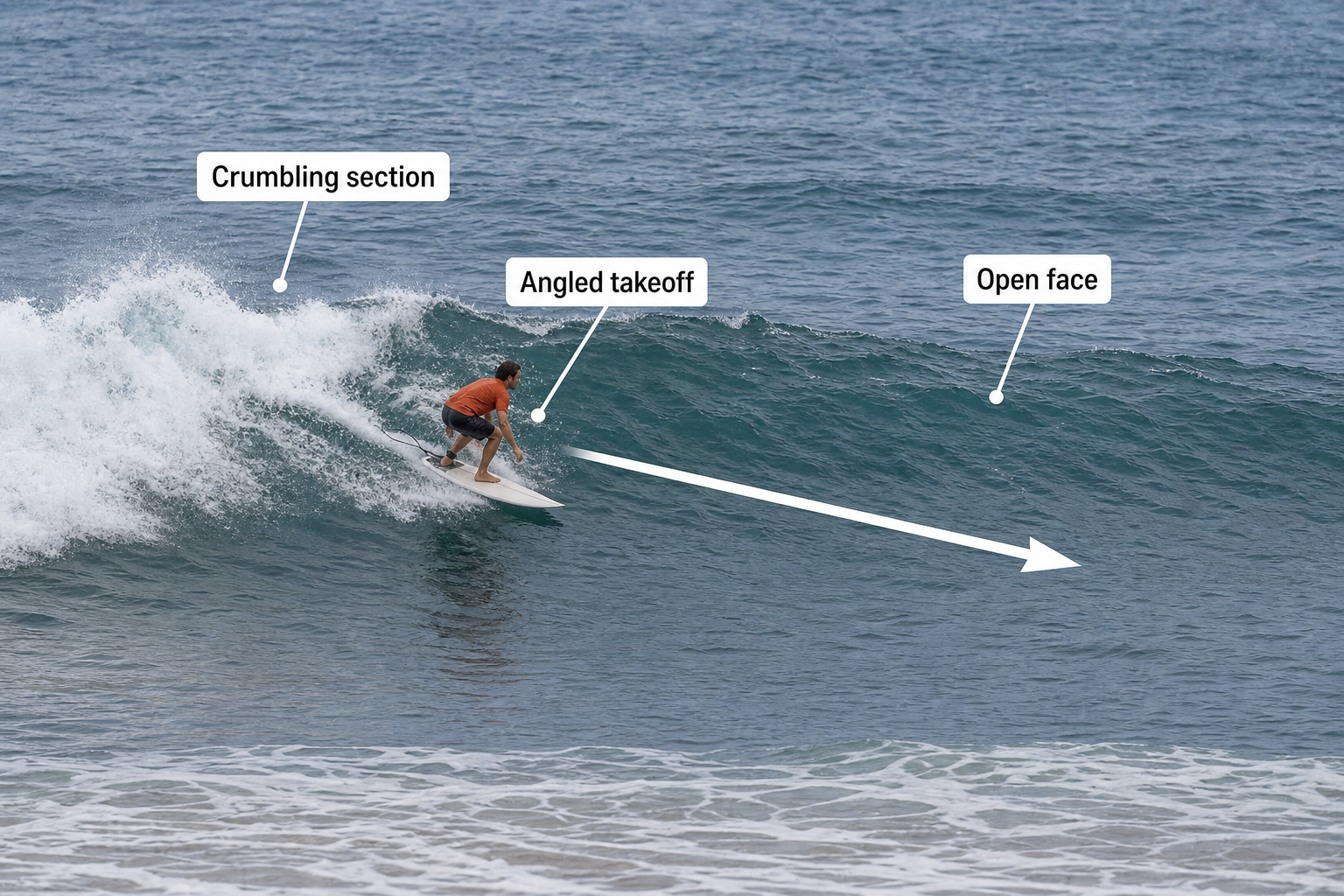
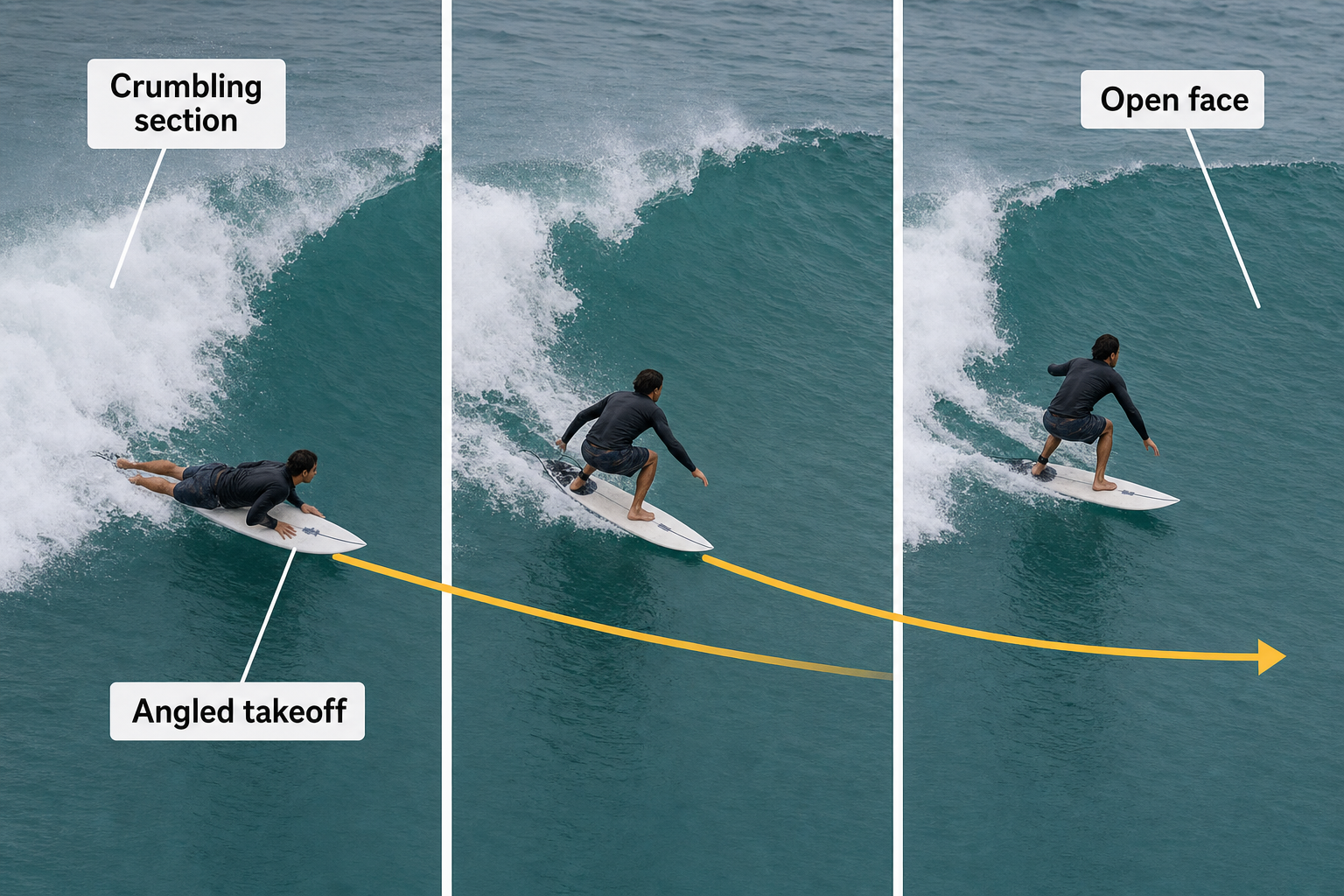
Don’t over-angle so much that you outrun the wave or slide sideways. Aim for a practical line that gives you speed immediately while still allowing a bottom turn if the wave opens up.
Keep Your Stance Low and Flexible
Bumpy faces make balance more difficult. Keep your knees bent, your weight centered, and your upper body quiet. A low stance lets your legs absorb the chop like suspension.
A slightly wider stance can also help, especially on shorter or punchier waves. Avoid standing tall too early—the first few seconds after takeoff are often the most unstable in choppy conditions.
Use Simpler Turns and Shorter Lines
Choppy waves rarely allow long, drawn-out carving turns because the face may not stay smooth long enough. Shorter, sharper adjustments often work better. Focus on generating speed, staying connected to the pocket, and making quick direction changes. A small pump, a high line, or a quick rebound off the foam can be more useful than trying to force a big open-face maneuver.
Look for the Cleanest Pocket, Not the Perfect Wave
In choppy surf, the best ride may only offer one good section. Your job is to find and use it. Look for the part of the wave with the least bump, the most defined wall, or the clearest shoulder. Sometimes the pocket behind a crumbling lip has more power than the open face. Stay flexible and avoid expecting the wave to behave like a clean groundswell line.
How to Recognize Rideable Choppy Waves
The biggest skill in messy surf is separating rideable waves from unmakeable ones. Choppy conditions can make every wave look bad from a distance, but some waves still have enough shape to surf.
Signs That Choppy Waves Are Rideable
A rideable choppy wave usually has at least one organized feature. It doesn’t need to be perfect, but it needs a defined path. Look for these signs:
- A visible shoulder: There is an open section running left or right, even if it’s bumpy.
- A stable peak: The wave stands up in one place long enough to paddle into it.
- A clean entry: The face is not already broken where you need to take off.
- Some wall: The wave has enough steepness to generate speed down the line.
- A makeable pace: The section runs fast but not faster than you can angle across.
One useful trick is to watch the wave before the one you want. If several waves in a row break with a similar shoulder, the sandbar or reef is still organizing the swell. If every wave breaks in a completely different spot, the conditions are more random.
Signs That Choppy Waves Are Unmakeable
Unmakeable choppy waves often break all at once or collapse before the surfer can stand and set a line. Watch out for:
- No shoulder in either direction.
- A lip already crumbling across the whole face.
- Multiple peaks colliding into each other.
- A takeoff zone buried in whitewater.
- A section that closes out immediately after standing up.
If the wave is square and breaking in a straight line across shallow water, it’s probably a closeout. If heavy side chop is crossing the face and the shoulder disappears the moment the wave stands up, it may be technically catchable but not worth chasing.
Typical Weather, Wind, and Swell Conditions That Make Choppy Waves
Choppy waves are often associated with windy or unstable weather, but they can also appear on sunny days when local sea breezes build during the afternoon. The key is not whether the weather looks stormy—it’s how the wind interacts with the water and the underlying swell.
Afternoon Sea Breezes
Many coasts experience cleaner conditions in the morning and choppier conditions in the afternoon. This happens because land heats faster than the ocean. Warm air rises over land, cooler marine air moves in to replace it, and an onshore sea breeze develops. That breeze may start light, then strengthen through the day. A spot that was glassy at sunrise can be bumpy by late morning and fully choppy by early afternoon.
Local Wind Swell
Local wind swell forms close to the coast. Because it hasn’t traveled far enough to organize, it usually has a short period and uneven shape, with waves arriving close together and little space between sets. Wind swell isn’t always bad—in places without frequent groundswell it may provide most of the surfable days—but the best wind swell sessions happen when the generating wind relaxes or switches offshore before the swell disappears.
Storm Surf and Frontal Systems
Storms and passing fronts can create larger choppy waves, especially when strong winds blow toward the coast. During active weather, wind direction may shift quickly and produce mixed swell with heavy cross chop. Storm surf can carry serious energy, but quality is usually poor while the wind is still onshore. Conditions may improve after the front passes if winds turn offshore and the swell remains.
If you’re thinking about filming a stormy session, a waterproof action camera can capture the chaos without worrying about spray or rain damage. Pair it with a high-capacity microSD card so you never run out of storage mid-session.
Mixed Swell Conditions
Choppy waves can also form when two or more swells arrive from different directions. Even without extreme wind, crossing swell lines can create peaks that double up, flatten, or break unpredictably. Mixed swell isn’t always bad—some of the best beach break peaks happen when swells combine at the right angle—but when it’s paired with onshore wind the surface can become very disorganized.
How Wave Height, Period, and Tide Affect Choppy Waves
Chop doesn’t act alone. The final surf conditions depend on the underlying swell height, wave period, and tide. Understanding these factors helps explain why one choppy day is still fun while another is nearly unsurfable.
Wave Height and Choppy Waves
Small choppy waves are often weak and frustrating. The bumps on the face may be large relative to the wave itself, leaving very little clean surface to ride. Knee-high chop is usually better for paddling practice than performance surfing.
Waist- to chest-high choppy surf can be rideable when there are defined peaks—this is often the range where fish, grovelers, and mid-lengths work well. Head-high choppy surf becomes more demanding because the waves have enough size to move a lot of water, but not always enough organization to provide clean exits.
Overhead choppy waves can be dangerous, especially when strong wind, current, and short-period swell combine. The waves may not look clean, but they can still break with force and make paddling out exhausting. In those conditions, an impact vest is worth considering for extra protection during wipeouts, and a low-profile surf helmet can protect your head when waves are breaking unpredictably near shallow sandbars or rocks.
Wave Period and Choppy Waves
Wave period is the time between passing wave crests and one of the most important factors in surf quality. Short-period waves, typically around 4 to 8 seconds, are usually associated with local wind swell and choppy surf. They arrive close together and have less time to organize into clean lines.
Medium-period swell, roughly 9 to 12 seconds, can still be affected by chop but may offer more defined waves underneath. Long-period swell of 13 seconds or more carries more organized energy from distant storms. If local wind is light, long-period swell can produce excellent surf. If strong onshore wind is blowing, even long-period swell can become bumpy and difficult—although the main wave lines often remain visible beneath the surface texture.
Tide and Choppy Waves
Tide can either improve or worsen choppy waves depending on the surf spot. At beach breaks, a very low tide may make waves steeper and more hollow, but it can also cause choppy waves to close out faster. A high tide may soften the wave and reduce closeouts, but it can also make already weak chop too fat to ride.
Mid tide is often the most workable range because there is usually enough water for the wave to hold shape while still breaking with some power. However, every break is different—some reefs need more water to cover the bottom, while some sandbars only work at lower tide.
Tidal movement also matters. A strong outgoing tide can create current that bumps up the surface, especially when running against the wind or swell. An incoming tide may smooth some sandbars, but if it pushes against a strong local wind it can add texture too.
Other Factors That Make Choppy Waves Worse or Better
Wind and swell are the main ingredients, but local geography often decides whether choppy waves are completely unsurfable or still worth a paddle.
Bathymetry and Bottom Shape
Bathymetry refers to the shape of the seafloor. Sandbars, reefs, points, and channels all influence how waves break. A well-shaped sandbar can organize messy wind swell into short but rideable peaks. A poor sandbar may turn the same swell into closeouts. Reefs and point breaks often handle chop better than open beach breaks because the bottom contour is fixed and more predictable—though if wind blows directly into the wave face, even a good reef can become bumpy.
Coastal Exposure and Wind Protection
Some surf spots are more exposed to wind than others. Open beaches receive the full effect of onshore wind. Coves, headlands, and harbors can block or reduce wind and create cleaner pockets nearby. When conditions are choppy at exposed beaches, surfers often look for protected corners where a slightly different facing can turn a side-onshore wind into a more manageable cross-shore.
Currents, Rips, and Wind Against Water Movement
Currents add to chop by disturbing the surface. One of the roughest combinations occurs when wind blows against a current—the opposing forces make waves stand up more steeply and break more erratically. River mouths, tidal inlets, and strong rip currents often create confused water that can produce peaky but unstable takeoffs.
Kelp Beds and Natural Smoothing
In some regions, kelp beds can reduce surface chop by slowing water movement and dampening small wind waves. This is one reason certain reef breaks stay cleaner than nearby exposed beaches in light to moderate wind. Kelp won’t overcome a strong onshore wind, but in marginal conditions it can make a noticeable difference.
When Choppy Waves Become Dangerous
Choppy waves are not always dangerous, but they become more serious when size, wind, and current increase together. The main issue is unpredictability. A clean wave may be powerful, but it is easier to read. A choppy wave can break in the wrong place, shift suddenly, or send whitewater from several angles at once.
Choppy conditions also make paddling harder. Short-period waves leave less time between walls of water, and strong wind can push surfers out of position. If the surf is large, stormy, and disorganized, even experienced surfers may struggle to get outside or return to the beach efficiently.
The most hazardous choppy sessions usually involve strong onshore wind, rising swell, heavy current, and low visibility from rain or spray. In cold water, a well-fitted full wetsuit keeps you warm and buoyant during longer hold-downs. A long sleeve rash guard worn underneath adds another layer of protection and UV coverage if you’re surfing in warmer but still messy conditions. If you’re surfing near rocks or reef in choppy surf, reef booties protect your feet during unexpected wipeouts onto shallow bottom.
Boards also take more damage in choppy surf from unexpected impacts and awkward wipeouts. Keeping a surfboard ding repair kit in your car means you can patch small pressure dings or rail cracks before they turn into bigger problems.
How to Decide Whether Choppy Waves Are Worth Surfing
Before paddling out, watch the surf for at least several minutes. Choppy waves change quickly, so a brief glance can be misleading. Look for patterns rather than individual waves.
Ask yourself:
- Are there recurring peaks or is everything random?
- Do the waves have shoulders or are they closing out?
- Is the wind getting stronger or beginning to relax?
- Is the tide moving toward a better stage for this break?
- Can you reach the lineup without constant duck dives or long drifts?
If there are occasional open faces, manageable current, and a board that fits the conditions, choppy surf can be worthwhile. If the ocean is all whitewater, collapsing peaks, and strong drift, it may be better to wait for a wind shift or a different tide.
How Choppy Waves Can Improve Your Surfing
Although choppy waves are rarely ideal, they can build real skills. They teach you to react quickly, paddle efficiently, and stay balanced on an uneven face. They also sharpen wave selection because you can’t rely on perfect lines arriving at regular intervals.
To get the most from choppy surf, set realistic goals. Instead of expecting long rides, focus on making difficult takeoffs, trimming through bumpy sections, or finding one good turn per wave. This approach turns a messy session into productive practice.
Choppy waves are created when wind disrupts the ocean surface—either by generating short-period waves or by interfering with cleaner swell. They are usually bumpy, irregular, and harder to surf than clean waves, but they are not always worthless. By understanding wind direction, swell period, tide, and local geography, surfers can better predict when chop will ruin a session and when it might still produce rideable peaks. The key is to stay observant, choose the right board, and surf the wave in front of you rather than the cleaner one you wish it were.