
Ocean and Wave Physics
Understand how ocean waves form, move, combine, bend, focus, and break, with clear explanations of the physics that directly affect surf quality.
Learn to forecast surf by combining swell science, wave physics, weather, wind, tides, buoy data, and modern forecasting tools so you can identify better windows before you paddle out.
Understand how ocean waves form, move, combine, bend, focus, and break, with clear explanations of the physics that directly affect surf quality.
Use buoy readings, charts, models, websites, apps, maps, and real-time observations to build more accurate surf forecasts.
Learn how swell height, period, direction, angle, power, and consistency influence wave size, shape, speed, and surfability at the coast.
Explore how storms, wind fields, fetch, distance, pressure systems, and ocean basins create the swells that eventually reach surfing coastlines.
See how local wind, weather patterns, air pressure, tides, currents, and coastal conditions improve or degrade waves throughout the day.
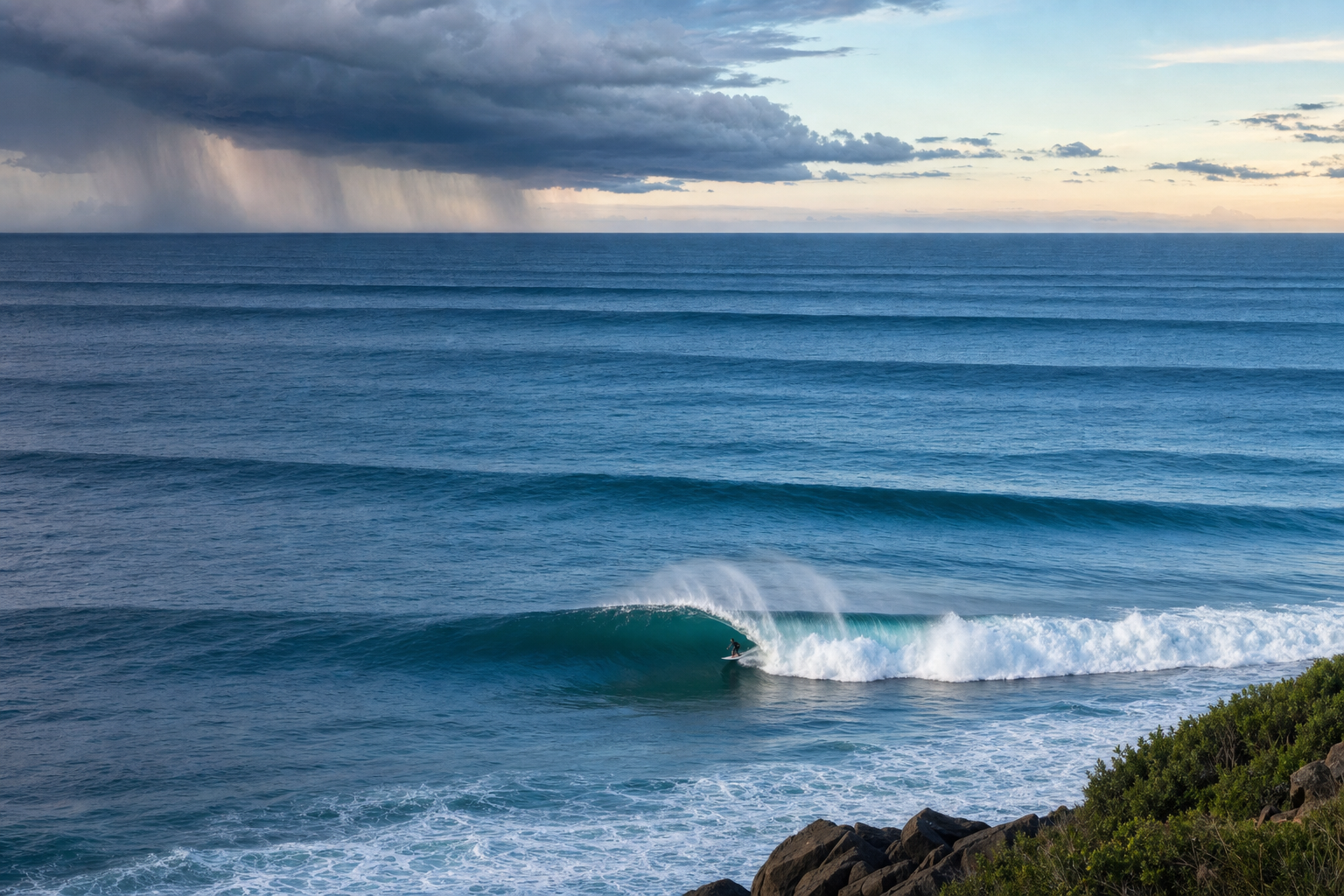
Every surfable wave begins as wind energy moving across the ocean. A local breeze can kick up short, peaky waves, but the memorable swells that light up coastlines…

Surfing is often described in terms of instinct, timing, and local knowledge, but every rideable wave is also a physics problem unfolding in real time. The shape of…

Surfers have their own language for waves because “good surf” is never just about size. A three-foot wave can be weak and crumbly, fast and hollow, or perfectly…

A coastline is not just the place where land meets sea. For surfers, it is a giant wave-shaping machine. The same swell that produces soft waist-high rollers at…

A clean line of swell moving through deep water doesn’t become a surfable wave by accident. It has to enter shallow water, slow down, steepen, and interact with…

Every surfable wave begins with wind blowing over water, but not every swell arrives at the beach in the same form. Some swells are short-period, choppy, and produced…

The ocean is the largest wave-making system on Earth, and every rideable surf wave begins as moving air over water. A distant storm can transfer energy into the…