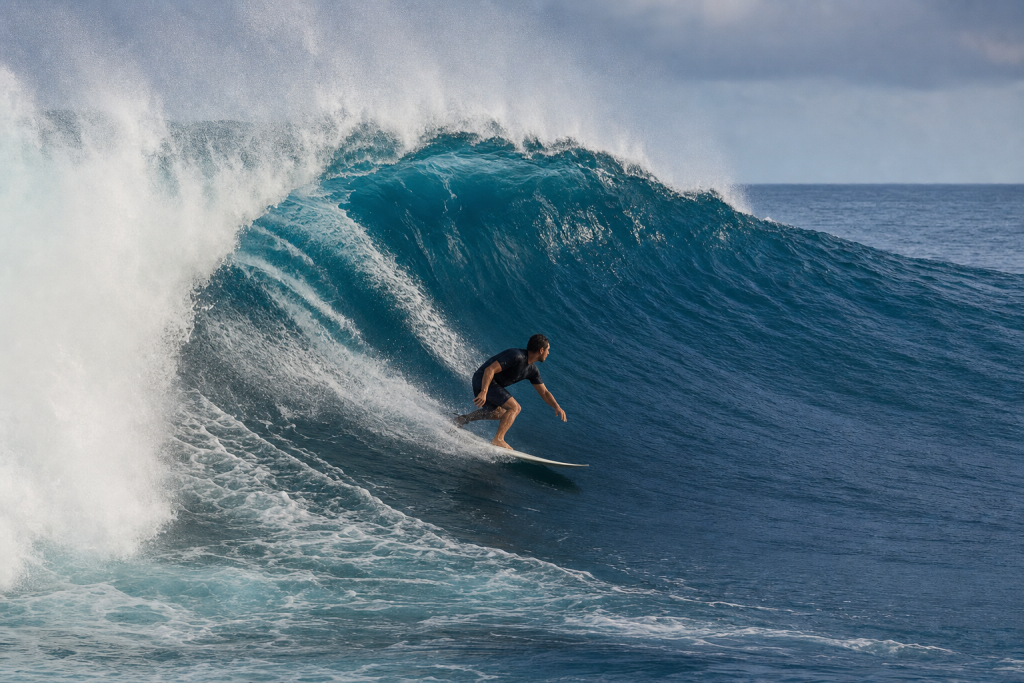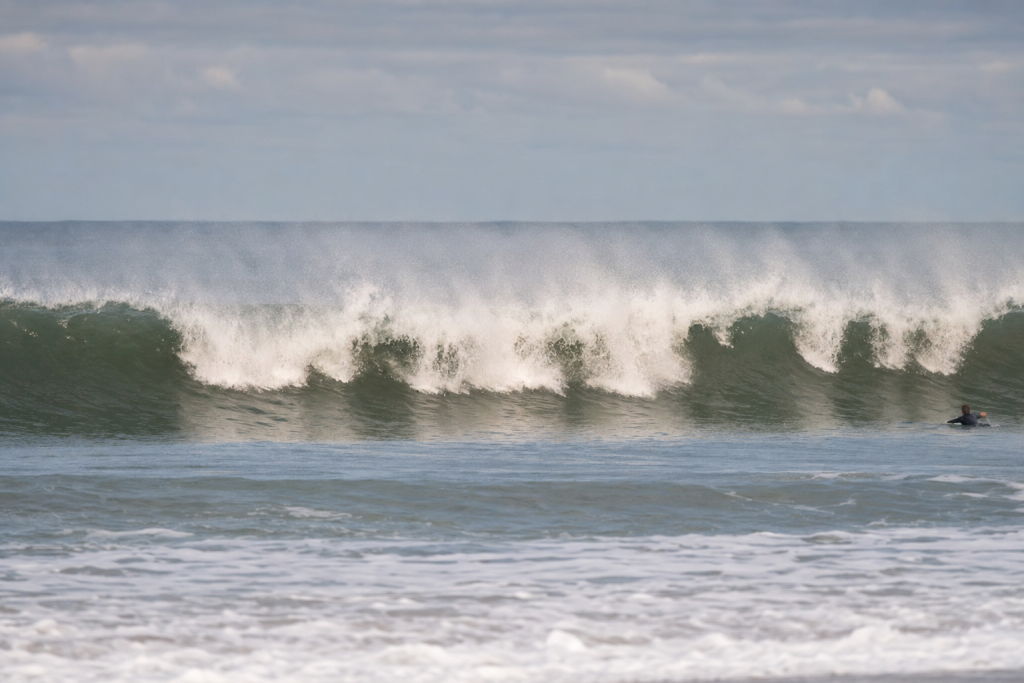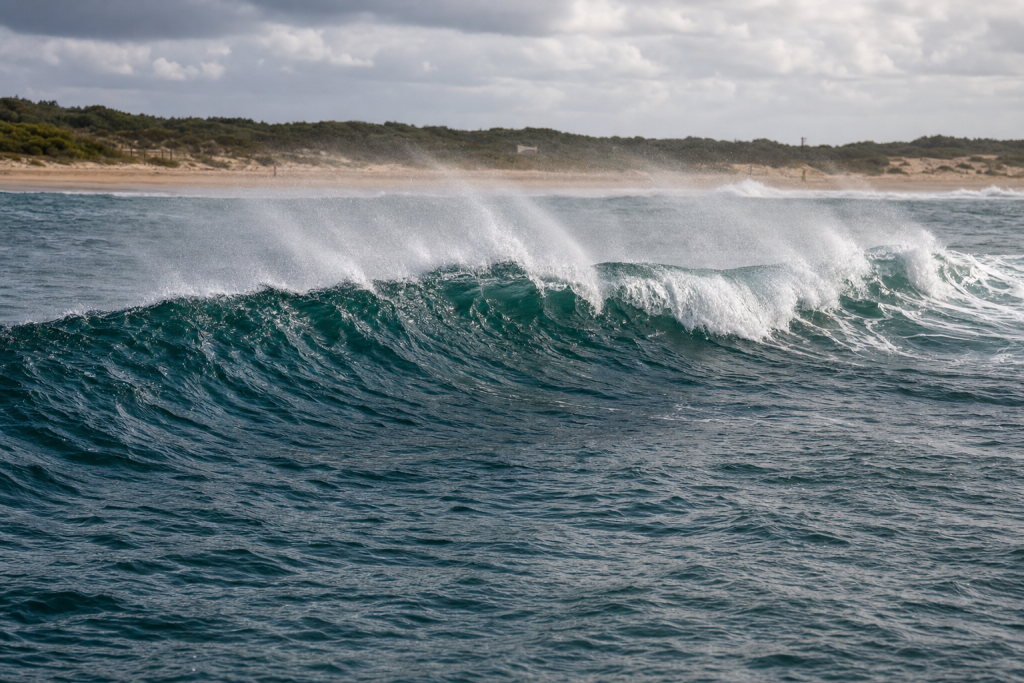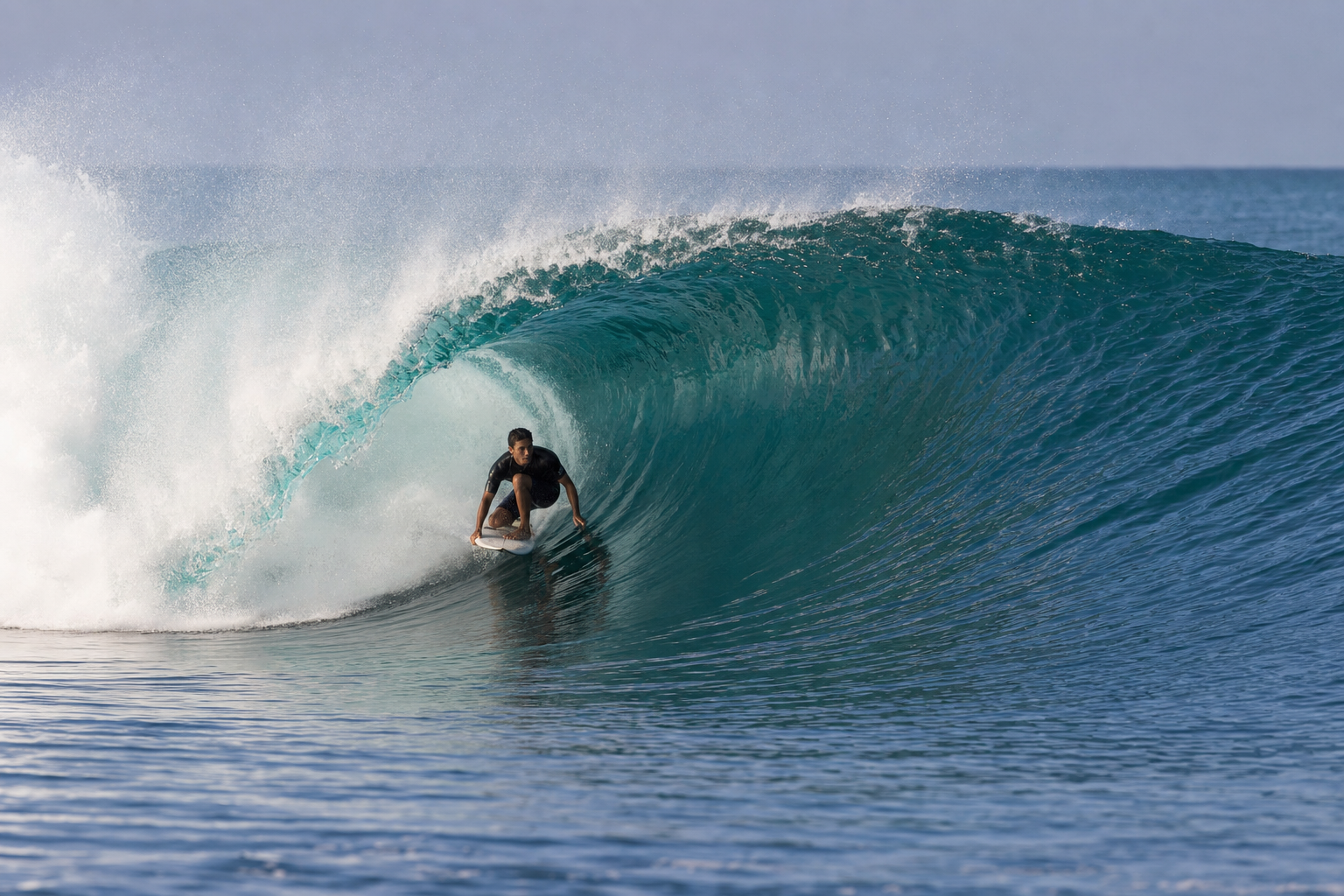
Bowling waves are the kind of surf that makes a wave suddenly stand up, bend toward the surfer, and throw a round, hollow section down the line. They are prized for producing some of the best barrels in surfing, but they can also be fast, technical, and punishing when the section clamps shut. Understanding what creates bowling waves helps you read forecasts better, choose the right spot, and judge whether a wave is makeable before you commit to the takeoff. If you’re the type of surfer who wants to get deeper into wave mechanics and technique, a resource like this surf technique book can add a lot of context to what you observe in the water.
What Bowling Waves Are in Surfing
In surf language, a bowling wave is a wave that forms a rounded, cupped, hollow section often called a “bowl.” The wave face draws up quickly, the lip thickens, and the section bends in a way that can produce a tube. The term is closely related to “bowly,” which surfers use to describe waves with a compact, curved, barrel-friendly shape. Whether you’re surfing in warm water or cold, keeping a good grip on your board matters — fresh surf wax makes a real difference when you’re trying to hold your footing on a steep takeoff.
A bowling wave is not always a perfect barrel, but it has the ingredients for one. The key feature is how wave energy focuses into a defined section rather than spreading evenly along a straight wall. This concentrated energy makes the wave steeper, faster, and more powerful than a soft peeling wave of the same size.
Bowling waves versus ordinary barreling waves
All bowling waves are associated with hollow surf, but not every hollow wave is truly “bowling.” A simple barreling wave may break evenly along a straight reef or sandbar. A bowling wave usually has more curve and a more concentrated takeoff zone, often feeling like the wave is wrapping around a high spot on the bottom before opening into a round chamber.
Bowling waves also differ from closeouts. A closeout throws all at once with no clear exit. A good bowling wave throws hard, but it tapers down the line as well. That taper is what gives the surfer a chance to set a line, travel through the tube, and exit before the section shuts down.
What Creates Bowling Waves
Bowling waves are shaped by the interaction between incoming swell and the seafloor. The most important factors are bathymetry, swell angle, wave period, and tide. When these align, the wave’s energy bends and concentrates into a hollow section.
Refraction focuses energy into bowling waves
As swell approaches shallow water, the lower part of the wave slows down because it begins to feel the bottom. The deeper part continues moving faster. This difference bends the wave line — a process called refraction.
Refraction is crucial for bowling waves. When a swell hits a reef point, sandbar, or rock ledge at the right angle, part of the wave slows over the shallow section while the rest continues over deeper water. The crest bends around the contour, energy focuses into a peak or bowl, and the wave stands up suddenly and throws a more powerful lip.
Bottom contours shape bowling waves
The best bowling waves usually form over a bottom that has contrast — shallow next to deep, high spots next to channels, or a curved bank that makes the wave wrap. Common setups include:
- Reef ledges: A swell moves from deep water onto a shallow shelf, causing the wave to jack up and throw.
- Point breaks with sand or rock: The wave bends along the point and hits a section where the contour tightens.
- Beachbreak sandbars: A peaked bar with a channel beside it can create compact, fast bowls.
- Wedges: Reflected water or crossing swell combines with the main wave to create a pitching peak.
The most reliable bowls often have a defined takeoff zone with a channel or deeper area nearby. The shallow section makes the wave break, while the deeper area helps keep part of the wave open. This contrast is why many famous barrel spots are found near reef passes, points, or well-formed sandbars.
Why bowling waves get hollow
A wave becomes hollow when the lip pitches outward faster than the base of the wave can move forward. On a steep seabed, the bottom of the wave slows quickly while the top keeps moving. The face becomes nearly vertical, then the lip throws over the trough.
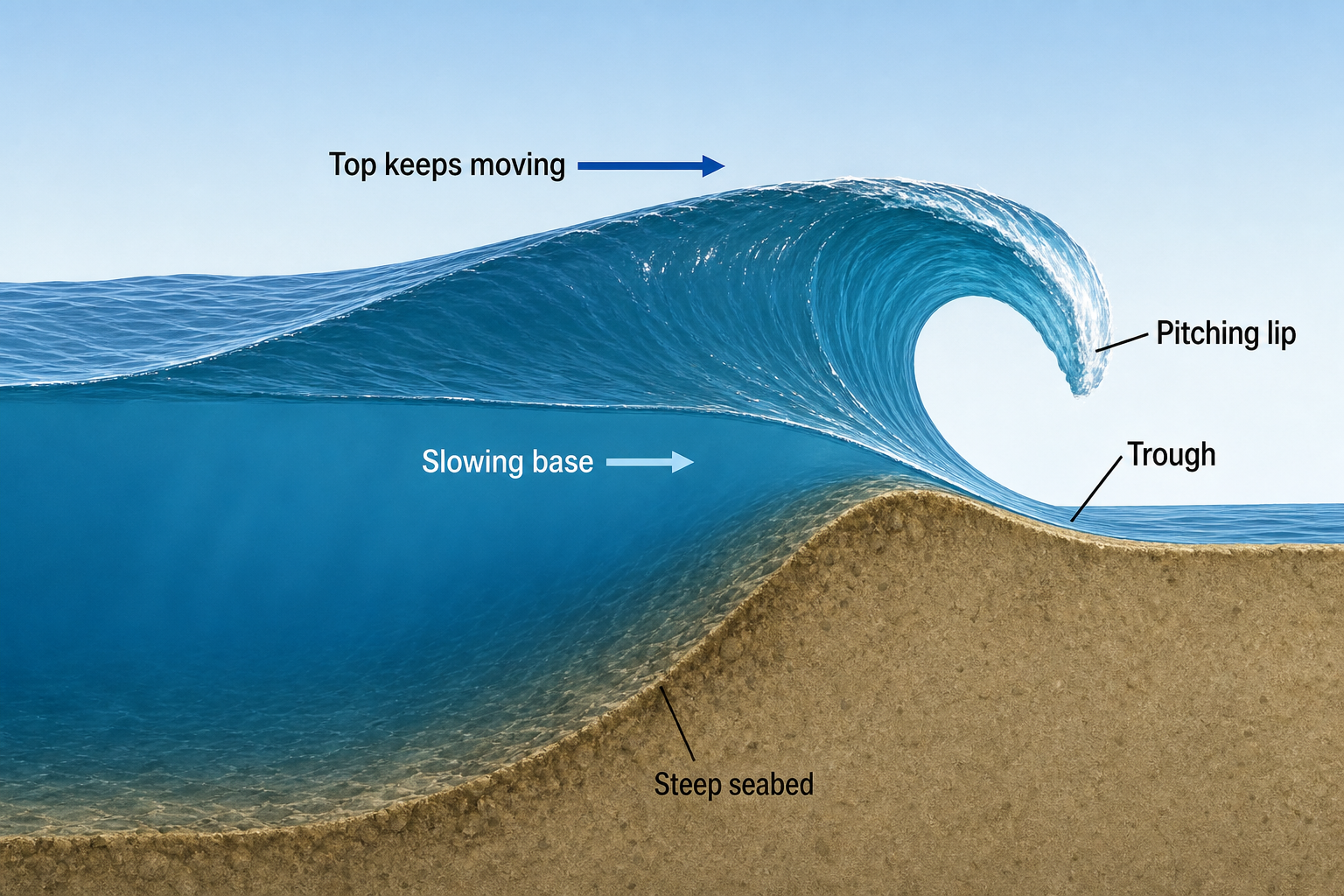
In a bowling wave, this hollowing effect is amplified by focused energy. The bowl stands up, the lip thickens, and the tube often takes on a round shape. The result can be a clean barrel if the wave peels properly, or a heavy shutdown if the entire section unloads at once.
How Bowling Waves Look, Feel, and Surf
Bowling waves have a distinct personality. They are rarely lazy. Even at moderate size, they can feel intense because the most powerful part of the wave is compressed into a small area.
Shape and quality of bowling waves
A high-quality bowling wave usually has a clear peak, a steep takeoff, and a shoulder that bends away from the breaking lip. The face often looks concave or cupped. From the water, the section may appear to grow as it approaches the reef or bar, then suddenly square up.
The best bowls are not random. They have rhythm. Sets break in a similar place, the lip throws at a predictable moment, and the exit stays open long enough for a surfer with speed to make it through. Poor-quality bowls may look exciting from the beach but collapse too quickly once you are inside them.
Power, speed, and hollowness of bowling waves
Bowling waves are usually more powerful than slopey waves of the same height. The bowl concentrates swell energy, so the lip can be thick and fast-moving. A head-high bowling wave may feel considerably heavier than a head-high point wave with a soft shoulder.
Speed is another defining feature. Because the wave is bending and pitching simultaneously, surfers often need immediate down-the-line momentum. There may not be time for a long bottom turn or casual setup. The first few seconds after takeoff usually determine whether the ride becomes a barrel, a quick exit, or a wipeout.
Hollowness varies by spot and tide. Some bowling waves are almond-shaped and makeable. Others are square, thick, and extremely tight. The more abrupt the depth change, the more dramatic the bowl tends to be.
Height and steepness of bowling waves
Bowling waves can appear in many sizes, from waist-high beachbreak wedges to large reef barrels. However, most spots need enough swell to activate the bottom contour. If the swell is too small, the wave may not stand up over the ledge or bar.
Steepness is usually high. The takeoff can feel late even when you paddle early, because the wave may rise suddenly beneath you. On the best days, that steepness creates a clean entry into the tube. On marginal days, it can make the wave lurch, warp, or pinch shut.
How hard bowling waves are to surf
Small bowling waves over sand can be approachable for improving surfers, especially when the tide softens the lip. True hollow bowling waves are generally best suited to advanced surfers because they demand quick reading, strong paddling, and confident rail control.
The main challenge is timing. You need to be close enough to the peak to enter the barrel, but not so deep that the lip lands in front of you. You also have to commit to a steep takeoff and build speed immediately. Hesitation almost always puts you behind the foam ball.
Best Conditions for Bowling Waves
No single set of conditions works for every spot, but bowling waves follow recognizable patterns. They need a bottom that focuses energy, a swell angle that creates a peel, and enough tide to let the wave break properly.
Ideal bottom structure for bowling waves
The ideal bottom has a shallow feature next to deeper water. On reefs, this might be a ledge, shelf, or coral head. On sandbars, it might be a triangular bank with a channel on one side. On point breaks, it may be a bend in the contour where the wave suddenly tightens and throws.
A moderate-to-steep seabed gradient is usually best. A gentle gradient tends to create spilling waves that break slowly and lack power. A very abrupt ledge can produce a slab that throws hard but may be difficult to make. The sweet spot is a bottom that is steep enough to pitch but tapered enough to peel.
Swell direction and the best swell angle for bowling waves
Swell direction is one of the biggest factors separating a perfect bowl from a closeout. If the swell hits too straight, the wave may break all at once. If it approaches too wide, it may miss the ledge entirely or lose power through excessive refraction.
Many bowling waves work best when the swell approaches at an oblique angle to the main bottom contour. A useful general range is roughly 20 to 45 degrees off the line of the reef, point, or bank. This gives the wave enough energy to stand up while still allowing it to peel. The exact angle depends on each spot’s orientation.
For beachbreaks, a slightly angled swell with some peakiness often creates bowls instead of long shutdown walls. For reef passes and point breaks, longer swell lines can be excellent if the contour bends the swell into a tapered barrel.
Best wave period for bowling waves
Wave period affects how strongly a swell interacts with the bottom. Longer-period swells feel the seabed earlier, refract more, and carry more energy. This often improves reef and point bowls, though it can overwhelm certain beachbreaks.
- 10 to 13 seconds: Often good for punchy beachbreak bowls and wedges, especially when the sandbar is well shaped.
- 14 to 17 seconds: A strong range for reef bowls, point bowls, and quality groundswell barrels.
- 18 seconds and above: Can create serious, powerful bowls, but some spots become too fast or too sectiony at this range.
The best period is always spot-specific. A reef designed by nature to handle long-period swell may come alive at 18 seconds, while a straight beachbreak may close out completely under the same conditions.
Best wave height for bowling waves
Many bowling setups need enough size to engage the shallow feature. As a broad guide, waist-to-head-high surf can create fun bowls over sand, while overhead surf often produces the more classic hollow shape at reef and point setups.
At most spots, the best bowling waves appear somewhere between head-high and double overhead. Below that range the wave may feel weak, and above it the bowl may outrun the shoulder or shift to outer sections that change the shape entirely. Heavy reef breaks are exceptions, as they may be built for much larger swell.
Best tide for bowling waves
Tide changes the depth over the ledge, reef, or sandbar. Lower tides generally make waves steeper and hollower. Higher tides tend to soften waves, though some spots need more water to connect properly.
Mid tide is the most reliable starting point for bowling waves. It often provides enough water for the wave to draw up cleanly without becoming too drained. Low tide can produce the best barrels at some reefs and beachbreaks, but it can also make the wave too square. High tide may improve shape at shallow sandbars, yet it often softens reef bowls too much to be ideal.
Wind and surface conditions for bowling waves
Bowling waves need a clean lip. Offshore or light cross-offshore wind helps hold the face open and delays the lip just enough for a tube to form. Glassy conditions can be excellent, especially at reef breaks where the wave shape is already well defined.
Onshore wind tends to make bowling waves disorganized. The lip crumbles, the face gets choppy, and the barrel becomes much harder to read. Strong cross-shore wind can still be surfable at some protected points, but it usually disrupts the clean, round shape that makes bowls so rewarding.
How to Surf Bowling Waves
Surfing bowling waves comes down to positioning, commitment, and speed. The wave gives you less time than a soft wall, but it rewards precise surfing with deeper barrels and more critical turns.
Positioning for bowling waves
The best position is usually near the peak, sitting slightly deeper than you would on a soft wave. If you sit too wide on the shoulder, you may miss the barrel entirely and end up racing a fast wall. Sit too deep, and the lip may throw directly in front of you.
Watch where the wave first feathers, where it bends, and where previous surfers make it or get clipped. The takeoff spot on a bowling wave may shift with each set, especially at beachbreaks. Reefs are generally more predictable, but changes in swell angle can move the bowl along the ledge.
Taking off on bowling waves
Angle your paddle slightly down the line rather than paddling straight toward the beach. This gives you direction from the start and reduces the need for a large bottom turn. On a steep bowl, getting to your feet early and cleanly matters more than standing tall. A well-placed surf traction pad on your tail helps here, giving you grip and a reference point for your back foot on critical takeoffs.
Once you pop up, stay compact. Keep your eyes down the line and identify the exit immediately. If the lip is already pitching, a high line may be necessary. If the face gives you a little room, a quick bottom turn can set the rail and project you toward the open section.
Setting a line in bowling waves
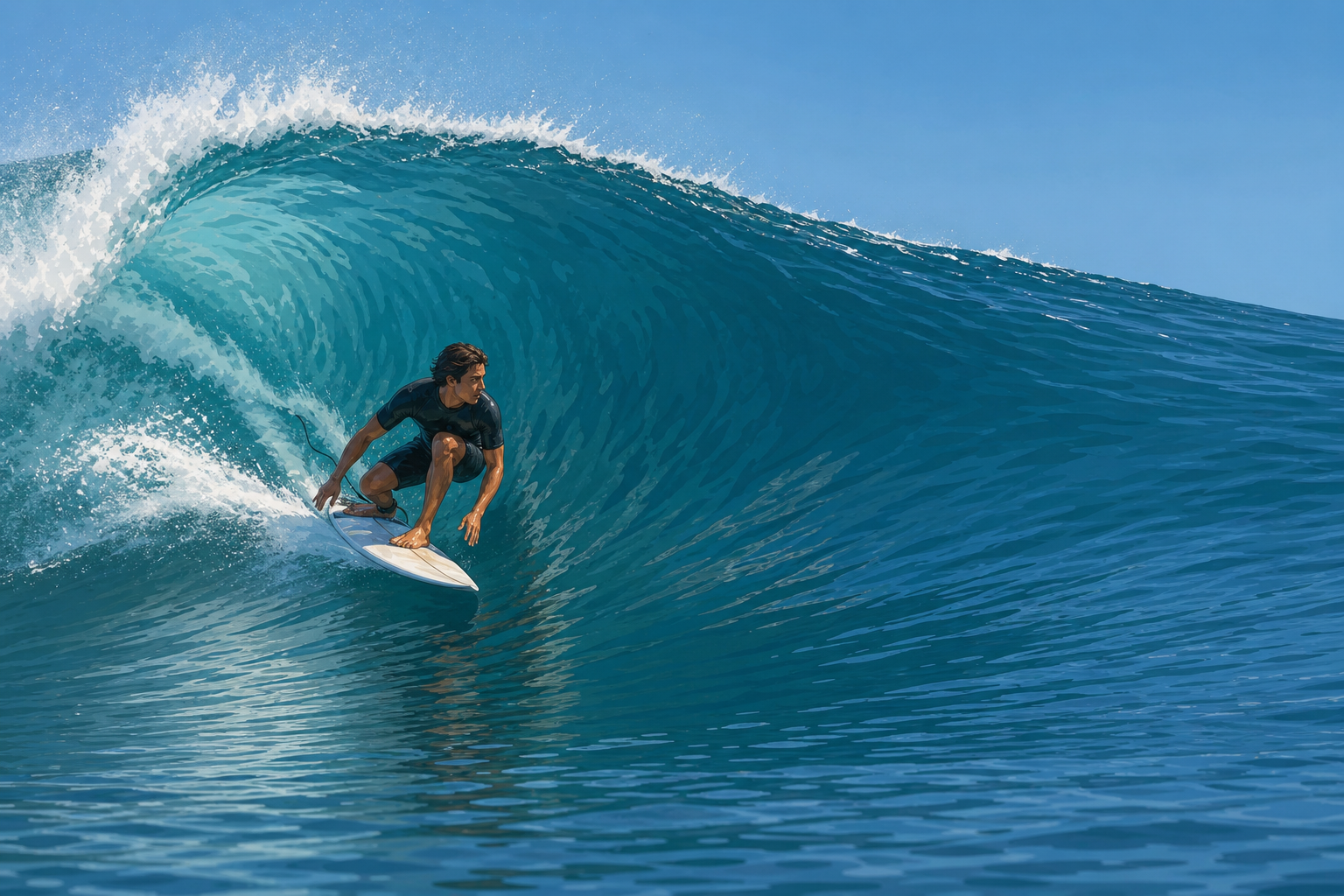
In a hollow bowl, your line should match the speed of the barrel. Too low and the foam ball can catch you. Too high and you may get clipped by the lip. Most surfers aim for a high-to-mid line, using small adjustments rather than big movements to stay in the right position.
Speed control is subtle. To accelerate, pump lightly off the rail and stay trim. To slow down, compress slightly, drag a hand, or set more rail into the face. On very fast bowls, stalling too much can be costly because the section may run away before you can pull it back.
Turning on bowling waves
Bowling waves can also create excellent performance sections. If the barrel is not open, the steep face and pitching lip can still provide a powerful pocket for snaps, hooks, and vertical turns. The key is to turn where the wave gives you space — forcing a large maneuver under a throwing lip usually puts you behind the section.
On smaller bowly waves, a quick bottom turn into the pocket can generate speed for a sharp top turn. On heavier waves, the smarter move is often a clean line through the bowl before using the open face beyond the tube.
Board choice for bowling waves
For hollow bowling surf, most surfers prefer boards with reliable hold and enough rocker to fit into steep curves. A rounded pin, round tail, or refined squash tail can all work depending on the size. Slightly narrower outlines and dependable rails help when the face is steep and fast.
Fins play a big role in how your board holds on steep faces. A set of FCS fins or a quality Futures-compatible fin set can make a noticeable difference in drive and control through fast, critical sections. For smaller beachbreak bowls, a shortboard with extra speed works well. For overhead reef bowls, many surfers prefer a step-up with a bit more length and paddle power. The right board should get you in early while still holding a line through the tube.
A reliable surfboard leash is also worth thinking about before paddling out at a heavy bowl. A thick, quality leash is less likely to snap on a hard wipeout and keeps your board within reach in a strong current.
How to Recognize Rideable Bowling Waves
The difference between a makeable bowl and an unmakeable one is often visible before you even paddle. The key is studying the wave’s angle, shoulder, and exit from the beach or the lineup.
Signs of a rideable bowling wave
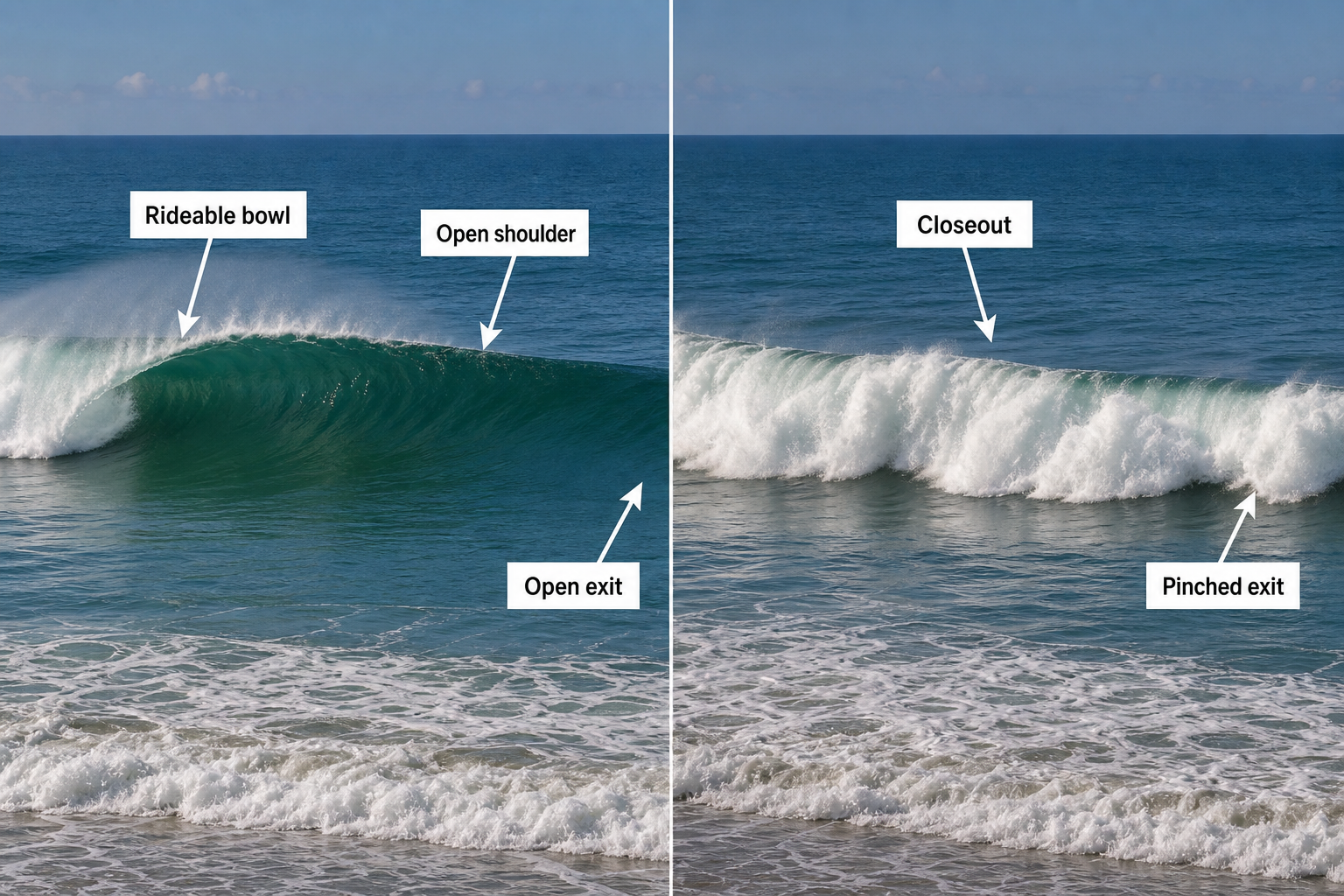
- A visible shoulder: The lip throws near the peak, but the wave face stays open down the line.
- A tapered breaking line: The section peels progressively rather than detonating all at once.
- A clean exit: The barrel opens into a shoulder, channel, or softer section.
- Predictable repetition: Set waves break in a similar place with a similar pace.
A rideable bowl often looks like it is bending away from the takeoff zone. From the lineup, you can usually trace a path across the face. Even if the section is hollow, there is a moment where the door stays open long enough to make it through.
Signs of an unmakeable bowling wave
- No shoulder: The whole wave throws across the bar or reef simultaneously.
- A pinching exit: The barrel opens briefly, then clamps shut before the surfer can travel through.
- Too much draw: The trough drains heavily and the lip lands far out in front.
- Bad angle: The swell hits too square and turns the bowl into a closeout.
Unmakeable bowls can look spectacular for a second. The lip is thick, the tube is round, and the wave may photograph beautifully. The problem is the exit. If the section pinches every single time, it is a closeout barrel rather than a rideable bowling wave.
Reading bowling waves from the beach
Before paddling out, watch several full sets. Notice where the first peak appears, how far the lip throws, and whether surfers are coming out. A single made barrel can be misleading if most waves clamp. Look for consistency rather than highlights.
Also compare set waves with the smaller insiders. Sometimes the best bowls are not the biggest waves. A slightly smaller wave may hit the bank at a better angle and peel cleanly, while the largest set waves break too wide or close out altogether.
Safety Gear for Bowling Waves
Heavy bowling waves, especially over reef, demand more from your body and your equipment. A few well-chosen pieces of gear can make a real difference when things go wrong.
If you are surfing reef bowls, reef booties protect your feet on shallow takeoffs and wipeouts. For particularly heavy or shallow waves, a surf helmet offers head protection without bulk, and an impact vest can reduce the sting of a hard landing on the water or a glancing hit from your board.
For colder water sessions, a good wetsuit keeps you warm and in the water longer. In warmer conditions, a rash guard with UPF protection is worth wearing for long sessions under a strong sun.
Wipeouts at powerful bowl breaks can ding your board. Keeping a ding repair kit in your bag means you can patch small cracks on the spot rather than letting water soak in overnight. And if you want to document your sessions, a waterproof action camera mounted to your helmet or board gives you a solid first-person view of how you are reading and riding the bowl. A high-capacity microSD card ensures you have enough storage to record full sessions without running out of space.
Famous Surf Spots with Bowling Waves
Many world-class surf spots are well known because they produce bowling sections under the right conditions. Some are reef slabs, some are sand-bottom barrels, and others are point waves with hollow bowls along the line.
| Surf spot | Location | Why it creates bowling waves |
|---|---|---|
| Banzai Pipeline and Backdoor | Oahu, Hawaii | A shallow reef focuses North Pacific swell into thick, round barrels with defined bowls. |
| Teahupo’o | Tahiti, French Polynesia | A deep-to-shallow reef pass turns long-period south swell into an extremely thick, ledging bowl. |
| Cloudbreak | Tavarua, Fiji | A long reef pass bends southwest swell into fast, hollow sections that bowl along the reef. |
| Padang Padang | Bali, Indonesia | A shallow left reef focuses Indian Ocean swell into a compact, powerful tube. |
| Desert Point | Lombok, Indonesia | A wrapping left reef point creates long barrels with bowly sections when the angle is right. |
| Kirra | Gold Coast, Australia | A sand-bottom right point can produce fast, dredging bowls during quality east-to-southeast swells. |
| The Box | Western Australia | A shallow slab near Margaret River makes a square, powerful right-hand bowl over reef. |
| La Gravière | Hossegor, France | Shifting sandbars and strong Atlantic swell create heavy beachbreak bowls and barrels. |
| Puerto Escondido | Oaxaca, Mexico | Long-period south swell hits powerful sandbars, producing large, hollow beachbreak peaks. |
| Skeleton Bay | Namibia | A long sand-bottom setup creates extremely fast barrels with bowly sections along the line. |
These spots are not identical. Pipeline is a reef peak, Kirra is a sand point, and La Gravière is a shifting beachbreak. What they share is the ability to focus swell energy into hollow, bending sections that reward speed and precise positioning.
Using Forecasts to Find Bowling Waves
To find bowling waves, start by matching the forecast to the spot’s bottom shape. Look for a swell direction that hits the reef, point, or bar at a peeling angle. Then check the period, tide, and wind conditions.
For reefs and points, a clean groundswell in the correct direction is usually the main ingredient. For beachbreaks, sandbar quality matters just as much as the swell. A perfect forecast can still produce poor bowls if storms or currents have flattened the banks in recent weeks.
A simple checklist can help before you head out:
- Bottom: Is there a ledge, bank, point, or channel that can focus the swell?
- Swell angle: Will the wave peel, or will it hit too straight?
- Period and size: Is there enough energy to make the bowl stand up?
- Tide: Will the depth make the wave hollow without shutting it down?
- Wind: Will the lip stay clean enough to barrel?
Bowling waves are among the most exciting waves in surfing because they combine power, shape, and consequence in a compact section. They are created by focused swell energy over the right bottom contour, then shaped further by tide, wind, and wave period. Once you understand how they form, you can read them more clearly — where to sit, when to go, and whether the barrel has an exit worth committing to. The best bowling waves are demanding, but when all the elements line up, few types of surf offer a better feeling than driving through a clean, round bowl and emerging onto an open face.