Slow waves are often described as soft, mushy, or mellow — but that doesn’t mean they’re boring. In the right conditions, slow waves can be some of the most enjoyable surf around: easy to catch, long-running, and perfect for improving trim, footwork, and flow. They also teach one of surfing’s most important skills — how to generate speed when the wave isn’t handing it to you. If you’re heading out on a softer day, having a reliable surfboard leash and fresh surf wax is always a good start. Understanding what makes slow waves form, where to find them, and how to surf them well can turn average-looking days into surprisingly fun sessions.
What Creates Slow Waves?
A slow wave is usually slow in two related ways. First, it may have a slow peel, meaning the breaking part of the wave moves down the line at a manageable pace. Second, it may feel soft, meaning the face has less push than a steep, hollow, or powerful wave.
The best slow waves combine both traits: they peel gently enough to be makeable, but still have enough shape to let a surfer trim, turn, and connect sections.
Gentle Bathymetry Creates Soft Slow Waves
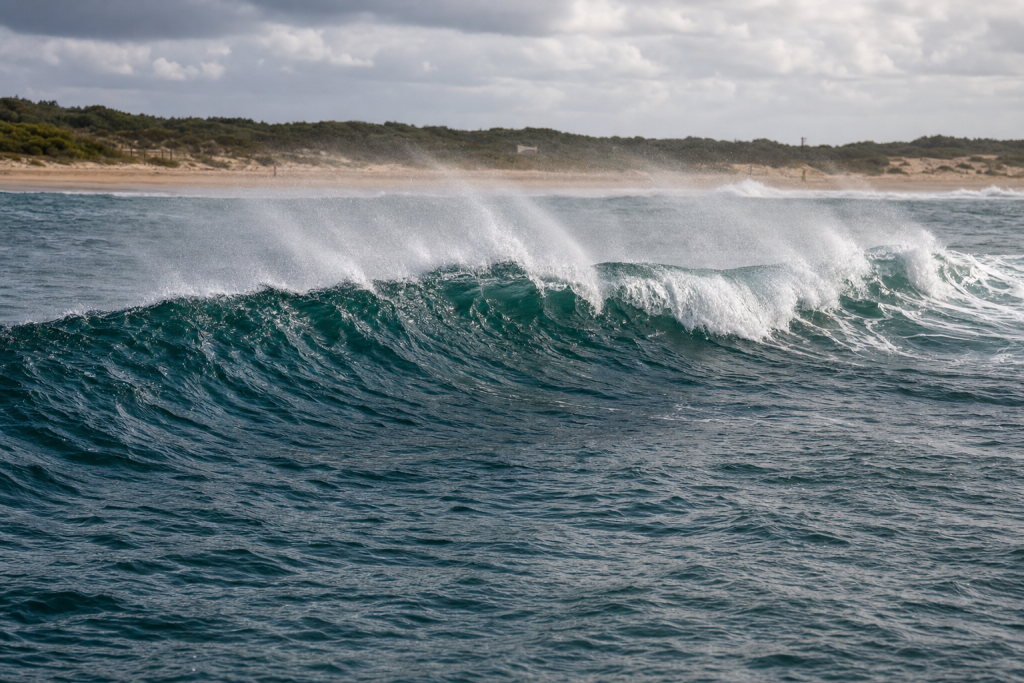
Most soft slow waves form where the seabed rises gradually. As a swell moves into shallower water, it slows down and grows taller. On a gentle slope, that transformation happens slowly. Instead of the lip throwing outward in a pitching barrel, the top of the wave crumbles down the face — what’s known as a spilling breaker.
Gentle bottoms are common at:
- Wide sandy beaches with flat outer sandbars
- Protected bays where swell energy is filtered
- Mellow point breaks with cobblestone or sand bottoms
- Soft reef breaks where the reef shelf rises gradually
By contrast, steep reefs, ledges, and abrupt sandbanks tend to create faster, hollower waves because the swell is forced to break suddenly.
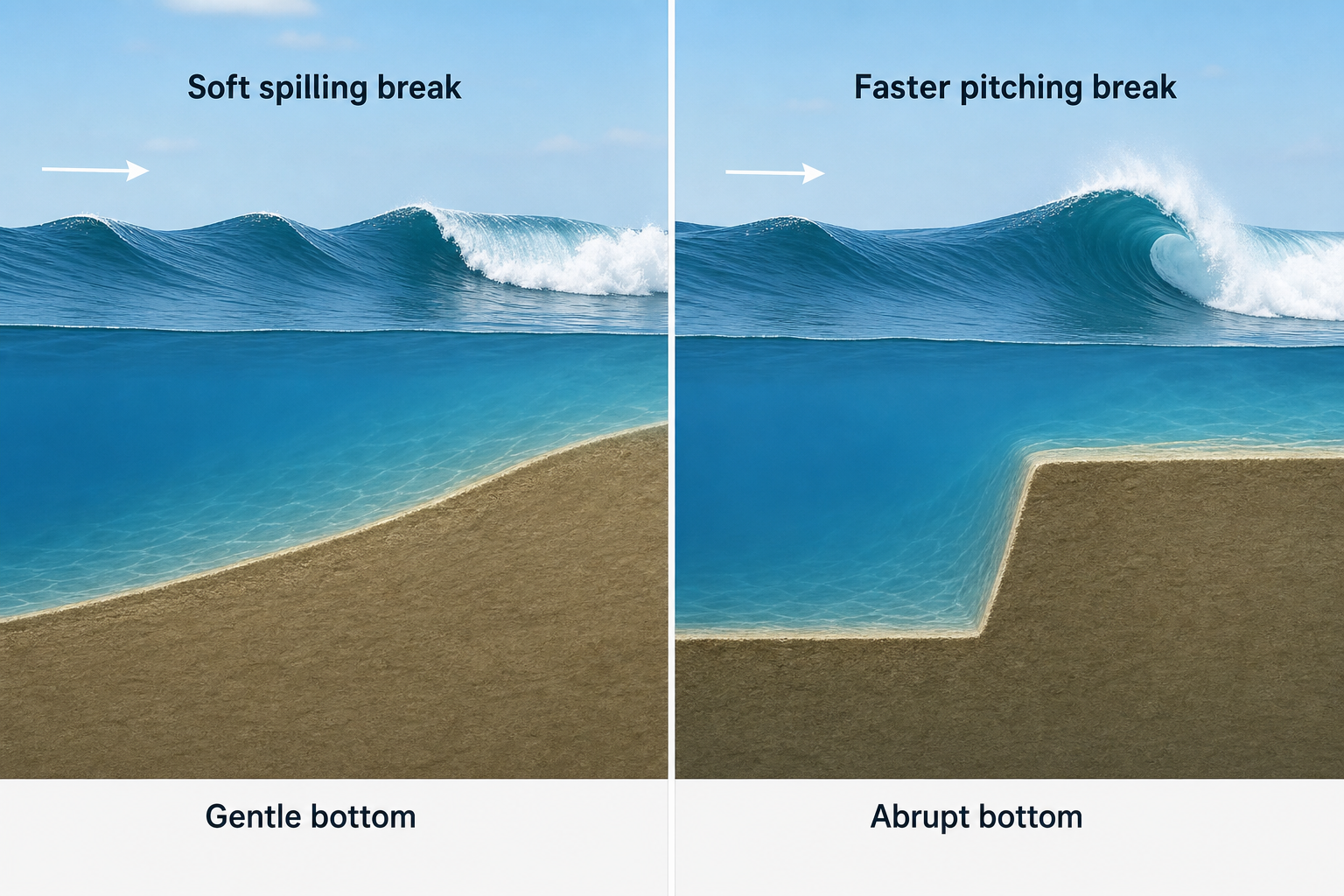
Peel Angle Controls How Fast Slow Waves Feel
A wave can be soft but still hard to make if it breaks too straight. The key is peel angle — how diagonally the wave breaks along the crest. A wide peel angle gives the surfer time to travel across the face. A narrow peel angle creates a fast section or a closeout.
In practical terms, slow waves usually have a visible shoulder that opens gradually from the peak. The whitewater doesn’t immediately overtake the unbroken face. Instead, the breaking section travels down the line slowly enough for trimming and gentle turns.
As a rough guide:
- High peel angle: slower, easier, and more makeable
- Medium peel angle: workable for most surfers
- Low peel angle: fast, racing, or closing out
This is why a clean, soft point break can be much easier to surf than a beachbreak of the same size. The wave may not be powerful, but the angle gives it a long, readable wall.
Swell Energy, Tide, and Wind Can Soften a Wave
Slow waves often appear when swell energy is moderate rather than intense. Shorter-period swells usually carry less deep-water energy, so they’re more likely to crumble softly. Higher tides can also soften waves because extra water over the bank delays the breaking process.
Wind matters too. Light offshore or glassy conditions help a soft wave maintain a clean face. Light onshore wind can add a little more crumble, but too much onshore wind usually breaks the face into chop and weakens the line.
The Slow Wave Shape: Power, Speed, Height, and Hollowness
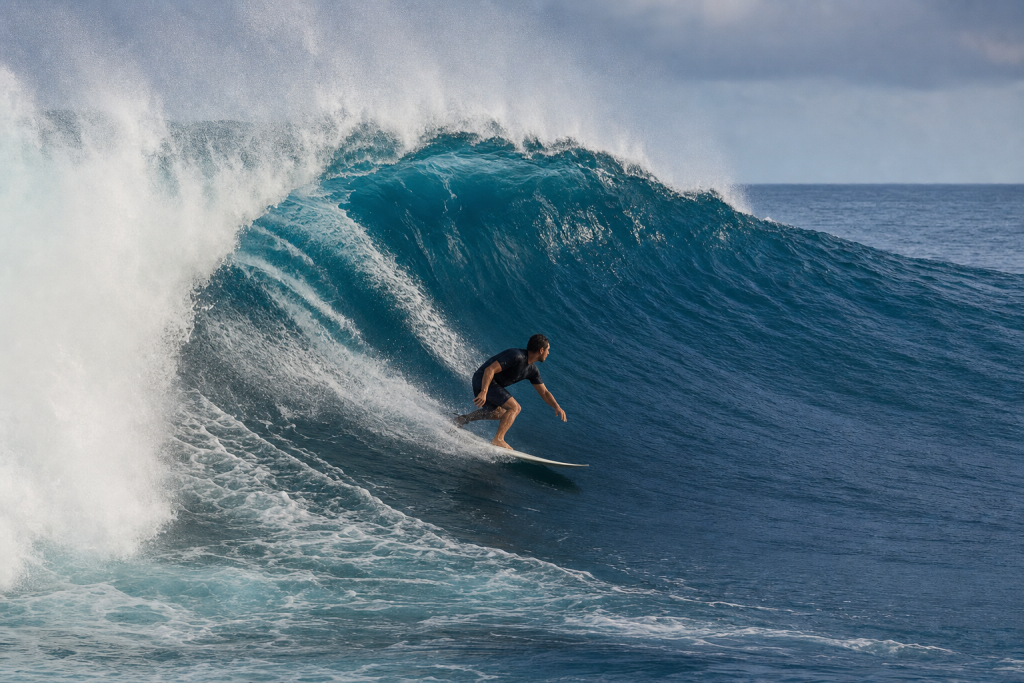
Slow waves have a recognizable look. They tend to be rounded rather than square, open rather than pitching, and forgiving rather than critical. The lip spills instead of throwing, and the face often has a broad upper section where the board can trim smoothly.
| Feature | Typical slow wave characteristics |
|---|---|
| Shape | Full face, soft shoulder, crumbly lip, gradual breaking line |
| Power | Low to moderate — the wave offers glide, but not much punch |
| Speed | Slow to medium down the line, with sections that may fade or reform |
| Height | Often knee to head high, though larger slow waves can exist at mellow point breaks |
| Steepness | Low to moderate — the face is usually sloped rather than vertical |
| Hollowness | Minimal. Barrels are rare unless the wave hits a shallow inside section |
| Surf quality | Excellent for trim, flow, longboarding, and learning speed generation |
The main weakness of slow waves is that they can lack a defined pocket. If there’s no steep section near the breaking lip, the surfer has no reliable power source — and that’s when a slow wave becomes frustratingly weak rather than enjoyably mellow.
Where Slow Waves Form Best
Slow Waves on Sandy Beaches
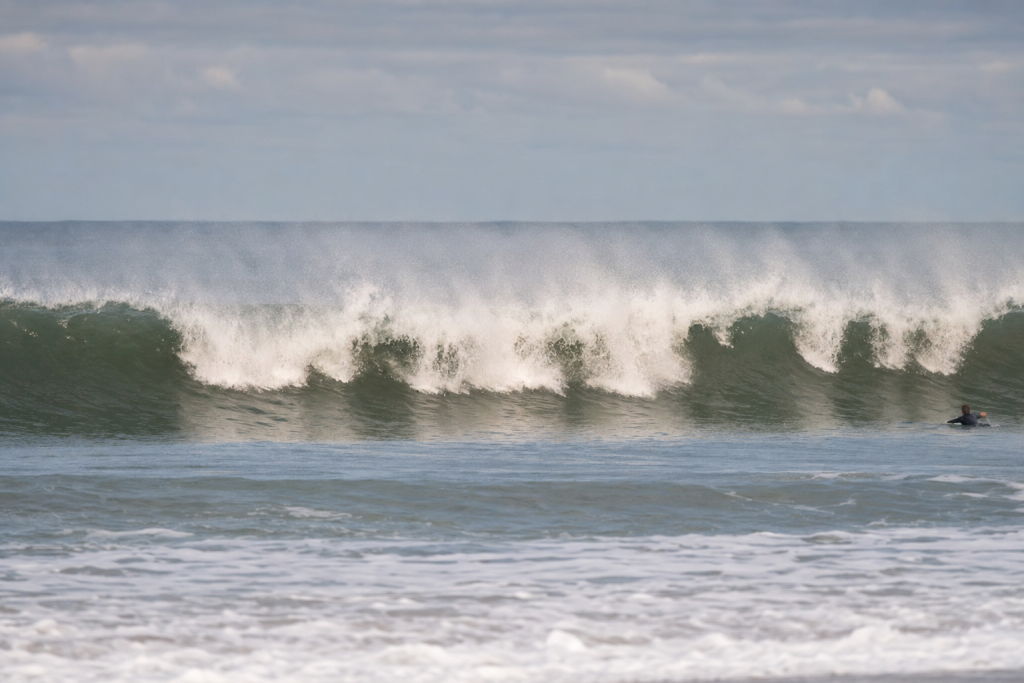
Beachbreak slow waves usually form over broad sandbars with a gentle slope. These waves are often playful when the sandbar has a defined peak and a deeper section beside it. The peak creates the takeoff, while the deeper water allows the shoulder to peel instead of shutting down.
Flat beaches with long, even sandbars can produce very soft waves, but they may also close out if the swell hits straight on. The best slow beachbreaks usually need some angle in the swell or irregularity in the sandbar to create corners and keep things rideable.
Slow Waves at Point Breaks
Point breaks are classic slow-wave setups when the swell wraps around a headland and breaks along a gradually curving bottom. Refraction bends the swell lines, spreads the energy, and creates a long peeling shoulder.
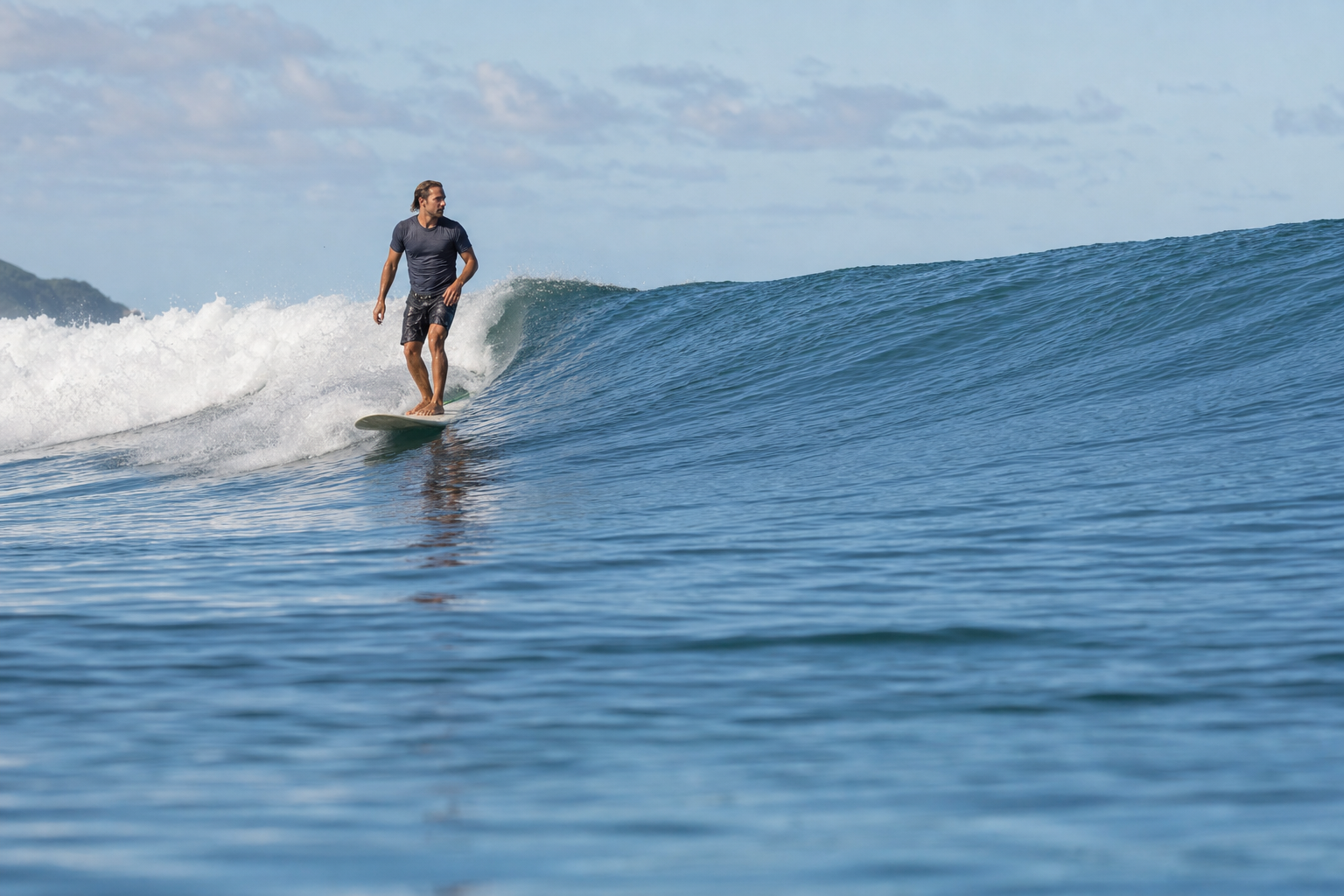
Soft point waves are often ideal for longboards and mid-lengths because they offer long rides with predictable sections. They may not have much hollowness, but they reward smart positioning, clean trimming, and well-timed cutbacks back to the pocket.
Slow Waves Over Reefs and Cobblestones
Not all reef waves are hollow. Some reefs have a gradual shelf or a deeper takeoff zone, which produces a rolling, user-friendly wave. Cobblestone points can also create slow waves because the rounded stones form a smooth, even bottom that encourages a clean spilling breaker.
These waves often come alive with a little more swell size than a beachbreak needs. The extra size helps the wave stand up, while the gradual bottom keeps it from becoming too abrupt or critical.
Swell, Period, Tide, and Wind for Slow Waves
Slow waves are shaped by more than the bottom contour. Swell direction, swell period, tide level, and wind all change how soft or makeable the wave becomes. The same break can be perfect for flowing turns at mid tide, then too fat to bother an hour later.
| Factor | How it affects slow waves | Typical sweet spot |
|---|---|---|
| Bottom gradient | Gentle slopes create spilling waves and softer faces | Often around 1:50 to 1:200 on mellow beaches, though every break differs |
| Swell direction | Too straight can close out; too angled may miss the bank | Beachbreaks often like 10–35 degrees off straight-on; points like swell that wraps along the contour |
| Peel angle | Controls how fast the wave breaks down the line | Roughly 50–80 degrees is usually manageable and slow-feeling |
| Swell period | Short periods are softer; longer periods add power and line | 6–11 seconds for mushy beach waves; 10–14 seconds for higher-quality mellow points |
| Wave height | Too small may not break properly; too big may speed up | Waist to head high faces are often best for soft performance |
| Tide | High tide softens; lower tide adds steepness | Mid tide is often the most balanced, but local bathymetry decides |
| Wind | Clean conditions keep the face usable | Glassy, light offshore, or light cross-shore conditions |
How Swell Period Affects Slow Waves
Swell period is the time between waves in a set. Short-period swell has less organized energy and often produces softer, weaker waves. That can be good for beginners, but it can also make the surf lumpy and difficult to link from section to section.
Medium-period swell is often the best range for quality slow waves. It delivers enough push to create a wall without making the wave hollow or critical. Long-period swell can improve a soft point break by producing longer, more defined lines, but it can also cause a beachbreak to close out if the sandbar is too straight.
How Tide Affects Slow Waves
High tide adds water over the bottom, so waves break later and generally feel softer. On a very gentle beach, high tide can make the wave too fat to catch easily or too weak to ride with any flow. Lower tide reduces water depth over the bank, which helps the wave stand up and form a more defined face.
Many slow waves work best at mid tide — there’s enough water for a smooth shoulder, but not so much that the wave loses its shape. A pushing tide can also help by adding a bit of extra lift and consistency to the sets.
Are Slow Waves Easy to Surf?
Slow waves are generally easier to catch than fast hollow waves, but they’re not always easier to surf well. They give beginners more time to paddle, pop up, and choose a line, and the takeoff is less vertical and more forgiving.
For intermediate and advanced surfers, the challenge is different. A slow wave doesn’t generate speed for you automatically. If you take off too wide, bottom turn too deep, or make one heavy turn in the wrong spot, the wave can outrun your momentum quickly. Good slow-wave surfing is really about efficiency.
Best Boards for Slow Waves
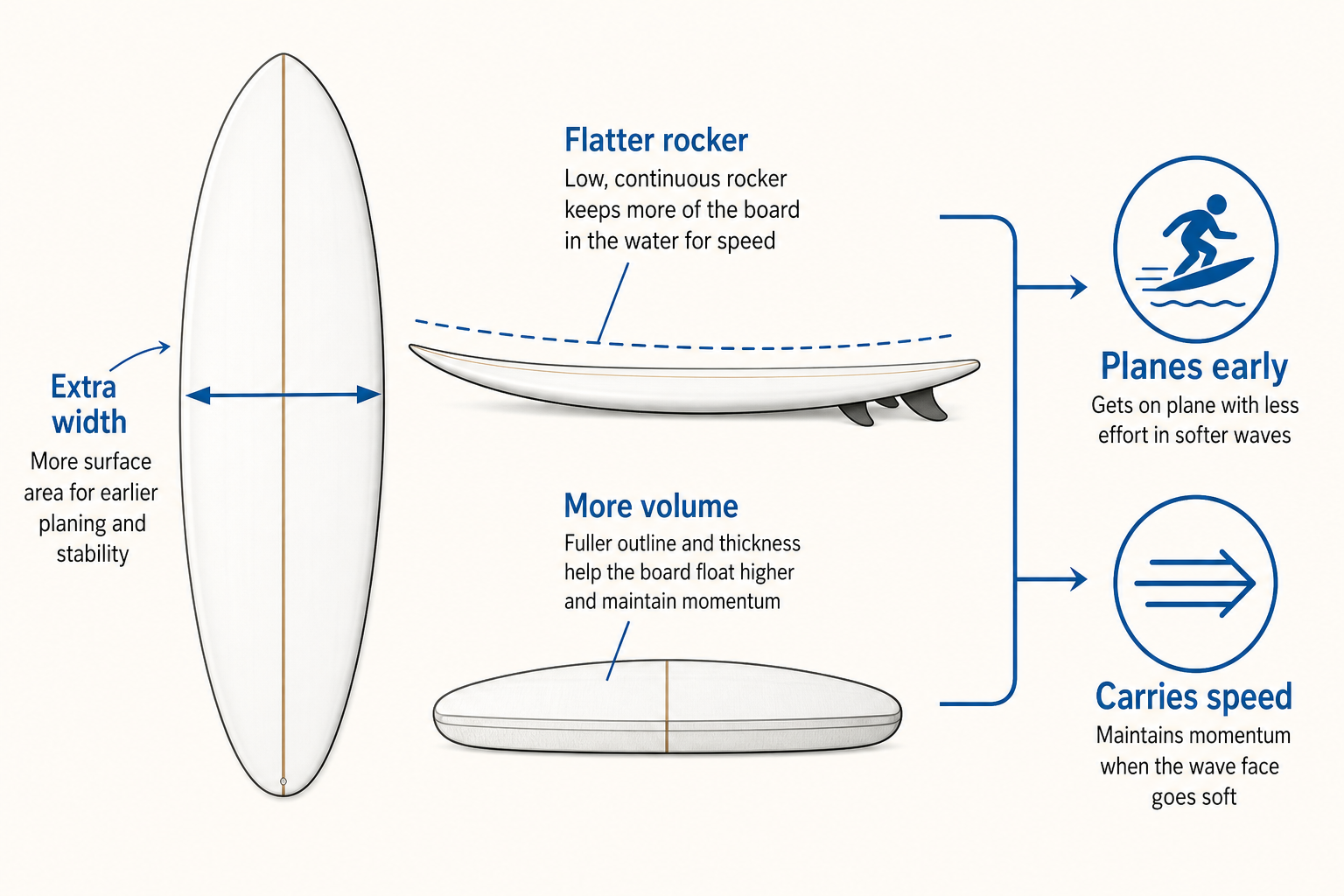
Board choice makes a major difference in slow surf. Slow waves reward boards that plane early and carry speed through flat sections.
- Longboards: Best for tiny to chest-high soft waves — they glide early and trim beautifully.
- Mid-lengths: Great for mellow points and soft reefs where paddle power helps.
- Fish and grovelers: Good for shortboard-style surfing in weak beachbreak waves.
- High-rocker shortboards: Harder to use unless the wave has a defined pocket or extra size.
In general, flatter rocker, extra width, and a little more volume go a long way. The goal isn’t just catching the wave — it’s carrying speed when the face goes soft. Fin setup also plays a role. A set of FCS tri fins can help a shortboard feel livelier in weaker surf, while a twin or thruster setup like these Futures-compatible fiberglass fins can add drive and speed down the line on flatter days.
How to Surf Slow Waves Better
Take Off Near the Pocket
The biggest mistake on slow waves is taking off too far out on the shoulder. The shoulder may look friendly, but it usually has the least power. Instead, position yourself near the steepest part of the peak — where the lip is just starting to crumble.
Paddle early, but don’t glide so far ahead that you leave the pocket behind. A slightly angled takeoff helps you enter the trim line sooner. On very soft waves, a small fade toward the breaking section can help you stay connected before redirecting down the line.
Stay High on the Face
On powerful waves, surfers can drop to the bottom and use a strong bottom turn. On slow waves, dropping too low often kills momentum. The best line is usually in the upper third of the face, where gravity and the wave’s remaining push work together to keep you moving.
Think of the high line as your speed lane. Use shallow bottom turns, smooth rail changes, and small climbs up the face. If the wave fattens out, trim high before attempting another turn.
Generate Speed Without Wasting Motion
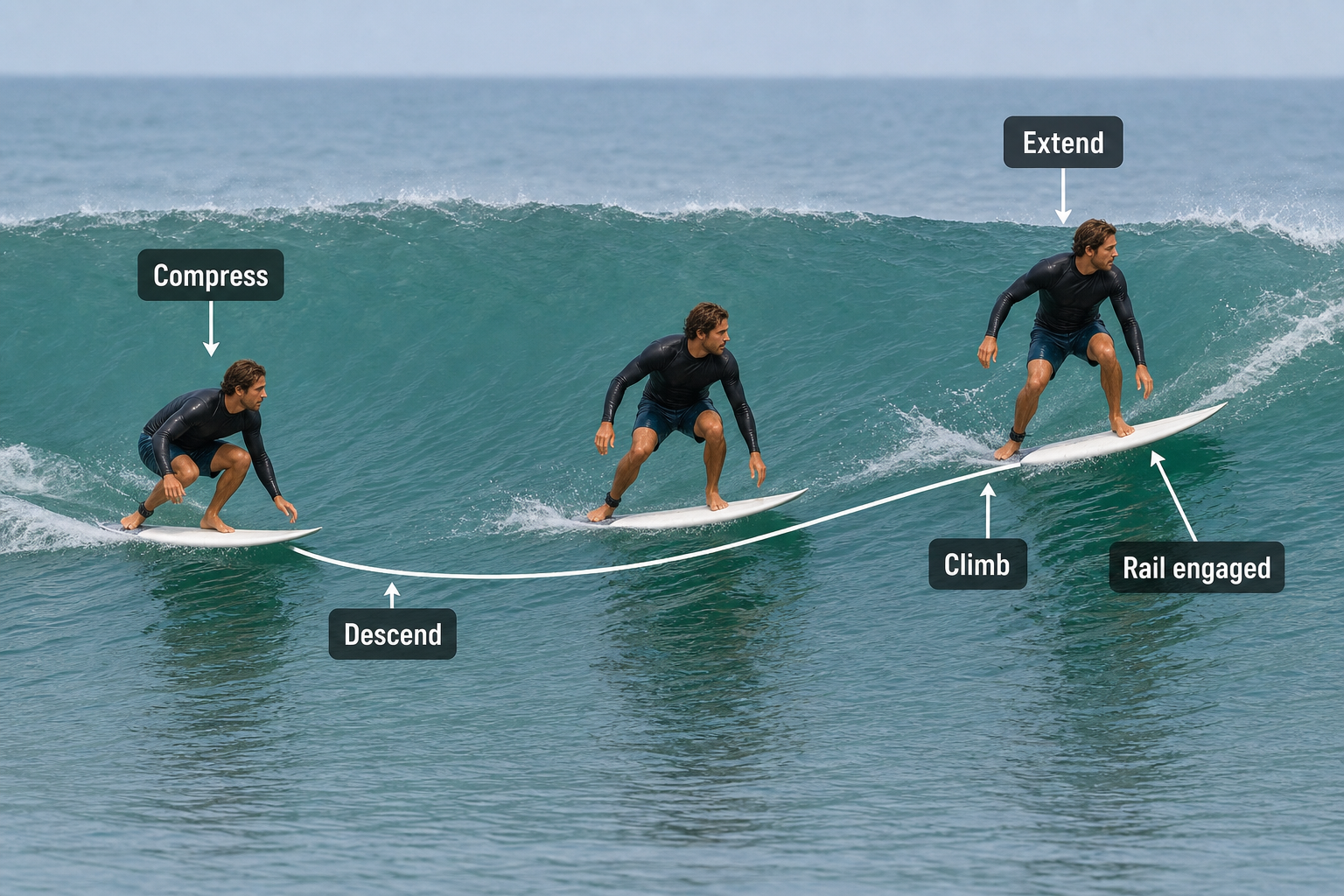
Slow waves are a great teacher for efficient speed generation. Pumping works best when the board is engaged with the face — not bouncing flat in the trough. Compress as you descend, extend as you climb, and keep your rail connected throughout.
Useful techniques include:
- Small high-line pumps to stay ahead of soft sections
- Foam ball climbs to reconnect with the pocket
- Gentle S-turns to maintain flow without stalling
Avoid oversized turns unless the wave has a clear pocket. Big movements can look powerful, but on weak waves they usually create drag and kill your momentum. If you want to go deeper into the technique side of this, this surf technique book covers trim, flow, and wave reading in a lot of useful detail.
Use Cutbacks to Return to the Power Source
Slow waves often have a wide shoulder, which makes it easy to outrun the energy. A well-timed cutback brings you back toward the breaking section, where the face is steeper and more alive.
Round, drawn-out cutbacks usually work better than abrupt snaps. Aim to redirect back toward the foam, brush the whitewater, then rebound into the open face. On a longboard, this same idea can be achieved through trim adjustments and footwork rather than sharp turning.
Connect Reforms
Many slow waves break in sections — the outside may crumble, fade, and then reform on the inside bank. To connect these waves, look farther down the line than you normally would. If you can see the inside section beginning to stand up, keep your speed high and choose a direct trim line.
When the wave goes flat, reduce unnecessary turning and let the board run. As the reform steepens, climb back toward the lip and re-enter the pocket. A well-placed surf traction pad on your back foot makes these quick weight shifts and repositions feel much more controlled.
How to Recognize Rideable Slow Waves
A rideable slow wave needs two things: enough softness to be makeable and enough steepness to be surfable. No wall means no carry. No time means no ride.
Signs of a Good Rideable Slow Wave
- A clear peak feathers before the rest of the wave
- The shoulder opens diagonally instead of shutting down
- The lip crumbles gradually rather than all at once
- The face stays steep enough for trimming
- The whitewater does not immediately overtake the shoulder
- Surfers can glide without frantic pumping
From the beach, watch how the foam line travels. On a good slow wave, the broken section and the open face move together at a makeable pace. The wave looks relaxed, but it still has direction and momentum.
Signs a Slow Wave Is Too Fat to Ride Well
Some slow waves look promising until you try to catch them. If the swell line lifts but never really feathers, the wave may be breaking in water that’s too deep. It rolls under the board, crumbles weakly, or fades into flat water before you get anywhere.
Common signs of a wave that’s too fat include:
- No defined peak or takeoff zone
- A shoulder that slopes away without any pocket
- Whitewater that dies before reaching the inside
- Riders bogging immediately after takeoff
A fat wave can sometimes become surfable with a lower tide, more swell size, or a board with better glide. If none of those are available, it may simply be unmakeable — not because it’s too fast, but because it doesn’t have enough energy to work with.
Signs a Slow-Looking Wave Will Close Out
Not every crumbly wave is makeable. A wave can look soft and still close out if the swell hits a straight bar with no angle. These waves often stand up evenly along a long stretch, then break almost all at once.
Look for these closeout cues:
- The entire line darkens and rises at the same time
- There is no obvious corner or shoulder
- The lip breaks in one long curtain of foam
- The open face disappears before a surfer can set a line
The best way to judge is to watch several sets before paddling out. Slow waves can change significantly with tide and set size — a smaller wave may peel beautifully while a larger one breaks too wide or too straight for the same sandbar to handle.
Gear Tips for Slow Wave Sessions
Slow waves are forgiving, but having the right gear still makes a difference — especially if you’re planning longer sessions or surfing somewhere unfamiliar. If the water is cold, a quality full wetsuit keeps you comfortable and in the water longer. In warmer conditions, a long sleeve rash guard provides sun protection without adding bulk.
If you’re surfing a mellow reef or cobblestone point, a pair of reef booties can save your feet on exposed sections, particularly at low tide. And even on softer days, an impact vest is worth wearing if you’re surfing over shallow rock or reef — slow waves can still produce unexpected wipeouts. If you’re surfing particularly shallow breaks, a surf helmet adds an extra layer of protection without getting in the way.
Slow wave sessions are also a great time to film your surfing. An action camera mounted on your board or held by someone on the beach can reveal a lot about your line, speed, and positioning. Pair it with a reliable high-capacity microSD card so you don’t run out of space mid-session. And after any session — slow waves or not — it’s worth having a ding repair kit on hand. Even gentle conditions can produce small pressure dings or cracks, and catching them early prevents water from soaking into your board.
A Practical Slow Waves Checklist
Before paddling out for slow waves, run through a few quick questions:
- Is there a peak? If yes, the wave has a starting point.
- Is there a shoulder? If yes, the wave has a path.
- Is there a pocket? If yes, the wave has a power source.
- Is the tide helping? If the wave is too fat, it may need less water over the bank.
- Is my board right? If you’re bogging on every wave, more glide might change the session.
Slow waves reward surfers who read the ocean carefully and surf with patience and efficiency. They may not offer the drama of a hollow reef or the raw speed of a freight-train point, but they develop timing, trim, and smooth rail work better than almost any other wave type. Once you understand how gentle bottom contours, swell angle, tide, and board choice interact, soft slow waves stop feeling like second-best conditions and start becoming a genuinely valuable part of your surfing.