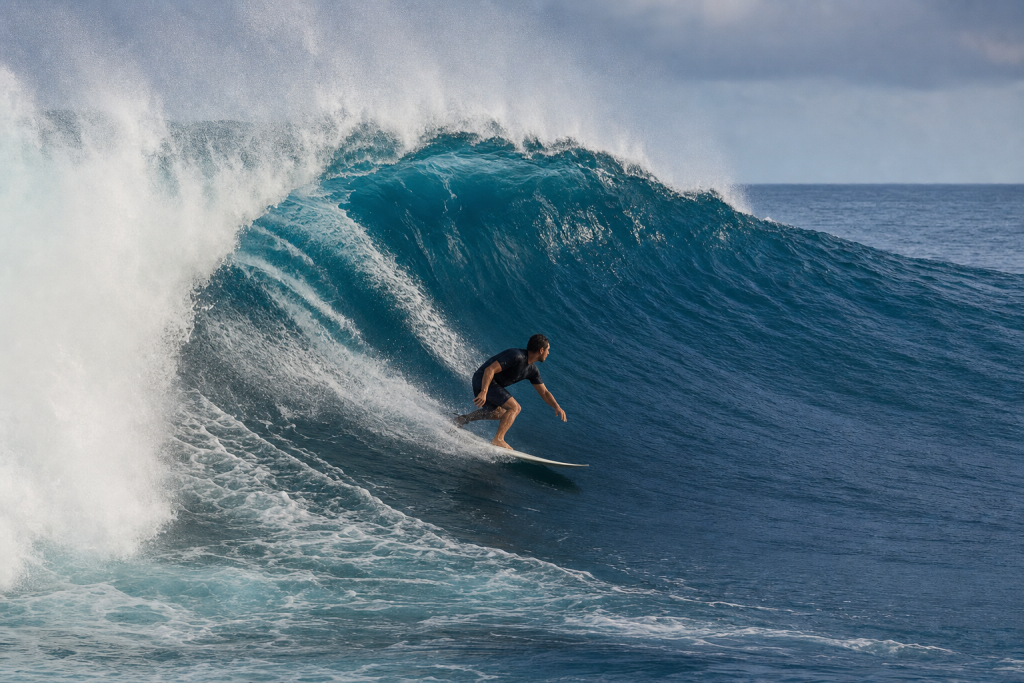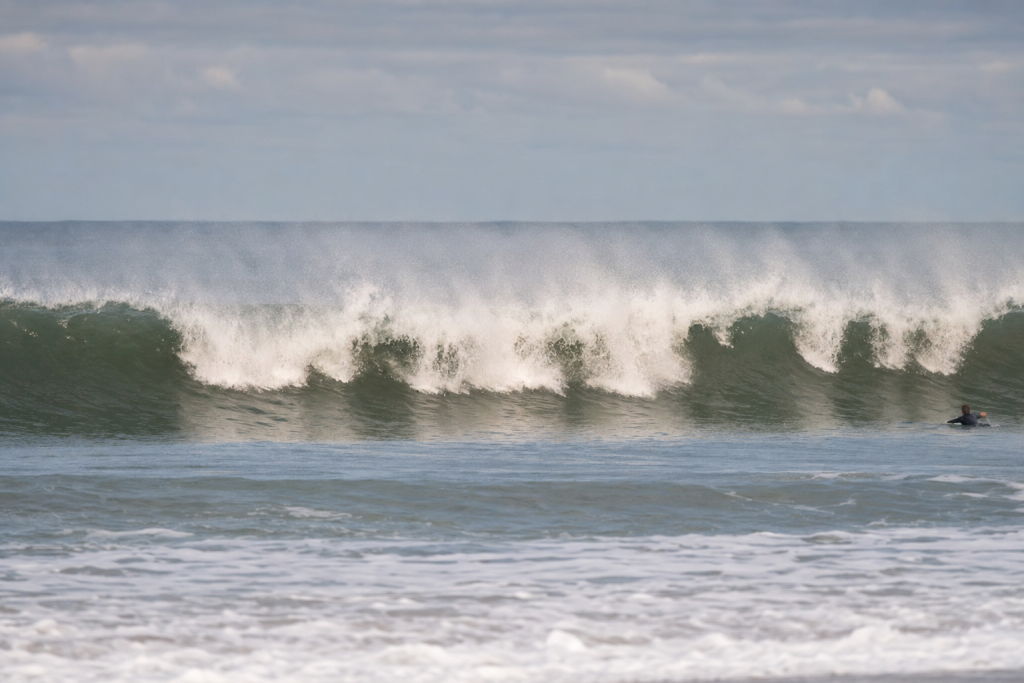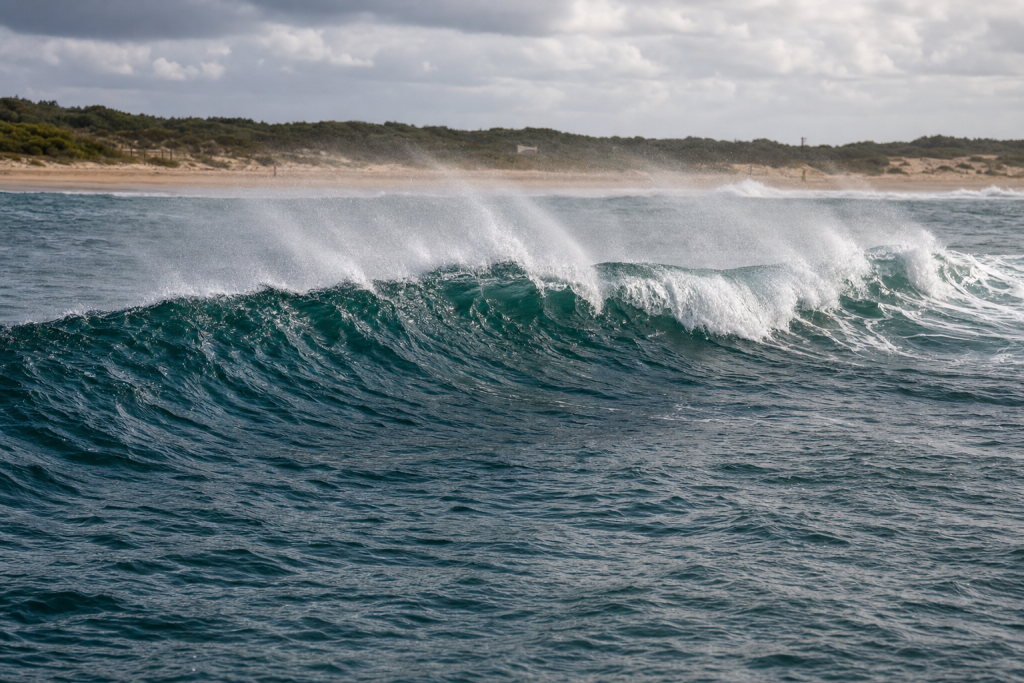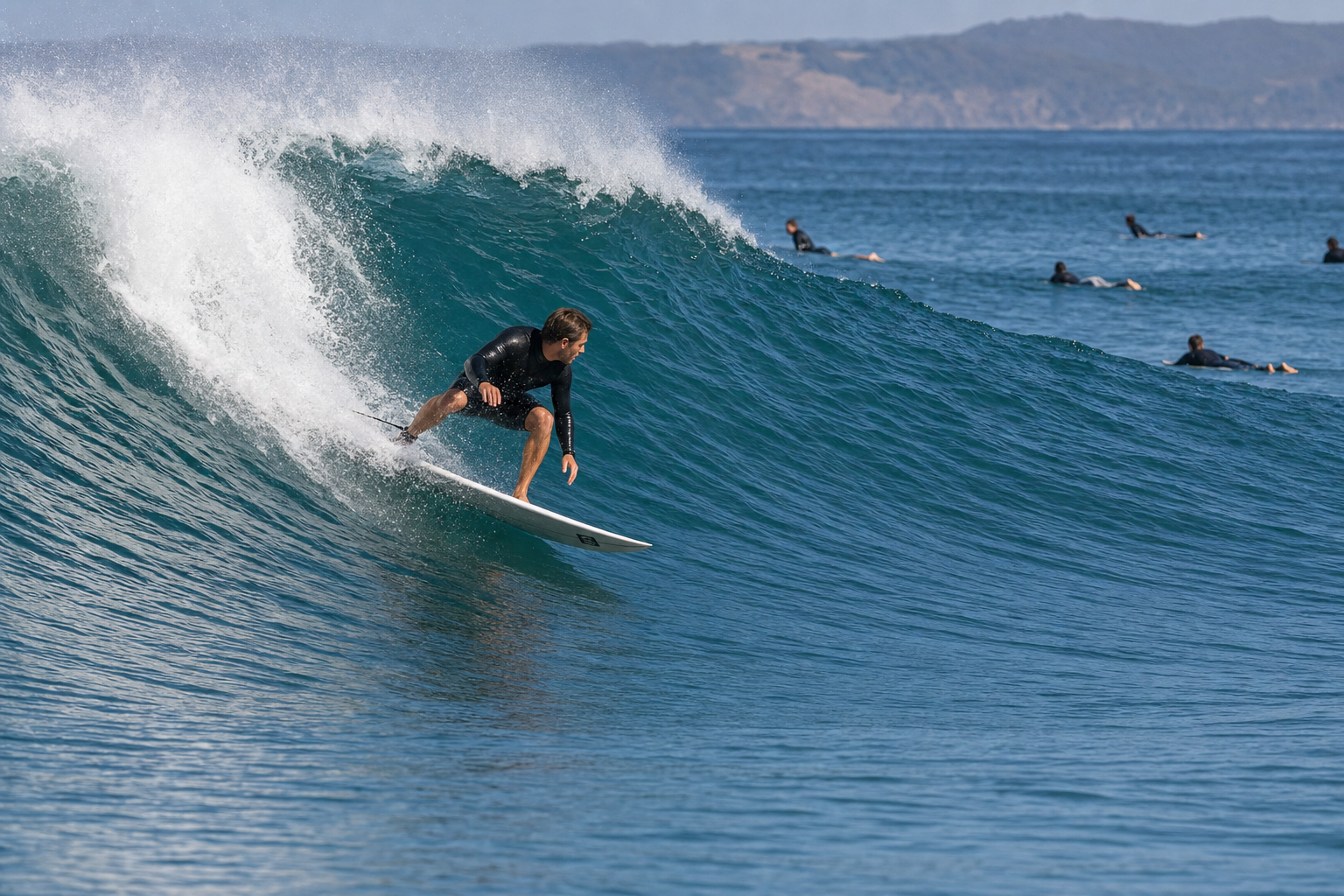
Steep waves are the ones that make surfers lean forward, paddle harder, and commit without hesitation. They stand up quickly, break with urgency, and often offer the most exciting parts of surfing: fast drops, high-speed walls, and hollow barrels. They can also be unforgiving, because a small mistake in timing or line choice can mean missing the wave completely or getting caught behind a closing section. Understanding what creates steep waves, where they form, and how to surf them helps you choose better conditions and make smarter decisions in the lineup. If you’re working on reading and riding these kinds of waves, a solid reference like this surf technique book can help fill in the gaps between sessions.
What Creates Steep Waves?
A steep wave forms when swell energy is forced to rise quickly as it reaches shallow water. In deep water, a swell may look smooth and rounded. As it approaches a reef, sandbar, point, or ledge, the lower part of the wave slows because it feels the seabed. The upper part keeps moving faster, so the wave face stands up sharply. If the transition is sudden enough, the lip pitches forward and the wave becomes hollow. Staying protected on these waves matters, and wearing a quality full wetsuit can make a real difference when sessions get heavy.
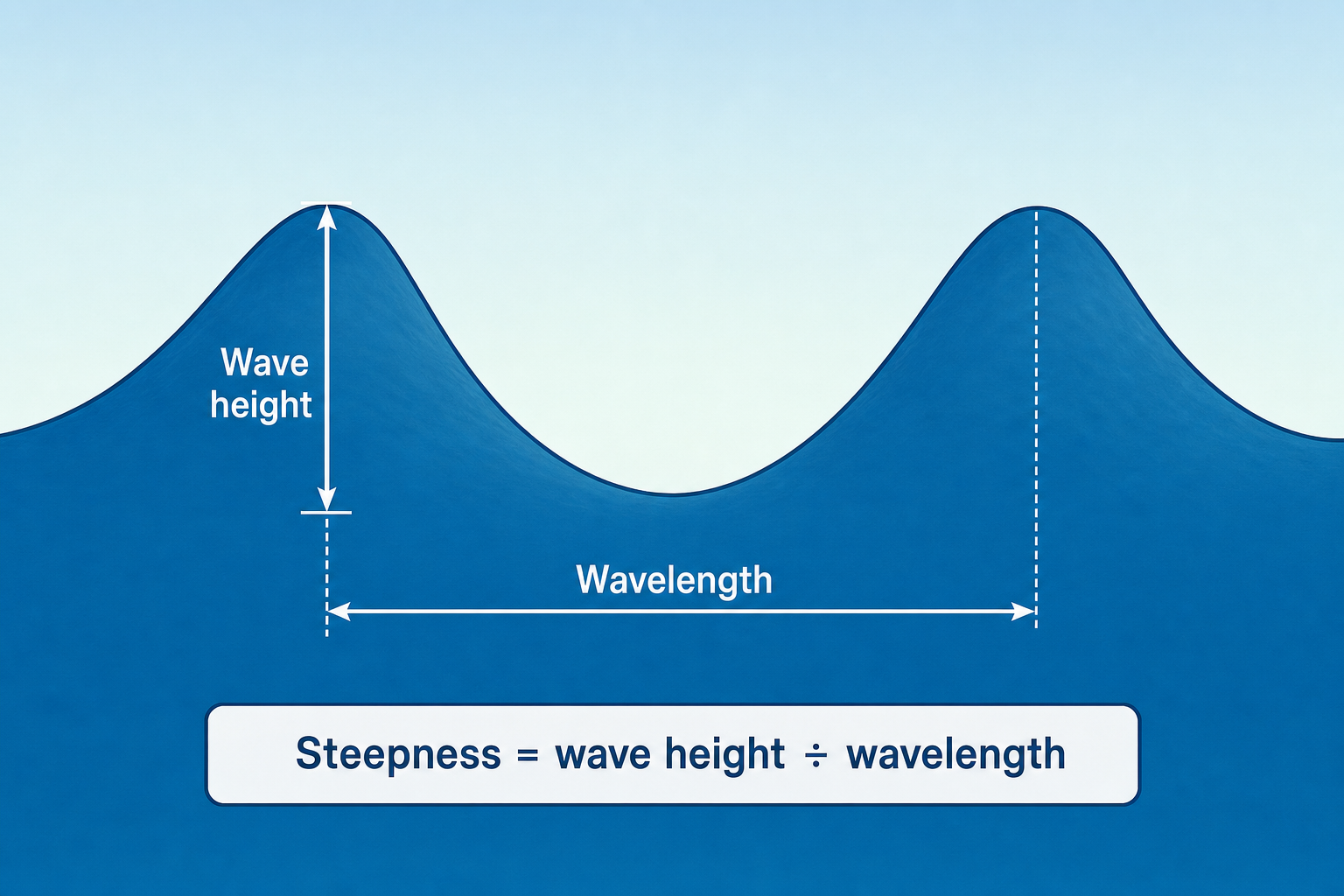
Surfers usually describe steepness by the angle of the wave face. Oceanographers describe wave steepness as the ratio between wave height and wavelength. In deep water, waves become unstable when they get too tall relative to their length. In the surf zone, the bottom contour matters just as much. A wave may not look especially steep offshore, yet it can become extremely steep when it hits a shallow reef or abrupt sandbar.
Steep Waves and Plunging Breakers
Most classic steep waves are plunging breakers. A plunging breaker occurs when the lip throws out and down instead of crumbling gently. This is the type of breaking wave that creates barrels. It usually happens where the seabed rises quickly enough to pitch the lip, but not so suddenly that the wave simply folds over and closes out.
By contrast, waves breaking over a gradual slope tend to be spilling waves. They crumble from the top and are generally easier to surf. Waves breaking over an extremely abrupt ledge can become slab-like, where the wave sucks water off the reef and throws forward with intense force.
How Steep Waves Look and Feel
Shape and Face Angle
A steep wave has a face that rises quickly from trough to lip. The takeoff zone may look like a ramp that suddenly turns vertical. On better waves, the steepest part is near the peak, and then the wall tapers into a surfable shoulder. On poorer waves, the entire line stands up and breaks all at once, leaving no room to work with.
Good steep waves usually have a defined peak, a clear direction of peel, and enough open face to draw a line. Bad steep waves often look exciting from a distance but offer no exit because the section runs too fast or shuts down immediately after the drop.
Power, Speed, and Hollowness
Steep waves are usually fast because the breaking section moves quickly down the line. They often demand immediate speed after takeoff. Instead of easing down the face and setting up gradually, the surfer may need to angle straight away, drive off the bottom, or set a high line under the lip.
Power depends on more than steepness alone. A waist-high beachbreak wave can be steep and punchy without being especially powerful. A long-period reef wave of the same height can feel much heavier because more water is moving through the breaking zone. The strongest steep waves usually combine a shallow bottom, long-period swell, and a lip that throws well out from the face.
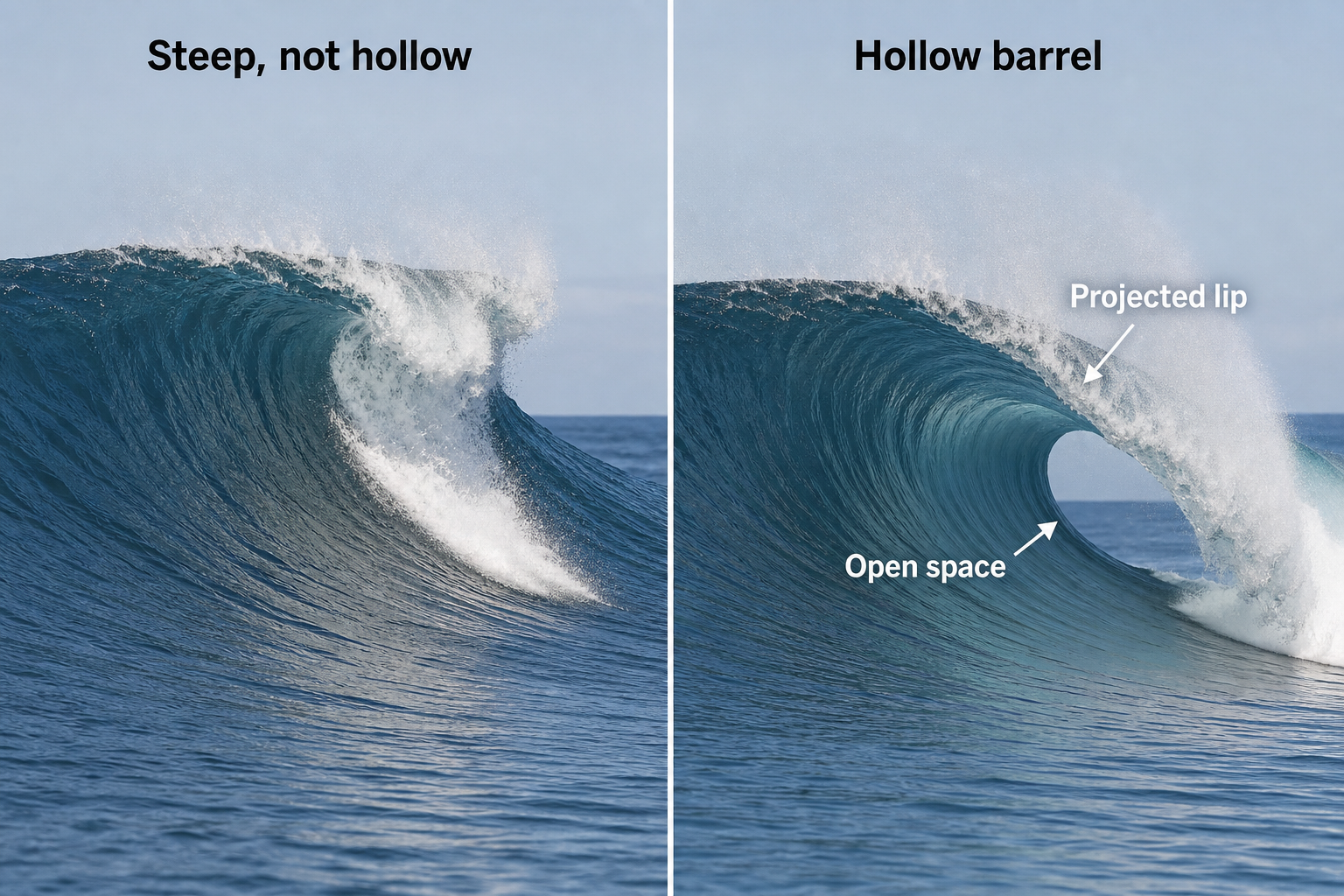
Hollowness is closely related to steepness, but the two are not the same thing. A wave can be steep without offering a clean barrel. For a true hollow wave, the lip must project outward and leave space between the falling lip and the face below. This is most common over reefs, ledges, and well-shaped sandbars.
Height and Perceived Size
Steep waves often feel larger than their measured height because the surfer drops from a more vertical face. A head-high steep wave can feel more intense than a larger rolling wave because there is less time to stand up and set an edge. The trough may also draw down below normal water level, making the face seem taller and the lip heavier than expected.
Are Steep Waves Hard to Surf?
Steep waves are generally harder to surf than soft, rolling waves. The main challenge is timing. You need to be in the right spot, paddle with commitment, and pop up while the wave is changing shape quickly. If you are too far out on the shoulder, the wave may outrun you. If you are too deep, the lip may land in front of you before you can generate speed.
That said, not every steep wave is expert-only. Small, well-shaped beachbreak peaks can be excellent for improving takeoffs and learning to surf faster lines. The difficulty rises sharply when the wave becomes hollow, shallow, or well overhead in size.
Why Steep Waves Feel Demanding
- Late takeoffs: The wave often reaches its breaking point quickly, leaving little time to adjust.
- Immediate speed: You must generate drive from the very first second of the ride.
- Precise positioning: A few feet can separate the perfect line from an impossible section.
- Stronger lip impact: The lip falls forward with force instead of crumbling softly.
At reef breaks especially, protection is worth thinking about before paddling out. A surf helmet and an impact vest can take some of the edge off a bad wipeout in shallow, heavy surf.
Ideal Bottom Structure for Steep Waves
The seabed is one of the most important factors in creating steep waves. Swell direction and wind matter, but the bottom ultimately decides how quickly the wave stands up and how it breaks.
Reefs and Ledges
Reefs are among the best setups for steep, hollow waves because they are fixed in place. A reef may have a shallow shelf, a defined takeoff ledge, and a deeper channel nearby. When swell hits the ledge, the wave jacks up quickly. If the reef contour bends along the line of the swell, the wave peels rather than closes out.
Ledges create some of the most dramatic steep waves. The swell travels over deeper water, then suddenly hits a shallow shelf, causing the trough to suck dry and the lip to throw far forward. These waves are often powerful relative to their height and can be deceptively dangerous.
Sandbars and Beachbreaks
Sandbars can create excellent steep waves, especially when they have a sharp outer edge or a well-formed channel behind them. A good sandbar makes the wave peak up, pitch, and run along the bank. Because sand moves, steep beachbreaks can be excellent one week and poor the next.
The best steep beachbreak banks are rarely perfectly straight. A straight bar often produces closeouts. Angled bars, crescent-shaped banks, and A-frame peaks create more rideable steep waves because they allow the wave to peel left or right rather than shut down all at once.
Points with Steep Sections
Pointbreaks are usually associated with long, peeling walls rather than ultra-steep drops. However, many points have steep takeoff zones or hollow inside sections where the swell crosses a shallow shelf. A point with a rock ledge, sand build-up, or reef platform can produce fast, steep waves with more length than a typical beachbreak.
Seabed Gradient
The ideal seabed gradient for steep waves is steep enough to make the wave pitch, but not so abrupt that it becomes unrideable. A gradual slope creates softer spilling waves, while a very sudden ledge can create a heavy slab that breaks in one explosive section. The best surfable steep waves usually sit between those two extremes.
How Swell Direction Affects Steep Waves
Swell direction controls how much energy reaches a break and how that energy meets the bottom. The best angle is always spot-specific, but the principle is simple: the swell must hit the bottom feature strongly enough to stand up while also arriving at an angle that allows the wave to peel.
Direct Swell for More Power
A direct swell sends more energy into the break. This can make waves steeper, taller, and more hollow. At reef breaks, direct swell may activate the main ledge. At beachbreaks, it may create punchier peaks across the bank.
The problem is that too much direct swell can cause straight beaches to close out. When the swell lines arrive nearly parallel to the beach, the whole wave may break at once. This is why many steep beachbreaks are best with a slightly angled swell rather than a perfectly head-on one.
Angled Swell for Better Peel
An angled swell can turn a fast, dumpy wave into a makeable wall. The angle causes one part of the wave to break before the next, creating a peeling shoulder. For points and reefs, the best swell direction often runs along the contour of the bottom. For beachbreaks, a slight angle can help form defined lefts and rights instead of closeouts.
If the swell angle is too oblique, the break may lose size or miss the main takeoff zone entirely. The ideal angle is the one that balances raw power with a surfable line.
Best Swell Period for Steep Waves
Swell period is the time in seconds between wave crests. It has a major effect on how steep, powerful, and organized a wave becomes as it breaks.
Short-Period Swell
Short-period swell, often around 6 to 9 seconds, is usually created by nearby wind. It can produce steep waves at beachbreaks, especially when the sandbars are shallow. These waves may be punchy and fun, but they tend to be less organized and carry less deep-water energy than longer-period swells.
Medium-Period Swell
Medium-period swell, roughly 10 to 14 seconds, is often excellent for steep beachbreaks and many reefs. It has enough energy to stand up over a shallow bottom without consistently closing out the way very long-period swell can on exposed sandbars. Many high-quality hollow beachbreak waves perform best in this range.
Long-Period Swell
Long-period swell, around 15 seconds and above, carries more energy and begins to feel the bottom earlier. It can wrap into reefs, focus onto ledges, and create powerful hollow waves. That same energy can also overwhelm poor sandbars or cause straight beaches to shut down completely.
For many steep reef waves, a longer period is beneficial because it draws water off the reef and creates a more forceful lip. For many beachbreaks, the sweet spot is often medium period, unless the sandbars are shaped well enough to handle bigger, more organized lines.
Best Wave Height for Steep Waves
The best wave height depends on the break. Some steep sandbars work beautifully at chest-high to overhead. Others need more swell before the wave starts breaking over the proper part of the bank. Heavy reefs and slabs may not show their true shape until the swell reaches a certain threshold.
As a general rule, steep waves become more technical as they get bigger. At smaller sizes, the challenge is usually quick positioning and speed generation. At overhead sizes, the drop becomes more critical and the lip carries significantly more force. Once a steep wave exceeds what the bottom can shape properly, it may break too wide, close out, or shift toward deeper water.
Best Tide for Steep Waves
Tide changes the water depth over the bottom, so it can completely transform a steep wave. A break that is hollow at mid tide may become soft at high tide and dangerously shallow at low tide.
Low Tide
Low tide often makes waves steeper because there is less water over the sandbar or reef. The wave feels the bottom more abruptly, causing it to jack up and pitch. This can create excellent barrels, but it can also make the wave too shallow or too fast to ride safely.
Mid Tide
Mid tide is often the most reliable for steep waves. There is usually enough water for the wave to hold its shape, but not so much that the wave becomes fat and weak. Many hollow reefs and beachbreaks are best on a lower-to-mid tide, especially when the tide is on the rise.
High Tide
High tide can soften steep waves by adding depth over the break. Some waves stop breaking properly at high tide. Others actually improve because the extra water smooths out the ledge or provides a better entry angle. Shorebreaks can also become very steep at high tide when waves unload directly onto a steep beach face.
The best tide is highly local. The same beach can have one bank that works best on low tide and another that comes alive at high tide. Watching a spot over multiple tides is one of the fastest ways to understand it.
Wind, Currents, and Other Factors That Shape Steep Waves
Wind Direction
Light offshore wind helps steep waves hold up. It blows into the face, delays the lip slightly, and can make the barrel cleaner and more defined. Too much offshore wind can make entry difficult, since it holds the surfer up on the face during the critical moment of the takeoff.
Onshore wind usually makes steep waves messier. It pushes the lip over early and breaks up the face. Light side-offshore wind can still be excellent if it keeps the wall clean without crumbling the lip prematurely.
Currents
Currents can make steep waves better or worse. A current moving against incoming swell can steepen the face and create extra pitch. This sometimes happens near river mouths, harbor entrances, and tidal channels. Strong or uneven currents can also make positioning harder and cause waves to behave unpredictably.
Wave Refraction and Focusing
Refraction occurs when swell bends as it moves into shallower water. Reefs, points, and headlands can focus swell energy into a smaller area, making one peak larger and steeper than surrounding waves. Some of the world’s most famous steep waves exist because offshore bathymetry concentrates swell energy directly onto a shallow takeoff zone.
How to Recognize Rideable Steep Waves
Not every steep wave is worth paddling for. The key is to look for a steep section that also has a makeable shoulder. A rideable steep wave has both power and direction.
Signs of a Rideable Steep Wave
- A clear peak: One part of the wave stands up first, giving the wave a direction to peel.
- A tapered shoulder: The wall gets slightly less steep down the line, creating a path forward.
- A staggered lip line: The lip throws in sequence rather than all at once.
- A visible exit: The barrel or steep section opens onto a shoulder or channel.
- A consistent takeoff zone: The best waves break near the same landmark each set.
Signs of an Unmakeable Steep Wave
- Straight horizon line: The wave approaches as one long wall with no defined peak.
- Simultaneous feathering: The entire lip starts breaking at the same time.
- No shoulder: The wave has a steep drop but nowhere to go after it.
- Overly fast section: The lip outruns even the fastest possible line.
- Wrong tide: The wave is either too fat to hold shape or unloading too abruptly to enter.
Before paddling out, watch several sets from land. Pay attention to which waves are made and which ones shut down. The best steep-wave surfers are not just brave; they are patient observers who understand the break before they enter the water.
How to Surf Steep Waves
Choose the Right Board for Steep Waves
For steep waves, the board needs to paddle into the wave early enough and hold through a fast line. In small to medium hollow surf, many surfers prefer a shortboard with enough rocker to fit into the curve of the wave without the nose catching. A slightly narrower tail adds control, and good fins with sharp rails help the board hold when the face turns vertical.
Fins make a real difference in how a board responds on steep, fast waves. A reliable set of FCS fins can give you the drive and control you need through critical sections, while a quality set of Futures-compatible fins is worth considering if your boards run that system. Traction also matters when things get steep. A well-positioned surf traction pad keeps your back foot locked in when you need it most.
In bigger steep surf, a step-up board can help with paddling speed and stability. Too much board can be awkward if the wave is very hollow, because a long rail may not fit into the curve of the face. Too little board can leave you late on every takeoff. The right choice depends on wave size, period, and how abrupt the takeoff section is.
Positioning for Steep Waves
Positioning is everything. You need to sit close enough to the peak to catch the wave before it throws, but not so deep that the lip lands on your head before you can move. Watch where successful surfers take off. Notice whether they paddle into the wave early from outside, swing late under the peak, or sit wide and angle in.
On many steep waves, you should begin paddling earlier than feels natural. The goal is to match the speed of the swell before the face becomes vertical. Once the wave lifts you, hesitation usually makes the drop harder and less controlled.
The Steep-Wave Takeoff
The takeoff on a steep wave should be committed and compact. Paddle hard, keep your chest low, and angle slightly in the direction you plan to go. Angling helps you avoid dropping straight to the bottom while the section races away. A solid surfboard leash is essential here too, since losing your board on a steep drop can put both you and others at risk.
As you pop up, keep your weight centered but ready to shift. Too much weight on the tail can stall the board at the top of the drop. Too much weight forward can bury the nose. A low, balanced stance gives you more control and lets you absorb the curve of the wave through the bottom of the drop.
Making the Drop
On a steep drop, the board often accelerates suddenly. Stay compressed and let the board run. If the wave is open-faced, drive into a strong bottom turn to redirect the energy up the face. If the wave is hollow, you may need a shallower bottom turn or a high line to stay under the lip and avoid getting pitched.
For late drops, setting the inside rail early is crucial. Think of knifing the rail into the face rather than falling flat down the wave. A clean rail set gives you direction and prevents the board from skipping out on a steep, glassy face.
Generating Speed on Steep Waves
Speed comes from staying in the steepest usable part of the face. On fast waves, the high line is often your best option. Pumping too low on the face can cost you time because you then have to climb back up through a flat section. Use the upper third of the wave when the section is racing, then drop lower when you need to set up a turn or a barrel line.
Good steep-wave surfing is often less about big movements and more about efficient lines. Small pumps, clean rail changes, and precise trimming can be faster than dramatic, energy-burning turns.
Surfing Hollow Steep Waves
If the wave is barreling, your first goal is to match the speed of the tube. Too slow and the lip catches you. Too fast and you outrun the barrel before it opens. Set your line early, stay compact, and use subtle weight shifts to control your speed inside the section.
Frontside, many surfers use a light rail grab to stabilize their line through a hollow section. Backside, the pigdog stance helps keep the body low and the rail engaged with the face. In both cases, the key is to stay calm and look toward the exit rather than fixating on the lip coming down above you.
If you’re shooting footage from the water or the beach, a waterproof action camera is a great way to review your positioning and barrel lines after the session. Make sure you have a large enough microSD card so you never run out of space mid-session.
Famous Surf Spots Known for Steep Waves
Steep waves appear all over the world, from shallow tropical reefs to cold-water sandbars. Conditions vary by swell, wind, and tide, but these spots are well known for producing steep or hollow surf consistently.
Pipeline, Oahu, Hawaii
Pipeline is one of the world’s most recognized steep reef waves. Long-period North Pacific swell hits a shallow reef ledge and creates a powerful, hollow left with an iconic barrel. The takeoff is steep, the tube is intense, and the wave’s shape changes dramatically with swell size and direction. At larger sizes, it also produces a fast right known as Backdoor.
Teahupo’o, Tahiti
Teahupo’o is a defining example of a ledge wave. South Pacific swell unloads over a very abrupt and shallow reef shelf, creating a thick, heavy lip and a famously hollow barrel. It is often described as a wave where the ocean bends more than it rises, and it holds a reputation as one of the most powerful waves in the world relative to its height.
The Box, Western Australia
The Box is a right-hand slab near Margaret River. It breaks over a shallow ledge and is known for square-shaped barrels, sudden takeoffs, and extreme steepness. It demonstrates how much power a wave can carry when deep-water swell hits an abrupt reef shelf with little warning.
Puerto Escondido, Mexico
Puerto Escondido is one of the most powerful sand-bottom waves in the world. The beachbreak can produce massive, steep peaks and heavy barrels, earning it the nickname “the Mexican Pipeline.” Its quality depends heavily on sandbar shape and swell direction, and it can go from excellent to dangerous very quickly.
Supertubos, Portugal
Supertubos is a fast, hollow beachbreak famous for its sand-bottom barrels. When the banks are right, the wave stands up quickly and throws hard. Medium to solid swell with favorable winds can create world-class steep waves that draw professionals from across Europe each autumn.
Hossegor, France
The beachbreaks around Hossegor, including La Gravière, are known for powerful sandbar barrels. Deep water close to shore allows incoming swell to retain energy before it unloads on the shallow banks, producing steep, hollow peaks that can rival reef waves in intensity. A good surf wax suited to the water temperature is a small but important detail at cold-water spots like this.
Skeleton Bay, Namibia
Skeleton Bay is a sand-bottom left that can produce extraordinarily long, fast, and hollow waves. Its steepness comes from south Atlantic swell wrapping onto a long sand point with a highly organized peel. It is a rare example of a wave that is both exceptionally fast and unusually long, sometimes running for hundreds of meters in a single ride.
Cloudbreak, Fiji
Cloudbreak is a powerful reef wave with steep takeoffs and long hollow sections. Depending on swell size and angle, it can range from performance walls ideal for progressive surfing to serious, heavy barrels that demand experience and respect. Reef booties are worth considering at spots like this, and a pair of reef booties can protect your feet during wipeouts over shallow coral.
Padang Padang, Bali
Padang Padang is a shallow left-hand reef barrel that needs a solid swell to break properly. When it turns on, it produces steep drops and compact tubes over a sharp reef platform. It is a relatively short wave, but the quality of the barrel when conditions align is exceptional.
Putting the Conditions Together for Better Steep Waves
The best steep waves usually come from a combination of factors rather than any single ingredient. A good setup might include a well-shaped reef or sandbar, a swell direction that hits the feature at the right angle, a period that provides enough energy and push, and a tide that keeps the wave hollow without making it unrideable.
For many steep beachbreaks, look for medium-period swell, clean wind, and sandbars with angled peaks. For many steep reefs, look for longer-period swell, a favorable direction, and a tide that exposes enough of the ledge for the wave to pitch properly. For slabs, the bottom contour is everything, and the margin between rideable and impossible can be very small. After a hard session on shallow reef, it’s also worth keeping a ding repair kit in your bag, since shallow, powerful waves are hard on equipment. A UV-protective rash guard is also worth packing for long sessions in tropical surf where sun exposure adds up quickly.
Steep waves reward knowledge as much as courage. The more carefully you study the bottom, swell direction, period, tide, and wind, the easier it becomes to predict when a wave will be fast but makeable rather than simply dangerous and closed out. Learn to read the taper of the shoulder, commit fully to the takeoff, and choose your line before the wave chooses it for you. When all the ingredients come together, steep waves can deliver some of the most memorable rides in surfing.